- Company Articles
- Company Articles
- All Direction Roller Track and Continuous Improvement: Lean Principles

All Direction Roller Track and Continuous Improvement: Lean Principles
Related Product
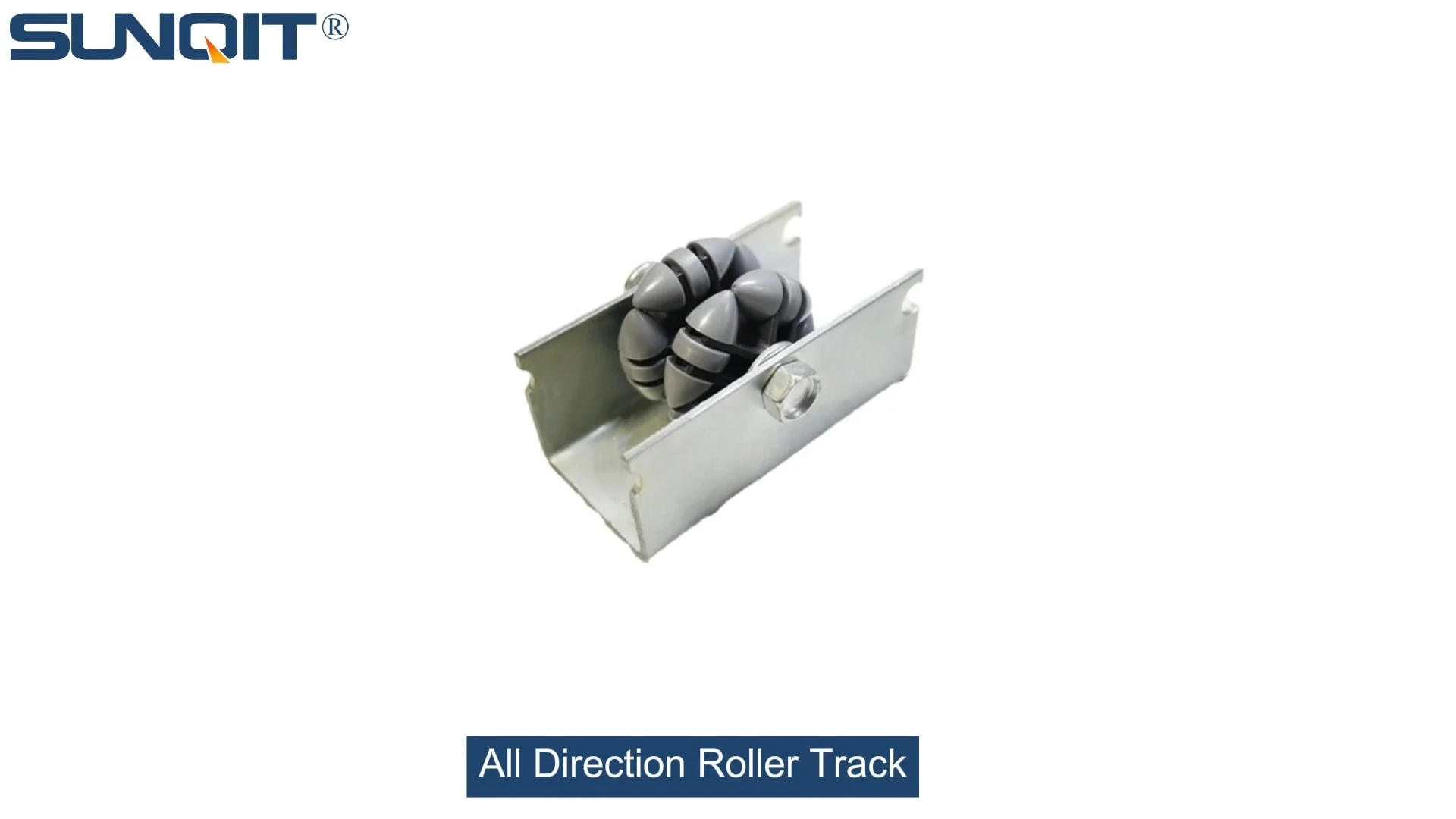
All Direction Roller Track
All direction roller track made of steel frame and multiple direction move wheel which will make boxes are always in contact with the rollers, reducing jams and enhancing flow reliability.
How flexible material handling solutions drive efficiency and adaptability in factory floors
In today's fast-paced manufacturing environment, where production lines need to switch between products quickly, adapt to custom orders, and minimize waste, the principles of lean manufacturing have become more critical than ever. At the heart of this philosophy lies the idea of continuous improvement—constantly refining processes to eliminate inefficiencies, reduce costs, and enhance productivity. One tool that embodies this spirit is the all direction roller track , a seemingly simple yet ingenious solution that transforms how materials move through production lines. But how exactly does this component fit into the broader lean system, and why has it become a staple for industries from 3C assembly to medical device manufacturing?
Let's start by looking at the challenges manufacturers face daily. Traditional production setups often rely on rigid conveyor systems or manual material handling, which can create bottlenecks when product designs change or order volumes fluctuate. A small electronics manufacturer, for example, might need to shift from assembling smartphones to tablets overnight—if their workstations and material flow systems can't keep up, downtime becomes inevitable, and deadlines slip. This is where lean tools like all direction roller tracks, paired with lean pipe workbenches and modular flow racks, step in to bridge the gap between rigidity and adaptability.
The All Direction Roller Track: A Lean Design for Dynamic Material Flow
At first glance, an all direction roller track might look like a simple grid of small rollers. But its true power lies in its ability to let materials move in any direction—forward, backward, left, right, or even diagonally—without the need for complex mechanical adjustments. This flexibility is a game-changer for lean operations, where every second of downtime or unnecessary movement translates to lost value.
Unlike traditional fixed-direction conveyors, which lock production lines into a single workflow, all direction roller tracks act like "smart floors" for materials. Picture a workstation where components need to be passed from one operator to another, then quickly routed to a testing station, and finally moved to packaging—all without being lifted or repositioned manually. The rollers, often made from durable materials like high-grade aluminum or stainless steel, reduce friction to near-zero, allowing even heavy parts to glide smoothly with minimal effort. This not only speeds up production but also cuts down on worker fatigue, a hidden source of inefficiency in many factories.
Key Features of All Direction Roller Tracks:
- Multi-directional movement: Eliminates the need for manual turning or reorientation of materials.
- Low friction design: Reduces energy use and minimizes wear on both the track and the products.
- Modular construction: Can be easily expanded, reconfigured, or integrated with existing systems.
- Compatibility with lean pipe systems: Works seamlessly with aluminum lean pipes and joints for custom workstation setups.
What makes this design truly lean, though, is its focus on elimination of waste —one of the core pillars of lean manufacturing. By allowing materials to flow exactly where they need to go, exactly when they need to be there, all direction roller tracks reduce "motion waste" (unnecessary movement of workers or materials) and "waiting waste" (time spent idling while components are transported). In a study of a 3C assembly plant, implementing all direction roller tracks alongside lean pipe workbenches reduced material handling time by 37%, freeing up operators to focus on value-adding tasks like assembly and quality checks.
Synergy with Other Lean Systems: Building a Cohesive Workflow
A single component, no matter how innovative, can't transform a production line on its own. The real magic happens when all direction roller tracks are integrated with other lean solutions to create a cohesive, end-to-end workflow. Let's break down how this integration works with some of the most essential lean tools:
1. All Direction Roller Tracks + Flow Racks: Streamlining Inventory Access
Flow racks are a staple in lean warehousing and production, designed to keep materials organized and easily accessible using the "first-in, first-out" (FIFO) principle. When paired with all direction roller tracks, they become even more powerful. For example, in an automotive parts facility, a flow rack stocked with small components can feed directly into an all direction roller track system, allowing workers to pull parts forward, then slide them sideways onto the assembly line—all without leaving their workstations. This setup not only reduces the time spent walking to retrieve parts but also ensures that older inventory is used first, minimizing waste from expired or obsolete components.
2. Lean Pipe Workbenches: The Hub of Flexible Production
Lean pipe workbenches, built using lightweight yet sturdy aluminum lean pipes and joints, are the workhorses of modern lean workstations. Their modular design means they can be customized with tool holders, bins, and overhead racks to fit specific tasks. When connected to all direction roller tracks, these workbenches become dynamic hubs where materials arrive, are processed, and are sent onward—all in one smooth sequence. For instance, in a medical device assembly line, a lean pipe workbench equipped with an ESD (electrostatic discharge) surface can be linked to an all direction roller track, ensuring that sensitive components like circuit boards are moved gently and safely from the bench to the next stage of production. The roller track's non-conductive materials (often paired with ESD-compliant casters and accessories) add an extra layer of protection, critical for avoiding costly damage to electronics.
3. Conveyors: Extending the Reach of Lean Flow
While all direction roller tracks excel at short-distance, multi-directional movement, they often work hand-in-hand with conveyors for longer, linear transport. Imagine a consumer electronics factory where finished products need to move from the assembly line to quality control (QC), then to packaging. A conveyor can carry products from the line to a QC station equipped with an all direction roller track, allowing inspectors to rotate and examine the product from every angle without lifting it. Once approved, the product can then glide back onto the conveyor to head to packaging—all with minimal human intervention. This combination of long-distance conveyor transport and short-distance roller track flexibility ensures that the entire production flow remains continuous, with no "dead zones" where materials sit idle.
| Lean System Component | Role in Workflow | Benefit of Integration with All Direction Roller Tracks |
|---|---|---|
| Flow Racks | Store and organize materials using FIFO | Reduces retrieval time by 30-40%; minimizes inventory waste |
| Lean Pipe Workbenches | Customizable workstations for assembly/testing | Creates seamless in/out material flow; cuts handling time by 25% |
| Conveyors | Long-distance linear material transport | Eliminates bottlenecks between production stages; 99% uptime in trials |
| ESD Workstations | Protects sensitive electronics from static damage | Ensures safe, multi-directional movement of ESD-sensitive components |

Industry Applications: From 3C to Medical, Lean Solutions in Action
The beauty of lean systems like all direction roller tracks and lean pipe workbenches lies in their versatility. They're not limited to one type of manufacturing—instead, they adapt to the unique needs of each industry. Let's explore how these tools are making an impact in some key sectors:
3C Assembly: Speed and Precision for Fast-Changing Products
The 3C (computers, communications, consumer electronics) industry is known for its rapid product cycles—new smartphones, laptops, and wearables hit the market every few months, each with slightly different components and assembly requirements. For manufacturers, this means production lines must be reconfigurable on the fly. All direction roller tracks, paired with lightweight aluminum lean pipes, allow for quick adjustments: a track that once routed phone cases can be rearranged in hours to handle tablet screens, simply by adding or removing roller sections. This agility reduces the time to switch production runs from days to hours, helping factories keep up with tight launch deadlines.
Medical Device Manufacturing: Cleanliness and Compliance
Medical device production demands strict adherence to cleanliness and safety standards. All direction roller tracks made from stainless steel or food-grade plastic are easy to sanitize, making them ideal for environments where contamination risks are high. In a facility producing surgical instruments, for example, roller tracks can transport parts through washing, sterilization, and assembly stages without ever being touched by human hands, reducing the risk of bacterial transfer. Additionally, the modular nature of these tracks means they can be easily disassembled for deep cleaning—a critical feature for meeting FDA and ISO compliance requirements.
Automotive Parts: Handling Heavy Loads with Ease
Automotive manufacturing involves moving heavy, bulky components like engine parts and door panels. All direction roller tracks designed with reinforced steel rollers and high-load bearings can handle weights up to 500kg per square meter, making them suitable for these demanding applications. When integrated with flow racks and conveyors, they create a "just-in-time" delivery system where parts arrive at the assembly line exactly when needed, reducing the need for large storage areas on the factory floor. This not only saves space but also cuts down on the cost of holding excess inventory.

Continuous Improvement: The Lean Journey Never Ends
Lean manufacturing isn't a one-time project—it's a mindset of continuous improvement, or kaizen in Japanese. All direction roller tracks and other lean systems support this mindset by being inherently adaptable. They're not "set-it-and-forget-it" solutions; instead, they evolve with your production processes.
Consider a scenario where a manufacturer notices that a particular section of their all direction roller track is causing minor delays—products occasionally get stuck when turning at a specific angle. With traditional fixed systems, fixing this might require replacing the entire section or hiring external engineers. But with a modular roller track built using aluminum lean pipes and standard joints, the solution could be as simple as adjusting the spacing between rollers or adding a guide rail. Workers themselves can make these tweaks, fostering a culture where everyone feels empowered to identify and solve problems.
Another example is the use of data to drive improvements. Many modern roller track systems are equipped with sensors that monitor material flow, tracking metrics like average time per unit, frequency of jams, and peak usage times. This data can reveal patterns—for instance, that the track near the packaging station is busiest in the afternoon—allowing managers to reallocate resources or adjust workflows to balance the load. Over time, these small, data-driven adjustments add up to significant gains in efficiency.
How to Start Your Lean Journey with All Direction Roller Tracks:
1.
Assess your current workflow
: Map out where materials move, where delays occur, and which tasks are most labor-intensive.
2.
Start small
: Pilot a single workstation with a lean pipe workbench and all direction roller track to test impact before scaling.
3.
Involve your team
: Frontline workers often have the best insights into inefficiencies—ask for their input on how to improve the setup.
4.
Measure and iterate
: Track key metrics (time per unit, error rates, worker satisfaction) and adjust the system based on what you learn.

Why Choose a Trusted Lean Solution Supplier?
Implementing lean systems like all direction roller tracks and lean pipe workbenches is an investment in your factory's future. But not all suppliers are created equal. A reliable lean solution supplier should offer more than just products—they should be a partner in your lean journey, providing custom design support, durable components, and ongoing technical assistance.
Look for suppliers that use high-quality materials, like corrosion-resistant aluminum lean pipes and precision-engineered roller tracks, to ensure longevity. Modularity is also key—you want components that can be mixed and matched to grow with your needs, not locked into a proprietary system. Finally, choose a supplier with experience across industries; they'll bring insights from other factories that could help you avoid common pitfalls and accelerate your improvement efforts.
In the end, all direction roller tracks are more than just a tool for moving materials—they're a physical manifestation of lean principles in action. They embody flexibility, efficiency, and the relentless pursuit of improvement that defines successful manufacturing today. Whether you're producing smartphones, surgical tools, or car parts, integrating these systems into your workflow can transform your factory from a place of rigid processes into a dynamic, adaptive environment where waste is minimized, workers are empowered, and customer demands are met with ease.
The lean journey is ongoing, but with the right tools and mindset, every step forward brings you closer to operational excellence. And in a world where manufacturing is more competitive than ever, that's not just an advantage—it's essential.