- Company Articles
- Company Articles
- Aluminum Workbench B: Environmental Impact and Sustainable Manufacturing Practices

Aluminum Workbench B: Environmental Impact and Sustainable Manufacturing Practices
Related Product
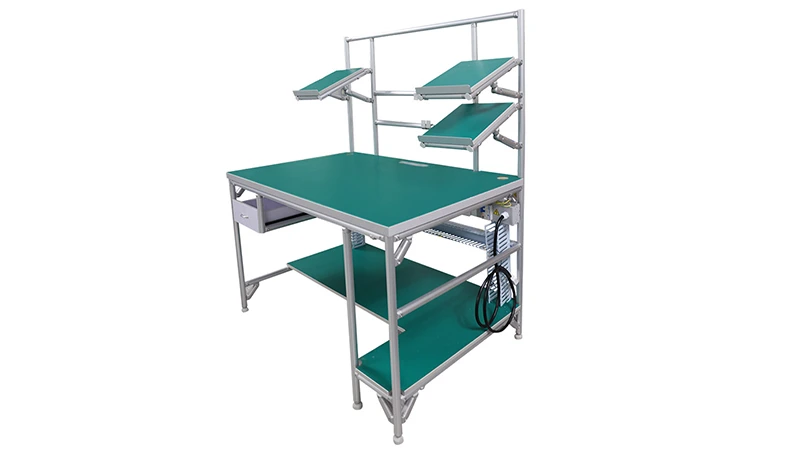
Aluminum Workbench B
Aluminum tube workbench is more flexible and durable, compared with traditional PE/ABS coated steel tube. It is easy to assemble, anti corrosion, rust protection, and recycle use after disassemble.
Walk into any workshop, factory, or maker space, and you'll notice something fundamental: the workbench. It's where ideas take shape, where products are assembled, and where the rhythm of productivity hums along day in and day out. For decades, workbenches have been built with one goal in mind—functionality. But in 2025, as we grapple with climate change, resource scarcity, and a growing desire to leave a lighter footprint on the planet, "functionality" isn't enough anymore. Enter the Aluminum Workbench B—a piece of equipment that doesn't just support your workflow, but supports the health of our planet, too. Let's dive into why this workbench is more than just a surface to work on, and how its sustainable design is reshaping the way we think about manufacturing tools.
The Hidden Environmental Cost of Traditional Workbenches
Before we talk about what makes Aluminum Workbench B special, let's take a step back. For years, workshops relied on workbenches made from wood, steel, or heavy plastics. Each has its own set of environmental trade-offs, and most of them aren't pretty.
Wooden workbenches, for example, often come from hardwoods that take decades to grow. Deforestation for timber not only destroys habitats but also reduces the planet's ability to absorb carbon dioxide. What's more, many wooden workbenches are treated with chemicals to resist rot or pests—chemicals that can leach into the soil or air over time, harming both workers and local ecosystems. Then there's steel: strong and durable, but producing steel requires mining iron ore, a process that scars landscapes and releases toxic byproducts. Melting and shaping steel also guzzles energy—so much so that the steel industry accounts for about 7% of global carbon emissions, according to the World Steel Association. And plastic workbenches? They're often made from non-biodegradable petroleum-based materials that stick around in landfills for centuries, breaking down into microplastics that pollute our oceans and food chain.
The problem isn't just in how these workbenches are made—it's also in how they're used. Heavy steel workbenches are hard to move, so workshops often end up buying more than they need, leading to excess production. Wooden ones warp or crack over time, ending up in the trash after just a few years. And when they're discarded, most of these materials aren't recycled—they're burned or buried, adding to our growing waste crisis.
Aluminum Workbench B: Redefining Sustainability in Workshop Design
Aluminum Workbench B was designed with a simple question in mind: What if a workbench could be both tough enough for daily use and gentle enough on the planet? The answer lies in its core material: aluminum extrusion profile. Unlike wood or steel, aluminum offers a unique combination of strength, lightness, and sustainability that makes it ideal for workbench construction.
First, let's talk about aluminum extrusion profile—the process that shapes the aluminum into the sturdy, customizable frames of Workbench B. Extrusion is like squeezing toothpaste through a tube, but on an industrial scale. Heated aluminum billets are pushed through a die (a custom-shaped mold) to create long, uniform pieces with complex cross-sections. This process is incredibly efficient: it produces minimal waste because the aluminum is shaped exactly to the needed dimensions, and the excess material can be melted down and reused right away. Compare that to cutting steel or sawing wood, where up to 30% of the raw material can end up as scrap.
But the sustainability of Aluminum Workbench B doesn't stop at the extrusion process. It's also in the details, like the aluminum profile accessories that hold the bench together. Instead of welding or gluing (which can weaken over time and make repairs hard), Workbench B uses modular accessories—things like brackets, joints, and fasteners—that click into place. This modular design means if a part breaks, you don't have to replace the entire bench; just swap out the accessory. It's a small feature, but it drastically extends the workbench's lifespan, reducing the need for new production. Think about it: a workbench that lasts 15 years instead of 5 means three times fewer resources used over time.
Another key advantage? Aluminum is one of the most recyclable materials on the planet. When an Aluminum Workbench B finally reaches the end of its life (which, with proper care, could be decades from now), 95% of its aluminum can be recycled. What's more, recycling aluminum uses just 5% of the energy needed to produce new aluminum from raw bauxite ore. That's a massive energy savings—enough to power a home for months with the energy saved from recycling a single workbench's worth of aluminum. And unlike plastic or wood, recycled aluminum is just as strong and durable as the original, so it can be turned into new workbenches, car parts, or even soda cans without losing quality.

Lean System Integration: Doing More with Less
Sustainability isn't just about materials—it's also about how we use the tools we have. That's where lean system principles come into play. Lean system is all about eliminating waste: reducing unnecessary steps, streamlining processes, and making the most of every resource. Aluminum Workbench B fits seamlessly into this philosophy, making workshops more efficient and less wasteful by design.
For starters, Aluminum Workbench B is lightweight. Unlike steel workbenches, which require forklifts or multiple people to move, this bench can be repositioned by just one or two workers. That means workshops can rearrange their layout on the fly to changing production needs—no need to buy extra workbenches "just in case." It also reduces the risk of workplace injuries from lifting heavy equipment, which is a win for both workers and businesses (fewer injuries mean lower insurance costs and happier teams).
The modular design we mentioned earlier also plays into lean system. With aluminum profile accessories, you can customize the workbench to fit your exact needs: add shelves, tool holders, or even conveyor attachments to keep materials flowing smoothly. This means no more cluttered workspaces filled with unused features—every part of the bench has a purpose. And if your needs change (say, you start assembling smaller products), you can reconfigure the accessories instead of buying a new bench. It's a flexible approach that cuts down on excess production and keeps your workshop running lean.
Perhaps most importantly, Aluminum Workbench B is built to support a circular economy. In a linear economy, products are made, used, and thrown away. In a circular economy, they're made to be reused, repaired, or recycled. By using recyclable aluminum, modular accessories, and a durable design, Workbench B is a circular economy in action. When you're done with it, the aluminum can be melted down and turned into something new—no waste, no guilt.

From Raw Material to Finished Bench: A Closer Look at Sustainable Manufacturing
To truly understand the environmental impact of Aluminum Workbench B, let's walk through its lifecycle—from the moment aluminum is mined to the day the bench is ready for your workshop.
It starts with bauxite, the ore from which aluminum is extracted. Mining bauxite does have an environmental impact, but modern mines are required to restore the land after mining—replacing topsoil, planting native trees, and ensuring water sources aren't contaminated. Once the bauxite is mined, it's refined into alumina (aluminum oxide) and then smelted into pure aluminum. Here's where aluminum shines: while primary aluminum production (from bauxite) uses energy, 75% of all aluminum ever produced is still in use today, thanks to recycling. In fact, Aluminum Workbench B is often made with recycled aluminum—scrap from old cars, windows, or even other workbenches. Using recycled aluminum cuts the carbon footprint of production by a staggering 95% compared to using new aluminum, according to the Aluminum Association.
Next comes the extrusion process we discussed earlier. The aluminum billets (recycled or new) are heated to around 500°C (932°F)—hot enough to be malleable but not melted. They're then pushed through a die to create the aluminum extrusion profile that forms the workbench's frame. This step uses far less energy than forging steel or cutting wood, and the extrusion plant is often powered by renewable energy sources like solar or wind, further reducing emissions.
Once the profiles are extruded, they're cut to size and assembled with aluminum profile accessories. These accessories are also made from recycled aluminum, and they're designed to be easily attached without glue or welding. The workbench's top—often a durable, non-toxic laminate—is added, and the whole thing is inspected for quality. Finally, the finished bench is packaged and shipped. Because aluminum is lightweight, shipping Aluminum Workbench B uses less fuel than shipping a steel bench of the same size, cutting down on transportation emissions.
The result? A workbench that, from start to finish, has a fraction of the environmental impact of traditional options. And when you factor in its long lifespan and recyclability, the total "carbon cost" per year of use is incredibly low.
Comparing Workbench Materials: The Sustainability Showdown
Curious how Aluminum Workbench B stacks up against traditional workbench materials? Let's break it down in the table below:
| Material | Carbon Footprint (kg CO₂ per bench) | Recyclability Rate | Typical Lifespan | Maintenance Needs | Weight (kg) |
|---|---|---|---|---|---|
| Wood (Hardwood) | 150-200 | Low (often treated with chemicals, hard to recycle) | 5-8 years | Regular sanding, sealing, prone to warping | 80-100 |
| Steel | 300-400 | Medium (recyclable but energy-intensive to process) | 10-15 years | Prone to rust, requires painting or coating | 150-200 |
| Plastic | 100-150 | Very Low (most plastics are not recycled) | 3-5 years | Scratches easily, fades in sunlight, warps in heat | 40-60 |
| Aluminum (Workbench B) | 50-70 (with recycled aluminum) | 95%+ (can be recycled infinitely without quality loss) | 20-30 years | Minimal (resistant to rust, easy to clean) | 60-70 |
As you can see, Aluminum Workbench B outperforms traditional materials in nearly every category. It has a lower carbon footprint, is almost fully recyclable, lasts twice as long as steel, and requires little maintenance. And because it's lightweight, it's easier to move and ship, saving even more energy.
Real-World Impact: How Workshops Are Thriving with Aluminum Workbench B
Sustainability isn't just a buzzword—it's a choice that can transform businesses. Let's hear from two workshops that made the switch to Aluminum Workbench B and never looked back.
Case Study 1: GreenTech Manufacturing (Small Electronics Workshop)
GreenTech, a family-owned electronics assembly workshop in Oregon, used to rely on steel workbenches. "They were sturdy, but they were so heavy we could barely move them," says Maria, the workshop manager. "We had 10 workbenches, but half of them were always empty because we couldn't rearrange the floor plan. We were wasting space and money." When Maria heard about Aluminum Workbench B, she was skeptical—could aluminum really be as strong as steel? "We ordered one to test, and within a month, we replaced all our steel benches. The aluminum ones are just as tough, but we can move them with two people instead of four. We've cut down on the number of workbenches we need by 30%, and our energy bill is lower because we're not heating a space with unused equipment. Plus, our workers love them—they're lighter, so less strain on their backs, and they look great! We even get compliments from clients who visit the shop."
Case Study 2: EcoFurniture Co. (Sustainable Furniture Maker)
EcoFurniture Co. builds furniture from reclaimed wood, so sustainability is core to their brand. "We were preaching sustainability but using steel workbenches that would end up in a landfill," says owner Tom. "It felt hypocritical." After switching to Aluminum Workbench B, Tom noticed a difference immediately. "The modular accessories let us customize each bench for different projects—we add tool holders for cutting and shelves for assembly. When we needed to expand, we just bought more accessories instead of new benches. And when our first bench got a scratch on the top, we replaced the laminate instead of the whole thing. We've saved over $5,000 in three years, and we sleep better knowing our workbenches align with our values. Our customers notice, too—they love that every part of our process is sustainable, right down to the workbenches."
Conclusion: Building a Better Workshop, One Bench at a Time
Aluminum Workbench B isn't just a tool—it's a statement. It says that you care about the planet, your workers, and the future of manufacturing. In a world where every choice matters, choosing a sustainable workbench is a small but powerful step toward a greener, more efficient workshop.
From its recycled aluminum extrusion profile to its modular aluminum profile accessories, from its lean system compatibility to its infinite recyclability, Aluminum Workbench B proves that sustainability and functionality don't have to be trade-offs. It's a workbench that works as hard for the planet as it does for you.
So the next time you're setting up a workshop, or upgrading your current space, ask yourself: What kind of impact do I want my tools to have? If the answer is "a positive one," then Aluminum Workbench B is more than just a good choice—it's the right choice. After all, the best workbenches aren't just built to last—they're built to leave the world better than they found it.