- Company Articles
- Company Articles
- Energy Efficiency of T Slot Aluminum Pipe with Board Holder Production: Green Manufacturing

Energy Efficiency of T Slot Aluminum Pipe with Board Holder Production: Green Manufacturing
Related Product
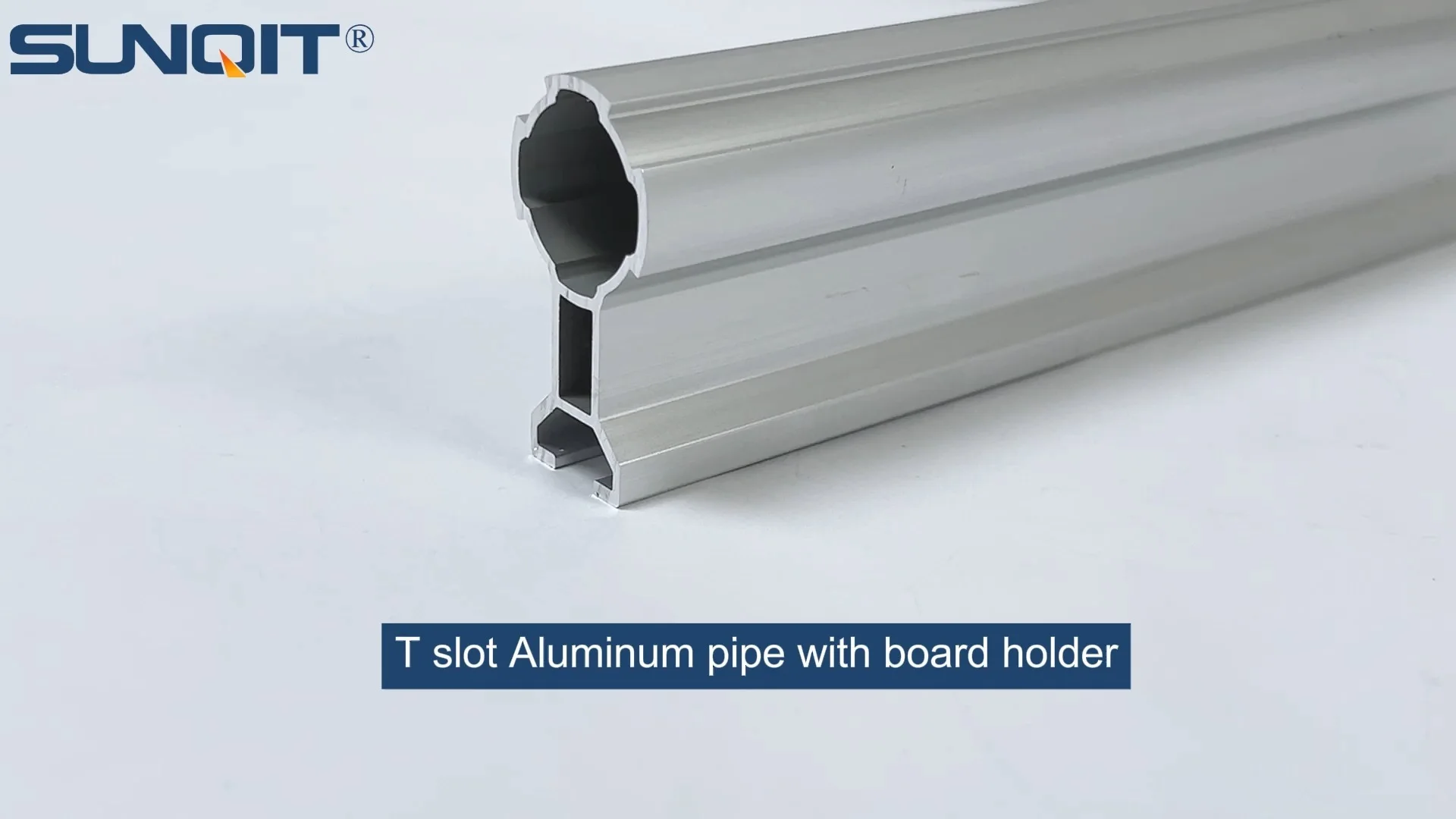
T Slot Aluminum Pipe with Board Holder
T slot Aluminum pipe with board holder,the pipe one side connected by a joint, the other side with a slot which can hold a tray or a aluminum pannel
In an era where sustainability is no longer a buzzword but a critical business imperative, the manufacturing industry stands at a crossroads. As global markets demand greener practices and stricter environmental regulations take hold, every component, process, and system within the production chain is under scrutiny for its energy footprint. Among these, yet indispensable tools like the T Slot Aluminum Pipe with Board Holder have emerged as unsung heroes, quietly driving energy efficiency and sustainability in modern manufacturing. This article explores how this modular, versatile component—paired with principles of
lean system
design and innovative materials like
aluminum extrusion profile
—is reshaping the future of green manufacturing.
The Green Manufacturing Imperative: Why Small Components Matter
Manufacturing accounts for approximately 28% of global energy consumption and 23% of direct carbon dioxide emissions, according to the International Energy Agency (IEA). As such, reducing energy use in production processes is not just an environmental goal but a financial one: lower energy costs, reduced waste, and improved resource efficiency directly boost profitability. Yet, much of the focus on sustainability in manufacturing tends to center on large-scale solutions—renewable energy adoption, electric machinery, or carbon capture technologies. While these are vital, the cumulative impact of smaller, everyday components is often overlooked.
Enter the T Slot Aluminum Pipe with Board Holder. At first glance, it may seem like a simple piece of hardware: a lightweight aluminum pipe with a T-shaped slot, paired with a board holder for workbenches, shelves, or material handling systems. But its design—modular, durable, and made from
aluminum profile
—addresses three core pillars of green manufacturing: material efficiency, process optimization, and lifecycle sustainability. By examining how this component contributes to each pillar, we can uncover lessons that extend far beyond its physical size.
Material Efficiency: Aluminum's Sustainability Edge
Why Aluminum Profile Stands Out
The choice of material is the first step toward energy-efficient manufacturing, and aluminum has long been celebrated for its sustainability credentials. Unlike steel, which requires intensive mining and high-temperature processing, or plastic, which relies on fossil fuels and degrades slowly, aluminum offers a unique combination of recyclability, durability, and lightweight performance.
Aluminum is 100% recyclable, and recycling it requires just 5% of the energy needed to produce primary aluminum from bauxite ore. This "energy memory" means that every ton of recycled aluminum saves approximately 9,600 kWh of electricity and avoids 90% of the greenhouse gas emissions associated with primary production, according to the Aluminum Association. For manufacturers, this translates to a material that not only reduces reliance on virgin resources but also cuts long-term energy costs.
The T Slot Aluminum Pipe is typically crafted from
aluminum extrusion profile
—a process where aluminum billets are pushed through a die to create custom cross-sectional shapes. Extrusion is inherently efficient: it minimizes material waste by producing near-net-shape parts, eliminating the need for excessive machining or cutting. Unlike casting, which often results in defects and requires rework, extrusion creates uniform, high-strength profiles with tight tolerances, reducing scrap rates to as low as 2-5% (compared to 15-20% for traditional machining).
| Material | Recyclability | Energy for Production (per ton) | Scrap Rate in Manufacturing | Weight (kg/m for 20mm pipe) |
|---|---|---|---|---|
| Aluminum Extrusion Profile | 100% recyclable; 5% energy vs. primary production | 620 kWh (recycled); 13,000 kWh (primary) | 2-5% | 0.8-1.2 |
| Steel (Mild) | 90% recyclable; 75% energy vs. primary production | 6,500 kWh (recycled); 25,000 kWh (primary) | 10-15% | 2.4-3.0 |
| Plastic (PVC) | Limited (5-10% recycled globally) | 8,000 kWh (virgin production) | 8-12% | 0.5-0.7 |
Lightweight Design, Lower Energy Consumption
Beyond recyclability, aluminum's low density (2.7 g/cm³, compared to steel's 7.8 g/cm³) reduces the weight of finished products like workbenches,
lean pipe workbench
systems, or conveyors. A lighter structure requires less energy to transport, assemble, and reconfigure—critical in dynamic manufacturing environments where layouts change frequently. For example, a T Slot Aluminum Pipe workbench weighs 40-60% less than a steel equivalent, making it easier to move without heavy machinery, cutting down on fuel or electricity use during reconfiguration.
This lightweight advantage also extends to material handling. When integrated into conveyors or turnover trolleys, aluminum profiles reduce the load on motors and rollers, lowering energy consumption by up to 15-20% compared to steel systems, according to a study by the Material Handling Institute. Over time, these savings compound, especially in high-volume facilities where conveyors run 24/7.

Process Optimization: Lean System Principles in Action
Modularity and Waste Reduction
A
lean system
is defined by its focus on eliminating waste—whether in time, materials, or energy. The T Slot Aluminum Pipe with Board Holder embodies lean principles through its modular design. Unlike fixed, custom-built workbenches or shelving units, which often become obsolete when production needs change, T Slot systems are infinitely reconfigurable. The T-slot allows for quick attachment of accessories—shelves, tool holders, lights, or board holders—without drilling, welding, or cutting. This flexibility means manufacturers can adapt their workspace to new products or processes in hours, not days, reducing downtime and the need to replace entire systems.
Consider a typical scenario: a electronics manufacturer needs to retool a production line for a new smartphone model. With traditional steel workbenches, this might involve disassembling the old setup, discarding unused parts, and welding new frames—wasting materials, labor, and energy. With T Slot Aluminum Pipe workbenches, workers simply loosen the connectors, reposition the pipes, and add new board holders or shelves. The old components can be repurposed elsewhere, eliminating waste and cutting retooling energy use by up to 60%, as observed in case studies by the Lean Enterprise Institute.
Energy Savings in Production: From Extrusion to Assembly
The energy efficiency of T Slot Aluminum Pipe begins long before it reaches the factory floor. The
aluminum extrusion profile
process itself is far less energy-intensive than alternatives like casting or forging. Extrusion presses operate at lower temperatures (around 450-500°C for aluminum, compared to 1,500°C for steel casting) and use hydraulic or electric drives that can be powered by renewable energy. Modern extrusion facilities often integrate solar panels or geothermal heating to further reduce their carbon footprint.
Once extruded, the T Slot Aluminum Pipe requires minimal secondary processing. Its smooth surface and precise dimensions eliminate the need for grinding, painting, or plating—steps that consume energy and release volatile organic compounds (VOCs). Many aluminum profiles are anodized, a process that uses electricity to create a protective oxide layer, but even this is energy-efficient: anodizing one square meter of aluminum uses approximately 2-3 kWh, compared to 5-8 kWh for powder coating steel.
Assembly is another area where energy is saved. The T Slot design allows for tool-free installation using friction-fit connectors or bolts, reducing the need for power tools. In large-scale production facilities, this translates to lower electricity use during setup and maintenance. A study by the Aluminum Extruders Council found that manufacturers using modular aluminum systems reduced assembly time by 30% and energy use for tooling by 25% compared to traditional steel fabrication.

Lifecycle Sustainability: From Cradle to Cradle
Durability and Longevity
Green manufacturing isn't just about reducing energy use during production—it's about maximizing the lifecycle of products to minimize replacement and disposal. Aluminum profiles excel here: they are resistant to corrosion, rust, and impact, with a lifespan of 20-30 years in industrial settings. Compare this to plastic pipes, which degrade in sunlight and chemicals after 5-10 years, or steel, which requires regular painting to prevent rust and may need replacement after 15-20 years.
The T Slot Aluminum Pipe's durability means fewer replacements, reducing the energy and materials needed to manufacture new components. For example, a
lean pipe workbench
made with aluminum profiles can outlast three generations of steel workbenches, saving the energy equivalent of 1,200 kWh over its lifecycle, according to data from the European Aluminum Association.
End-of-Life Recycling: Closing the Loop
When a T Slot Aluminum Pipe finally reaches the end of its useful life, it doesn't become waste. Unlike plastic, which often ends up in landfills, or steel, which may be downcycled into lower-grade products, aluminum can be recycled into new profiles with no loss of quality. This "cradle-to-cradle" loop is a cornerstone of circular manufacturing. For example, a decommissioned aluminum workbench can be shredded, melted down, and extruded into new T Slot Pipes in a matter of weeks, using just 5% of the energy of primary production.
Some manufacturers have even begun implementing "take-back" programs for aluminum components, ensuring that old pipes, connectors, and board holders are recycled rather than discarded. This not only reduces waste but also creates a stable supply of recycled aluminum, insulating manufacturers from volatile primary material prices.
Case Study: Automotive Supplier Cuts Energy Use by 22% with Aluminum Profiles
A leading automotive parts supplier in Michigan, USA, was struggling with high energy bills and frequent retooling delays in its transmission assembly line. The facility relied on steel workbenches and fixed conveyor systems, which were heavy, prone to rust, and difficult to reconfigure. In 2022, the company partnered with an
aluminum extrusion profile
supplier to replace 80% of its steel workbenches with T Slot Aluminum Pipe systems, including board holders, tool racks, and lightweight conveyors.
The results were striking:
- Energy savings: Conveyor motor energy use dropped by 18% due to the lighter aluminum profiles, while retooling energy use fell by 65% (from 1,200 kWh per retool to 420 kWh).
- Waste reduction: Steel scrap from old workbenches was recycled, and aluminum components reduced assembly waste by 70% (from 150 kg/month to 45 kg/month).
- Lifecycle benefits: The new aluminum workbenches required no painting or rust treatment, cutting maintenance energy use by 30%.
Within 18 months, the company had recouped its investment in the new system through energy and material savings, and its carbon footprint for the assembly line was reduced by 22%. "We used to see workbenches as just a place to put tools," said the plant manager. "Now we realize they're a key part of our sustainability strategy."
Beyond the Pipe: Scaling Sustainability Across the Supply Chain
The lessons from T Slot Aluminum Pipe with Board Holder extend beyond individual factories. As manufacturers adopt this component, they create ripple effects throughout the supply chain. Suppliers of
aluminum profile
are incentivized to invest in cleaner extrusion technologies, such as electric presses or recycled aluminum feedstocks. Distributors optimize their logistics to transport lighter aluminum components, reducing fuel use. Even customers benefit: products assembled on energy-efficient workbenches have lower embedded carbon, making them more attractive to eco-conscious consumers.
Moreover, the modularity of T Slot systems encourages collaboration between manufacturers, suppliers, and designers. A furniture maker, for example, might share its aluminum pipe designs with a electronics manufacturer, reducing the need for duplicate R&D and cutting overall industry energy use. This kind of cross-sector innovation is critical to achieving global sustainability goals.
Future Trends: Innovations in Aluminum Extrusion and Lean Systems
Advanced Alloys and Smart Design
The future of T Slot Aluminum Pipe and
aluminum extrusion profile
lies in materials science and digital design. Researchers are developing new aluminum alloys with higher strength-to-weight ratios, allowing for even thinner pipes without sacrificing durability. These advanced alloys could reduce material use by an additional 10-15%, further lowering energy consumption during extrusion and transportation.
Digital tools like 3D modeling and generative design are also playing a role. By simulating stress, load, and energy use, engineers can optimize T Slot profiles to use material only where it's needed, eliminating excess and reducing weight. For example, finite element analysis (FEA) has led to the development of hollow-core aluminum pipes that are 20% lighter than solid pipes but just as strong, ideal for board holders and lightweight shelving.
Integration with Industry 4.0
As manufacturing embraces Industry 4.0, T Slot Aluminum Pipe systems are becoming smarter. Embedded sensors in aluminum profiles can monitor temperature, vibration, or load, providing real-time data on energy use and wear. This allows predictive maintenance—repairing components before they fail, reducing downtime and energy waste. For example, a conveyor system with sensor-equipped aluminum rollers can alert operators when a bearing is wearing out, preventing a breakdown that would require emergency repairs and excess energy use.
Conclusion: The Power of Small Changes in Green Manufacturing
The T Slot Aluminum Pipe with Board Holder may be small in size, but its impact on energy efficiency and sustainability is profound. By choosing
aluminum profile
for its recyclability, leveraging
aluminum extrusion profile
for low-waste production, and aligning with
lean system
principles for flexibility, this component demonstrates how green manufacturing can start with the basics. It proves that sustainability isn't just about grand gestures—it's about rethinking every part of the process, no matter how small.
As manufacturers face growing pressure to reduce their environmental footprint, the lessons from T Slot Aluminum Pipe are clear: prioritize materials with low lifecycle energy use, design for flexibility and recyclability, and integrate sustainability into every stage of production. By doing so, they won't just meet regulations or cut costs—they'll build resilient, future-ready operations that thrive in a world where sustainability is the ultimate competitive advantage.
So the next time you walk through a factory, take a closer look at the workbenches, the conveyors, the shelves. If they're made of aluminum profiles, with T slots and modular connectors, you're seeing more than just a workspace—you're seeing the future of green manufacturing in action. And it all starts with a simple pipe.