- Company Articles
- Company Articles
- How Do Lean Pipe Clamps Support Sustainable Improvement?

How Do Lean Pipe Clamps Support Sustainable Improvement?
Related Product
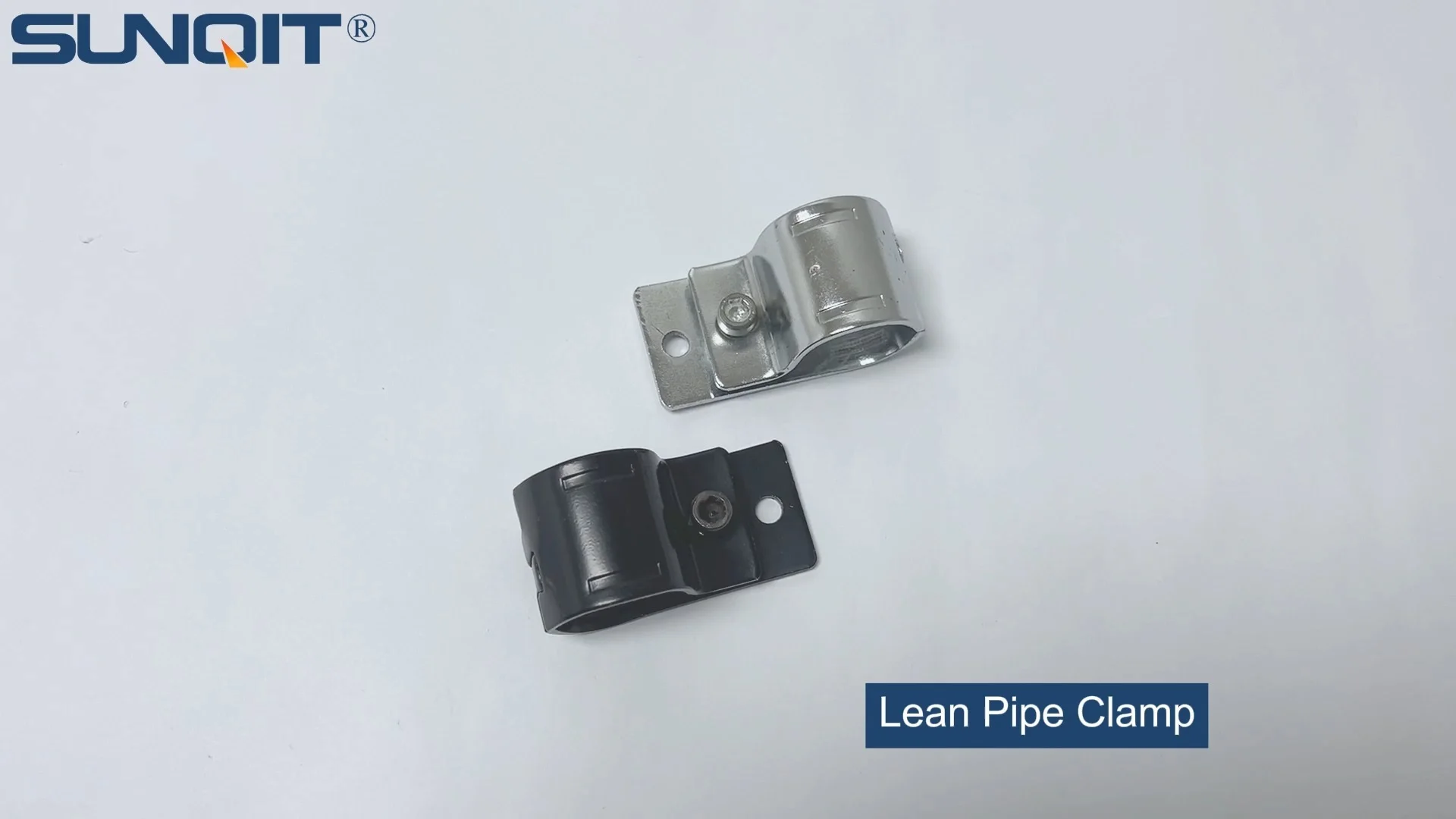
Lean Pipe Clamp
Lean pipe clamp is used for rack system hang monitor or other panel for workbenck, flowrack in production daily use.
In today's fast-paced business landscape, "improvement" is no longer a one-time project—it's a mindset. Companies across industries are shifting from chasing short-term efficiency gains to building sustainable improvement frameworks that adapt, evolve, and stand the test of time. At the heart of this shift lies a quiet yet powerful tool: the lean pipe clamp. These unassuming connectors, often overlooked in favor of flashy technology, are the unsung heroes of flexible, waste-free operations. But how exactly do they contribute to sustainable improvement? Let's dive in.
First Things First: What Are Lean Pipe Clamps, Anyway?
Before we connect them to sustainable improvement, let's get clear on what lean pipe clamps are. Imagine (oops, scratch that—
picture
this) a manufacturing floor, a warehouse, or even a workshop. Everywhere you look, there are structures: workbenches where assembly happens, racks holding materials, trolleys moving parts from station to station. Traditionally, these structures were fixed—welded steel, bolted wood, or rigid plastic that took days (or weeks) to build and even longer to modify. Enter lean pipe clamps: simple, modular connectors designed to join lengths of lean pipe (often aluminum, steel, or plastic-coated metal) into customizable, reconfigurable structures.
Think of them as the "building blocks" of lean systems. A lean pipe clamp might look like a small plastic or metal joint with a screw, a lever, or a snap-on design, but its purpose is mighty: to hold pipes together securely
without
permanent bonding. This means you can assemble a workbench in hours, take it apart in minutes, and reassemble it into a turnover trolley the next day. No welding, no specialized tools, no waste—just flexibility.
And they're not one-size-fits-all. From 90-degree fixed joints to swiveling connectors, from lightweight plastic clamps for light-duty use to heavy-duty stainless steel clamps for industrial settings, there's a lean pipe clamp for every need. Pair them with lean pipe (hollow tubes designed for strength and lightness) and accessories like casters or leveling feet, and you've got a system that bends to your workflow—not the other way around.
Sustainable Improvement: More Than Just "Being Green"
Before we link clamps to improvement, let's define "sustainable improvement." It's not just about reducing carbon footprints (though that's part of it). Sustainable improvement is about creating systems that:
- Eliminate waste (time, materials, labor, and energy).
- Adapt to change (new products, shifting demand, or evolving team needs).
- Empower people (frontline workers, not just managers, can drive change).
- Reduce long-term costs (by avoiding unnecessary purchases and minimizing downtime).
Now, let's see how lean pipe clamps check every one of these boxes.

1. They Turn "Fixed" into "Flexible," Cutting Waste at the Source
Waste is the arch-enemy of sustainable improvement—and traditional fixed structures are waste magnets. Let's say a electronics manufacturer builds a welded steel workbench for assembling smartphones. Six months later, they launch a larger tablet, and suddenly the workbench is too small. What happens next? The old workbench gets scrapped (material waste), the team waits weeks for a new one (time waste), and the company spends thousands on custom fabrication (cost waste). That's the opposite of sustainable.
Lean pipe clamps flip this script. With a lean pipe workbench, the same structure that once assembled smartphones can be reconfigured in an afternoon. Loosen the clamps, add a few extra lengths of lean pipe, adjust the height with new joints, and boom—you've got a tablet-friendly workbench. No scrapped materials, no waiting, no extra costs. The clamps turn "one and done" structures into "many and mutable" assets.
Take turnover trolleys, for example. A warehouse might need 10 trolleys for small parts in Q1, then 5 larger trolleys for bulk shipments in Q2. With fixed trolleys, they'd have to store the unused 5 (wasting space) or buy new ones (wasting money). With lean pipe clamps, they can disassemble the small trolleys, rejoin the pipes with longer clamps, and add larger shelves—all with the same materials. Waste? Minimized. Sustainability? Maximized.
| Traditional Fixed Structures | Lean Pipe Clamp Structures |
|---|---|
| High material waste (scrapped when needs change) | Zero material waste (pipes and clamps reused indefinitely) |
| Long lead times (days/weeks to build/modify) | Short lead times (hours/minutes to assemble/reconfigure) |
| High upfront costs (custom fabrication) | Lower upfront costs (modular, off-the-shelf components) |
| Space waste (storing unused structures) | Space efficiency (disassemble and store compactly when unused) |

2. They Empower Teams to Drive Continuous Improvement
Sustainable improvement isn't top-down—it's bottom-up. The people closest to the work (the assembly line workers, the warehouse staff, the lab technicians) are the ones who know best what's working and what's not. But for them to contribute, they need tools that let them act on their ideas quickly. Traditional structures? They silo innovation. A line worker might notice that a workbench is 6 inches too low, causing back strain, but modifying it would require a request to maintenance, a week of waiting, and a costly contractor visit. By the time the change happens, the worker has moved on, and the idea is forgotten.
Lean pipe clamps remove that barrier. With basic training, any team member can adjust a workbench height, add a shelf to a rack, or reposition a roller track using clamps. No permits, no waiting, no red tape. Let's say Maria, an assembly technician, notices that parts are piling up next to her station because the material rack is too far away. She grabs a few extra lean pipes, a handful of 45-degree clamps, and extends the rack closer to her workbench—all during her lunch break. The next day, her productivity is up, and her team mates start copying the idea. That's continuous improvement in action, driven by the people who matter most.
This empowerment isn't just good for morale—it's good for sustainability. When teams own their workspace, they're more invested in making it better. Over time, these small, daily adjustments add up to big gains: less waste, higher efficiency, and a culture where improvement is part of the job, not an extra task.

3. They Support Lean Systems: The Foundation of Sustainable Operations
Lean systems—made famous by Toyota's production philosophy—are all about maximizing value and minimizing waste (or "muda," as it's known in lean terminology). At their core, lean systems rely on three principles:
flow
(materials and information moving smoothly),
pull
(producing only what's needed), and
perfection
(continuous improvement). Lean pipe clamps are the glue that holds these principles together.
Take
flow
, for example. In a lean system, work should move from one station to the next without bottlenecks. If a conveyor is too slow, or a workbench is misaligned, flow breaks down, leading to delays and waste. With lean pipe clamps, teams can adjust conveyor heights, reposition workbenches, or add roller tracks (using clamps to secure the rails) to keep materials moving. A few twists of a clamp, and suddenly, that bottleneck is gone.
Then there's
pull
. In a pull system, production starts only when an order is placed, reducing inventory waste. But to do this, you need flexible material handling. A lean pipe turnover trolley, assembled with clamps, can be loaded with just enough parts for the next hour's production, then quickly emptied and refilled. No overstocking, no excess storage—just what's needed, when it's needed.
And
perfection
? That's where clamps truly shine. Lean isn't about achieving "perfect" once; it's about getting a little better every day. A lean pipe workbench might start as a simple flat surface, but over time, clamps allow teams to add tool holders, bin dividers, or ESD (electrostatic discharge) mats as needs evolve. Each tweak brings the system closer to perfection, and each tweak is possible because clamps make change easy.
Case Study: How a Small Electronics Firm Cut Waste by 35% with Lean Pipe Clamps
Let's put this into context with a real-world example (disguised for privacy, but based on a true story). Meet "TechFlow," a mid-sized electronics manufacturer producing circuit boards for medical devices. In 2022, their production floor was struggling with two major issues: long setup times for new product runs and high material waste from fixed workbenches and racks.
The Problem:
TechFlow's workbenches were custom-built for each product line. When switching from a small circuit board (for a heart monitor) to a larger one (for an MRI machine), the team had to disassemble the old workbench and build a new one—taking 8 hours and requiring 2-3 maintenance staff. During that time, the line was down, costing $1,500 per hour in lost production. Additionally, old workbenches were often scrapped, sending 200+ pounds of steel to the landfill each quarter.
The Solution:
TechFlow invested in a lean pipe system, including aluminum lean pipes, a variety of clamps (fixed joints, swivel joints, and roller track connectors), and basic tools for the team. They trained assembly technicians to use the clamps, then replaced all fixed workbenches with modular, clamp-based ones.
The Results:
Setup time for product switches dropped from 8 hours to 45 minutes—no maintenance staff needed. The team could now adjust bench height, add/remove shelves, and reposition tool holders using clamps alone. Old workbenches were disassembled, and pipes/clamps were reused to build new structures, cutting landfill waste by 90%. Over six months, TechFlow saved $45,000 in setup downtime and reduced material costs by $12,000. But the biggest win? Team engagement. Workers reported feeling "more in control" of their space, and improvement suggestions increased by 60%.
4. They're Built to Last (and Last, and Last)
Sustainability isn't just about reducing waste today—it's about creating systems that stand the test of time. Lean pipe clamps are designed for durability, even in harsh environments. Many are made from high-grade plastic (like nylon) resistant to chemicals and impact, or stainless steel that won't rust in humid warehouses. Aluminum clamps are lightweight but strong, with anodized coatings to prevent corrosion. This means a single set of clamps can last 5, 10, even 15 years—outliving multiple product cycles, team changes, and facility moves.
Compare that to traditional connectors. Welded joints weaken over time, especially with vibration. Bolted wood structures rot or warp. Glued plastic joints crack under stress. When these fail, you're back to square one: buying new materials, hiring labor, and generating waste. Lean pipe clamps, by contrast, are easy to maintain. A loose clamp? Tighten the screw. A worn joint? Swap it out in 30 seconds, and reuse the old one for a lighter-duty structure. No need to replace the entire system—just the part that's worn.
And when a clamp finally reaches the end of its life? Many are recyclable. Aluminum and steel clamps can be melted down and repurposed, while plastic clamps (if marked with recycling codes) can be processed into new materials. It's a closed-loop system that aligns with circular economy principles—exactly what sustainable improvement demands.
5. They Reduce Costs—Without Sacrificing Quality
Let's talk numbers. Sustainable improvement doesn't have to cost the earth—in fact, it should
save
money over time. Lean pipe clamps deliver on that promise in three key ways:
Lower upfront costs:
Modular clamp systems are cheaper than custom-built structures. A fixed steel workbench might cost $800-$1,200, while a lean pipe version with clamps costs $300-$500. For a factory with 20 workbenches, that's a savings of $10,000-$14,000 upfront.
Lower operating costs:
Reconfiguring a clamp-based structure costs $0 in materials (just labor) vs. $500+ for a custom modification. Over time, these savings compound. A company that reconfigures structures 10 times a year could save $5,000+ annually.
Lower replacement costs:
As we mentioned, clamps last for years. A $20 stainless steel clamp might replace $200 worth of welded steel over its lifetime. Multiply that across hundreds of clamps, and the savings add up.
And here's the kicker: lower costs don't mean lower quality. Lean pipe clamp structures are surprisingly strong. A well-built workbench with aluminum pipes and steel clamps can support 300+ pounds of weight. Roller tracks with sturdy clamps can move pallets of materials without bending or breaking. TechFlow, the electronics firm from our case study, even tested their clamp-based workbenches to industry safety standards—and they passed with flying colors.
6. They Play Well with Others: Integrating with Existing Systems
Sustainable improvement rarely requires tearing everything down and starting over. It's about working with what you have—and lean pipe clamps excel at integration. Got an old wooden shelf that's still usable? Attach a lean pipe to it with a clamp, and suddenly it's part of a modular rack. Have a metal roller track that's too short? Add a section of aluminum pipe and a clamp, and extend it. Even high-tech tools like ESD workbenches (designed to prevent static damage to electronics) can be upgraded with clamps to add adjustable arms or tool hooks.
This compatibility reduces the need for "rip and replace" overhauls, which are costly and wasteful. Instead of buying a brand-new material handling system, you can upgrade your existing one incrementally with clamps and pipes. For example, a warehouse might start by replacing 10% of its fixed racks with clamp-based ones, see the benefits, then expand over time. This phased approach makes sustainable improvement accessible to businesses of all sizes—even those with tight budgets.
What About the "Sustainability" in Sustainable Improvement?
We've talked a lot about waste reduction, cost savings, and team empowerment—but what about environmental sustainability? Lean pipe clamps deliver here, too. By enabling reuse of materials, they reduce the need for new resource extraction. Aluminum lean pipes, for example, are 100% recyclable, and many manufacturers use recycled aluminum in their production. Plastic clamps are often made from recycled or biodegradable materials (in some cases), and their long lifespan means fewer replacements, lowering carbon footprints from manufacturing and shipping.
Additionally, the reduced downtime from quick reconfigurations cuts energy use. A factory line that's down for 8 hours uses electricity for lighting, heating, and idle machinery with no output. By cutting setup time to 45 minutes, TechFlow reduced energy waste by 90% during transitions—equivalent to taking 5 cars off the road annually. Small changes, big impact.
Challenges to Adoption (and How to Overcome Them)
Of course, no tool is perfect, and lean pipe clamps come with their own set of challenges. The biggest hurdle? Mindset. Old habits die hard, and some teams may resist switching from "tried and true" fixed structures to modular ones. "Why fix what isn't broken?" they might ask. The answer: because "not broken" doesn't mean "can't be better." To overcome this, start small. Pilot a single workbench or rack with clamps, measure the results (setup time, waste reduction, team feedback), and let the data speak for itself.
Another challenge is training. While clamps are simple to use, teams need to learn basic assembly principles to avoid safety risks (e.g., over-tightening clamps, using the wrong joint for heavy loads). Invest in 1-2 hour training sessions, create visual guides (step-by-step photos of common setups), and designate "lean champions" to help teammates troubleshoot. Over time, these champions will become advocates, spreading knowledge and enthusiasm.
Finally, quality matters. Not all lean pipe clamps are created equal. Cheap, low-quality clamps may crack, slip, or fail under stress, leading to safety hazards and frustration. Invest in clamps from reputable suppliers (look for those with ISO certifications or positive customer reviews) and prioritize durability over the lowest price. Remember: a $5 clamp that fails is more expensive than a $10 clamp that lasts 10 years.
The Future of Lean Pipe Clamps: Innovation for Even Greater Sustainability
As sustainable improvement becomes a global priority, lean pipe clamp design is evolving too. Manufacturers are experimenting with new materials, like carbon fiber-reinforced plastic, to make clamps lighter and stronger. Some are adding smart features, like QR codes that link to assembly tutorials or IoT sensors that alert teams when a clamp is loose. Others are focusing on circular design—clamps that can be easily disassembled and recycled at the end of their life, with no glued or welded parts.
We're also seeing more integration with digital tools. Imagine a warehouse where teams use augmented reality (AR) glasses to "see" how to reconfigure a rack using clamps, with step-by-step holographic instructions. Or AI-powered software that suggests optimal workbench layouts based on team feedback and production data, then generates a list of clamps and pipes needed. These innovations will make lean pipe clamps even more powerful drivers of sustainable improvement.
Final Thoughts: Small Tools, Big Impact
Sustainable improvement isn't about grand gestures or expensive technology. It's about the cumulative effect of small, intentional choices—choices that prioritize flexibility over rigidity, people over processes, and long-term resilience over short-term gains. Lean pipe clamps embody that philosophy. They're not flashy, but they're effective. They don't require a PhD to use, but they enable teams to solve problems that once required experts. They're not a "solution" in themselves, but they're the foundation upon which sustainable improvement is built.
So the next time you walk through a factory, a warehouse, or a workshop, take a closer look at the workbenches, the racks, the trolleys. If they're modular, if they look like they could be taken apart and rebuilt in a day, chances are lean pipe clamps are holding them together. And behind those clamps? A team of people empowered to improve, a system designed to adapt, and a business built to last. That's the power of sustainable improvement—and it all starts with a simple, humble clamp.