- Company Articles
- Company Articles
- How Mini Aluminum Roller Track Black Supports Sustainable Manufacturing (Reusability)

How Mini Aluminum Roller Track Black Supports Sustainable Manufacturing (Reusability)
Related Product
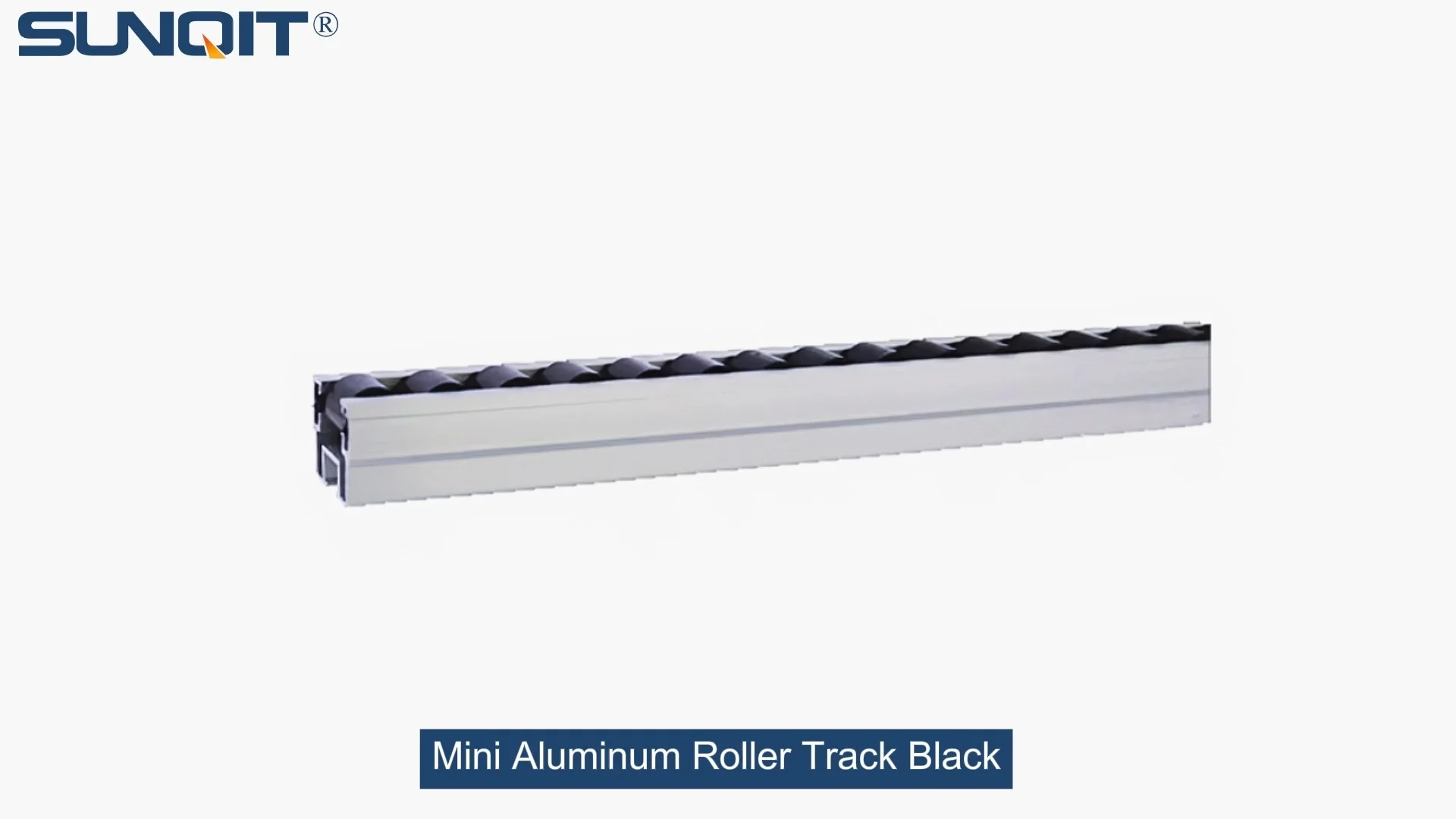
Mini Aluminum Roller Track Black
Mini aluminum roller track black for modular system, lean solution.Durable and smooth-running modular roller rails. The system is fully assembled. The roller rail profile contains plastic rollers mounted on steel axles.
How Mini Aluminum Roller Track Black Supports Sustainable Manufacturing (Reusability)
In today's fast-paced manufacturing landscape, sustainability isn't just a buzzword—it's a business imperative. Manufacturers are under increasing pressure to reduce their environmental footprint, cut waste, and build systems that stand the test of time. But how do you balance flexibility (a must for changing production lines) with sustainability? The answer lies in modular, reusable components like mini aluminum roller track black. This small but powerful tool is transforming how factories handle materials, aligning with lean principles and driving real change in waste reduction.
Mini aluminum roller track black isn't just another piece of hardware. It's a core component of modern lean systems, designed to be disassembled, reassembled, and repurposed across different production lines and even industries. Let's dive into how this component supports sustainable manufacturing and why it's becoming a staple in factories worldwide.
What Is Mini Aluminum Roller Track Black?
At its core, mini aluminum roller track black is a modular, lightweight component made from high-grade aluminum profile. The black finish isn't just for aesthetics—it often includes an electrostatic discharge (ESD) coating, making it ideal for industries like 3C assembly where static can damage sensitive components. Each track features smooth-rolling rollers that minimize friction, allowing materials to glide easily from one station to the next.
What sets it apart from traditional fixed systems? Its modular design. You don't need specialized tools or custom cuts to build a layout. Instead, you can mix and match standard lengths of roller tracks, connect them with simple accessories, and adjust the configuration as your needs change. This flexibility is key to its sustainability: unlike welded steel tracks, which are permanent and often discarded when lines change, mini aluminum roller track black can be reused again and again.
Reusability: The Foundation of Sustainability
The biggest contribution of mini aluminum roller track black to sustainability is its reusability. Let's take an example: a consumer electronics factory that produces smartphones. When the factory switches from manufacturing Model X to Model Y, it needs to reconfigure its assembly line. With fixed steel tracks, this would mean cutting new pieces, welding them into place, and discarding the old tracks—resulting in tons of waste each year. But with mini aluminum roller track black, the process is entirely different.
The factory can simply disassemble the existing tracks, sort the components, and reassemble them into the new line layout. No cutting, no welding, no waste. This isn't just a theoretical benefit—many factories report reusing up to 80% of their roller track components across line changes. Over time, this adds up to significant cost savings and a drastically reduced environmental footprint.
Another aspect of reusability is its compatibility with other modular components. Mini aluminum roller track black works seamlessly with lean pipe workbenches, flow racks, and conveyor systems. For instance, if a factory decides to expand its warehouse, it can take roller tracks from an old assembly line and use them to build new flow racks for inventory management. This cross-functional reusability means the component never becomes obsolete—even as the factory's needs evolve.
Reducing Waste Beyond Reusability
Reusability is just the start. Mini aluminum roller track black also reduces waste in other ways:
1. Minimal Scrap Material:
Traditional fixed systems require custom-cut pieces, which often result in scrap. With mini aluminum roller track black, you use standard lengths and connect them with accessories—no scrap, no waste. For example, a factory building a 10-meter line can use ten 1-meter tracks instead of cutting a 10-meter piece from a larger roll, which would leave leftover material.
2. Long Lifespan:
Aluminum is corrosion-resistant and durable, so mini roller tracks last for decades. Unlike plastic alternatives, which can crack or degrade over time, aluminum tracks withstand heavy use and harsh factory environments. This means fewer replacements and less material ending up in landfills.
3. Energy Efficiency:
The smooth rollers of mini aluminum roller track black reduce friction, which translates to energy savings. When used in conveyor systems or flow racks, materials move more easily, so less energy is needed to power the system. Over time, this reduces the factory's carbon footprint and lowers utility costs.
Integration with Lean Systems: A Perfect Match
Mini aluminum roller track black isn't just a sustainable component—it's a key part of lean manufacturing. Lean principles focus on eliminating waste (muda) and continuous improvement, and this component aligns perfectly with those goals.
For example, when paired with lean pipe workbenches, mini roller tracks create flexible workstations where parts roll smoothly from one station to the next. This reduces the time workers spend moving materials, which not only boosts efficiency but also reduces the risk of injury. Additionally, using these tracks in flow racks allows for first-in-first-out (FIFO) inventory management, which minimizes waste from expired or obsolete parts.
Lean systems also emphasize adaptability, and mini aluminum roller track black delivers on that front. If a factory wants to test a new production process, it can quickly rearrange the roller tracks to create a prototype line. If the process works, the line can be scaled up using the same components. If not, the tracks can be reused elsewhere—no wasted time or money.
Real-World Impact: A Case Study
To understand the true impact of mini aluminum roller track black, let's look at a hypothetical but realistic case study of a 3C assembly factory (producing tablets and smartphones):
Before Implementation:
The factory used fixed steel tracks for its assembly lines. Every time it launched a new product model, it had to replace 25% of its track system, resulting in 15 tons of steel waste per year. Reconfiguring a line took 3 days, and the factory spent $50,000 annually on new track materials.
After Implementation:
The factory switched to mini aluminum roller track black. For each line change, it reused 80% of its existing tracks, cutting waste to just 3 tons per year. Reconfiguring lines now takes 1.5 days, and the factory's annual material cost dropped to $10,000. Additionally, the smooth rollers reduced energy use in conveyor systems by 18%.
| Metric | Before (Fixed Steel Tracks) | After (Mini Aluminum Roller Track Black) |
|---|---|---|
| Annual Waste | 15 tons | 3 tons |
| Line Reconfiguration Time | 3 days | 1.5 days |
| Annual Material Cost | $50,000 | $10,000 |
| Energy Savings (Conveyors) | N/A | 18% |
This case study shows that mini aluminum roller track black isn't just a sustainable choice—it's a smart business choice. The factory reduced its environmental impact while saving money and improving efficiency.
Why Choose Mini Aluminum Roller Track Black Over Alternatives?
You might be wondering: why not use plastic or steel tracks instead? Let's compare:
Plastic Tracks:
Plastic is cheap, but it's not durable. It can crack under heavy loads or degrade in harsh factory environments. Plastic tracks are also not reusable—once you cut them, you can't reassemble them elsewhere. This leads to more waste over time.
Fixed Steel Tracks:
Steel is durable, but it's heavy and permanent. You can't disassemble steel tracks without cutting them, which means they're not reusable. Additionally, steel is prone to corrosion if not properly maintained, which shortens its lifespan.
Mini Aluminum Roller Track Black:
It's lightweight, durable, and reusable. Aluminum is corrosion-resistant, so it lasts for decades. The modular design means you can adapt it to any layout without cutting or welding. It's the perfect balance of sustainability and flexibility.
Conclusion: A Small Component, A Big Impact
Mini aluminum roller track black is more than just a piece of hardware—it's a symbol of the future of manufacturing. It shows that sustainability and flexibility don't have to be mutually exclusive. By choosing reusable, modular components, factories can reduce their environmental footprint, save money, and build systems that adapt to changing needs.
Whether you're in 3C assembly, medical device production, or warehouse logistics, mini aluminum roller track black can help you achieve your sustainability goals. It's a small change that makes a big difference—one track at a time.