- Company Articles
- Company Articles
- How to Train Frontline Workers to Strengthen Lean Management Practices

How to Train Frontline Workers to Strengthen Lean Management Practices
Related Product
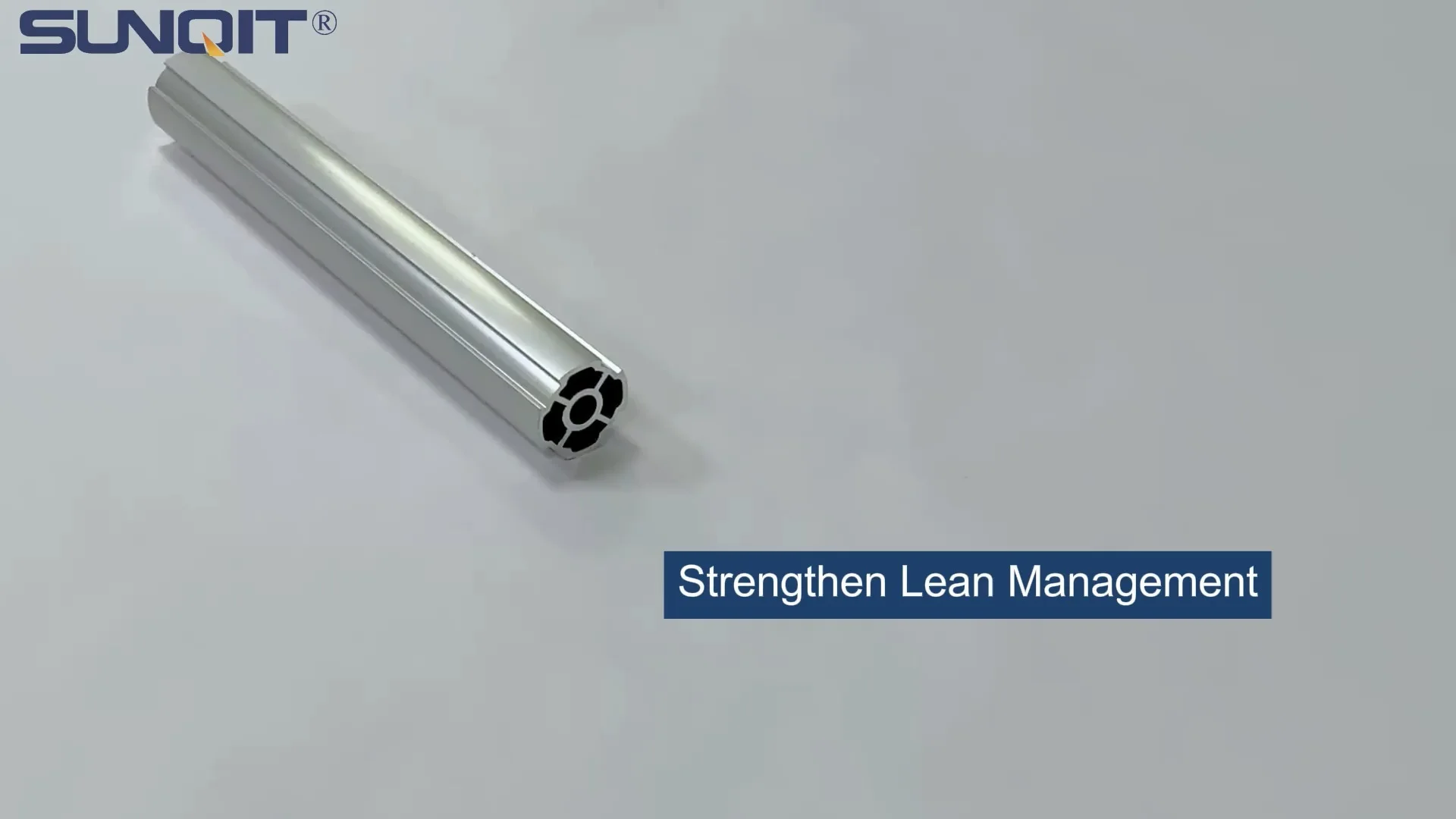
Strengthen Lean Management
This product is called reinforced aluminum tube, and its bending strength is about twice that of the basic aluminum tube. The end face can process m1o threaded holes, install foot cups and other accessories, or convert internal and external screws in
In the world of manufacturing and production, lean management isn't just a buzzword—it's the backbone of efficient, waste-free operations. Yet, even the most well-designed lean system can falter if the people executing it—your frontline workers—aren't equipped with the right skills, mindset, and tools. These are the individuals who interact with materials, machines, and processes daily; they're the eyes and hands that can either breathe life into lean principles or let them wither on the vine. Training frontline workers to embrace lean isn't just about teaching them new tasks—it's about empowering them to own the process, spot inefficiencies, and drive continuous improvement. Let's dive into how to build that foundation, step by step.
Step 1: Start with "Why"—Connecting Lean to Their Daily Work
Before diving into tools or techniques, frontline workers need to understand why lean matters— to them . Too often, training starts with abstract concepts like "value streams" or "kaizen," which can feel disconnected from the reality of their workday. Instead, frame lean as a solution to the frustrations they already face.
For example, ask: "How many times a day do you walk across the shop floor to grab parts?" "Ever had to search through a messy workbench to find a tool?" "Felt like you're waiting around while materials sit idle on a conveyor?" These are all forms of waste— muda in lean terms—and lean management exists to eliminate them. When workers see lean as a way to make their jobs easier, safer, and more satisfying, they'll engage more deeply.
Begin training sessions with a conversation: Invite workers to share their biggest daily headaches. Jot them down on a whiteboard, then map each pain point to a lean principle. That "messy workbench"? It's defects (lost tools) and motion waste (searching). Those idle materials on the conveyor? That's waiting —one of the seven wastes lean targets. Suddenly, lean isn't just for the company's bottom line; it's for their quality of life.
Step 2: Teach Lean Principles Through Their Tools—Not Textbooks
Frontline workers learn best by doing, not by listening to lectures. Instead of handing out manuals about "standard work" or "continuous flow," use the tools they interact with daily as teaching aids. Chances are, your facility already uses lean tools like workbenches, flow racks, or conveyors—these are your most powerful training props.
The Workbench: Your First Lean Classroom
A workbench isn't just a table—it's a microcosm of lean principles. Walk workers through their current workbench setup and ask: "Where do you keep the tools you use most often?" If the answer is "on the bottom shelf" or "across the room," that's motion waste . Use a lean pipe workbench as a example of how design impacts efficiency: Its modular, customizable structure lets workers arrange tools at eye level, within arm's reach, reducing unnecessary movement.
Hands-on activity: Split workers into teams and challenge them to redesign their workbench using lean pipe workbench accessories—like tool holders, shelf dividers, or adjustable height settings. Afterward, have them test the new setup: Time how long it takes to complete a task (e.g., assembling a small part) before and after. The difference in speed and reduced frustration will make "5S" (sort, set in order, shine, standardize, sustain) tangible.
Flow Racks and Conveyors: Visualizing "Flow" in Action
"Flow" is a core lean principle—ensuring materials and work-in-progress move smoothly from one step to the next, with minimal stops. For frontline workers, nothing illustrates flow better than a well-designed flow rack or conveyor system. Walk them through a current production line and point out bottlenecks: a conveyor that stops frequently, a flow rack where parts get stuck, or shelves that require bending and reaching.
Explain how flow racks are engineered to present materials at the "golden zone" (waist height, no bending), and how conveyors with consistent speed prevent backups. Then, let them experiment: Adjust the angle of a flow rack's rollers to see how it affects part movement, or observe how a conveyor's speed impacts downstream workstations. When workers see how small tweaks to these tools eliminate waiting and motion waste, "flow" stops being a buzzword and becomes a practical goal.
| Lean Tool | What It Teaches | Worker Benefit |
|---|---|---|
| Lean Pipe Workbench | 5S (organization, standardization) | Less time searching for tools; reduced physical strain |
| Flow Rack | Flow (smooth material movement) | Easier access to parts; fewer dropped or damaged items |
| Conveyor | Pull system (producing only what's needed) | No more overproduction; balanced workload |

Step 3: Train Problem-Solving, Not Just Procedures
A lean system isn't static—it needs constant tweaking, and frontline workers are the best people to do it. But to empower them, you need to train them to solve problems, not just follow rules. The key? Teaching simple, repeatable frameworks they can use when they spot waste.
The "5 Whys" for Everyday Issues
The 5 Whys technique is deceptively simple: When a problem occurs, ask "Why?" five times to get to the root cause. It's perfect for frontline workers because it doesn't require special training—just curiosity. Practice with real scenarios they've encountered.
Example: Solving a Flow Rack Jam
Problem: Parts keep jamming on the flow rack.
Why 1: The parts are getting stuck between rollers.
Why 2: The rollers are misaligned.
Why 3: The roller brackets are loose.
Why 4: The brackets weren't tightened properly during setup.
Why 5: There's no standard checklist for flow rack assembly.
Solution: Create a step-by-step setup checklist for flow racks, including tightening brackets. Train the team to use it.
After practicing, encourage workers to apply the 5 Whys to their own problems. Provide small notebooks or a digital tool where they can jot down issues and their "why" chains. Celebrate solutions they propose—even small ones. When a worker realizes they can fix a daily frustration by adjusting a conveyor's speed or repositioning a flow rack, they'll start seeing themselves as problem-solvers, not just doers.

Step 4: Turn Training into Habit—The Power of Daily Huddles and Kaizen Events
Lean training isn't a one-time workshop—it's a daily practice. To embed lean habits, implement two rituals: daily huddles and kaizen events .
Daily Huddles: 15 Minutes to Keep Lean Alive
Start each shift with a 15-minute huddle at the workbench or near the conveyor line. Keep it informal: Stand in a circle, no chairs. Ask three questions:
- What worked well yesterday (lean wins)?
- What was frustrating (waste spotted)?
- What small change can we try today?
For example, a worker might mention: "The new tool layout on my lean pipe workbench cut setup time by 10 minutes!" Another might say: "The flow rack in zone C kept jamming—let's check the roller alignment today." Assign one person to lead the huddle, rotating weekly so everyone gets a chance to facilitate. Over time, these huddles create a culture where lean is part of the daily conversation, not an afterthought.
Kaizen Events: Hands-On Improvement Projects
Every month, dedicate a half-day to a kaizen event —a focused project to improve a specific process. Let workers choose the target: Maybe the conveyor line that's always backed up, or the workbench area that feels chaotic. Split into small teams, provide tools (tape measures, lean pipe workbench parts, flow rack accessories), and let them redesign the space.
After the event, test the new setup and gather feedback. Did rearranging the workbench reduce errors? Did adjusting the flow rack cut retrieval time? Celebrate wins with a team lunch or recognition. When workers see their ideas turn into tangible improvements—faster workflows, less stress—they'll take ownership of lean for the long haul.

Step 5: Measure Success—But Not Just with Numbers
To keep lean training on track, you need to measure progress—but don't rely solely on metrics like "productivity" or "waste reduction." Frontline engagement is just as critical. Use a mix of quantitative and qualitative indicators:
- Quantitative: Time spent searching for tools (down 30% after workbench redesign), conveyor downtime (reduced by 15%), parts per hour (up 10%).
- Qualitative: Number of worker suggestions (are they increasing?), participation in huddles, comments like "This new flow rack makes my job easier."
Share these results openly in huddles. When workers see that their training is making a difference—both in numbers and in their daily lives—they'll stay motivated. And don't forget to ask for feedback on the training itself: "What parts of the workbench redesign session were most helpful?" "Would you like more practice with the 5 Whys?" Adjust based on their input; after all, lean is about continuous improvement—including training.
Conclusion: Frontline Workers Are Your Lean Champions
At the end of the day, a lean system is only as strong as the people who live it. Frontline workers aren't just cogs in the machine—they're the ones who can make or break lean success. By connecting lean to their daily frustrations, training them through hands-on tools like the lean pipe workbench, flow rack, and conveyor, and empowering them to solve problems, you'll build a team that doesn't just follow lean—it drives it.
Remember: Lean training isn't about turning workers into experts overnight. It's about giving them the confidence to say, "I can make this better." And when that happens, your lean system won't just be a process—it will be a culture.