- Company Articles
- Company Articles
- Lean Management: Duplex Aluminum Pipe Joint for Continuous Improvement

Lean Management: Duplex Aluminum Pipe Joint for Continuous Improvement
Related Product
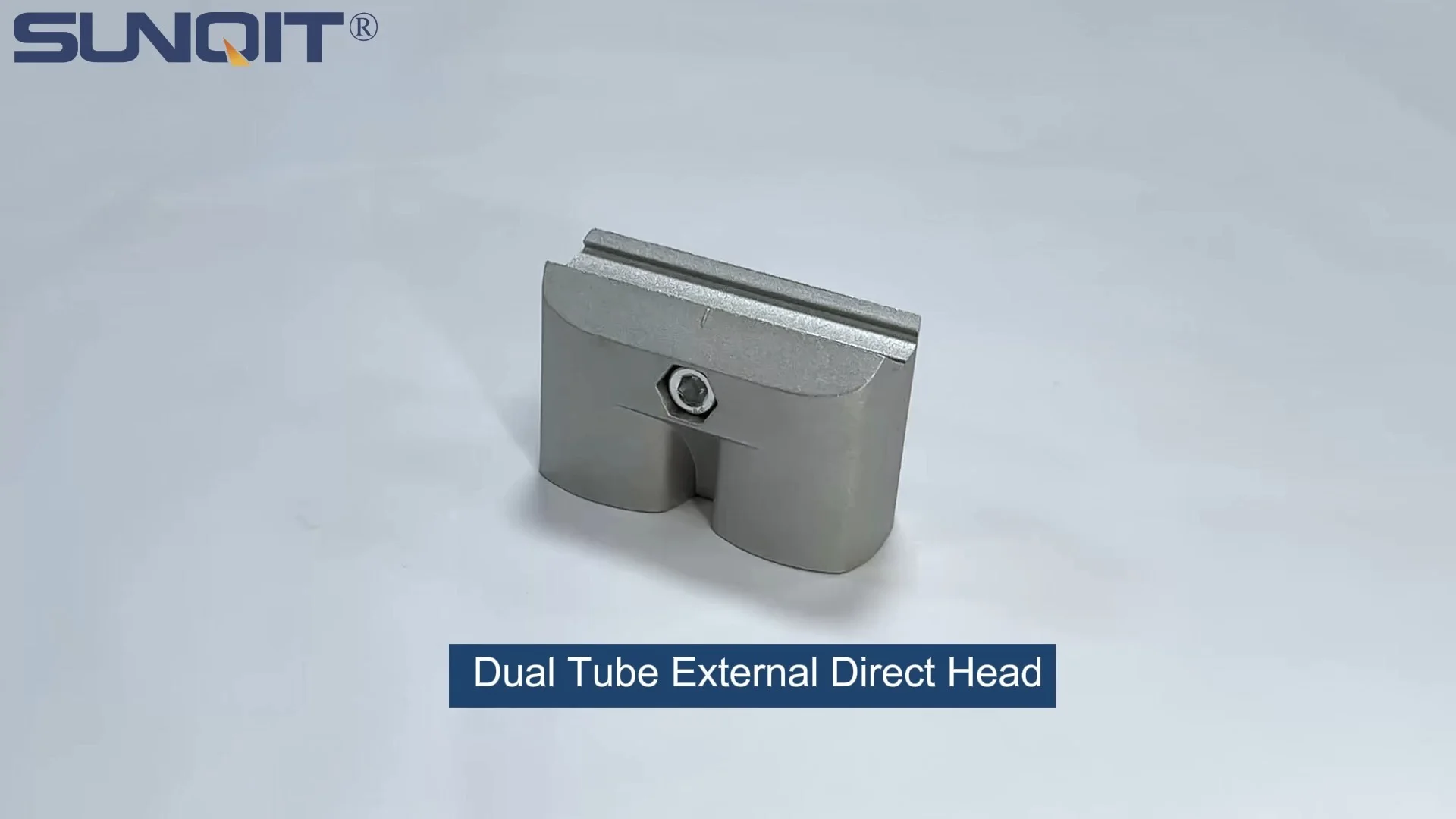
Duplex Aluminum Pipe Joint
Duplex Aluminum pipe joint used for one pcs 28pcs aluminum pipe and one pcs of 28mm duplex pipe connection in straight angle.
The Heartbeat of Lean: Why Continuous Improvement Matters
Walk into any thriving manufacturing facility today, and you'll likely feel it—the quiet hum of efficiency, the seamless movement of materials, the sense that every process has a purpose. That's the mark of lean management in action. At its core, lean isn't just a set of tools or buzzwords; it's a mindset—a commitment to asking, "How can we do this better, tomorrow than we did today?" It's about stripping away waste, streamlining flow, and empowering teams to own their work. But here's the thing: even the best minds and most dedicated teams can't drive continuous improvement if they're stuck with rigid, outdated tools. That's where the unsung heroes of lean systems come in—modular, adaptable components that grow and evolve with your processes. And among these, one component stands out for its ability to turn "what if" into "let's do it": the duplex aluminum pipe joint.
Think about the last time your team needed to adjust a workflow. Maybe a new product line required a taller workbench, or a change in demand meant reconfiguring a flow rack to handle more inventory. If you're still relying on traditional steel structures or welded frames, that adjustment probably meant days of downtime, costly custom fabrication, and a team left waiting for the tools they need to do their jobs. That's not lean—that's waste. Lean management demands flexibility, and flexibility demands tools that can keep up. Enter the duplex aluminum pipe joint: a small but mighty connector that's redefining how manufacturers build, adapt, and improve their workspaces.
The Old Way: Pain Points of Rigid Manufacturing Setups
To appreciate the impact of the duplex aluminum pipe joint, let's first revisit the challenges of traditional manufacturing setups. For decades, factories relied on fixed structures: steel workbenches bolted to the floor, flow racks welded into place, and material handling systems designed for a single, unchanging process. These setups were built to last—but "last" often meant "stay the same," even when the world around them didn't. Let's break down the pain points:
1. Waste of Time: The Hidden Cost of "Fixed"
Imagine a electronics assembly line where a new component requires the workbench height to increase by 6 inches. With a traditional steel workbench, that's not a quick fix. You'd need to order custom legs, hire a welder, or even replace the entire bench—all of which could take weeks. In the meantime, operators might be hunched over, increasing the risk of ergonomic injuries, or production slows as teams adapt to a suboptimal setup. Time lost here isn't just minutes; it's opportunities to innovate, meet deadlines, or respond to customer needs.
2. Waste of Resources: "One and Done" vs. "Build to Reuse"
Traditional steel structures are built to be permanent, which sounds like a strength—until you no longer need them. A flow rack designed for a specific product size becomes obsolete when that product is phased out. What do you do with it? Scrap it, likely. That's material waste, and in today's sustainability-focused world, it's also a missed chance to reduce your carbon footprint. Lean management teaches us to value resources, but rigid setups make reuse nearly impossible. Every new project becomes a fresh expense, rather than a chance to repurpose what you already have.
3. Stifled Creativity: When Teams Can't Experiment
Continuous improvement thrives on experimentation. A line worker might notice that angling a roller track slightly could reduce picking errors, or a supervisor might want to test a U-shaped workbench layout to improve team collaboration. But with fixed structures, these ideas often die in the brainstorming phase. "We can't change that—it's welded in," becomes a common refrain. Over time, that stifles the very culture of innovation lean aims to foster. Teams stop suggesting improvements because they believe the tools won't let them act on them.

Meet the Game-Changer: The Duplex Aluminum Pipe Joint
So, what makes the duplex aluminum pipe joint different? Let's start with the basics. This isn't just any connector. It's a precision-engineered component designed to work seamlessly with aluminum profiles—lightweight, strong, and infinitely adaptable. The "duplex" in its name hints at its superpower: it connects two aluminum pipes at various angles (90°, 45°, 135°—you name it) with minimal effort, no welding, and no specialized tools. Think of it as the Lego brick of manufacturing: snap it together, take it apart, and rebuild it however you need, whenever you need.
Let's get technical for a moment, but don't worry—we'll keep it practical. The duplex aluminum pipe joint features an internal rotary mechanism that allows for smooth adjustment. Want to angle a workbench shelf to reduce strain on operators? Loosen a few screws, rotate the joint, and tighten it back up. Need to extend a flow rack by adding another section? Slide the joint onto the end of an aluminum profile, lock it in place, and you're done. It's that simple. And because it's made from high-grade aluminum, it's strong enough to support heavy loads (think toolboxes, inventory bins, even small machinery) but light enough that a single person can reconfigure a workbench or trolley without calling in the maintenance crew.
But the real magic isn't just in the joint itself—it's in how it transforms the entire lean system. When you pair duplex aluminum pipe joints with aluminum profiles (like the 2020 or 3030 standard profiles common in lean setups), you're not just building a workbench or a rack—you're building a ecosystem of adaptability. Every component works together, from the pipes and joints to the accessories: casters that lock into place with a click, roller tracks that snap onto profiles to create gravity-fed flow, and workbench surfaces that can be swapped out for ESD-safe materials when needed. It's a system designed to grow with your needs, not hold you back.

How Duplex Aluminum Pipe Joints Fuel Lean Principles
Lean management is built on five core principles: value, value stream, flow, pull, and perfection. Let's break down how the duplex aluminum pipe joint supports each, turning abstract ideas into tangible results.
Eliminating Waste: From "Downtime" to "Uptime"
Waste (or "muda," as it's known in lean circles) comes in many forms: overproduction, waiting, defects, and yes, unnecessary motion. The duplex aluminum pipe joint attacks waste at its source by slashing the time and effort needed to adjust workspaces. For example, reconfiguring a traditional steel workbench might take 8 hours and require a welder. With a duplex joint setup? A single operator can do it in 30 minutes with a hex key. That's 7.5 hours of saved time—time the team can spend on value-added tasks, like improving quality or training new members. And because aluminum profiles are lightweight, moving components around the facility uses less energy, cutting down on motion waste too.
Improving Flow: Making Materials Move Like They Should
In lean, "flow" means ensuring materials and information move smoothly from one process to the next, without bottlenecks. A clunky, fixed flow rack that forces workers to reach awkwardly or walk extra steps disrupts that flow. The duplex joint changes the game by letting you design flow racks that follow the natural rhythm of your workflow. Need to angle a section of roller track to speed up material movement? The joint lets you adjust the angle in seconds. Want to add a third level to a material rack to separate incoming and outgoing inventory? Snap on a few more profiles and joints, and you're set. Suddenly, flow isn't just a goal—it's something your team can see, feel, and improve on daily.
Driving Continuous Improvement: Empowering Teams to Act
Perfection—the fifth lean principle—isn't about being flawless; it's about getting better, incrementally, every day. But incremental improvement requires the ability to test small changes quickly. Let's say a team notices that a workbench is too low for taller operators, leading to slower assembly times. With a duplex joint setup, they don't need to wait for approval or a maintenance request. They can adjust the legs themselves, test the new height for a shift, and tweak it again if needed. That's empowerment. When teams see that their ideas can be implemented in hours, not weeks, they're more likely to speak up, experiment, and own the improvement process. Over time, those small, daily adjustments add up to big gains in efficiency and morale.

Real-World Impact: From the Factory Floor to the Bottom Line
Talk is cheap, so let's ground this in reality. Consider a mid-sized electronics manufacturer we worked with last year. They produced circuit boards for medical devices, a field where precision and compliance are non-negotiable. Their challenge? They were launching three new product lines in six months, each with different component sizes and assembly requirements. Their existing setup relied on steel workbenches and fixed flow racks, and reconfiguring for each new product took 2-3 days of downtime—time they couldn't afford to lose.
We recommended a lean system built around duplex aluminum pipe joints, paired with aluminum profiles and roller tracks. Here's what happened: For the first new product, they assembled a custom workbench (using Workbench E, a single-deck model without casters) in under 2 hours. When the second product required a deeper surface, they added an extension using parallel aluminum joints and a new aluminum honeycomb panel—no tools beyond a hex key. For the third product, they reconfigured a flow rack (Material Rack B, originally 3 rows and 3 floors) to 4 rows by adding extra aluminum guide rails and swivel roller balls, allowing for smaller component bins. Total downtime across all three launches? Less than 8 hours. And because the aluminum components were reusable, they saved over $15,000 in custom fabrication costs compared to their old steel setups.
But the biggest win wasn't financial—it was cultural. "Our operators used to come to us with ideas, but we'd have to say, 'Maybe next quarter when we can afford the downtime,'" their production manager told us. "Now, they see a problem, grab a few joints and profiles, and fix it themselves. Last month, one team rearranged their workbench layout to reduce hand movement by 12 inches per cycle—that's 2,400 fewer inches of motion per shift, just from a 15-minute tweak. That's the power of giving people the tools to improve their own work."
Beyond the Joint: Building a Complete Lean Ecosystem
The duplex aluminum pipe joint is a star, but even stars need a supporting cast. To truly unlock continuous improvement, it needs to work with other lean system components—each designed to enhance flexibility, durability, and efficiency. Let's explore a few key players:
Aluminum Profiles: The Backbone of Modularity
Duplex joints connect aluminum profiles, so the profiles themselves matter. Look for high-quality, extruded aluminum profiles with T-slots—those grooves along the sides that let you attach accessories (like roller tracks, tool holders, or shelves) without drilling or welding. Profiles come in standard sizes (2020, 3030, 4040) to fit different load needs, and they're lightweight enough for easy handling but strong enough to support heavy tools. Pairing duplex joints with these profiles means you're not just building a structure—you're building a platform for endless customization.
Roller Tracks and Swivel Balls: Keeping Flow Smooth
Materials need to move, and roller tracks make that movement effortless. Whether you're using plastic roller track guide rails (yellow for visibility, grey for low-key setups) or aluminum roller tracks with side guides, the duplex joint lets you angle and position them for optimal flow. Add swivel roller balls (1 inch or 0.5 inch) to workbench surfaces, and suddenly, materials glide from one station to the next with a light push—reducing strain on operators and speeding up processes. It's the difference between "pushing a heavy cart" and "guiding a breeze."
Casters and Feet: Mobility When You Need It, Stability When You Don't
Sometimes, you need a workbench to stay put; other times, you need to roll it to a new line. That's where casters and adjustable feet come in. Many lean system suppliers offer casters that lock into aluminum profiles using the same duplex joints, so you can add or remove them in minutes. For stationary setups, anti-slip adjustable leveling feet keep workbenches stable on uneven floors—no more wobbling tools or spilled parts. It's adaptability at its finest: mobile when you need to rearrange, solid when you need to focus.
Traditional vs. Duplex Aluminum: The Numbers Speak for Themselves
| Feature | Traditional Steel/Welded Setups | Duplex Aluminum Pipe Joint Systems |
|---|---|---|
| Setup Time | 2-5 days (requires welding/fabrication) | 1-3 hours (no tools beyond hex key) |
| Reconfigurability | Fixed; requires cutting/welding to modify | Reconfigurable in minutes; no permanent changes |
| Cost Over Time | High (custom fabrication for each change) | Low (reusable components; no repeated fabrication costs) |
| Weight | Heavy (requires 2+ people to move) | Lightweight (1 person can handle most components) |
| Waste Reduction | High (scrapped when obsolete) | Low (reused/reconfigured for new purposes) |
| Team Empowerment | Low (changes require external contractors) | High (teams can adjust setups independently) |
Choosing Your Lean System Supplier: More Than Just a Vendor
You've decided to invest in duplex aluminum pipe joints and a lean system—great! But not all suppliers are created equal. To maximize your ROI, look for a partner who understands your industry, offers a full range of components (from joints and profiles to roller tracks and casters), and provides the support you need to get started. A good lean system supplier won't just sell you parts; they'll help you design your first setup, train your team on assembly, and even troubleshoot when you're experimenting with new configurations. After all, continuous improvement isn't just about your processes—it's about growing with a supplier who's invested in your success.
Ask questions like: Do they offer samples so you can test joints and profiles before buying in bulk? Do their components work together seamlessly (no mismatched sizes or proprietary parts that lock you in)? Can they provide case studies from manufacturers in your field? The right supplier becomes an extension of your team, helping you turn lean principles into tangible results.
The Road Ahead: Lean Management in a World of Constant Change
Manufacturing today isn't static. Customer demands shift, technologies evolve, and global markets fluctuate. To thrive, you need more than a "set it and forget it" approach—you need a lean system that can pivot, adapt, and improve with every challenge. The duplex aluminum pipe joint isn't just a tool for today's workflows; it's a tool for tomorrow's innovations. It's the difference between being stuck in "how we've always done it" and leading with "how can we do it better?"
So, as you think about your lean journey, remember this: Continuous improvement isn't about grand gestures. It's about the small, daily wins—the workbench adjusted by an inch, the flow rack reconfigured in an hour, the team that feels empowered to own their space. And behind each of those wins? Often, a simple, smart component like the duplex aluminum pipe joint. It's not flashy, but it's foundational. It's the quiet enabler of the lean mindset, turning "we can't" into "we can—and we will, better than yesterday."
In the end, lean management is about people—their ideas, their effort, their drive to improve. Give them the tools to act, and there's no limit to what they can achieve. The duplex aluminum pipe joint isn't just a connector of pipes; it's a connector of people to their potential. And that's where true continuous improvement begins.