- Company Articles
- Company Articles
- 5S Methodology & Lean Pipe Clamp B Chrome: Organizing Efficient Workspaces

5S Methodology & Lean Pipe Clamp B Chrome: Organizing Efficient Workspaces
Related Product
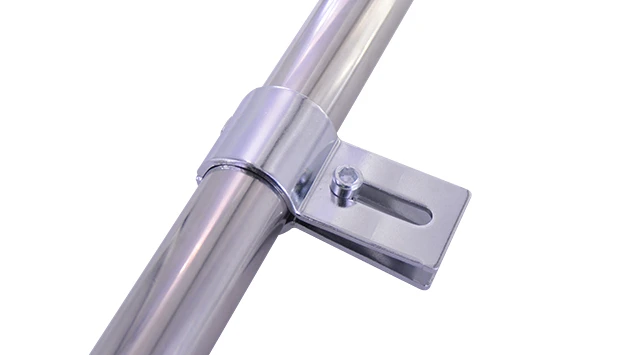
Lean Pipe Clamp B Chrome
Lean pipe clamp is used for turnover trolley, workbench, flowrack adjust the frame or fix some accessory.
Walk into any well-run manufacturing facility, and you'll notice something immediately: order. Tools have designated spots, materials flow smoothly from one station to the next, and workers move with purpose. Now contrast that with a workspace where tools lie scattered across benches, boxes of parts block walkways, and every task starts with a 10-minute hunt for the right screwdriver. The difference? Often, it comes down to two powerful concepts: the 5S methodology and the right lean tools—like the Lean Pipe Clamp B Chrome. In this article, we'll explore how 5S transforms chaotic workspaces into hubs of productivity, and how this unassuming clamp plays a starring role in making that transformation stick. Whether you're managing a factory floor, a workshop, or even a home garage, the lessons here will help you build a space that works
with
your team, not against them.
Understanding 5S: The Foundation of Workplace Efficiency
Originating in post-WWII Japan, the 5S methodology (Seiri, Seiton, Seiso, Seiketsu, Shitsuke—translated to Sort, Set in Order, Shine, Standardize, Sustain) is more than just a cleaning checklist. It's a philosophy that creates a culture of organization, accountability, and continuous improvement. Let's break down each step and see why they matter:
Sort (Seiri): Separate the Necessary from the Unnecessary
The first step in 5S is ruthless but liberating: clear out everything that doesn't add value. That might mean old tools that haven't been used in six months, broken parts, or even redundant paperwork cluttering desks. Without Sort, workspaces become storage units for "just in case" items, and valuable time is wasted navigating the chaos. A study by the Lean Enterprise Institute found that workers in unorganized environments spend up to 25% of their day searching for tools or materials—time that could be spent building products or serving customers.
Set in Order (Seiton): Arrange What's Left for Easy Access
Once you've sorted, it's time to arrange the remaining items so that anyone can find them in seconds. Think "a place for everything, and everything in its place." This isn't just about tidiness; it's about workflow. A wrench used 50 times a day should be within arm's reach of the workbench, not tucked away in a cabinet. Here's where lean tools start to shine—they turn abstract "arrangement" into tangible, functional structures.
Shine (Seiso): Clean and Inspect Regularly
Shine isn't about deep cleaning once a week; it's about daily maintenance. Wiping down workbenches, sweeping floors, and checking equipment for dust or damage prevents small issues from becoming big problems. A clean workspace also boosts morale—no one feels proud working in a dirty environment. Plus, regular cleaning makes it obvious when something is missing or out of place (ever noticed how a smudge on a shelf immediately draws your eye to where a tool should be?).
Standardize (Seiketsu): Create Consistent Processes
Without standards, 5S becomes a one-time project, not a habit. Standardize means documenting how things should be organized, cleaned, and maintained. Maybe it's a checklist for closing the shop at the end of the day, or a diagram showing exactly where each tool hangs on the wall. The goal? Ensure that no matter who's working—new hire or veteran—they can maintain the workspace the same way.
Sustain (Shitsuke): Make It a Way of Life
Sustain is the hardest step. It's about embedding 5S into your team's daily routine so it doesn't fade away after the initial push. This requires training, regular audits, and—importantly—tools that are durable and easy to maintain. If the structures you build to organize your workspace fall apart after a month, even the most motivated team will revert to old habits.
Sort (Seiri): Separate the Necessary from the Unnecessary
The first step in 5S is ruthless but liberating: clear out everything that doesn't add value. That might mean old tools that haven't been used in six months, broken parts, or even redundant paperwork cluttering desks. Without Sort, workspaces become storage units for "just in case" items, and valuable time is wasted navigating the chaos. A study by the Lean Enterprise Institute found that workers in unorganized environments spend up to 25% of their day searching for tools or materials—time that could be spent building products or serving customers.
Set in Order (Seiton): Arrange What's Left for Easy Access
Once you've sorted, it's time to arrange the remaining items so that anyone can find them in seconds. Think "a place for everything, and everything in its place." This isn't just about tidiness; it's about workflow. A wrench used 50 times a day should be within arm's reach of the workbench, not tucked away in a cabinet. Here's where lean tools start to shine—they turn abstract "arrangement" into tangible, functional structures.
Shine (Seiso): Clean and Inspect Regularly
Shine isn't about deep cleaning once a week; it's about daily maintenance. Wiping down workbenches, sweeping floors, and checking equipment for dust or damage prevents small issues from becoming big problems. A clean workspace also boosts morale—no one feels proud working in a dirty environment. Plus, regular cleaning makes it obvious when something is missing or out of place (ever noticed how a smudge on a shelf immediately draws your eye to where a tool should be?).
Standardize (Seiketsu): Create Consistent Processes
Without standards, 5S becomes a one-time project, not a habit. Standardize means documenting how things should be organized, cleaned, and maintained. Maybe it's a checklist for closing the shop at the end of the day, or a diagram showing exactly where each tool hangs on the wall. The goal? Ensure that no matter who's working—new hire or veteran—they can maintain the workspace the same way.
Sustain (Shitsuke): Make It a Way of Life
Sustain is the hardest step. It's about embedding 5S into your team's daily routine so it doesn't fade away after the initial push. This requires training, regular audits, and—importantly—tools that are durable and easy to maintain. If the structures you build to organize your workspace fall apart after a month, even the most motivated team will revert to old habits.
Lean Systems: The Bridge Between 5S and Action
5S provides the "why" and the "what," but lean systems provide the "how." A lean system is a set of tools and practices designed to eliminate waste—whether that's wasted time, wasted space, or wasted effort. At its core, lean is about making work
flow
: materials flow to workers, tools flow to tasks, and information flows to decision-makers. And at the heart of many lean systems are modular, flexible structures built from components like lean pipes, joints, and clamps.
Unlike fixed, one-size-fits-all furniture, lean systems are adaptable. A workbench that assembles smartphones today can be reconfigured next month to test circuit boards. A flow rack holding small parts can be extended as production scales up. This flexibility is critical because workspaces are never static—customer demands change, product lines evolve, and teams grow. Rigid structures resist these changes; lean systems embrace them.
Now, let's zoom in on one component that makes this adaptability possible: the Lean Pipe Clamp B Chrome. It might look like a simple metal bracket, but this clamp is the unsung hero of modular lean systems. Let's take a closer look.
Unlike fixed, one-size-fits-all furniture, lean systems are adaptable. A workbench that assembles smartphones today can be reconfigured next month to test circuit boards. A flow rack holding small parts can be extended as production scales up. This flexibility is critical because workspaces are never static—customer demands change, product lines evolve, and teams grow. Rigid structures resist these changes; lean systems embrace them.
Now, let's zoom in on one component that makes this adaptability possible: the Lean Pipe Clamp B Chrome. It might look like a simple metal bracket, but this clamp is the unsung hero of modular lean systems. Let's take a closer look.
Lean Pipe Clamp B Chrome: The Tool That Builds Order
The Lean Pipe Clamp B Chrome is a small but mighty component in the lean toolkit. Designed to connect lean pipes (typically 28mm diameter) into sturdy, customizable structures, it's the reason lean systems are so easy to build, reconfigure, and maintain. Let's break down its key features and why they matter for 5S:
Durable Chrome Construction
First, the chrome plating isn't just for looks. It resists rust and corrosion, even in humid factory environments or areas where spills are common. That's a big deal for the Shine step of 5S—when you wipe down a workbench built with these clamps, they stay shiny and functional for years. Unlike painted or uncoated clamps, which chip or rust, chrome stands up to daily cleaning and heavy use.
Easy Assembly, No Special Tools
You don't need a welding torch or a team of engineers to use these clamps. They attach to lean pipes with a simple hex key (Allen wrench), tightening securely to create rigid joints. This means your team can build or reconfigure a workbench in hours, not days. For example, if a production line needs a new material rack to support a rush order, your team can assemble it on the spot using pipes, clamps, and a few basic tools. No waiting for external contractors—just immediate action.
Secure Grip, Flexible Design
The clamp's design ensures a tight hold on pipes, preventing wobbling or shifting even under heavy loads. But it's also adjustable: loosen the hex screw, rotate the clamp to the desired angle, and retighten. This flexibility lets you build structures at 90-degree angles (for workbench frames), 45-degree angles (for bracing), or even custom angles to fit unique workspace layouts. Whether you're building a vertical shelf, a horizontal flow rack, or a mobile trolley, the clamp adapts to your needs.
Compatibility with Other Lean Components
The Lean Pipe Clamp B Chrome isn't a one-trick pony. It works seamlessly with other lean accessories: caster wheels for mobile workstations, roller tracks for gravity-fed material flow, and tool panels for hanging equipment. This compatibility means you can build fully integrated systems. For example, a workbench might have a clamp-mounted shelf above, a roller track below for parts delivery, and caster wheels for mobility—all connected by these clamps.
Cost-Effective in the Long Run
While the upfront cost of lean components might be higher than cheap, disposable shelving, the longevity and reusability of the Lean Pipe Clamp B Chrome make it a smart investment. A single clamp can be reused dozens of times as structures are reconfigured. Compare that to particleboard shelves, which warp or break after a few months and end up in landfills. Over time, the clamp saves money by reducing replacement costs and minimizing downtime during reconfigurations.
Durable Chrome Construction
First, the chrome plating isn't just for looks. It resists rust and corrosion, even in humid factory environments or areas where spills are common. That's a big deal for the Shine step of 5S—when you wipe down a workbench built with these clamps, they stay shiny and functional for years. Unlike painted or uncoated clamps, which chip or rust, chrome stands up to daily cleaning and heavy use.
Easy Assembly, No Special Tools
You don't need a welding torch or a team of engineers to use these clamps. They attach to lean pipes with a simple hex key (Allen wrench), tightening securely to create rigid joints. This means your team can build or reconfigure a workbench in hours, not days. For example, if a production line needs a new material rack to support a rush order, your team can assemble it on the spot using pipes, clamps, and a few basic tools. No waiting for external contractors—just immediate action.
Secure Grip, Flexible Design
The clamp's design ensures a tight hold on pipes, preventing wobbling or shifting even under heavy loads. But it's also adjustable: loosen the hex screw, rotate the clamp to the desired angle, and retighten. This flexibility lets you build structures at 90-degree angles (for workbench frames), 45-degree angles (for bracing), or even custom angles to fit unique workspace layouts. Whether you're building a vertical shelf, a horizontal flow rack, or a mobile trolley, the clamp adapts to your needs.
Compatibility with Other Lean Components
The Lean Pipe Clamp B Chrome isn't a one-trick pony. It works seamlessly with other lean accessories: caster wheels for mobile workstations, roller tracks for gravity-fed material flow, and tool panels for hanging equipment. This compatibility means you can build fully integrated systems. For example, a workbench might have a clamp-mounted shelf above, a roller track below for parts delivery, and caster wheels for mobility—all connected by these clamps.
Cost-Effective in the Long Run
While the upfront cost of lean components might be higher than cheap, disposable shelving, the longevity and reusability of the Lean Pipe Clamp B Chrome make it a smart investment. A single clamp can be reused dozens of times as structures are reconfigured. Compare that to particleboard shelves, which warp or break after a few months and end up in landfills. Over time, the clamp saves money by reducing replacement costs and minimizing downtime during reconfigurations.
| Aspect | Traditional Workspace Tools | 5S with Lean Pipe Clamp B Chrome | Key Benefit |
|---|---|---|---|
| Tool Storage | Jumbled in drawers or on open shelves; hard to find specific tools. | Clamp-built tool panels with labeled hooks; each tool has a visible, fixed spot. | Reduces search time by up to 70% (per industry studies). |
| Material Flow | Workers carry heavy bins across the floor; risk of spills or strain. | Clamp-assembled roller tracks; materials glide to workstations via gravity. | Reduces manual handling, cutting down on fatigue and injuries. |
| Workbench Design | Fixed-height, one-size-fits-all benches; no customization. | Adjustable-height benches with clamp-on shelves, lighting, or bins. | Adapts to different tasks (e.g., assembly vs. inspection) and worker heights. |
| Durability | Particleboard or plastic shelves; warp, crack, or break within 6–12 months. | Chrome clamps and steel pipes; withstands heavy loads and daily cleaning for 5+ years. | Lower long-term costs; no frequent replacements. |
| Adaptability | Must be replaced entirely if needs change (e.g., new product line). | Clamps are loosened, pipes rearranged, and system is reconfigured in hours. | Responds quickly to changing production needs without major overhauls. |
Case Study: How a Small Electronics Manufacturer Used Clamps to Transform 5S
Let's put this into context with a real-world example. Take "TechFlow," a small electronics manufacturer with 20 employees, struggling with disorganization. Their assembly line workbenches were cluttered with tools, materials were stored in random bins, and workers often duplicated efforts because they couldn't find parts. Product defects were rising, and employee morale was low.
TechFlow's operations manager decided to implement 5S, starting with the assembly area. The team began with Sort: they removed broken tools, obsolete parts, and unused equipment, freeing up 30% of floor space. Next, Set in Order: they needed a way to organize the remaining tools and materials. After researching lean systems, they chose to build custom workbenches and flow racks using lean pipes and Lean Pipe Clamp B Chrome.
Here's what happened next: Each workbench was fitted with a clamp-mounted tool panel, where every screwdriver, plier, and tester had a labeled hook. A roller track (built with clamps and aluminum guide rails) was installed above the benches, delivering circuit boards and components directly to workers. Bins for finished products were mounted under the benches using—you guessed it—more clamps.
The results were striking. Within three months:
TechFlow's operations manager decided to implement 5S, starting with the assembly area. The team began with Sort: they removed broken tools, obsolete parts, and unused equipment, freeing up 30% of floor space. Next, Set in Order: they needed a way to organize the remaining tools and materials. After researching lean systems, they chose to build custom workbenches and flow racks using lean pipes and Lean Pipe Clamp B Chrome.
Here's what happened next: Each workbench was fitted with a clamp-mounted tool panel, where every screwdriver, plier, and tester had a labeled hook. A roller track (built with clamps and aluminum guide rails) was installed above the benches, delivering circuit boards and components directly to workers. Bins for finished products were mounted under the benches using—you guessed it—more clamps.
The results were striking. Within three months:
- Search time for tools dropped from 15 minutes per day per worker to less than 2 minutes.
- Defect rates fell by 22%, as workers could focus on assembly instead of hunting for parts.
- Employee satisfaction scores rose by 40%—team members reported feeling "proud" of their workspace.
Integrating Lean Pipe Clamp B Chrome into Each 5S Step
Now that we've seen the clamp in action, let's map out exactly how it supports each phase of 5S. This isn't just about building structures—it's about embedding 5S into the physical design of your workspace.
Sort: Temporary Holding Racks for Unnecessary Items
During Sort, you'll need a place to temporarily store items you're unsure about (the "maybe" pile). Instead of piling them on the floor or using flimsy cardboard boxes, build a simple rack with lean pipes and clamps. Label shelves as "Discard," "Donate," or "Review Later." This keeps the Sort process organized and prevents the "maybe" items from re-cluttering the workspace.
Set in Order: Custom Storage for Every Item
This is where the clamp truly shines. Use it to build:
Shine: Easy-to-Clean Surfaces
The chrome finish of the clamps resists grime and wipes clean with a damp cloth. Unlike wooden shelves or painted metal, there are no cracks or crevices for dirt to hide. When combined with smooth aluminum or steel workbench tops (also mounted with clamps), you've got a workspace that stays clean with minimal effort. For example, a food packaging plant using these clamps reported that daily cleaning time dropped by 35%—the smooth surfaces left nowhere for crumbs or spills to linger.
Standardize: Consistent, Replicable Structures
With the Lean Pipe Clamp B Chrome, you can create standard designs for common structures. For example, your "standard workbench" might be 120cm wide, with a clamp-mounted shelf 40cm above the surface and a roller track below. Document this design with photos and measurements, and new workbenches can be built to match exactly—no guesswork. This consistency means new employees know exactly where to find tools, no matter which workbench they use.
Sustain: Building a Culture of Ownership
Sustain is all about making 5S a habit, and the clamp helps here in two key ways. First, because the structures are built by the team (not imposed by management), workers feel ownership. If a clamp loosens or a pipe bends, they'll tighten or replace it themselves—no need to wait for maintenance. Second, the system's adaptability means it grows with the team. As processes improve, the workspace can evolve too. A year after implementing 5S, TechFlow's team reconfigured their flow racks to accommodate a new product line—using the same clamps and pipes. The system didn't fight change; it enabled it.
Sort: Temporary Holding Racks for Unnecessary Items
During Sort, you'll need a place to temporarily store items you're unsure about (the "maybe" pile). Instead of piling them on the floor or using flimsy cardboard boxes, build a simple rack with lean pipes and clamps. Label shelves as "Discard," "Donate," or "Review Later." This keeps the Sort process organized and prevents the "maybe" items from re-cluttering the workspace.
Set in Order: Custom Storage for Every Item
This is where the clamp truly shines. Use it to build:
- Tool shadow boards: Mount pegboards or metal sheets to clamp-built frames, then trace tool outlines with permanent marker. No more missing tools—you'll spot an empty space immediately.
- Flow racks: Connect roller tracks to clamp-built frames, creating gravity-fed systems where materials move forward as items are taken. Perfect for assembly lines, where parts need to reach workers in sequence.
- Mobile trolleys: Attach caster wheels to a clamp-built frame, and you've got a trolley that carries tools or materials directly to the workbench. No more walking back and forth to storage areas.
Shine: Easy-to-Clean Surfaces
The chrome finish of the clamps resists grime and wipes clean with a damp cloth. Unlike wooden shelves or painted metal, there are no cracks or crevices for dirt to hide. When combined with smooth aluminum or steel workbench tops (also mounted with clamps), you've got a workspace that stays clean with minimal effort. For example, a food packaging plant using these clamps reported that daily cleaning time dropped by 35%—the smooth surfaces left nowhere for crumbs or spills to linger.
Standardize: Consistent, Replicable Structures
With the Lean Pipe Clamp B Chrome, you can create standard designs for common structures. For example, your "standard workbench" might be 120cm wide, with a clamp-mounted shelf 40cm above the surface and a roller track below. Document this design with photos and measurements, and new workbenches can be built to match exactly—no guesswork. This consistency means new employees know exactly where to find tools, no matter which workbench they use.
Sustain: Building a Culture of Ownership
Sustain is all about making 5S a habit, and the clamp helps here in two key ways. First, because the structures are built by the team (not imposed by management), workers feel ownership. If a clamp loosens or a pipe bends, they'll tighten or replace it themselves—no need to wait for maintenance. Second, the system's adaptability means it grows with the team. As processes improve, the workspace can evolve too. A year after implementing 5S, TechFlow's team reconfigured their flow racks to accommodate a new product line—using the same clamps and pipes. The system didn't fight change; it enabled it.
Beyond the Clamp: Complementary Lean Tools
While the Lean Pipe Clamp B Chrome is a cornerstone, it works best when paired with other lean components. Let's highlight a few that enhance its effectiveness:
Workbenches
A sturdy workbench is the center of any productive workspace. When built with lean pipes and clamps, workbenches can include features like adjustable height (via telescoping pipes), built-in lighting, or ESD (electrostatic discharge) surfaces for electronics manufacturing. The clamp ensures that accessories like tool panels or bins stay securely attached, even during heavy use.
Aluminum Profile
For heavier-duty applications, aluminum profiles (extruded aluminum beams with T-slots) are ideal. The Lean Pipe Clamp B Chrome can connect lean pipes to aluminum profiles, creating hybrid structures that combine the flexibility of pipes with the strength of aluminum. For example, a material rack might use aluminum profiles for the frame (to support heavy loads) and lean pipes with clamps for adjustable shelving.
Roller Tracks
Roller tracks (also called flow rails) use gravity to move materials from one point to another. When mounted to clamp-built frames, they turn static shelves into dynamic material delivery systems. For instance, a warehouse might use roller tracks to feed boxes from a high shelf to a picking station, reducing manual lifting. The clamps make it easy to adjust the angle of the track for faster or slower flow, depending on the product weight.
Workbenches
A sturdy workbench is the center of any productive workspace. When built with lean pipes and clamps, workbenches can include features like adjustable height (via telescoping pipes), built-in lighting, or ESD (electrostatic discharge) surfaces for electronics manufacturing. The clamp ensures that accessories like tool panels or bins stay securely attached, even during heavy use.
Aluminum Profile
For heavier-duty applications, aluminum profiles (extruded aluminum beams with T-slots) are ideal. The Lean Pipe Clamp B Chrome can connect lean pipes to aluminum profiles, creating hybrid structures that combine the flexibility of pipes with the strength of aluminum. For example, a material rack might use aluminum profiles for the frame (to support heavy loads) and lean pipes with clamps for adjustable shelving.
Roller Tracks
Roller tracks (also called flow rails) use gravity to move materials from one point to another. When mounted to clamp-built frames, they turn static shelves into dynamic material delivery systems. For instance, a warehouse might use roller tracks to feed boxes from a high shelf to a picking station, reducing manual lifting. The clamps make it easy to adjust the angle of the track for faster or slower flow, depending on the product weight.
Sustaining 5S: Tips for Long-Term Success
Even the best tools won't save a 5S program if the team doesn't sustain it. Here are practical tips to keep the momentum going, with the Lean Pipe Clamp B Chrome as your ally:
Involve the Team in Design
Workers know their tasks better than anyone—ask them how to arrange their workbenches or flow racks. When a team member suggests adding a shelf using clamps, implement it immediately. This ownership turns 5S from a "management initiative" into "our way of working."
Hold Weekly "5S Walks"
Every Friday, gather a cross-functional team (operators, supervisors, maintenance) to walk the workspace. Look for clamps that need tightening, tools out of place, or opportunities to reconfigure. Keep a "5S wins" log to celebrate small improvements—like a worker who suggested a new roller track layout using clamps, cutting delivery time by 10%.
Train New Hires on the System
When onboarding new employees, teach them not just where tools go, but how the clamp system works. Let them assemble a small shelf using pipes and clamps—hands-on experience builds understanding and pride. Explain that if they see a better way to organize, they have the power to reconfigure it (with team input, of course).
Celebrate Milestones
Did the team go six months without a major workspace disorganization issue? Throw a pizza party. Did defect rates hit a new low thanks to the organized setup? Recognize the team in a company meeting. Positive reinforcement makes 5S feel like a success, not a chore.
Involve the Team in Design
Workers know their tasks better than anyone—ask them how to arrange their workbenches or flow racks. When a team member suggests adding a shelf using clamps, implement it immediately. This ownership turns 5S from a "management initiative" into "our way of working."
Hold Weekly "5S Walks"
Every Friday, gather a cross-functional team (operators, supervisors, maintenance) to walk the workspace. Look for clamps that need tightening, tools out of place, or opportunities to reconfigure. Keep a "5S wins" log to celebrate small improvements—like a worker who suggested a new roller track layout using clamps, cutting delivery time by 10%.
Train New Hires on the System
When onboarding new employees, teach them not just where tools go, but how the clamp system works. Let them assemble a small shelf using pipes and clamps—hands-on experience builds understanding and pride. Explain that if they see a better way to organize, they have the power to reconfigure it (with team input, of course).
Celebrate Milestones
Did the team go six months without a major workspace disorganization issue? Throw a pizza party. Did defect rates hit a new low thanks to the organized setup? Recognize the team in a company meeting. Positive reinforcement makes 5S feel like a success, not a chore.
Conclusion: Order as a Competitive Advantage
In a world where businesses compete on speed, quality, and efficiency, a disorganized workspace isn't just a nuisance—it's a liability. The 5S methodology transforms chaos into order, but it needs the right tools to come alive. The Lean Pipe Clamp B Chrome is more than a bracket; it's a catalyst for change. It lets teams build workspaces that adapt, endure, and empower.
As we've seen through TechFlow's story, the impact goes beyond productivity. Organized workspaces reduce stress, boost morale, and foster a culture of continuous improvement. When workers walk into a space where every tool has a place and every process flows smoothly, they don't just work harder—they work smarter, with pride in what they do.
So, whether you're just starting your 5S journey or looking to reinvigorate an existing program, don't overlook the power of the right lean tools. The Lean Pipe Clamp B Chrome might be small, but its ability to build order—one joint at a time—can transform your workspace from a source of frustration into a competitive advantage. After all, in lean manufacturing, as in life, the details matter. And sometimes, the smallest tools make the biggest difference.
As we've seen through TechFlow's story, the impact goes beyond productivity. Organized workspaces reduce stress, boost morale, and foster a culture of continuous improvement. When workers walk into a space where every tool has a place and every process flows smoothly, they don't just work harder—they work smarter, with pride in what they do.
So, whether you're just starting your 5S journey or looking to reinvigorate an existing program, don't overlook the power of the right lean tools. The Lean Pipe Clamp B Chrome might be small, but its ability to build order—one joint at a time—can transform your workspace from a source of frustration into a competitive advantage. After all, in lean manufacturing, as in life, the details matter. And sometimes, the smallest tools make the biggest difference.