- Company Articles
- Company Articles
- Roller Track Placon Mount Joints and Sustainability: Eco-Friendly Manufacturing

Roller Track Placon Mount Joints and Sustainability: Eco-Friendly Manufacturing
Related Product
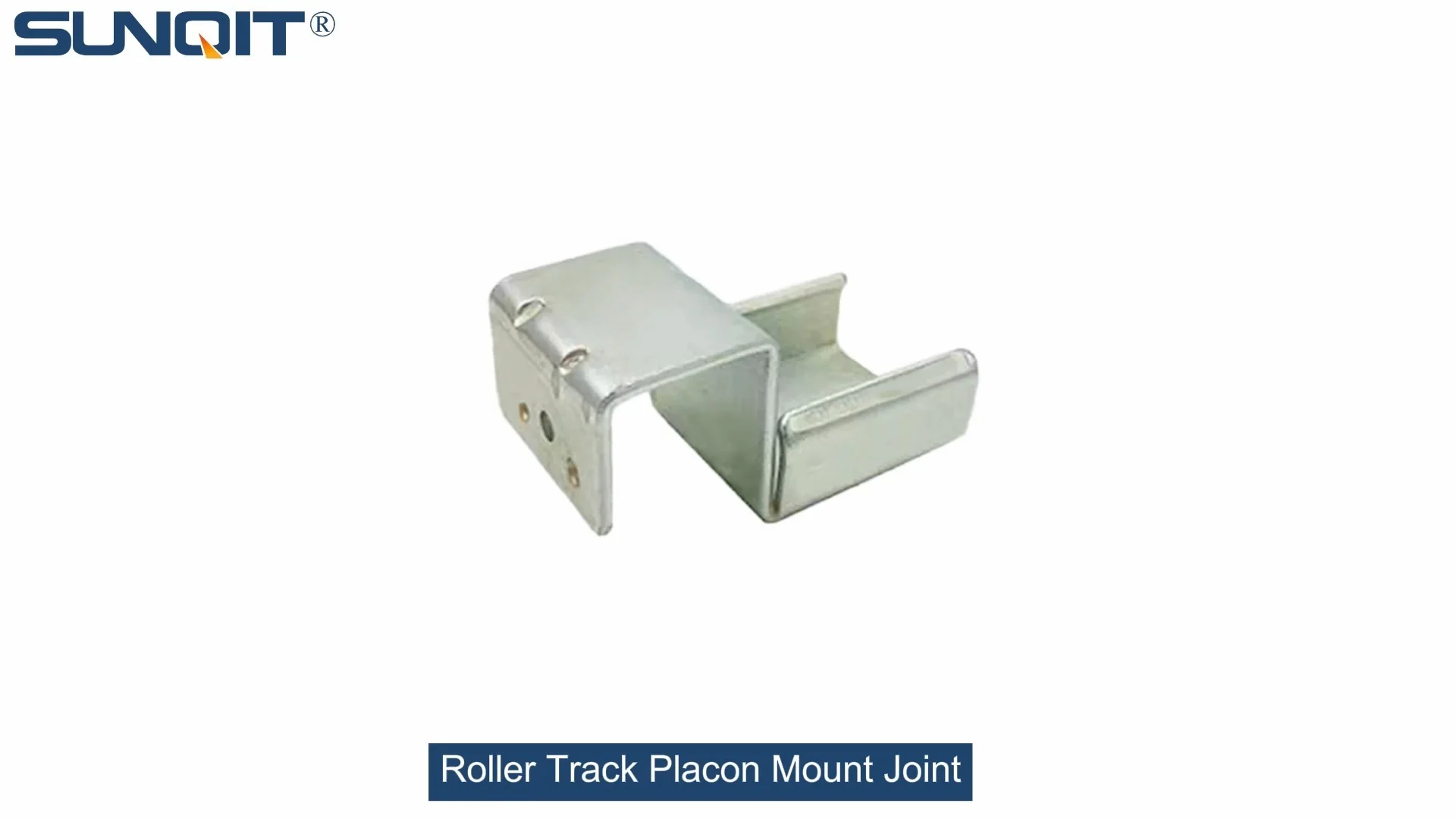
Roller Track Placon Mount Joint
Roller track placon mount work as a connector for roller track and pipe or aluminum profile in rack syetem, it is a necessary parts in rack system which widely used in industrial plant and logistic,warehouse storage.
How small components are driving big change in green production
The Quiet Revolution in Factory Sustainability
Walk into any modern manufacturing plant today, and you'll notice a shift happening—quietly, but powerfully. It's not just about making products faster or cheaper anymore. Today's factories are asking a bigger question: how do we make better, while doing better for the planet? From automotive assembly lines to medical device workshops, sustainability has moved from a "nice-to-have" to a core mission. And surprisingly, some of the most impactful answers are hiding in the smallest parts of the production puzzle—like the roller track placon mount joints that hold everything together.
Think about the traditional manufacturing model. For decades, it was built on a cycle of "use and replace." A conveyor belt breaks? replace it. A workbench becomes outdated? Tear it down. A roller track system no longer fits the new product line? Scrap it. All that waste adds up—metals in landfills, energy wasted on producing replacements, carbon emissions from shipping new parts. But what if we could flip that script? What if the components that build our factories were designed to last, adapt, and reuse instead of being thrown away?
That's where lean systems and their unsung heroes—like roller track placon mount joints—come into play. These small, unassuming connectors are more than just pieces of metal or aluminum. They're the building blocks of a sustainable manufacturing future. Let's dive into how they're reshaping the industry, one joint at a time.
What Makes Roller Track Placon Mount Joints a Sustainability Game-Changer?
Let's start with the basics: what is a roller track placon mount joint, anyway? In simple terms, it's the connector that holds roller tracks together—those systems of wheels and rails that move materials smoothly across factory floors, from assembly lines to storage racks. Without these joints, roller tracks would be wobbly, unreliable, and impossible to customize. But the best placon mount joints do more than just "hold things together." They're engineered with sustainability in mind, right down to the material and design.
Three Key Traits That Make Them Eco-Friendly:
- Modular Design = Less Waste : Unlike fixed, welded joints, placon mount joints are designed to be detachable and reusable . Need to reconfigure your roller track for a new product? Simply unbolt the joint, move the track, and reattach. No cutting, no welding, no scraps left behind. This means a single joint can adapt to dozens of setups over its lifetime, drastically reducing the need for new parts.
- Aluminum: The Sustainable Material Choice : Many placon mount joints (and the roller tracks they connect) are made from aluminum—and for good reason. Aluminum is one of the most recyclable materials on the planet, with a recycling rate of over 95% (compared to just 50% for some steels). It also requires 95% less energy to recycle than to produce from raw ore, cutting carbon emissions dramatically. Plus, aluminum is lightweight, so shipping these joints uses less fuel—another win for the planet.
- Durability That Outlasts Trends : These joints aren't just reusable—they're tough . Made to withstand the wear and tear of busy factory floors (think heavy loads, constant movement, daily use), they last 10–15 years on average, compared to 3–5 years for cheaper, low-quality connectors. Fewer replacements mean less waste, less energy used in production, and a lower carbon footprint over time.
Take, for example, a 3C electronics factory that produces smartphones. Every 6–12 months, they roll out a new model, which means reconfiguring their assembly lines to fit new components. With traditional steel joints, this would mean tearing out old tracks and buying new ones—wasting metal and money. But with aluminum placon mount joints, they can adjust the roller tracks in hours, not days, and reuse 100% of the existing joints. Over a decade, that's thousands of pounds of metal saved from landfills, and thousands of dollars kept in the budget.

Aluminum Lean Pipe Systems: The Bigger Picture of Sustainable Manufacturing
Roller track placon mount joints don't work alone. They're part of a larger ecosystem: the aluminum lean pipe system. If placon mount joints are the "connectors" of sustainability, aluminum lean pipes are the "backbone." These lightweight, strong tubes are the foundation of workbenches, material racks, conveyors, and flow racks—all essential parts of modern manufacturing.
So why aluminum? Let's compare it to the old standard: steel. Steel is strong, but it's heavy, prone to rust (unless coated), and much harder to recycle. Aluminum, on the other hand, is a sustainability all-star: it's 100% recyclable, retains its quality even after multiple recycling cycles, and is naturally resistant to corrosion. Plus, aluminum lean pipes are lighter than steel, which means less energy is needed to transport them and install them—lowering carbon emissions across the supply chain.
| Feature | Traditional Steel Joints/Tubes | Aluminum Placon Mount Joints & Lean Pipes |
|---|---|---|
| Recyclability Rate | ~50% (lower quality after recycling) | ~95% (high quality retained indefinitely) |
| Typical Lifespan | 3–5 years (prone to rust/wear) | 10–15+ years (corrosion-resistant, durable) |
| Energy to Produce New vs. Recycle | High energy for both new production and recycling | 95% less energy to recycle than produce new |
| Customization Flexibility | Low (fixed, welded designs) | High (modular, detachable, reconfigurable) |
| Carbon Footprint (per unit) | High (heavy shipping, frequent replacements) | Low (lightweight, long-lasting, reusable) |
But the benefits don't stop at materials. Aluminum lean pipe systems are built on the "lean manufacturing" philosophy—the idea of minimizing waste while maximizing value. This means everything from the pipes to the joints is designed to be just enough —no excess material, no over-engineering, just the strength and functionality needed. For example, a basic aluminum tube might weigh 30% less than a steel tube of the same strength, using less raw material from the start.
Imagine a medical device manufacturer that needs to adjust its production line to meet sudden demand for a new surgical tool. With an aluminum lean pipe system, they can take apart their existing workbench, reconfigure the roller tracks using placon mount joints, and have the new setup ready in hours—no new materials needed, no waste generated. That's the power of lean systems: they turn adaptability into sustainability.

From Factory Floor to Real Impact: Case Studies in Sustainable Manufacturing
Numbers and specs are great, but let's talk about real-world impact. How are companies actually using roller track placon mount joints and aluminum lean systems to cut waste and boost sustainability? Let's look at two industries where the difference is clear: 3C assembly (think smartphones, laptops) and medical device manufacturing.
Case Study 1: 3C Assembly – Adapting Fast, Wasting Less
The 3C industry is famous for rapid change. New phone models, updated laptops, smarter wearables—factories are constantly shifting to keep up. In the past, this meant constant overhauls: old conveyor belts, roller tracks, and workbenches would be scrapped every 6–12 months to make way for new setups. One major 3C manufacturer in China decided to switch to an aluminum lean system with placon mount joints, and the results were eye-opening:
- Waste Reduction: Before the switch, they were discarding ~20 tons of steel roller track components annually. After switching to aluminum placon mount joints, that number dropped to less than 1 ton —a 95% reduction. Why? Because they could reuse 90% of the joints and tracks by simply reconfiguring them.
- Cost Savings: They cut spending on new roller track parts by 60% in the first year alone. No more buying new tracks—just reusing what they had.
- Carbon Footprint: Lighter aluminum components reduced shipping emissions by 35%, and less manufacturing of new parts lowered their overall carbon output by 22%.
Case Study 2: Medical Manufacturing – Clean, Safe, and Sustainable
Medical device manufacturing has unique challenges: strict cleanliness standards, precise assembly needs, and frequent process updates to meet regulatory changes. A U.S.-based medical equipment maker switched to lean solutions with placon mount joints and aluminum lean pipes, and here's what happened:
- ESD Safety + Sustainability: Their ESD workbenches (designed to prevent static electricity damage) used to be fixed, heavy steel structures. Now, with aluminum lean pipes and detachable joints, they can replace just the worktop (when it wears out) instead of the entire bench. This saved ~15,000 lbs of steel from landfills in three years.
- Quick Reconfigurations: When new FDA regulations required changes to their assembly line layout, they reconfigured their roller track system in 2 days instead of 2 weeks (the old steel setup time). Faster adaptation meant less downtime—and less energy wasted on prolonged construction.
- Recycling Loop: When some older aluminum joints finally reached the end of their life, they were recycled locally, with 100% of the material going into new lean system components. No waste, just a closed loop.
These aren't isolated stories. From automotive parts to consumer electronics, companies are discovering that sustainability and efficiency go hand-in-hand. And it all starts with choosing the right components—like roller track placon mount joints—that are built to last, adapt, and reuse.

Beyond Joints: Lean Solutions as a Holistic Sustainability Strategy
Roller track placon mount joints and aluminum lean pipes are powerful, but they're just one part of the puzzle. True sustainable manufacturing requires a holistic approach —and that's where lean solutions come in. A lean solution isn't just a product; it's a partnership between manufacturer and supplier to design systems that minimize waste at every stage, from production to disposal.
For example, consider a warehouse logistics company looking to reduce its carbon footprint. A lean solution might include:
- Flow racks with aluminum roller tracks and placon mount joints, so the racks can be reconfigured as inventory needs change—no new racks needed.
- Conveyors made from lightweight aluminum, reducing energy use (since lighter systems need less power to run).
- Custom workstations designed to be modular, so they can grow or shrink with the team—no empty desks or overcrowded spaces.
- A "take-back" program for old components, where the supplier recycles or refurbishes joints and pipes instead of letting them end up in landfills.
This kind of end-to-end thinking is what makes lean solutions so effective for sustainability. It's not just about selling a product; it's about helping companies build a factory that works with the planet, not against it.
And here's the best part: sustainability doesn't have to mean sacrificing performance. In fact, lean systems often improve efficiency. When you can reconfigure a roller track in hours instead of days, you're more agile. When you reduce waste, you cut costs. When you use lighter materials, you save on energy and shipping. It's a win-win-win—for the business, the workers, and the planet.
The Future of Manufacturing: Small Components, Big Change
So, what does the future hold? As more companies set net-zero goals and consumers demand eco-friendly products, the pressure on manufacturing to go green will only grow. And the answer won't be in flashy, expensive "sustainability tech." It will be in the basics—the nuts and bolts (or in this case, the joints and pipes) that make factories run.
Roller track placon mount joints might seem small, but they represent a big idea: that sustainability is built into the design of our tools, not just an afterthought. They prove that we don't have to choose between making things well and making things responsibly. We can do both—by building systems that last, adapt, and reuse.
So the next time you walk through a factory, take a closer look at those roller tracks, those connectors, those aluminum pipes. They're not just parts of a machine. They're the future of manufacturing—one that's cleaner, smarter, and more sustainable. And that future starts with choosing the right components today.
After all, the best way to build a better world is to build it with parts that care about the world too.