- Company Articles
- Company Articles
- Strengthen Lean Management Across the Product Lifecycle: From Design to Disposal

Strengthen Lean Management Across the Product Lifecycle: From Design to Disposal
Related Product
Strengthen Lean Management
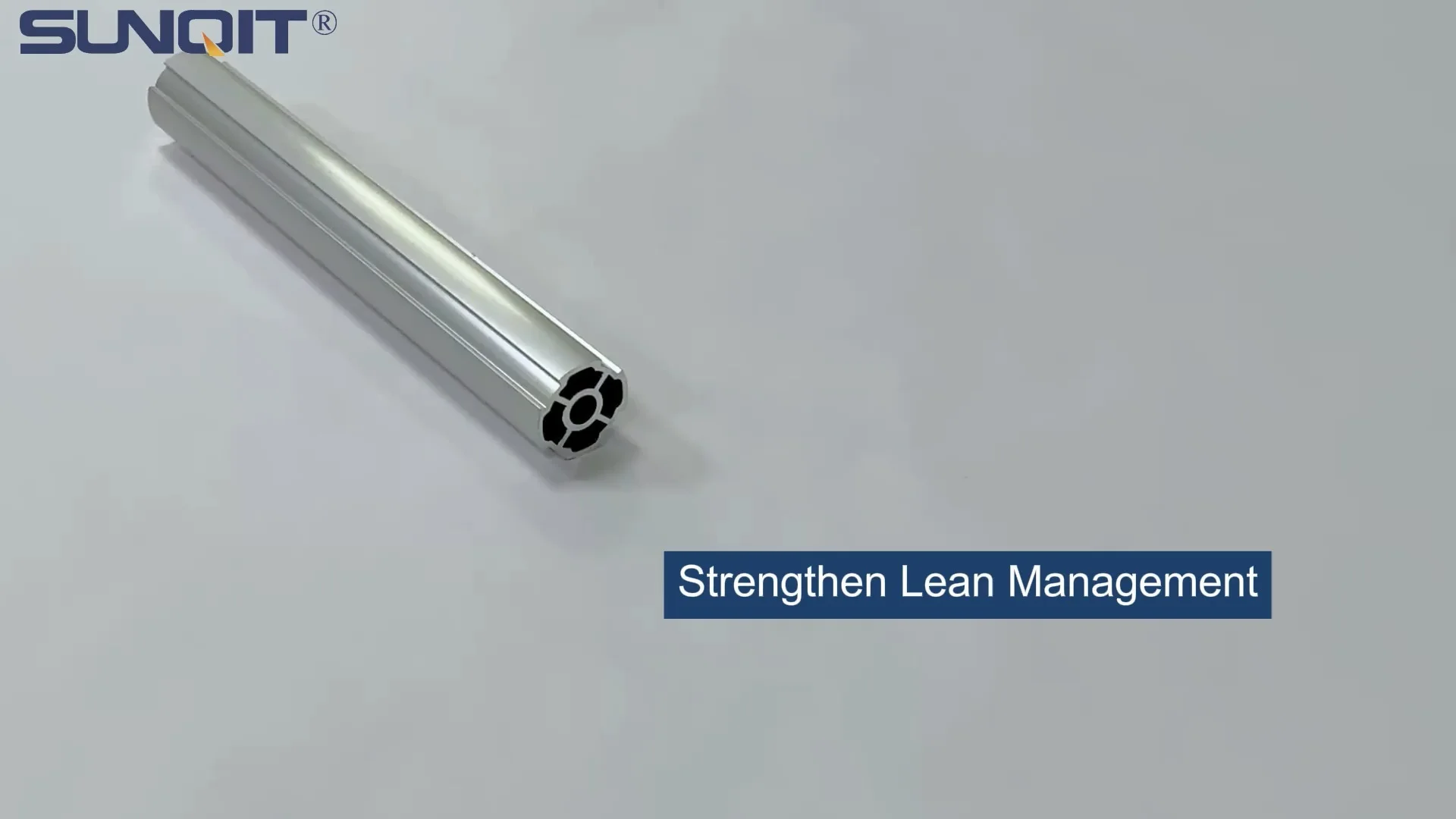
This product is called reinforced aluminum tube, and its bending strength is about twice that of the basic aluminum tube. The end face can process m1o threaded holes, install foot cups and other accessories, or convert internal and external screws in
Lean management has long been hailed as a game-changer in manufacturing, but its true power lies not just in optimizing production lines—it's about embedding efficiency, waste reduction, and adaptability into every phase of a product's journey. From the moment an idea is sketched on a napkin to the day a product is retired, lean principles can transform how businesses create value, cut costs, and build resilience. In this article, we'll explore how to weave lean thinking into every thread of the product lifecycle, using practical tools and real-world examples to show that lean isn't just a production buzzword—it's a holistic approach to doing more with less, better.
Why Lifecycle-Wide Lean Matters
Traditional lean efforts often get stuck in the production phase—think 5S audits or kanban boards on the factory floor. But here's the problem: waste doesn't start when assembly begins, and it doesn't end when a product ships. A poorly designed product might require expensive rework later; inflexible distribution systems can bog down even the most efficient factories; and products that can't be repaired or recycled create hidden costs long after they're sold. By applying lean across the entire lifecycle—design, production, distribution, use, and disposal—businesses can catch waste at its source, build systems that adapt to change, and create products that serve both customers and the bottom line.
Let's break down each phase and see how lean principles, paired with tools like aluminum profiles, lean pipe workbenches, and flow racks, can turn inefficiency into opportunity.
1. Design Stage: Building Lean from the Blueprint
The design phase is where waste is either baked in or baked out. Traditional product design often prioritizes function over flexibility, leading to products that are hard to assemble, expensive to upgrade, or impossible to repair. Lean design flips this script by asking: How can we create something that's easy to make, adapt, and eventually reuse?
Modularity: The Foundation of Lean Design
Enter aluminum profiles —those sleek, groove-lined metal rails that have become a staple in modern manufacturing. Unlike traditional fixed structures, aluminum extrusion profiles are modular by design. They connect with simple accessories (think brackets, joints, and fasteners) to form everything from workbenches to material racks, and they're easy to disassemble, reconfigure, or repurpose. This modularity is lean gold: instead of designing a product with a "one-and-done" mindset, teams can build systems that grow with needs.
Take a factory workbench, for example. A traditional wooden workbench is fixed—if you need to add a shelf or adjust the height, you're either sawing wood or buying a new bench. But an aluminum profile workbench? Its frame is built from interlocking aluminum pipes and accessories, so adding a shelf is as simple as sliding on a new bracket. When the workbench becomes obsolete, the aluminum profiles can be stripped down and reused to build a material rack or a turnover trolley. No waste, no extra cost—just adaptability.
Cross-Functional Collaboration: Designing for the Whole Lifecycle
Lean design isn't just about materials—it's about people. Too often, designers work in silos, unaware of the headaches their choices create for production teams or customers. Lean design brings together engineers, assembly line workers, and even end-users to ask: What will make this hard to build? What will break first? How will someone fix it?
A electronics manufacturer we worked with once designed a circuit board assembly station with a fixed-height table. When production ramped up, workers complained the table was too low for tall team members, leading to back strain and slower work. By involving the assembly team early, they switched to an aluminum profile workbench with adjustable legs—built from basic aluminum tubes and internal rotary joints—letting each worker set their ideal height. The result? Fewer injuries, faster assembly, and a workbench that could adapt as team members changed.

2. Production Stage: Streamlining the Factory Floor
If design is about preventing waste, production is about eliminating it. This is where lean tools like lean pipe workbenches and flow racks shine—turning chaotic workspaces into well-oiled machines where every tool, part, and movement has a purpose.
Lean Pipe Workbenches: The Heart of Efficient Assembly
Walk into a lean factory, and you'll notice the workbenches aren't just tables—they're command centers. A well-designed lean pipe workbench (often built with aluminum or stainless steel pipes and joints) is organized to minimize motion waste: tools hang within arm's reach, parts bins slide out from under the surface, and cables are routed through built-in channels. Nothing is out of place, because every inch is planned around the task at hand.
Consider a smartphone assembly line. Each worker focuses on one step—installing the battery, attaching the screen, testing the camera. On a traditional bench, parts might be stacked in boxes on the floor, forcing workers to bend down or reach across the table dozens of times an hour. On a lean pipe workbench, those parts are stored in flow racks mounted to the bench's side, with gravity feeding the next part forward as soon as one is taken. No bending, no searching—just smooth, continuous work.
Flow Racks: Keeping Materials Moving, Not Waiting
Waste loves stagnation. When parts sit idle in a corner or pile up on a shelf, they tie up cash, take up space, and risk damage. Flow racks solve this by using gravity to keep materials moving—like a slide for parts. Loaded from the back, parts roll forward as the front ones are used, ensuring first-in, first-out (FIFO) inventory and eliminating the need to dig through stacks.
A automotive parts supplier we partnered with once struggled with expired inventory: rubber gaskets would sit on shelves for months, hardening and becoming useless. By installing flow racks with roller tracks, they rotated stock automatically—new gaskets went in the back, old ones came out the front. Expired parts dropped by 40%, and workers spent less time hunting for usable inventory.
Visual Management: Making Waste Visible
Lean production isn't just about tools—it's about awareness. Visual cues turn hidden waste (like overstocked parts or unbalanced workloads) into something anyone can see. For example, a flow rack might use color-coded bins to signal when stock is low: green for "plenty," yellow for "order soon," red for "stop production." A lean pipe workbench could have shadow boards where tools hang—if a shadow is empty, everyone knows a tool is missing.

3. Distribution Stage: Moving Materials Without the Mess
Even the most efficient production line can be undone by a clunky distribution system. Traditional warehouses often rely on manual labor and static storage, leading to bottlenecks, lost parts, and delayed shipments. Lean distribution uses tools like conveyors and roller tracks to keep materials flowing smoothly—from the factory floor to the shipping dock.
Conveyors: Automating the Heavy Lifting
Conveyors are the unsung heroes of lean distribution. Instead of workers pushing heavy carts across the warehouse, conveyor belts (powered or gravity-fed) move products automatically, reducing fatigue and human error. A food packaging plant, for example, might use a belt conveyor to carry boxes from the filling station to the sealing machine, then a roller conveyor to move sealed boxes to palletizing. No more waiting for a cart—just a steady stream of products, each step feeding the next.
But not all conveyors are created equal. Lean distribution favors modular conveyors (often built with aluminum profiles and roller track accessories) that can be extended, shortened, or reconfigured as needs change. A seasonal spike in orders? Add a few extra roller track sections to the conveyor line. A new product with different dimensions? Swap out the belt for a wider one. Adaptability keeps the flow steady, no matter what comes next.
Flow Racks Revisited: From Production to Shipping
Flow racks aren't just for production—they're distribution MVPs, too. In a warehouse, flow racks can store finished goods, with the oldest products at the front, ready to ship. This FIFO system prevents products from sitting too long (hello, expiration dates!) and ensures orders are filled quickly. Pair a flow rack with a conveyor, and you've got a seamless path from storage to truck: workers pull products from the flow rack, place them on the conveyor, and they glide to the shipping area—no backtracking, no wasted steps.

4. Use Stage: Lean Systems That Adapt to Real-World Needs
Lean doesn't end when a product leaves the factory—it extends to how users interact with it daily. A tool or workspace that works on day one might become inefficient as tasks change, leading to frustration and lost productivity. Lean systems solve this by being adjustable —growing, shrinking, or reconfiguring to meet the user's needs.
Workbenches That Grow with the Job
Remember the aluminum profile workbench from the design phase? Its modularity pays off here, too. A manufacturing team might start with a basic single-deck workbench (without casters), but as projects get more complex, they can add a second deck, attach a flow rack for parts, or bolt on casters to make it mobile. No need to buy a new bench—just add new components. This not only saves money but also empowers workers to design their own ideal workspace, boosting morale and efficiency.
Turnover Trolleys and Material Racks: Keeping Tools on the Move
In a busy facility, tools and materials rarely stay in one place. A lean system uses turnover trolleys (built with aluminum pipes and casters) to bring supplies directly to the workbench, eliminating trips to the stockroom. Material racks, like the 3-row, 3-floor "Material Rack B" (a common lean design), keep bulk items organized and accessible, so workers spend less time searching and more time building.
5. Disposal Stage: Closing the Loop with Sustainable Lean
The final phase of the lifecycle is often overlooked, but it's where lean and sustainability intersect. Traditional disposal means sending old equipment to the landfill, losing valuable materials and creating environmental harm. Lean disposal, by contrast, is about recycling, reusing, or repurposing —turning "waste" into a resource.
Recyclable Materials: Aluminum, Stainless Steel, and Beyond
Aluminum and stainless steel are stars here. Unlike plastic or wood, these materials are 100% recyclable, retaining their strength and quality through multiple cycles. When a lean pipe workbench or aluminum profile rack reaches the end of its life, it can be disassembled, melted down, and turned into new profiles—no loss of value. Even smaller components, like plastic roller track guide rails (in yellow or grey), can often be recycled or repurposed into other industrial parts.
Reusing Components: Joints, Casters, and Accessories
Not everything needs to be recycled—many lean components can be reused directly. A lean pipe joint that held together a workbench can be unbolted and used to build a new turnover trolley. Casters from an old rack can be cleaned and attached to a new material cart. Even smaller parts, like swivel roller balls (1 inch or 0.5 inch), can be swapped between flow racks, keeping them out of landfills and in circulation.
Traditional vs. Lean: A Lifecycle Comparison
To see the impact of lifecycle-wide lean, let's compare traditional and lean approaches across each stage:
| Lifecycle Stage | Traditional Approach | Lean Approach | Key Lean Tools |
|---|---|---|---|
| Design | Fixed, single-use designs; little input from end-users | Modular, adaptable designs; cross-functional collaboration | Aluminum profiles, aluminum extrusion profiles |
| Production | Disorganized workspaces; excess motion and waiting | Organized, task-focused workspaces; minimal waste | Lean pipe workbenches, flow racks |
| Distribution | Manual material handling; static storage | Automated flow; dynamic, FIFO storage | Conveyors, roller tracks |
| Use | Static tools/workspaces; hard to adjust | Adjustable, modular systems; user-driven design | Adjustable workbenches, turnover trolleys |
| Disposal | Landfilling; little recycling or reuse | Recycling, component reuse; closed-loop systems | Recyclable aluminum/stainless steel parts, reusable joints |
Conclusion: Lean as a Journey, Not a Destination
Strengthening lean management across the product lifecycle isn't about implementing a single tool or checking a box—it's about adopting a mindset of continuous improvement. It's seeing waste not as a problem to fix once, but as an opportunity to learn and adapt. Whether you're designing with aluminum profiles, building with lean pipe workbenches, or distributing with conveyors and flow racks, the goal is the same: create systems that work for people, not against them.
In a world where customer needs, market trends, and sustainability demands are always changing, lifecycle-wide lean isn't just a competitive advantage—it's a survival strategy. By embedding lean principles from design to disposal, businesses can build resilience, reduce costs, and create products that stand the test of time. And isn't that the ultimate goal of lean? To do more with less, better—for your team, your customers, and the planet.