- Company Articles
- Company Articles
- Strengthen Lean Management for Energy Efficiency: How Flexible Lines Reduce Resource Waste

Strengthen Lean Management for Energy Efficiency: How Flexible Lines Reduce Resource Waste
Related Product
Strengthen Lean Management
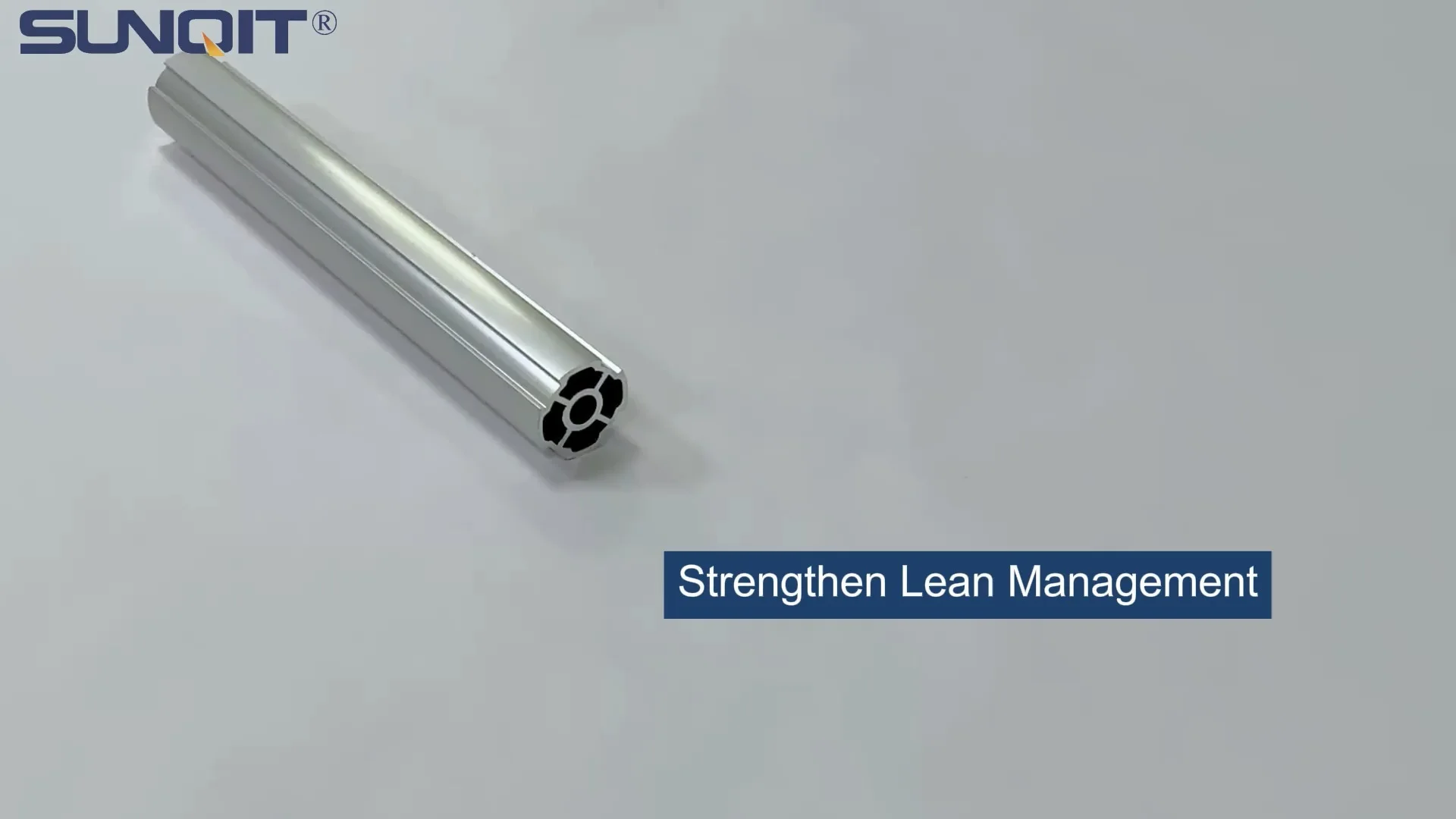
This product is called reinforced aluminum tube, and its bending strength is about twice that of the basic aluminum tube. The end face can process m1o threaded holes, install foot cups and other accessories, or convert internal and external screws in
It's a Tuesday morning at a mid-sized electronics assembly plant. Maria, the operations manager, stares at the monthly energy bill and sighs. For the third month in a row, costs are up—and it's not just electricity. The scrap bin is overflowing with leftover materials, and her team spends hours each week rearranging tools and parts because the production line "just doesn't fit" the new product run. "There has to be a better way," she mutters, flipping through a stack of reports. That's when she spots it: a case study about a competitor that cut energy use by 23% and material waste by 18% after switching to "flexible lean lines." Intrigued, she dives in. What she finds isn't just about efficiency—it's about rethinking how production spaces use resources, from electricity to aluminum, in ways that save money and reduce waste.
This story isn't unique. Across manufacturing, warehouses, and assembly facilities, teams are grappling with the same challenge: how to do more with less. Lean management has long been the go-to solution for eliminating waste, but today's leaders are realizing that true lean excellence requires something more: flexibility. Rigid, one-size-fits-all production lines lock in inefficiencies, from excess energy consumption to unused materials. Flexible lines, built with modular tools like lean pipe workbenches, flow racks, and conveyors, are changing the game. They adapt to shifting needs, minimize resource use, and turn "wasted potential" into measurable savings. Let's explore how strengthening lean management with flexible lines can transform your facility's energy efficiency and resource footprint.
What is Lean Management, and Why Energy Efficiency Matters?
At its core, lean management is about one thing: eliminating waste. But not just the obvious kind—scrap metal, leftover plastic, or broken parts. Lean thinking targets seven types of waste, often called "muda": overproduction, waiting, transportation, overprocessing, inventory, motion, and defects. What many teams overlook, though, is how these wastes tie directly to resource use. For example, "motion waste"—workers walking back and forth to grab tools—wastes time, but it also wastes energy (think: more steps mean more electricity used in lighting, heating, or cooling the space). "Inventory waste"—stockpiling parts "just in case"—ties up materials that could be used elsewhere, increasing storage costs and the risk of obsolescence.
Energy efficiency, then, isn't just a "green" goal—it's a lean goal. When you reduce energy use, you're cutting the "hidden waste" of unnecessary electricity, fuel, or water. And when you pair that with flexible production lines, you create a system that adapts to demand, avoids overproduction, and uses resources only when needed. It's lean management with a sustainability twist—and it's proven to boost the bottom line. A 2023 study by the Lean Enterprise Institute found that manufacturers with flexible lean systems reported 15-30% lower operational costs than those with rigid setups, with energy and material savings accounting for nearly half of that difference.
The Problem with Rigid Production Lines: Why They Waste More Than You Think
Traditional production lines are built for stability. They're designed around a single product or process, with fixed workbenches, permanently installed conveyors, and bolted-down material racks. If your facility makes the same thing day in and day out, this works. But in today's fast-paced market—where product cycles shrink, custom orders rise, and demand fluctuates—rigid lines become a liability. Here's why:
1. They Lock in Inefficient Workflows
Imagine a rigid assembly line built for a product that's now only 60% of your output. The remaining 40% requires workers to bend, reach, or walk extra steps to access tools that don't fit the original layout. Each unnecessary movement burns calories (labor waste) and keeps the lights, fans, and machines running longer (energy waste). A study by the Occupational Safety and Health Administration (OSHA) found that workers in rigid setups walk an average of 2.3 miles more per day than those in optimized layouts—wasting 1.5 hours of productive time and increasing energy use by 12% due to extended shift hours.
2. They Force Overproduction (and Over-Consumption)
Rigid lines are hard to scale down. If demand drops, you can't easily shrink the line—so you either run it at half-capacity (wasting energy on idle machines) or overproduce to "keep the line busy," leading to excess inventory. That inventory sits in storage, taking up space (and energy for climate control) and risking damage or obsolescence. One automotive parts manufacturer reported throwing away $45,000 worth of obsolete components last year—all because their rigid line couldn't adjust to smaller batch sizes.
3. They Waste Materials (and Money) on Repairs and Replacements
Fixed structures like welded steel workbenches or glued-down conveyor tracks don't last forever. When they break or become outdated, you can't just swap a part—you have to replace the entire unit. That means more steel, more plastic, and more energy to manufacture and install new equipment. A food packaging plant in Ohio recently replaced 12 rigid workbenches at $2,000 each because they couldn't accommodate a new packaging size. That's $24,000 in materials and labor—money that could have been saved with a modular alternative.

Flexible Lines: The Lean Solution for Resource Savings
Flexible lean lines aren't just "adjustable"—they're modular, adaptable systems built to evolve with your needs. Think of them as the "Lego sets" of production: components like lean pipe workbenches, flow racks, and conveyors can be assembled, disassembled, and reconfigured in hours, not days. This flexibility directly targets the wastes of rigid lines, slashing energy use, material waste, and labor inefficiency. Here's how:
They Adapt to Demand, So You Only Use What You Need
Need to switch from assembling 500 small widgets to 50 large gadgets? A flexible line lets you shrink the workspace, turn off unused conveyors, and reposition flow racks to match the new workflow. No more running half-empty lines or heating/cooling unused areas. A furniture manufacturer in North Carolina reported cutting energy use by 19% after switching to flexible lines—simply by scaling down during slow seasons and avoiding idle machine time.
They Reduce Material Waste Through Reusability
Modular components like aluminum lean pipe and lean pipe workbenches are designed to be reused. When you reconfigure the line, you don't throw away the old parts—you repurpose them. A medical device plant in Texas recently reconfigured their assembly line three times in a year using the same set of aluminum lean pipes and joints. The result? Zero waste from discarded equipment and $15,000 saved on new workbench purchases.
They Optimize Workflow, Cutting Labor (and Energy) Costs
By designing lines around the worker (not the other way around), flexible systems minimize unnecessary movement. Tools are within arm's reach, materials flow smoothly via flow racks, and conveyors move parts exactly where they're needed—when they're needed. This reduces labor time (saving on wages) and cuts energy use from shorter shift hours or reduced machine runtime. A electronics assembler in Malaysia saw a 22% drop in labor hours after installing flexible lines—translating to $30,000 in monthly savings and a 15% lower electricity bill.

Key Components of Flexible Lean Lines: Building Blocks for Efficiency
Flexible lines aren't magic—they're built with specific, proven components. Let's take a closer look at three workhorses that drive resource savings:
1. Lean Pipe Workbench: The Heart of Adaptable Workspaces
A lean pipe workbench isn't your grandfather's workbench. Made from lightweight aluminum lean pipe and modular joints, it can be customized in minutes: add shelves, adjust height, or even reconfigure the shape to fit a new task. Unlike rigid wooden or steel benches, it doesn't require tools to modify—just a quick twist of a joint. This means one bench can replace three or four fixed workbenches, saving space, materials, and energy. A toy manufacturer in California swapped 8 rigid benches for 3 lean pipe workbenches and reported a 40% reduction in workspace clutter, a 12% drop in material waste (from fewer broken parts due to better ergonomics), and $8,000 saved on new equipment costs.
2. Flow Rack: Gravity-Powered Material Efficiency
Flow racks are the unsung heroes of material handling. These inclined racks use gravity to "flow" parts from the back to the front, ensuring first-in, first-out (FIFO) inventory and eliminating the need for workers to bend, reach, or walk to grab materials. By keeping parts at waist height and reducing picking time, flow racks cut labor motion waste—and the energy that comes with it. A distribution center in Georgia installed flow racks for small parts and saw workers walk 1.2 miles less per day, reducing shift hours by 30 minutes and saving $1,200 monthly on labor. Plus, since they use gravity (no electricity), they're a zero-energy way to optimize material flow.
3. Conveyor: Streamlined Transport with Smart Energy Use
Not all conveyors are created equal. Flexible conveyors—especially modular belt and roller conveyors—can be extended, shortened, or redirected to match workflow changes. Many come with variable speed controls, so you can slow them down during lulls or speed them up during peaks, avoiding energy waste from constant operation. A pharmaceutical packager added modular conveyors to their line and reduced electricity use by 24% by matching speed to demand. They also eliminated 10 hours of weekly manual material transport, freeing workers for higher-value tasks.

Real Impact: How Flexible Lines Reduce Resource Waste (By the Numbers)
Still skeptical? Let's look at a real-world example. A contract manufacturer in Michigan, specializing in electronics assembly, was struggling with rigid lines that couldn't keep up with custom orders. Their energy bill hovered around $18,000 monthly, and material waste (scrap, obsolete parts, and damaged inventory) cost $30,000 annually. Here's what happened after they invested in flexible lean lines with lean pipe workbenches, flow racks, and modular conveyors:
- Energy Use: Dropped to $14,000 monthly (-22%) by scaling down lines during small-batch runs and using variable-speed conveyors.
- Material Waste: Fell to $19,000 annually (-37%) by reusing lean pipe components and reducing overproduction with flexible batch sizes.
- Labor Time: Saved 12 hours weekly (-15%) by optimizing workflows with flow racks and reducing movement waste.
- ROI: The $65,000 investment in flexible components paid for itself in 8 months.
This isn't an anomaly. A 2024 survey by the Manufacturing Excellence Association found that 78% of facilities using flexible lean lines reported "significant" reductions in energy and material costs, with average savings of 17-25% within the first year.
A Closer Look: Rigid vs. Flexible Lines (Resource Comparison)
| Metric | Rigid Production Line | Flexible Lean Line |
|---|---|---|
| Setup Time for New Product | 3-5 days (requires tools, welding, or new parts) | 2-4 hours (modular components, no tools needed) |
| Energy Consumption (Monthly) | $18,000 (idle machines, over-lit areas) | $14,000 (-22%, scaled to demand) |
| Material Waste (Annual) | $30,000 (scrap, obsolete parts, broken fixed structures) | $19,000 (-37%, reusable components, less overproduction) |
| Labor Motion Waste (Miles Walked/Worker/Day) | 3.5 miles (reaching, bending, searching for parts) | 2.1 miles (-40%, optimized flow racks and workbenches) |
| Adaptability to Demand Fluctuations | Low (fixed size; hard to scale up/down) | High (easily resized; matches batch sizes to demand) |
Implementing Flexible Lean Lines: Practical Steps for Your Facility
Ready to strengthen your lean management with flexible lines? Here's how to start:
1. Audit Your Current Waste
Walk the floor and note where energy, materials, or labor are being wasted. Is there a conveyor that runs 24/7 but only needs to operate 8 hours? A workbench that's too big for the task? Flow racks that force workers to stretch? Document these pain points—they'll guide your flexible line design.
2. Start Small with High-Impact Components
You don't need to overhaul your entire line at once. Begin with a high-waste area: maybe the assembly station with the most worker movement (install a lean pipe workbench) or the material storage area with frequent stockouts (add a flow rack). Measure savings, then expand.
3. Train Your Team to "Think Modular"
Flexible lines work best when your team knows how to reconfigure them. Host a workshop on using lean pipe joints, adjusting conveyors, and optimizing flow rack layouts. Empower workers to suggest changes—they know the workflow best!
4. Track Metrics (and Celebrate Wins)
Monitor energy bills, material waste, and labor hours before and after implementation. Share the results with your team—nothing motivates like seeing a 15% energy drop or a lighter scrap bin. One plant in Indiana even started a "Waste Reduction Wall" to track monthly savings, turning lean into a team sport.
Conclusion: Flexible Lines Are the Future of Lean (and Sustainability)
Strengthening lean management isn't just about cutting costs—it's about building a facility that can thrive in a world of constant change. Rigid lines lock you into yesterday's workflows, wasting energy, materials, and talent. Flexible lines, built with tools like lean pipe workbenches, flow racks, and modular conveyors, unlock tomorrow's efficiency by adapting to your needs—so you only use the resources you need, when you need them.
Maria, the operations manager from our opening story? Six months after installing flexible lean lines, her energy bill is down 21%, the scrap bin is half-empty, and her team no longer dreads product changes. "We're not just saving money," she says. "We're working smarter. And that makes every day feel like a win."
So, what's stopping you? The future of lean isn't rigid—it's flexible. And it starts with a single question: What would your facility look like if you could build it, rebuild it, and improve it—without wasting a single watt, a single dollar, or a single minute?