- Company Articles
- Company Articles
- Strengthen Lean Management for Just-in-Time Production: Role of Turnover Carts

Strengthen Lean Management for Just-in-Time Production: Role of Turnover Carts
Related Product
Strengthen Lean Management
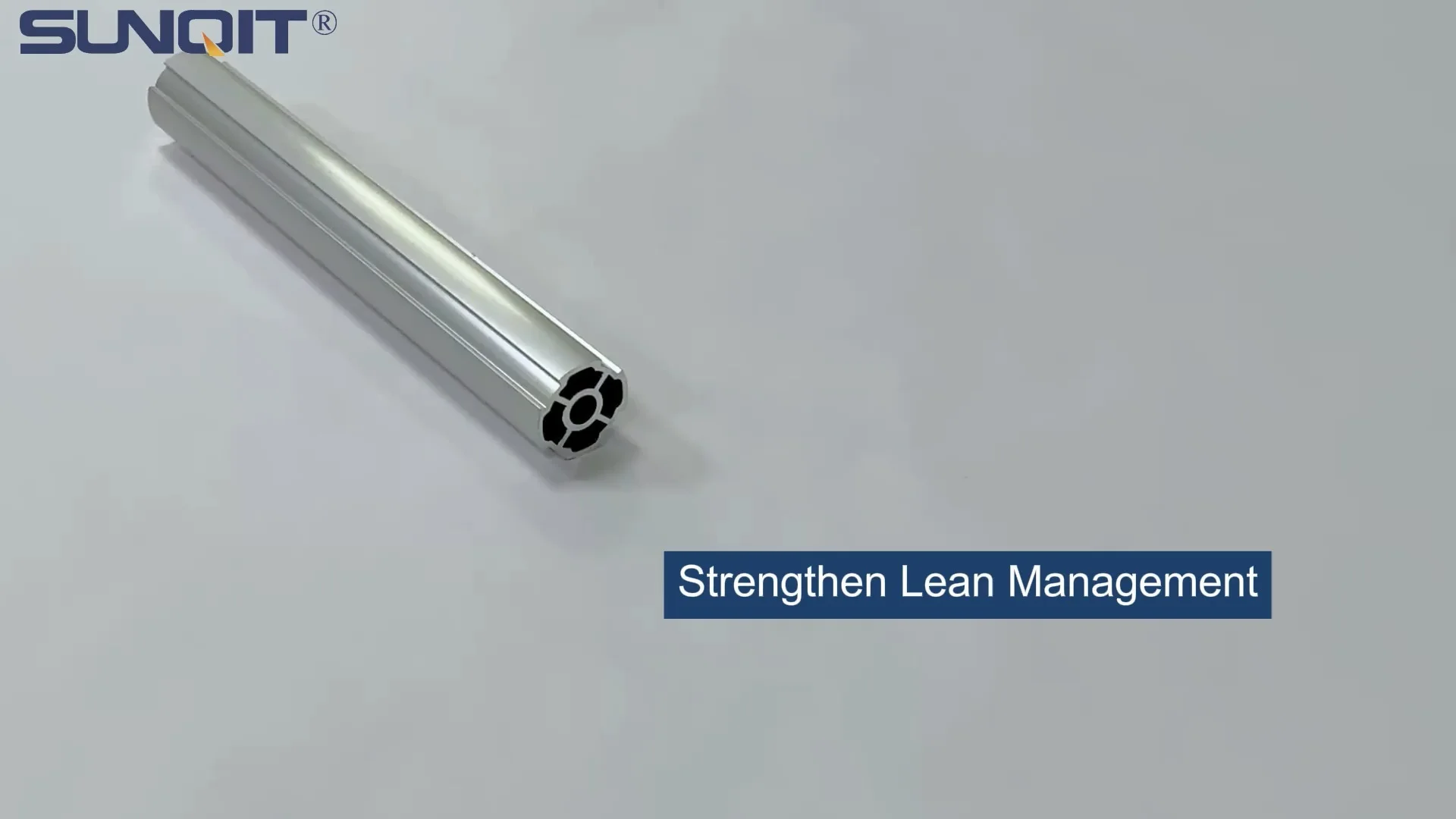
This product is called reinforced aluminum tube, and its bending strength is about twice that of the basic aluminum tube. The end face can process m1o threaded holes, install foot cups and other accessories, or convert internal and external screws in
Walk into any thriving manufacturing facility today, and you'll likely notice a subtle rhythm—a choreography of materials moving smoothly from one workstation to the next, workers focused on value-adding tasks rather than hunting for parts, and inventory levels that feel "just right." Behind this harmony lies a decades-old philosophy: lean management. But lean isn't just about big-picture strategies; it's the small, often overlooked tools that turn theory into reality. Among these unsung heroes are turnover carts—those humble, wheeled workhorses that bridge gaps in material flow, cut waste, and keep just-in-time (JIT) production on track. In this article, we'll explore how these unassuming tools play a pivotal role in strengthening lean systems, why their design matters, and how they integrate with other lean staples like flow racks and workbenches to create a seamless, waste-free production ecosystem.
Lean Management and Just-in-Time: The Backbone of Modern Manufacturing
Before diving into the world of turnover carts, let's ground ourselves in the principles that make them so vital. Lean management, born from the Toyota Production System (TPS) in the mid-20th century, is fundamentally about eliminating waste —that is, any activity that doesn't add value to the customer. Over the years, this philosophy has evolved into a global standard, with manufacturers of all sizes adopting its core tenets: 5S (Sort, Set in Order, Shine, Standardize, Sustain), value stream mapping, continuous improvement, and perhaps most famously, just-in-time production.
JIT takes lean a step further by focusing on timing . Instead of stockpiling raw materials or finished goods "just in case," JIT emphasizes producing "just what's needed, when it's needed, and in the amount needed." The goal? Slash inventory costs, reduce storage space, and minimize the risk of obsolescence. But JIT is a high-wire act: get the timing wrong, and you're looking at production delays, missed deadlines, or frantic expediting. That's where tools like turnover carts come in—they're the safety net that keeps the JIT rhythm steady.
Fun fact: The term "lean" was coined in 1988 by John Krafcik, a researcher at MIT, to describe the efficiency of Toyota's production system compared to traditional mass production. Today, lean isn't just for manufacturing—it's used in healthcare, education, and even software development. But at its heart, it still relies on tangible tools to turn ideas into action.
The Unsung Hero: Turnover Carts in the Lean Ecosystem
If lean management is an orchestra, and JIT is the conductor, then turnover carts are the first violins—quietly but critically setting the pace. Also known in industry circles as "turnover trolley and rack" systems, these mobile units are designed to transport materials, components, or even finished products between workstations, storage areas, or shipping zones. But they're far more than just "moving shelves." When designed and used correctly, turnover carts become active participants in waste reduction, particularly in three key areas:
1. Cutting Transportation Waste
In traditional manufacturing setups, materials often take a meandering path from storage to production. A worker might walk 50 feet to retrieve a box of screws, then carry it back to their station—only to repeat the trip an hour later. This is "transportation waste," one of the seven classic forms of waste identified in lean theory. Turnover carts eliminate this by bringing materials directly to the point of use. Imagine a line worker assembling circuit boards: instead of leaving their workbench to fetch resistors, a turnover cart stocked with the exact quantity needed arrives right as they're ready for the next batch. No more walking, no more waiting, no more wasted energy.
2. Reducing Inventory Waste
JIT's worst enemy is excess inventory—parts sitting idle on shelves, tying up capital and taking up space. Turnover carts help here by acting as "mobile buffers." Instead of storing 500 units of a component in a central warehouse, a facility might use smaller batches loaded onto turnover carts. As one cart is emptied at a workstation, another (pre-loaded with the next batch) takes its place. This "pull system" ensures materials are only ordered and delivered when they're needed, keeping inventory levels low without risking stockouts. For example, a furniture manufacturer using JIT might load upholstery fabric onto turnover carts in quantities that match the day's production schedule—no more bolts of fabric gathering dust in a corner.
3. Minimizing Motion Waste
Motion waste refers to unnecessary movement by workers—bending, reaching, or searching for tools or materials. Well-designed turnover carts are ergonomically tailored to reduce this. Adjustable shelves can be set to waist height, so workers don't have to bend or stretch. Handles are positioned for comfortable pushing, and casters (wheels) are smooth-rolling to minimize effort. Even the width of the cart matters: too wide, and it won't fit through narrow aisles; too narrow, and it can't carry enough material to avoid frequent trips. When every second and every movement counts, these details add up to significant time savings over a shift.

Design Matters: What Makes a Turnover Cart "Lean-Friendly"?
Not all turnover carts are created equal. A poorly designed cart can become a source of waste itself—think of a rickety cart that jams in doorways, or one with fixed shelves that can't adapt to different material sizes. To truly support lean and JIT goals, turnover carts need to check several boxes:
Modularity and Flexibility
Manufacturing needs change—product lines shift, order volumes fluctuate, and new components are introduced. A lean turnover cart should adapt without requiring a complete overhaul. This is where modular designs shine. For example, carts with adjustable shelves, removable dividers, or interchangeable bins can be reconfigured in minutes to carry circuit boards one day and packaging materials the next. Some advanced models even integrate with lean pipe systems, allowing teams to add custom accessories like tool holders or label slots using simple connectors. This flexibility ensures the cart remains useful even as production demands evolve.
Durability Without the Bulk
Turnover carts take a beating. They're pushed through doorways, loaded onto elevators, and sometimes left outdoors during loading dock transfers. A flimsy cart will bend, crack, or lose wheels, leading to downtime and replacement costs. But durability doesn't mean overbuilding—excess weight makes carts hard to maneuver, defeating the purpose of reducing motion waste. The sweet spot? Materials like aluminum or high-grade steel, which offer strength without the heft. Aluminum, in particular, is a favorite in lean environments: it's lightweight, resistant to rust, and easy to clean—critical for industries like food processing or pharmaceuticals where hygiene is paramount.
Integration with Other Lean Tools
A turnover cart rarely works in isolation. To maximize its impact, it should play well with other lean staples, like flow racks and workbenches. Flow racks, for instance, are sloped storage systems that use gravity to feed materials forward—perfect for "first in, first out" (FIFO) inventory management. A well-designed turnover cart can dock directly with a flow rack, allowing workers to slide materials from the rack to the cart in seconds. Similarly, carts with flat, stable surfaces can serve as temporary workbenches during peak production times, eliminating the need for extra furniture. This kind of integration turns individual tools into a cohesive system, where the whole is far more efficient than the sum of its parts.
| Feature | Traditional Cart | Lean-Friendly Turnover Cart |
|---|---|---|
| Weight | Heavy (steel frames, fixed design) | Lightweight (aluminum or thin-gauge steel) |
| Shelving | Fixed height, non-adjustable | Adjustable, removable, or modular |
| Mobility | Basic casters, hard to maneuver | Smooth-rolling casters with brakes |
| Integration | Standalone, no compatibility with other tools | Docks with flow racks, workbenches, and lean pipe systems |
| Waste Impact | May increase motion/transportation waste | Reduces 3+ types of waste (transportation, inventory, motion) |

Real-World Impact: How Turnover Carts Transform Production Lines
Theory is one thing, but real-world results are what convince manufacturers to invest in lean tools. Let's look at a hypothetical (but realistic) example of a small electronics manufacturer that integrated turnover carts into its JIT system. Before lean, the company struggled with two major issues: long lead times (due to excess inventory) and high worker fatigue (due to constant material retrieval).
The production floor was organized in "silos": a central warehouse stored all components, and workers from the assembly line would trek back and forth to collect parts. A time-motion study revealed that assemblers spent nearly 25% of their shift not assembling—instead, they were walking, searching, or waiting for materials. Inventory levels were also bloated: the warehouse held 30 days' worth of resistors, capacitors, and semiconductors, tying up $120,000 in capital.
The solution? A two-part plan: first, redesign the layout to group workstations by product line (a value stream mapping exercise identified this as a key bottleneck), and second, introduce a fleet of 15 modular turnover carts. Each cart was assigned to a specific workstation and loaded daily with exactly the components needed for that day's production run. The carts were designed to dock with flow racks near the warehouse, so material handlers could quickly restock them without disrupting assembly. Casters with locks ensured carts stayed in place during use, and adjustable shelves kept components at eye level, reducing bending.
The results were striking. Within three months, worker non-value-added time dropped from 25% to 8%. Inventory levels shrank to 7 days' worth, freeing up $90,000 in capital. Lead times for finished products decreased by 40%, and customer complaints about late orders vanished. Perhaps most telling? Employee satisfaction scores rose—workers reported feeling less tired at the end of shifts and more focused on their core tasks.
Quote from the plant manager: "We used to think of turnover carts as 'nice to have'—just another piece of equipment. Now, they're the glue that holds our JIT system together. I can't imagine going back to the old way."

Overcoming Common Challenges with Turnover Carts
Of course, integrating turnover carts into a lean system isn't without its hurdles. Even the best tools can become liabilities if mismanaged. Here are three common challenges and how to solve them:
Challenge 1: Inconsistent Loading
If one shift loads a cart with 500 parts and the next shift loads 700, inventory tracking falls apart. The fix? Standardization. Create clear loading checklists with photos showing exactly how many of each component go on a cart, and where they should be placed. Color-coded labels (e.g., red for morning shift, blue for afternoon) can also help track which carts are in use. Some facilities even use "kanban cards"—physical or digital signals that trigger restocking when a cart is 75% empty—ensuring consistency across shifts.
Challenge 2: Poor Maintenance
A cart with a stuck caster or a broken shelf is worse than no cart at all—it slows down material flow and creates frustration. Preventive maintenance is key. Assign a weekly "cart check" to a team member: lubricate casters, tighten bolts, and inspect shelves for cracks. Keep a small inventory of replacement parts (casters, dividers, labels) on hand so repairs can happen immediately, not next week. Remember: in JIT, even a 30-minute cart breakdown can ripple into hours of delays downstream.
Challenge 3: Resistance to Change
Old habits die hard. Longtime workers might resist using carts, preferring their "tried and true" method of fetching materials themselves. The solution here is involvement . Include frontline workers in the cart design process—ask them what features would make their jobs easier. Let them test prototypes and provide feedback. When workers feel ownership over the change, they're far more likely to embrace it. Training sessions should focus on why the carts matter ("This will cut your walking time by 2 hours a week") rather than just how to use them.
Future Trends: Where Turnover Carts Are Headed
As manufacturing becomes smarter and more connected, turnover carts are evolving too. Here are a few innovations to watch:
Smart Carts with IoT Integration
Imagine a turnover cart equipped with RFID tags or Bluetooth beacons that track its location in real time. Managers could pull up a dashboard and see exactly where every cart is, how long it's been at a workstation, or when it's due for restocking. Some manufacturers are even testing carts with weight sensors that automatically send alerts when inventory levels drop below a threshold—no more manual checks.
Eco-Friendly Materials
Sustainability is no longer a buzzword—it's a business imperative. Look for turnover carts made from recycled aluminum or bioplastics, or designed for easy disassembly and recycling at the end of their lifecycle. Some companies are also experimenting with solar-powered carts that charge small devices (like barcode scanners) during transport, reducing reliance on batteries.
Collaborative Carts for Cobots
Cobots (collaborative robots) are becoming common on factory floors, working alongside humans to perform repetitive tasks. Future turnover carts may be designed to interface directly with cobots—for example, a cart that automatically aligns itself with a cobot's workspace, allowing the robot to unload materials without human intervention. This kind of automation could further reduce motion waste and free workers for more complex tasks.
Conclusion: Turnover Carts—Small Tools, Big Impact
In the grand scheme of lean management, turnover carts might seem like minor players. They don't have the flash of automated assembly lines or the complexity of AI-driven demand forecasting tools. But as we've explored, their impact is anything but minor. By cutting transportation waste, reducing inventory, and minimizing motion, these humble carts become the backbone of a smooth-running JIT system. They turn abstract lean principles into tangible results—happier workers, lower costs, and faster delivery times.
So the next time you walk through a manufacturing plant, take a moment to notice the turnover carts. Watch how they glide from station to station, loaded with exactly what's needed, exactly when it's needed. They're not just moving materials—they're moving the needle on lean success. And in today's fast-paced manufacturing world, that's a role worth celebrating.