- Company Articles
- Company Articles
- Strengthen Lean Management in 3C Assembly: How Aluminum Pipe Systems Boost Efficiency

Strengthen Lean Management in 3C Assembly: How Aluminum Pipe Systems Boost Efficiency
Related Product
Strengthen Lean Management
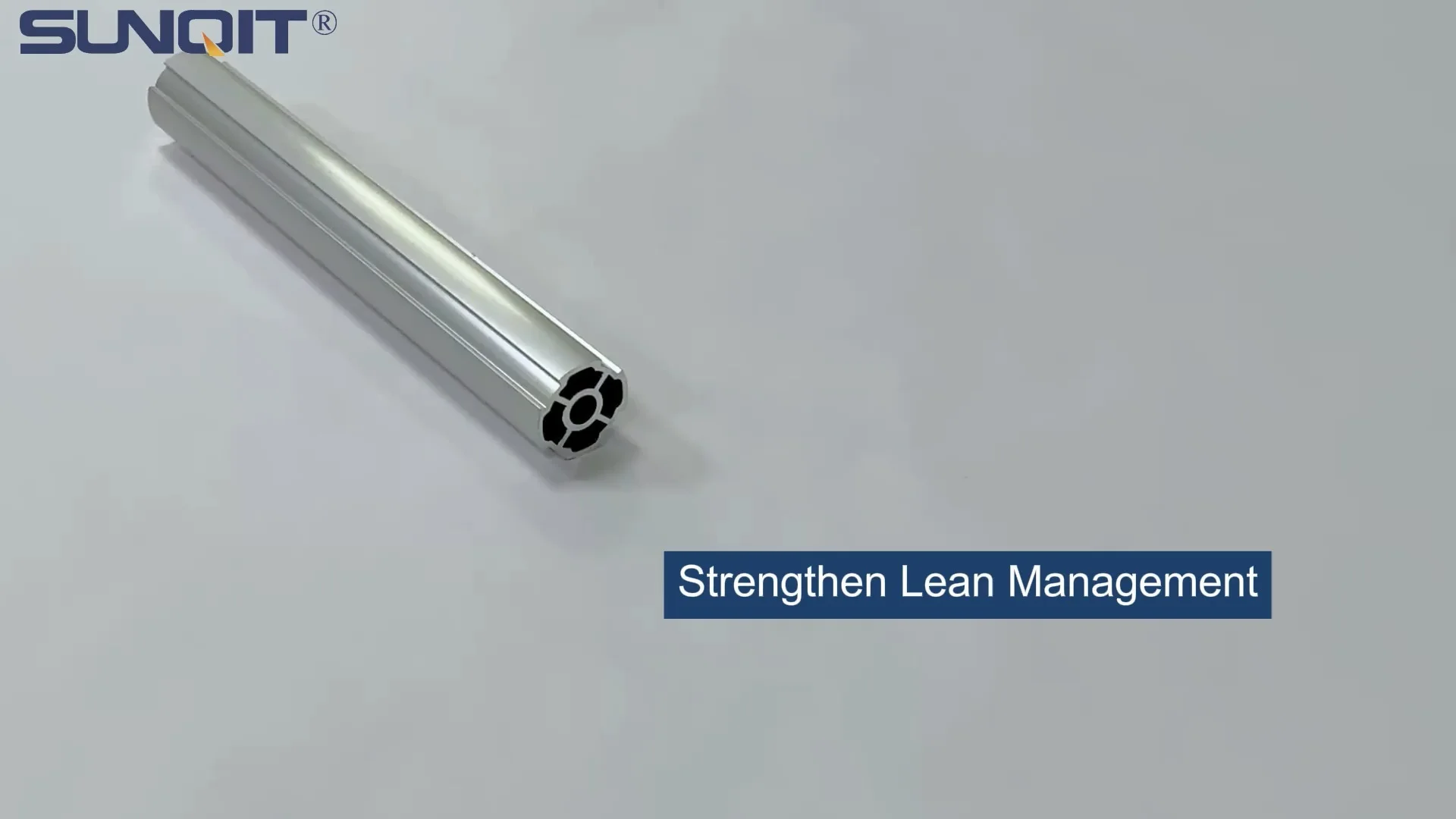
This product is called reinforced aluminum tube, and its bending strength is about twice that of the basic aluminum tube. The end face can process m1o threaded holes, install foot cups and other accessories, or convert internal and external screws in
Walk into any 3C (computers, communications, consumer electronics) assembly plant, and you'll feel the energy immediately—conveyor belts humming, workers focused on tiny components, and the constant hum of machinery turning out smartphones, laptops, and smart devices at a pace that seems to accelerate every year. But behind that energy often lies a hidden struggle: keeping up with demand while maintaining precision, reducing waste, and adapting to frequent product changes. This is where lean management steps in—not as a buzzword, but as a lifeline. And in the toolkit of lean transformation, one solution stands out for its versatility and impact: aluminum pipe systems. Let's dive into how these unassuming components are reshaping 3C assembly floors, one workbench and roller track at a time.
The 3C Assembly Challenge: Why Lean Management Isn't Optional Anymore
3C manufacturing is a high-stakes game. Products get smaller, more complex, and obsolete faster than ever. A single smartphone model might have over 1,000 components, each needing to align with micrometer precision. Meanwhile, consumers demand customization—different colors, storage capacities, features—forcing factories to switch production lines on a dime. Add in tight profit margins and the pressure to reduce lead times, and it's clear: inefficiency isn't just a problem here; it's a threat to survival.
Waste creeps in everywhere. Workers spend too much time searching for tools (motion waste). Parts pile up because the material flow from storage to assembly is disjointed (inventory waste). A sudden design change means dismantling an entire workstation and rebuilding it from scratch (waiting waste). Traditional assembly setups—often rigid, heavy, and one-size-fits-all—exacerbate these issues. They're built for stability, not speed or adaptability. That's why lean management, with its focus on eliminating waste and empowering workers, has become non-negotiable. But lean isn't just about processes; it's about the physical space where those processes happen. Enter aluminum pipe systems.
Aluminum Lean Pipe Systems: The Foundation of Flexible Lean
At first glance, aluminum lean pipes might look like simple tubes—but they're the building blocks of a lean revolution. Unlike traditional steel pipes or fixed metal structures, aluminum lean pipes are lightweight, corrosion-resistant, and infinitely modular. Pair them with aluminum profile accessories—joints, connectors, casters, and roller tracks—and you get a system that adapts to your needs, not the other way around. Let's break down why this matters for 3C assembly.
First, flexibility. In 3C, a production line for a basic phone might need to reconfigure into a line for a high-end model with extra cameras in a matter of hours. Aluminum lean pipes make that possible. Their modular design lets workers disassemble a workbench or reposition a roller track in minutes, not days. No welding, no heavy lifting—just simple tools and a few adjustments. This agility cuts down on "changeover time," the silent killer of productivity in fast-paced environments.
Second, durability. 3C assembly floors are busy places—oils, coolants, and occasional spills are par for the course. Aluminum resists rust and corrosion, so unlike steel, it won't degrade over time. It's also strong enough to support heavy components, from circuit boards to toolkits, without bending or warping. This longevity means fewer replacements, lower maintenance costs, and a consistent workflow—key for lean's "continuous improvement" ethos.
Third, ergonomics. Lean isn't just about efficiency; it's about people. Aluminum lean pipe workbenches can be customized to any height, with tool holders, shelves, and bins positioned exactly where workers need them. No more stretching, bending, or reaching—reducing fatigue and errors. When employees can focus on the task, not the workspace, productivity soars.

From Workbench to Roller Track: Key Components That Drive Results
Aluminum pipe systems aren't a one-trick pony. They're a ecosystem of components, each designed to solve specific lean challenges. Let's zoom in on two workhorses: the workbench and the roller track.
The Workbench: Your Team's Command Center
The workbench is where the magic happens—where components become products. But a cluttered, poorly designed workbench is a productivity black hole. Aluminum lean pipe workbenches fix this by putting control in the hands of workers. Take, for example, the "workbench e (single deck-without caster)" model—a stripped-down, sturdy option ideal for tasks that don't require mobility. Its flat surface, built from aluminum honeycomb panels, is lightweight but strong enough to hold a day's worth of components. Add aluminum profile accessories like tool hooks, bin rails, and monitor mounts, and suddenly, every screwdriver, tweezers, and instruction manual has a home. No more wasted seconds rummaging through drawers. Workers stand straighter, move less, and focus more.
But what if you need mobility? Swap out the fixed legs for casters, and that same workbench becomes a mobile station, gliding smoothly to where it's needed most. A technician assembling a motherboard can roll their tools right to the testing area, eliminating the need to carry parts back and forth. It's small changes like these that add up to big lean wins.
Roller Tracks: Keeping Material Flow Lean and Smooth
In lean management, "material flow" is king. Parts should move from storage to assembly to packaging with zero bottlenecks. Roller tracks, often overlooked, are the unsung heroes here. Made from aluminum rails and plastic or steel rollers, they create gravity-fed or powered pathways that carry components exactly where they need to go—no pushing heavy carts, no waiting for forklifts.
Imagine a 3C plant where circuit boards need to move from the soldering station to the testing area. With a traditional setup, a worker might carry a tray of boards, risking drops or delays. With a roller track—fitted with swivel roller balls 1 inch in diameter for smooth movement—the boards glide along the track, stopping precisely at the testing bench. It's seamless, safe, and fast. And if the testing area moves? No problem—just reposition the roller track using aluminum profile connectors. That's the beauty of modularity.

Traditional vs. Aluminum: A Lean Showdown
Still not convinced aluminum pipe systems are worth the switch? Let's put them head-to-head with traditional setups in the areas that matter most for 3C assembly.
| Metric | Traditional Steel/ Fixed Systems | Aluminum Lean Pipe Systems |
|---|---|---|
| Reconfiguration Time | Days (requires welding, heavy tools) | Minutes to hours (modular joints, no special tools) |
| Durability in 3C Environments | Prone to rust from coolants/oils; heavy, hard to repair | Corrosion-resistant; lightweight but strong; easy to replace parts |
| Worker Ergonomics | Fixed height; limited customization; causes fatigue | Adjustable height; tool holders/ bins positioned for reach; reduces motion waste |
| Cost Over Time | High upfront; frequent replacements; downtime costs | Moderate upfront; long lifespan; low maintenance; reduces downtime |
| Adaptability to Product Changes | Limited—built for one product line | Unlimited—reconfigure for new components, tools, or layouts |
The numbers speak for themselves. Aluminum systems aren't just better—they're built for the way 3C assembly *actually works*: fast, flexible, and focused on people.

Real Impact: How Factories Are Winning with Aluminum Lean Pipes
Let's ground this in real life. Take a mid-sized 3C manufacturer in Shenzhen that produces smartwatches. A year ago, their assembly line was a patchwork of fixed steel workbenches and manual material carts. Changeover time between watch models (e.g., from a basic fitness tracker to a premium health monitor) took 8 hours—eating into production time and delaying orders. Workers complained about back pain from bending to reach tools, and parts often sat idle because the material flow was erratic.
Then they partnered with a lean system supplier specializing in aluminum pipe systems. The supplier replaced the steel workbenches with customizable aluminum workbenches, each fitted with tool hooks, bin rails, and adjustable height legs. They added roller tracks from the storage area to each assembly station, using swivel roller balls to ensure smooth movement of small parts trays. Within a month, changeover time dropped to 2 hours. Workers reported less fatigue, and material flow bottlenecks disappeared. Productivity spiked by 30%, and the factory could now handle 50% more product variations without adding shifts. That's the power of aligning lean processes with the right tools.
Another example: a laptop assembly plant struggling with inventory waste. Parts were stored in distant warehouses, and workers spent 20% of their day walking to fetch components. The solution? Aluminum material racks—built with aluminum lean pipes and roller tracks—that brought parts directly to the assembly line. Each rack had 3 rows and 3 floors, customized to hold specific components (screens, batteries, motherboards). Now, parts are always within arm's reach, and inventory waste plummeted by 45%. Workers call it "having a store right at your desk."
Choosing Your Partner: What to Look for in a Lean System Supplier
Not all aluminum pipe systems are created equal. To maximize your lean transformation, you need a supplier who understands 3C assembly's unique demands. Here's what to prioritize:
Customization expertise: 3C plants have unique layouts and product needs. A good supplier won't just sell you pipes—they'll visit your floor, map your workflows, and design a system tailored to *your* pain points. Do you need a workbench with ESD protection (critical for electronics)? They should offer that. Need roller tracks that curve around a corner? They should have the connectors to make it happen.
Range of accessories: The magic is in the details. Look for suppliers with a full suite of aluminum profile accessories—from internal rotatary aluminum joints (for flexible angles) to plastic roller track guide rails (to keep parts from slipping). The more options they have, the more adaptable your system will be.
Technical support: Even the best systems need tweaks. A reliable supplier offers training for your team (so workers can reconfigure setups themselves) and fast support when you need a replacement part or a design adjustment. Avoid suppliers who disappear after the sale.
Future-Proofing Your Line: Aluminum Pipes and the Next Wave of Lean
The future of 3C assembly is smart, connected, and even more flexible. Aluminum pipe systems are evolving right alongside it. Imagine workbenches with built-in IoT sensors that track tool usage (cutting down on loss) or roller tracks that sync with production software to adjust speed based on assembly line demand. Some suppliers are already experimenting with "smart joints" that log reconfiguration data, helping teams refine their lean processes over time. And as sustainability becomes a priority, aluminum's recyclability adds another layer of value—aligning with green manufacturing goals.
Final Thought: Lean Isn't About Perfection—It's About Progress
At the end of the day, lean management is about making small, consistent improvements that add up to big results. Aluminum pipe systems don't solve every problem, but they remove barriers—freeing your team to focus on what they do best: building great products. They turn your assembly floor from a static space into a dynamic, responsive environment where waste shrinks, productivity grows, and workers feel empowered. In 3C manufacturing, where every second and every component counts, that's not just an advantage—it's the future.
So take a walk through your assembly line today. Notice the bottlenecks, the sighs of frustration, the time wasted. Then imagine what it could look like with aluminum lean pipes, workbenches that adjust to your team, and roller tracks that keep parts flowing like water. That's not just lean management—that's putting your people first. And in the world of 3C, that's how you win.