- Company Articles
- Company Articles
- Strengthen Lean Management in After-Sales Service: Parts Handling with Flow Racks

Strengthen Lean Management in After-Sales Service: Parts Handling with Flow Racks
Related Product
Strengthen Lean Management
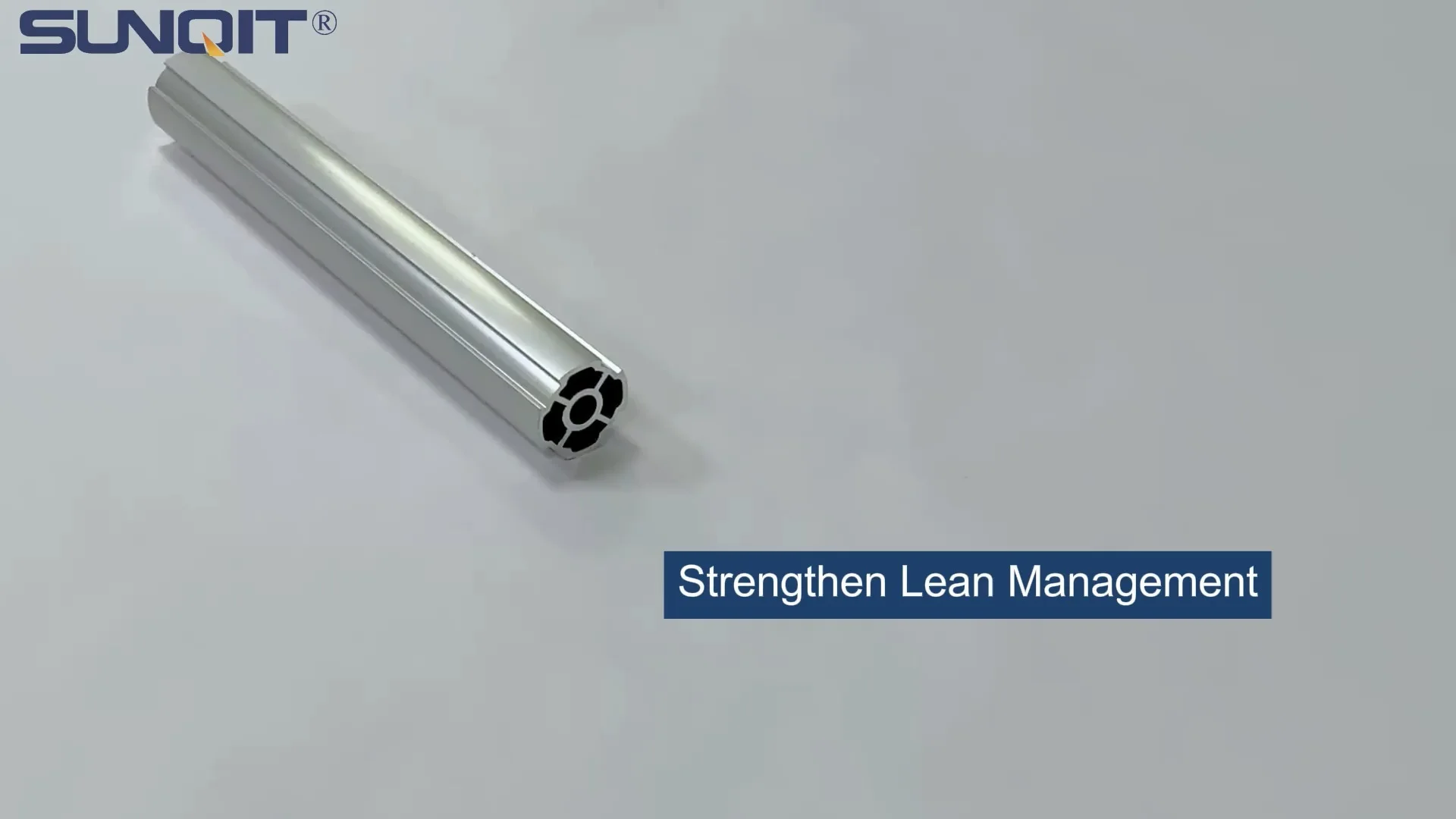
This product is called reinforced aluminum tube, and its bending strength is about twice that of the basic aluminum tube. The end face can process m1o threaded holes, install foot cups and other accessories, or convert internal and external screws in
When a customer buys a product—whether it's a high-end appliance, industrial machinery, or a commercial vehicle—their journey with your brand doesn't end at the checkout. In fact, the real test of loyalty begins after the sale: in the speed of repairs, the availability of replacement parts, and the ease of getting their product back up and running. After-sales service isn't just a "support function"; it's the backbone of customer trust. Yet, for many businesses, this critical (link) is held back by a silent bottleneck: inefficient parts handling. Misplaced components, slow retrieval times, and disorganized storage don't just frustrate technicians—they erode customer satisfaction, delay resolutions, and eat into profits. This is where lean management steps in, and at its core? The humble yet transformative flow rack.
The Lean Revolution: Why Traditional Parts Handling Falls Short
Lean management, born from the Toyota Production System, is all about one simple idea: eliminate waste to create more value. In after-sales service, "waste" comes in many forms: time wasted searching for parts, motion wasted walking between storage areas, inventory wasted on overstocked (yet often unneeded) components, and even talent wasted when skilled technicians are stuck hunting for screws instead of fixing machines. Traditional parts handling systems—think static metal shelves, disorganized bins labeled with faded markers, and "eyeball inventory" checks—are breeding grounds for this waste.
Let's paint a familiar picture: A technician receives a service request for a broken air conditioner. They head to the parts room, armed with a list. The first part, a fan motor, is supposed to be on Shelf B, Row 3—but when they get there, it's missing. A quick call to the warehouse reveals it was moved last week to "make space." Ten minutes later, they find it on Shelf D, hidden behind a box of filters. Next, a capacitor: the bin says "in stock," but it's empty. By the time they track down all three required parts, 45 minutes have passed. The customer, originally promised a 2-hour repair window, is now waiting, annoyed. Meanwhile, another technician is searching for the same capacitor, unaware it's already been taken. This isn't just inefficiency—it's a breakdown in trust.
Lean management asks: What if we designed the system to
prevent
this waste, rather than just reacting to it? What if parts flowed to technicians, instead of technicians chasing parts? Enter the flow rack—a tool so intuitive, yet so powerful, it redefines how after-sales teams handle components.
Flow Racks: The Game-Changer in Lean Parts Handling
At first glance, a flow rack might look like a simple shelving unit with rollers. But its genius lies in physics and psychology: gravity does the work, and FIFO (First-In, First-Out) logic ensures order. Here's how it works: Parts are loaded from the back of the rack onto inclined roller tracks; as the front part is removed, the next one slides forward, ready for use. No more digging, no more searching, no more "where did that go?" moments.
Let's break down why flow racks are non-negotiable for a lean after-sales system:
Faster Retrieval, Faster Repairs:
When parts slide to the front automatically, technicians spend seconds—not minutes—grabbing what they need. A study by the Lean Enterprise Institute found that flow rack systems reduce part retrieval time by up to 60% compared to static shelves. For after-sales teams, that translates to more repairs per day and shorter customer wait times.
FIFO Compliance, Reduced Waste:
In industries like electronics or pharmaceuticals, parts have expiration dates or shelf lives. Flow racks enforce FIFO by design: the oldest parts (loaded first at the back) are used first, preventing obsolescence and reducing inventory waste. Even for non-perishable parts, FIFO minimizes the risk of "forgotten stock"—components that sit in the back of shelves for months, only to be discovered after they've been reordered.
Space Efficiency, Maximum Storage:
Flow racks utilize vertical space and dense packing without sacrificing accessibility. Unlike static shelves, where you need gaps between bins for "reaching room," flow racks can be packed tightly, with roller tracks guiding parts to the front. This means more parts in less square footage—a lifesaver for after-sales centers in urban areas where space is at a premium.
Error Reduction, Happier Teams:
When each part has a dedicated slot on a flow rack—color-coded, labeled clearly, and visible at a glance—the risk of picking the wrong component (e.g., a 12V capacitor instead of a 24V one) drops dramatically. Technicians report lower stress levels, too: knowing parts will be where they're supposed to be lets them focus on their expertise—repairing, not searching.
| Traditional Parts Handling | Flow Rack-Based Lean Handling |
|---|---|
| Retrieval time: 15–45 minutes per part set | Retrieval time: 2–5 minutes per part set |
| Inventory accuracy: ~60–70% (due to manual tracking) | Inventory accuracy: ~95–99% (visual FIFO + dedicated slots) |
| Space usage: 10–15 sq. ft. per 100 parts | Space usage: 5–8 sq. ft. per 100 parts |
| Technician satisfaction: Low (frustration from wasted time) | Technician satisfaction: High (focus on skilled work) |
| Customer wait time: Often exceeds quoted windows | Customer wait time: Consistently meets or beats quotes |

Beyond Flow Racks: Building a Holistic Lean System for After-Sales
Flow racks are powerful, but they're not a standalone solution. To truly strengthen lean management in after-sales, they need to be part of a larger ecosystem—a lean system that connects storage, retrieval, and repair into a seamless flow. Let's explore the key players in this ecosystem:
Workbenches: The Bridge Between Parts and Repairs
Imagine retrieving parts from a flow rack, then walking 50 feet to a cluttered workbench with tools scattered across the surface. The momentum of "lean efficiency" grinds to a halt. A well-designed workbench—positioned steps away from the flow rack, with dedicated slots for tools, built-in power outlets, and even ESD (Electrostatic Discharge) protection for sensitive electronics—turns retrieved parts into repaired products faster. Think of it as the "final assembly line" of after-sales: parts arrive via the flow rack, tools are at arm's reach, and the technician can focus on diagnostics and repair without interruptions. Some workbenches even integrate small conveyor belts to move sub-assemblies, reducing the need to lift heavy components—a win for ergonomics and speed.
Conveyors: Moving Parts, Not People
In larger after-sales facilities—think automotive service centers or industrial equipment repair shops—parts might need to travel from a central flow rack storage area to multiple workbenches. Here, conveyors (especially roller conveyors, which use gravity or mild motor power) eliminate the need for technicians to make multiple trips. A part is picked from the flow rack, placed on the conveyor, and sent directly to the workbench where it's needed. This cuts down on motion waste (no more walking back and forth) and ensures parts arrive "just in time" for the repair—another lean principle in action. For example, a tractor dealership in Iowa installed a 30-foot roller conveyor connecting their flow rack room to three service bays; technicians report saving 2 hours per day on average, simply by eliminating trips.
Lean Pipes: Flexibility for a Changing After-Sales Landscape
After-sales needs aren't static. New product lines launch, old models phase out, and service demands shift with seasons (e.g., more AC repairs in summer). Rigid steel shelving can't adapt—but lean pipes (also called "lean tubes") can. These lightweight, modular pipes (often aluminum or stainless steel) with easy-to-connect joints let teams build, modify, and reconfigure flow racks, workbenches, and even mobile carts in hours, not weeks. Need to add a new slot for a new part? Just clip on a new section. Moving the flow rack closer to the conveyor? Disassemble and rebuild in the new location. This flexibility ensures your lean system grows with your business, not against it.

From Chaos to Clarity: A Real-World Lean Transformation
Let's ground this in a real example. A mid-sized HVAC service company in Texas was struggling with after-sales delays. Their 10 technicians were spending 30% of their day searching for parts, and customer complaints about "slow service" were rising. They decided to implement a lean system centered on flow racks, supported by workbenches and a small conveyor. Here's what happened:
Step 1: Audit and Sort (5S in Action):
First, they cleared out the old parts room—throwing away expired components, returning overstock to the main warehouse, and categorizing remaining parts by frequency of use (fast-moving parts like filters and capacitors up front, slow-moving parts like fan blades in the back).
Step 2: Install Flow Racks with Roller Tracks:
They replaced static shelves with flow racks fitted with plastic roller track guide rails (yellow for fast-moving parts, grey for slow-moving) to ensure smooth sliding. Each part got a labeled slot with a minimum stock level indicator.
Step 3: Add Workbenches and a Mini Conveyor:
Two ergonomic workbenches were placed 10 feet from the flow racks, each with tool organizers and ESD mats for sensitive circuit boards. A short roller conveyor connected the flow racks to the workbenches, so parts could be sent over without carrying.
The Result:
Within 3 months, part retrieval time dropped from 25 minutes to 4 minutes. Technician productivity increased by 22% (more repairs per day). Customer wait times shrank from an average of 3 hours to 1.5 hours. And perhaps most telling: The company's "Net Promoter Score" (a measure of customer loyalty) rose by 18 points. As one technician put it: "I used to hate parts runs. Now, I grab what I need, walk to my bench, and fix the unit. It's like night and day."

Sustaining the Lean Momentum: It's About Culture, Not Just Tools
Flow racks, workbenches, and conveyors are powerful tools—but they're only as effective as the team using them. To keep the lean system working, after-sales leaders need to focus on culture: training technicians to follow FIFO, labeling protocols, and "return to place" habits; empowering teams to suggest improvements (e.g., "This part would flow better if we angle the roller track slightly"); and celebrating small wins (e.g., a week with zero picking errors). Regular 5S audits (Sort, Set in Order, Shine, Standardize, Sustain) ensure the system doesn't slip back into chaos. Remember: Lean isn't a one-time project—it's a mindset of continuous improvement.
The Future of Lean After-Sales: Smarter, Lighter, More Connected
As technology evolves, flow racks and lean systems are getting even smarter. Today's aluminum lean pipes are lighter and more durable than traditional steel, making reconfiguration easier. Some flow racks integrate sensors that track inventory levels in real time—when a part is removed, the system alerts the warehouse to restock, preventing stockouts. Others use QR codes on bins: scan the code, and a digital display shows how many parts are left, their expiration dates, and even usage trends (e.g., "This capacitor is used 3x more in summer"). Tomorrow's lean after-sales systems might even connect to customer service software, automatically pre-picking parts when a service request is logged—ensuring the technician has everything they need before they even arrive at the facility.
Conclusion: Flow Racks Are Just the Start
Strengthening lean management in after-sales service isn't about replacing every shelf with a flow rack—it's about reimagining how parts move, how teams work, and how customers feel. When parts flow smoothly from storage to repair, when technicians are freed from waste to focus on expertise, and when customers get their products back faster, everyone wins: your team, your customers, and your bottom line. The flow rack is the first step—but the real journey is building a system where lean thinking becomes second nature. After all, in the world of after-sales, the best way to keep customers loyal is to make sure their experience after the sale is as smooth as the parts flowing on your rack.