- Company Articles
- Company Articles
- Strengthen Lean Management in Batch Production: Reducing Changeover Times with Aluminum Joints

Strengthen Lean Management in Batch Production: Reducing Changeover Times with Aluminum Joints
Related Product
Strengthen Lean Management
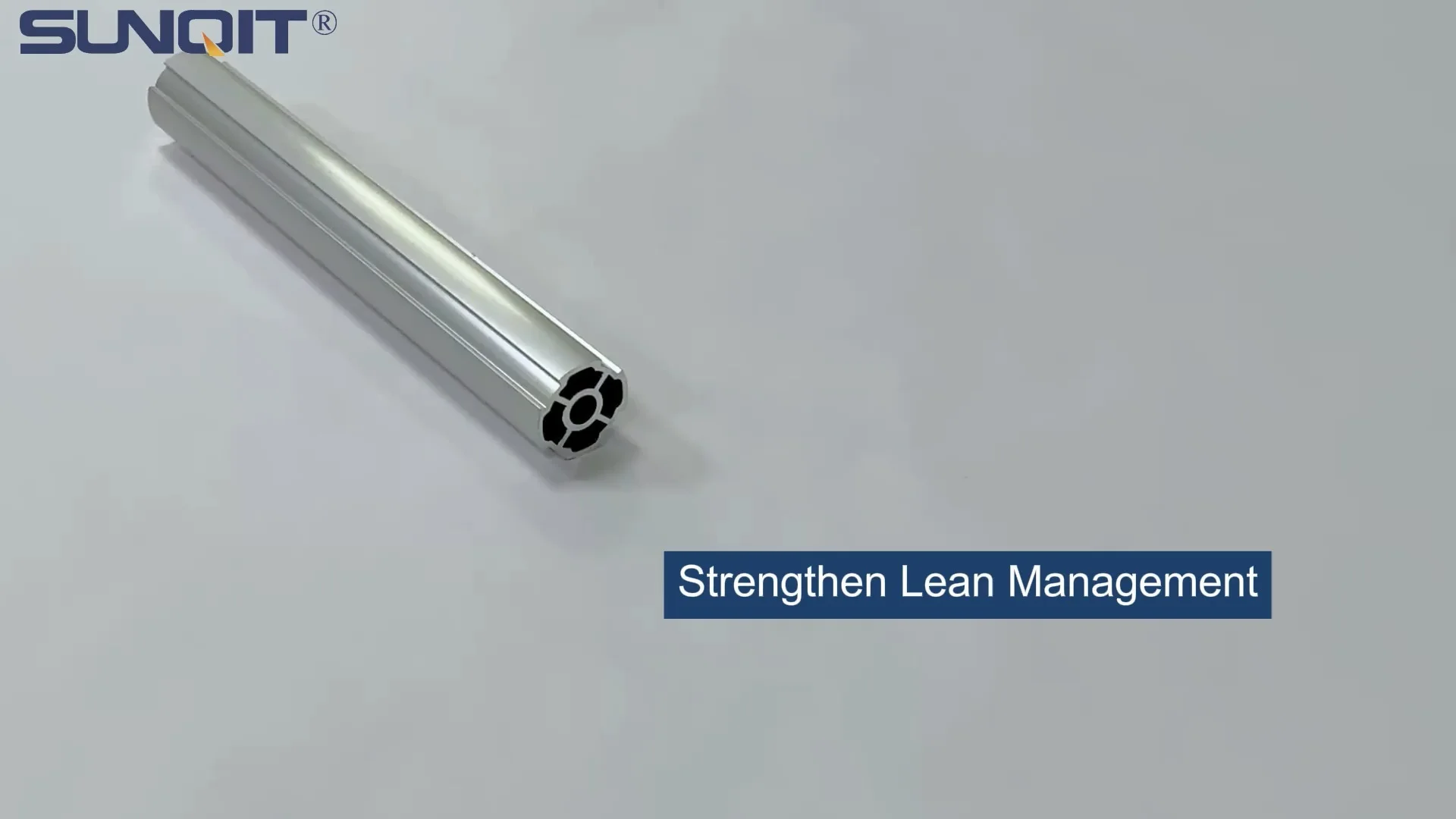
This product is called reinforced aluminum tube, and its bending strength is about twice that of the basic aluminum tube. The end face can process m1o threaded holes, install foot cups and other accessories, or convert internal and external screws in
Walk into any batch production facility, and you'll likely notice a familiar rhythm: the hum of machinery churning out products in bursts, followed by sudden, jarring silences. Those silences are changeovers—the time it takes to reconfigure equipment, tools, and workstations to switch from one product to another. For manufacturers, these pauses aren't just quiet; they're costly. Every minute a line sits idle eats into profits, delays deadlines, and frustrates teams eager to keep moving. In an era where lean management has become the gold standard for efficiency, reducing changeover time isn't just a goal—it's a necessity. And surprisingly, the solution might lie in something as unassuming as the joints that hold your production line together: aluminum joints.
Lean management, at its core, is about eliminating waste—whether that's wasted time, materials, or effort. But traditional production setups, with their rigid steel pipes, welded joints, and one-size-fits-all workstations, often turn changeovers into exercises in frustration. Reconfiguring a workstation to handle a new product might require cutting pipes, welding new joints, or even replacing entire structures. By the time the line is ready again, hours have passed, and opportunities have slipped away. That's where aluminum lean pipes and their modular joints come in. Lightweight, adaptable, and designed for speed, these systems are quietly revolutionizing how manufacturers approach batch production—turning slow, wasteful changeovers into quick, seamless transitions. Let's dive into how they work, why they matter, and how they can transform your production floor from a space of delays to one of continuous flow.
Understanding Batch Production and the Changeover Challenge
Batch production is the backbone of many industries, from electronics and automotive parts to consumer goods and pharmaceuticals. Instead of producing one product nonstop, manufacturers create "batches"—groups of identical items—before switching to the next design. This approach makes sense for products with varying specifications, seasonal demand, or limited shelf life. But it comes with a critical trade-off: changeovers. Every time the batch ends, the line must be reset. Tools are swapped, conveyors adjusted, workbenches reorganized, and safety protocols reviewed. Even small changes—like adjusting a flow rack to hold a different-sized component or repositioning a workbench for a new assembly process—can add up to hours of downtime.
Consider a hypothetical electronics plant that assembles two types of circuit boards: one for smartphones and another for tablets. The smartphone boards are small, lightweight, and require precise placement of tiny components. The tablet boards, larger and heavier, need sturdier work surfaces and different tooling. To switch between them, the production team might need to: disassemble the current workstation, replace the benchtop with a thicker, more stable surface, reposition the flow rack to accommodate larger component trays, adjust the roller tracks to handle heavier loads, and recalibrate tools. With traditional steel or even pe-coated lean pipe setups, this process could take 2–3 hours. Multiply that by several changeovers a day, and you're looking at 6–9 hours of lost production time weekly—time that could have been spent manufacturing products, not rearranging equipment.
The costs of these delays go beyond just lost output. Idle workers still need to be paid, utilities run while machines sit unused, and tight deadlines become even tighter. Worse, frequent long changeovers can demotivate teams, who grow frustrated by the constant stop-start rhythm. For lean managers, this waste—known as "downtime" in lean terminology—is a prime target for elimination. But to tackle it, you need tools that are as flexible as your production needs. Traditional setups, with their fixed structures and time-consuming reconfiguration, simply can't keep up.
Lean Management: More Than Just a Buzzword
Lean management has evolved from a manufacturing philosophy into a way of life for forward-thinking facilities. Born from the Toyota Production System (TPS) in the mid-20th century, lean is built on two core principles: kaizen (continuous improvement) and the elimination of muda (waste). Waste, in lean terms, isn't just physical trash—it includes anything that doesn't add value to the customer. That means overproduction, excess inventory, unnecessary movement, and yes, unplanned downtime from changeovers.
For batch producers, lean management often feels like a puzzle. How do you create "flow"—a steady, uninterrupted production stream—when your process inherently requires stopping and starting? The answer lies in making those stops as short and painless as possible. Enter the concept of "single-minute exchange of die" (SMED), a lean technique developed by Shigeo Shingo that aims to reduce changeover times to 10 minutes or less. SMED teaches that most changeover tasks can be classified as "internal" (must be done while the line is down) or "external" (can be prepared while the line is running). The goal is to minimize internal tasks by streamlining setup and using flexible tools.
But here's the catch: SMED relies on your production tools being adaptable. If your workstations, flow racks, and conveyors are bolted down, welded, or made of heavy, rigid materials, even the best SMED training won't save you. You can't prepare external tasks if reconfiguring a workstation requires a team of welders or hours with power tools. This is where traditional systems fail—and where aluminum lean pipes and joints step in. By designing for flexibility, these systems turn SMED from a lofty goal into a daily reality.

The Problem with Traditional Production Setups
For decades, manufacturers relied on steel pipes and welded joints to build their production lines. Steel is strong, durable, and affordable—qualities that made it a staple in factories worldwide. But when it comes to changeovers, steel's strengths become weaknesses. Welded joints are permanent, so reconfiguring a workstation means cutting pipes, grinding down welds, and rewelding new connections. Not only does this take hours, but it also requires skilled labor and specialized tools. Even if you avoid welding by using bolted joints, steel's weight makes disassembly and reassembly a Herculean task. A single steel pipe section can weigh 10–15 pounds; multiply that by dozens of pipes in a workstation, and you're looking at a team-lifting exercise every time you need to adjust the line.
In recent years, pe-coated lean pipes (also called "flexible pipes") emerged as a step forward. These are steel pipes coated in plastic, designed to be connected with metal joints that screw or clamp into place. They're lighter than raw steel and don't require welding, which made them popular for lean initiatives. But while pe-coated pipes are more flexible than welded steel, they still have limits. The metal joints can be stiff, requiring tools to tighten or loosen, and the plastic coating can wear down over time, especially in high-friction areas like flow racks. Worse, pe-coated pipes are still heavier than they need to be, and their rigidity means they can't always adapt to quick, on-the-fly changes. For facilities with frequent changeovers, these limitations translate to one thing: wasted time.
Consider a typical scenario: a manufacturer of small appliances needs to switch from assembling blenders to toasters. The blender assembly line uses a low workbench with a narrow flow rack for small motor components. Toasters, however, require a taller workbench (to accommodate their larger frames) and a wider flow rack for heating elements. With a pe-coated lean pipe setup, the team might need to: unscrew each joint with a wrench, lift heavy pipes to adjust the workbench height, reattach the flow rack with new joints, and tighten everything down. Even with two people, this could take 1.5–2 hours. By the time they're done, the line has been idle for so long that the day's production targets are at risk.
The problem isn't just the time—it's the frustration. Workers aren't trained to be mechanics; they're trained to assemble products. When changeovers turn into construction projects, morale suffers. Teams rush to finish, cutting corners that compromise safety or quality. And because the process is so tedious, managers may delay changeovers, leading to larger batch sizes and excess inventory—another form of waste in lean terms. Traditional setups don't just slow down production; they actively work against lean principles.

Aluminum Lean Pipes and Joints: A Lean Revolution
Aluminum lean pipes and joints aren't just a new material—they're a reimagining of how production systems should work. Aluminum is lighter than steel (about one-third the weight), corrosion-resistant, and surprisingly strong. When paired with modular joints, it becomes a building block for flexibility. Unlike steel, aluminum pipes don't require welding or heavy tools. Instead, they use precision-engineered joints that snap, twist, or clamp into place—often without any tools at all. This simple design change transforms how production lines are built, reconfigured, and maintained.
Let's start with the basics: aluminum lean pipes. These are hollow, lightweight tubes made from high-grade aluminum alloy. They come in various diameters (common sizes include 28mm and 40mm) and can be cut to custom lengths with a simple pipe cutter—no power tools needed. What makes them truly lean, though, is their compatibility with aluminum joints. These joints are the unsung heroes of the system. Available in dozens of configurations—90-degree elbows, 45-degree angles, T-joints, internal rotatory joints, and more—they allow pipes to be connected in seconds. Most joints use a friction-fit or cam-lock design: slide the pipe into the joint, twist, and it locks into place. To disassemble, just twist again and pull. No wrenches, no screws, no hassle.
But aluminum systems don't stop at pipes and joints. They're part of a broader ecosystem of accessories designed for flexibility. Need a mobile workstation? Add casters with quick-attach brackets. Want to create a flow rack for parts? Snap on roller tracks and guide rails. Need a sturdier work surface? Mount an aluminum honeycomb panel or wooden benchtop using bracket joints. Everything is modular, meaning components can be mixed, matched, and reused across different setups. A pipe from a disused flow rack can become part of a new workbench; a joint from an old conveyor can be repurposed for a turnover trolley. This reusability not only reduces waste but also cuts costs—you're not buying new equipment every time your production needs change.
Take, for example, the internal rotatory aluminum joint. This clever design allows pipes to rotate 360 degrees, making it easy to adjust the angle of a flow rack or workbench without disassembling the entire structure. Need to tilt a roller track to better feed parts to an assembly station? Just twist the joint. No tools, no downtime. Or consider the parallel aluminum joint, which connects two pipes side by side, creating sturdy, adjustable frames for workbenches or material racks. These joints can be slid along the pipe to change the width of the frame in seconds—perfect for accommodating different product sizes during changeovers.
Aluminum's lightweight nature also plays a key role in lean management. A 2-meter aluminum pipe weighs around 1.5 pounds, compared to 4.5 pounds for a steel pipe of the same size. This means one worker can easily carry, lift, and assemble pipes and joints alone—no need for team lifts or forklifts. Reducing physical strain not only speeds up changeovers but also improves safety. Workers are less likely to suffer back injuries or muscle strain when handling lightweight materials, leading to fewer absences and higher morale. In lean terms, this eliminates "waste of human effort"—another muda that often goes overlooked.

How Aluminum Joints Reduce Changeover Time
So, how exactly do aluminum joints turn 2-hour changeovers into 20-minute tasks? Let's break it down step by step, using a real-world example: a workstation used to assemble two products, Product A (a small sensor) and Product B (a larger control module).
Step 1: Disassemble the Old Setup (5 minutes instead of 30+ minutes). With traditional steel or pe-coated systems, disassembling a workstation might involve unscrewing bolts with a wrench, prying apart stuck joints, or even cutting pipes. With aluminum joints, it's as simple as twisting. The team removes the current workbench top by releasing two clamp joints, detaches the flow rack from the workstation legs using quick-release levers, and lifts off the roller tracks—all by hand. Total time: 5 minutes.
Step 2: Reconfigure the Frame (10 minutes instead of 1 hour). Product B requires a taller workbench (to accommodate its larger size) and a wider flow rack (to hold bigger component trays). The team adjusts the height of the workstation legs by sliding the aluminum pipes up in their joints and locking them into place—no tools, just a twist of the joint's locking collar. They add two additional aluminum pipes to widen the flow rack, connecting them with T-joints. Since the pipes are lightweight, one worker handles this alone. Total time: 10 minutes.
Step 3: Attach New Components (5 minutes instead of 30+ minutes). The new workbench top (thicker, to support Product B's weight) snaps into place using bracket joints. The wider flow rack gets new roller tracks, which click into aluminum guide rails. A caster wheel is added to one leg to make the workstation mobile for future changes. All components attach without screws or bolts—just pressure and a quick twist. Total time: 5 minutes.
Step 4: Test and Adjust (10 minutes instead of 30 minutes). With the new setup assembled, the team tests the flow rack by sliding a component tray down the roller tracks. It's a bit uneven, so they adjust the angle of the tracks using internal rotatory joints—twisting the joint to tilt the track slightly, then locking it. No need to restart the process; the adjustment takes 30 seconds. Total time: 10 minutes.
Total changeover time? 30 minutes. Compare that to the 2–3 hours the same task would take with a steel or pe-coated setup. The difference is staggering—and it's all thanks to aluminum joints' modular, tool-free design. By eliminating the need for welding, heavy tools, and team lifts, aluminum systems turn changeovers from a production-stopping event into a quick, routine task.
Case Study: From 3 Hours to 30 Minutes—A Real-World Transformation
A mid-sized automotive parts manufacturer in the Midwest was struggling with changeovers. Their production line assembled two types of brake calipers: one for compact cars and one for SUVs. The SUV calipers were larger and heavier, requiring a completely different workstation setup. With their existing steel workbenches and welded flow racks, changeovers took 3 hours—time that ate into their daily production targets.
The team decided to invest in aluminum lean pipe workstations and flow racks with aluminum joints. They trained two assembly workers to handle reconfigurations (no specialized labor needed). The first changeover with the new system took 45 minutes—already a huge improvement. As the team grew more familiar with the joints, they streamlined the process further. Within a month, changeovers were down to 30 minutes. The results? The manufacturer added an extra batch of calipers per day, increasing monthly output by 15%. Labor costs for changeovers dropped by 70% (no more paying welders or extra workers). Perhaps most importantly, employee morale improved—workers no longer dreaded changeover days and felt empowered to suggest further tweaks to the setup.
Beyond Speed: Additional Benefits of Aluminum Systems
Reducing changeover time is the headline benefit of aluminum lean pipes and joints, but their impact on lean management goes deeper. Let's explore a few more ways they support lean principles:
Durability That Supports Long-Term Lean. Aluminum is naturally corrosion-resistant, so it holds up in harsh factory environments—no rust, no degradation. Unlike pe-coated pipes, which can chip or wear thin, aluminum's finish stays intact, even with frequent handling. This durability means aluminum systems last for years, reducing the need to replace equipment—a classic example of eliminating "waste of defects" (another muda) and cutting long-term costs.
Cost-Effectiveness, Even Upfront. It's true: aluminum systems often have a higher upfront cost than steel or pe-coated pipes. But when you factor in changeover time savings, reduced labor costs, and reusability, they pay for themselves quickly. For example, if a 3-hour changeover costs $300 in labor (based on average manufacturing wages), and aluminum reduces it to 30 minutes ($25), the system saves $275 per changeover. With weekly changeovers, that's over $14,000 in annual savings—more than enough to offset the initial investment.
Safety That Aligns with Lean Culture. Lean isn't just about efficiency—it's about respecting people. Aluminum's lightweight design reduces the risk of workplace injuries from lifting heavy pipes. Tool-free assembly means fewer trips to the tool room, lowering the chance of accidents with power tools. Even the smooth, rounded edges of aluminum pipes reduce cuts and scrapes. A safer workplace is a more productive one, and aluminum systems deliver on both fronts.
Aesthetics That Boost Morale. It might sound trivial, but a clean, modern production floor matters. Aluminum has a sleek, professional look that steel and pe-coated pipes lack. Bright, uncluttered workstations with aluminum frames feel less like a "factory" and more like a high-tech workspace—something employees take pride in. Studies have shown that well-designed work environments improve focus and reduce errors, which are key to lean quality control.
Choosing the Right Aluminum Joints and Accessories
Not all aluminum lean pipe systems are created equal. To maximize changeover time savings, you need to choose the right joints and accessories for your specific needs. Here's a quick guide to key components:
Joint Types for Every Reconfiguration. Start by assessing your changeover needs. Do you need to adjust angles frequently? Look for internal rotatory joints, which allow 360-degree rotation. Need to connect pipes at odd angles? 45-degree or 135-degree joints are essential. For workbenches and frames, parallel joints (which connect two pipes side by side) provide stability. Don't forget about crossing joints—90-degree crossing joints let you build multi-layered flow racks without sacrificing flexibility.
Accessories That Add Mobility and Function. Casters are a must for mobile workstations—look for swivel casters with brakes to keep workstations stable during use. Roller tracks and guide rails are critical for flow racks; choose plastic or aluminum tracks based on your product weight (plastic for lighter items, aluminum for heavier ones). Workbench tops come in various materials: aluminum honeycomb for durability, wooden for a softer surface, or ESD (electrostatic discharge) tops for electronics manufacturing. Finally, don't overlook small accessories like end caps (to protect pipe ends) or rubber leveling feet (to stabilize workstations on uneven floors).
Supplier Partnerships Matter. To get the most out of your aluminum system, work with a supplier who understands lean principles. Look for suppliers that offer custom design support—they can help you map out your changeover needs and recommend the right joints and accessories. A good supplier will also provide training for your team, ensuring everyone knows how to assemble and reconfigure the system quickly. Avoid one-size-fits-all suppliers; the best aluminum systems are tailored to your production flow.
Comparing Systems: Traditional vs. Aluminum Lean
| Aspect | Traditional Steel/Welded | Pe-Coated Lean Pipes | Aluminum Lean Pipes & Joints |
|---|---|---|---|
| Changeover Time | 2–3 hours | 1–1.5 hours | 20–30 minutes |
| Assembly Tools Needed | Welder, grinder, wrench | Wrench, screwdriver | None (tool-free) |
| Weight (per 2m pipe) | 4.5 lbs | 3 lbs | 1.5 lbs |
| Reusability | Low (welded joints are permanent) | Medium (joints can wear out) | High (joints and pipes reusable indefinitely) |
| Long-Term Cost | High (frequent replacement, labor costs) | Medium (moderate replacement needs) | Low (saves on labor, minimal replacement) |
| Lean Compatibility | Poor (works against flexibility) | Moderate (some flexibility, but limited) | Excellent (designed for SMED and waste reduction) |
Implementing Aluminum Lean Systems in Your Facility
Ready to make the switch to aluminum? Here's a step-by-step plan to implement aluminum lean pipes and joints in your batch production facility:
Step 1: Map Your Current Changeover Pain Points. Start by documenting your current changeover process. Which workstations take the longest to reconfigure? What tools are needed? How many people are involved? This baseline will help you measure improvement later.
Step 2: Start Small, Then Scale. You don't need to replace your entire production line at once. Pick a high-priority workstation (like the one with the longest changeover time) and pilot an aluminum system there. Use the pilot to train your team, refine your processes, and demonstrate ROI to stakeholders. Once the pilot is successful, expand to other areas.
Step 3: Train Your Team for Speed. Aluminum systems are simple to use, but proper training ensures everyone can reconfigure them quickly. Hold a hands-on workshop where workers practice assembling and disassembling a workstation. Create quick-reference guides (with photos of joint types and assembly steps) and post them near workstations. Empower workers to suggest improvements—they're the ones using the system daily, so they'll have great ideas for tweaks.
Step 4: Measure, Adjust, Repeat. After implementing the aluminum system, track your new changeover times. Compare them to your baseline and calculate savings (labor, production output, etc.). If changeovers are still longer than expected, identify bottlenecks—maybe a specific joint type is tricky to use, or you need additional accessories like casters. Adjust your setup and retrain as needed. Remember: lean is about continuous improvement, so keep refining.
Conclusion: Aluminum Joints—The Lean Tool You Didn't Know You Needed
In the world of lean management, changeover time is the ultimate test of how "lean" your facility truly is. It's where rigid systems break down and flexible ones shine. Aluminum lean pipes and joints aren't just a tool for building workstations—they're a catalyst for lean transformation. By reducing changeover time from hours to minutes, they eliminate waste, boost productivity, and empower teams to focus on what matters: adding value to your products.
As batch production continues to evolve—with smaller batches, more product variety, and tighter deadlines—flexibility will only grow in importance. Aluminum systems aren't a trend; they're a foundational technology for the factories of tomorrow. They align with every lean principle: eliminating waste, respecting people, pursuing perfection. And best of all, they deliver results you can see from day one: a quieter, more efficient production floor, happier workers, and a bottom line that reflects true lean success.
So, the next time your production line falls silent during a changeover, ask yourself: What if this silence lasted 30 minutes instead of 3 hours? With aluminum joints, that's not a hypothetical—it's your new reality. Lean management isn't about working harder; it's about working smarter. And when it comes to smart production systems, aluminum joints are the future.