- Company Articles
- Company Articles
- Strengthen Lean Management in Communication Equipment Manufacturing: Conveyor Efficiency

Strengthen Lean Management in Communication Equipment Manufacturing: Conveyor Efficiency
Related Product
Strengthen Lean Management
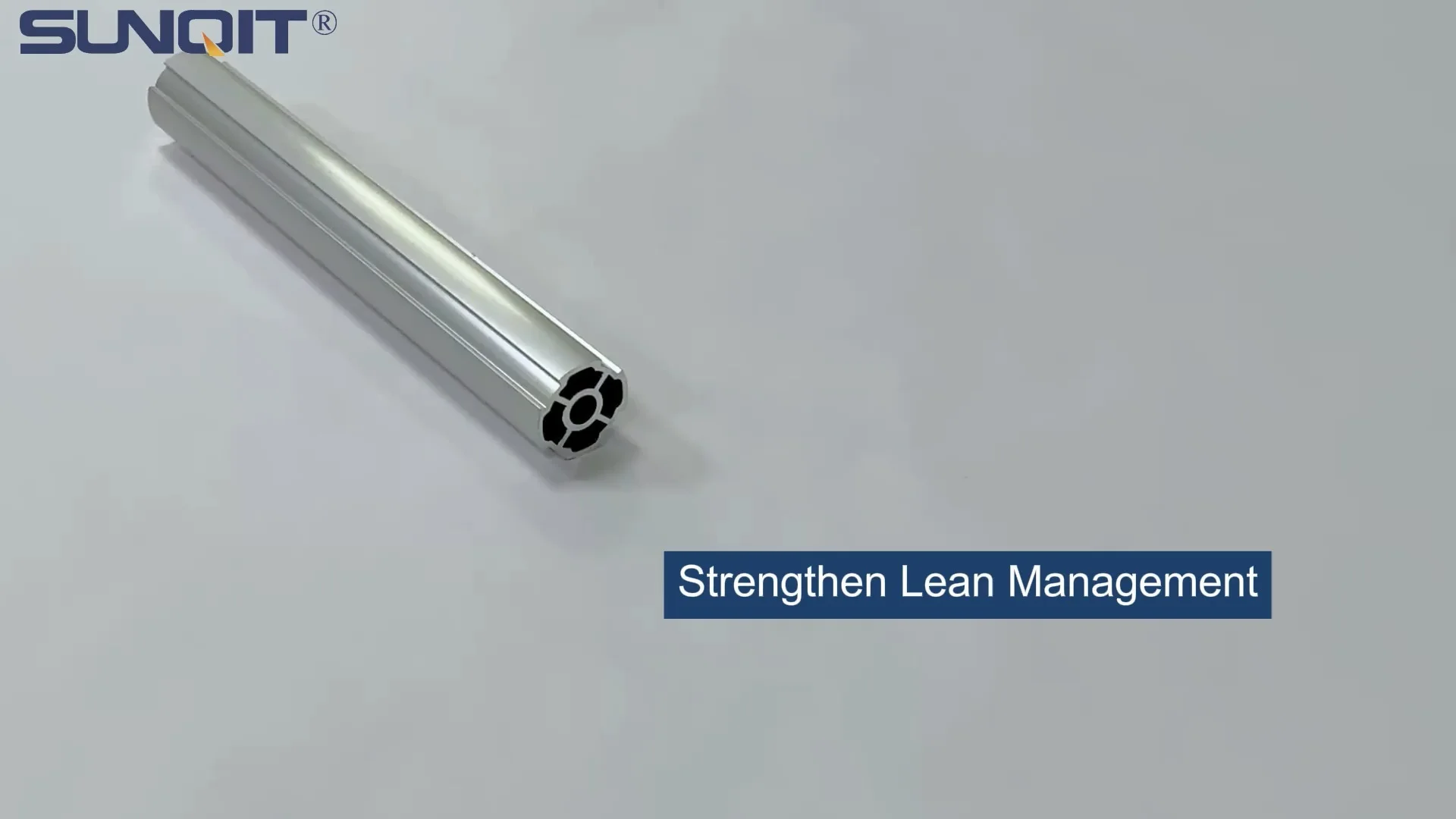
This product is called reinforced aluminum tube, and its bending strength is about twice that of the basic aluminum tube. The end face can process m1o threaded holes, install foot cups and other accessories, or convert internal and external screws in
In the fast-paced world of communication equipment manufacturing, where precision meets urgency, the difference between success and stagnation often lies in the efficiency of production lines. Every second wasted, every unnecessary movement, and every bottleneck can ripple through the supply chain, delaying the delivery of critical components—from routers and switches to 5G transceivers that keep the world connected. This is where lean management steps in, not as a buzzword, but as a lifeline. At its core, lean is about stripping away waste to reveal a smoother, more responsive operation. And if lean management is the brain of this operation, then conveyor systems are its circulatory system—quietly, yet powerfully, keeping materials and products flowing where they need to be, when they need to be there.
Understanding Lean Management: More Than Just "Cutting Costs"
Before diving into conveyors, let's clarify what lean management truly means for communication equipment manufacturing. It's easy to mistake lean for simple cost-cutting, but that's a narrow view. Lean is a philosophy built on two pillars: respect for people and continuous improvement. In practice, this translates to identifying and eliminating "muda"—the Japanese term for waste—in all its forms: overproduction, waiting, transport, overprocessing, inventory, motion, and defects. For communication equipment, where products are often complex assemblies of tiny, sensitive parts (think microchips, antennas, and circuit boards), waste isn't just inefficient—it can compromise quality and reliability.
Consider, for example, a traditional production line where workers manually carry circuit boards from one station to the next. This isn't just a waste of motion; it increases the risk of ESD (electrostatic discharge) damage, a critical concern in electronics manufacturing. Or imagine a workstation where parts sit idle for hours because the previous step's conveyor moves too slowly—this is "waiting" waste, and it's a silent productivity killer. Lean management seeks to replace these scenarios with systems that flow like water: steady, adaptable, and frictionless. And that's where conveyor systems, paired with complementary tools like workbenches and flow racks, become indispensable.
Conveyors: The Unsung Heroes of Lean Flow
Conveyors are often overlooked as "just another machine," but in a lean system, they're strategic assets. A well-designed conveyor doesn't just move products—it orchestrates the rhythm of production. In communication equipment manufacturing, where assembly steps are often sequential and time-sensitive (e.g., soldering, testing, packaging), conveyors ensure that each part arrives at the right workstation exactly when the operator is ready for it. This synchronization eliminates "transport waste" (no more workers pushing carts back and forth) and "waiting waste" (no more idle stations), two of the biggest enemies of lean efficiency.
But not all conveyors are created equal. Traditional rigid conveyors, with fixed speeds and inflexible paths, can become bottlenecks themselves if production needs change. For lean management to thrive, conveyors must be adaptable . This is where modern solutions shine—think modular designs with adjustable speeds, curved tracks to navigate tight factory spaces, and ESD-safe components to protect sensitive electronics. For instance, roller track conveyors with plastic or aluminum wheels (like the 40 steel roller track with black ESD wheels or 38 aluminum roller track with side guides) are engineered to minimize friction and static, ensuring smooth transport of delicate parts without damage.

Workbenches and Flow Racks: Conveyors' Lean Partners
A conveyor system can't deliver peak efficiency in isolation. It needs teammates: workbenches and flow racks. Imagine a conveyor feeding parts to a cluttered, poorly designed workstation. Even if the conveyor runs perfectly, the operator will waste time searching for tools or reaching awkwardly for components—this is "motion waste," and it negates the conveyor's benefits. Lean workbenches solve this by putting everything within arm's reach. Ergonomically designed (like the "workbench e (single deck-without caster)" model), they often include built-in storage, ESD mats to prevent static damage, and adjustable heights to reduce operator fatigue. When paired with a conveyor, a well-placed workbench turns a chaotic station into a hub of focused productivity.
Then there are flow racks—those clever shelving units where products "flow" forward as items are removed, ensuring first-in, first-out (FIFO) inventory management. In communication equipment manufacturing, where parts can have short shelf lives or strict expiration dates (e.g., adhesives, solder paste), FIFO isn't just a best practice—it's critical for quality control. Flow racks like "material rack b (3 row and 3 floor)" work seamlessly with conveyors: parts are loaded onto the rack from the back, and as the conveyor delivers empty bins, operators restock efficiently. This integration cuts down on "inventory waste" by keeping stock levels lean and reducing the risk of obsolete parts piling up.

The Cost of Ignoring Conveyor Efficiency: A Lean Wake-Up Call
To truly grasp the impact of conveyor optimization, let's look at the consequences of getting it wrong. A mid-sized communication equipment manufacturer we worked with recently was struggling with frequent delays. Their production line used outdated, fixed-speed conveyors that couldn't keep up with sudden spikes in demand for 5G modules. Workers were often seen rushing to unload backed-up parts, while downstream stations sat idle—classic "bottleneck" waste. Worse, the conveyors lacked ESD protection, leading to a 2% defect rate in circuit boards, which translated to thousands of dollars in rework and scrap.
After a lean audit, the solution was clear: upgrade to modular aluminum roller track conveyors with variable speed controls, pair them with ESD workbenches, and install flow racks at key stations. Within three months, the results spoke for themselves: defect rates dropped to 0.5%, production throughput increased by 18%, and operators reported less fatigue. The lesson? Conveyors aren't just about moving things—they're about moving things intelligently , and in lean management, intelligence equals efficiency.

Modern Conveyor Solutions: Built for Lean Flexibility
So, what does a "lean conveyor system" look like in 2025? It starts with modularity . Aluminum profile conveyors, for example, use lightweight, durable aluminum extrusion profiles and accessories that can be reconfigured in hours, not days. Need to add a new workstation? Swap out a straight track for a curved one using aluminum guide rails and roller track connectors. Suddenly, the line adapts to new product designs without a complete overhaul—this is "flexibility waste" eliminated.
Another key feature is smart integration . Today's conveyors often come with sensors that communicate with production management software, alerting teams to jams, slowdowns, or low stock levels in real time. For communication equipment manufacturers, this means issues are resolved before they become crises. For example, a roller track with a "roller track placon mount center support bracket" might trigger an alert if a wheel jams, preventing a cascade of delays downstream.
ESD compliance is also non-negotiable. Communication equipment components like semiconductors are damaged by static electricity, which can discharge at voltages as low as 200 volts—far below what humans can feel. Conveyors with ESD-safe wheels (like the 40 steel roller track with black ESD wheels) and ESD workbenches create a continuous "grounded" path, protecting sensitive parts from invisible damage. This isn't just about quality; it's about avoiding the waste of scrapping a $500 circuit board because of a 2-cent static discharge.
From Theory to Practice: A Lean Conveyor Implementation Roadmap
Adopting a lean conveyor system doesn't happen overnight, but it doesn't have to be overwhelming. Here's a step-by-step approach inspired by real-world lean transformations:
1. Map the Current State
Start by walking the production line and mapping every step of the process. Where do parts enter? How do they move between stations? Where do delays occur? Tools like value stream mapping (VSM) can help visualize waste—for example, a VSM might reveal that a conveyor between soldering and testing stations is causing a 15-minute daily backlog. This data becomes the foundation for improvement.
2. Involve the Team
Operators are the experts on what works and what doesn't. A conveyor might look efficient on paper, but if the person loading it struggles with heavy bins, that's a problem. Hold brainstorming sessions to gather input: "What would make this conveyor easier to use?" "Where do you waste the most time?" Their feedback often leads to simple, impactful changes—like adding casters to a workbench for mobility or adjusting a conveyor's height to reduce bending.
3. Invest in Modular Components
Choose conveyors, workbenches, and flow racks designed for adaptability. Aluminum profile conveyors, for example, use T-slot aluminum pipes and accessories that can be assembled and disassembled without welding. This means if your product line shifts from routers to satellite modems, you can reconfigure the conveyor path in a weekend instead of waiting weeks for custom machinery.
4. Pilot and Iterate
Don't overhaul the entire line at once. Pick a high-waste area (e.g., the testing station) and pilot a new conveyor-workbench-flow rack setup. Measure key metrics: throughput, defect rates, operator fatigue. If the pilot works, scale it; if not, adjust. Lean is about continuous improvement, not perfection on the first try.
5. Train and Sustain
Even the best conveyor system will fail if operators don't know how to maintain it. Train teams on basic troubleshooting (e.g., fixing a jammed roller), cleaning protocols, and how to spot early signs of wear. Create a "lean team" to regularly review performance and suggest updates—because lean isn't a one-time project; it's a habit.
Traditional vs. Lean Conveyor Systems: A Comparative Look
| Aspect | Traditional Conveyor Systems | Lean-Optimized Conveyor Systems |
|---|---|---|
| Flexibility | Fixed paths and speeds; hard to reconfigure for new products. | Modular design with adjustable tracks, speeds, and accessories (e.g., aluminum guide rails, roller track connectors). |
| Waste Reduction | Often causes transport, waiting, and motion waste (e.g., manual loading/unloading). | Eliminates waste via synchronization with workbenches/flow racks, ESD protection, and smart sensors. |
| ESD Safety | Basic or no ESD protection; higher risk of static damage to electronics. | ESD-compliant wheels (e.g., black ESD wheels), grounded tracks, and integrated ESD workbenches. |
| Maintenance | Complex repairs requiring specialized technicians; long downtime. | Simple, tool-free assembly with standardized parts (e.g., roller track placon mounts); operators can perform basic fixes. |
| Cost Over Time | Lower upfront cost but higher long-term costs due to waste, defects, and inflexibility. | Higher initial investment, but faster ROI via increased throughput, lower defects, and adaptability to market changes. |
The Future of Lean Conveyors: Where Technology Meets Human-Centric Design
As communication equipment manufacturing evolves—with trends like miniaturization (smaller 6G components), customization (tailored IoT devices), and sustainability (reduced energy use)—conveyors will need to evolve too. We're already seeing innovations like "smart conveyors" with AI-powered predictive maintenance (sensors that detect wear before a breakdown) and energy-efficient motors that reduce power consumption by 30% or more. But perhaps the most exciting trend is the focus on human-centric design: conveyors that adjust speeds based on operator workload, or workbenches with built-in ergonomic sensors that remind workers to stretch or adjust their posture.
In this future, lean management won't just be about "eliminating waste"—it will be about empowering people to do their best work. Conveyors, workbenches, and flow racks will fade into the background, becoming so intuitive and efficient that operators can focus on what they do best: building high-quality communication equipment that keeps the world connected. After all, the goal of lean isn't just to make machines work better—it's to make work better for the people behind the machines.
Conclusion: Conveyors as the Catalyst for Lean Excellence
In communication equipment manufacturing, where innovation is constant and competition is fierce, lean management isn't optional—it's essential. And at the heart of any successful lean transformation is a well-optimized conveyor system. It's the thread that connects workbenches to flow racks, operators to parts, and ideas to action. By investing in modular, ESD-safe conveyors and integrating them with ergonomic workbenches and efficient flow racks, manufacturers can eliminate waste, boost productivity, and build a culture of continuous improvement.
So, if you're looking to strengthen lean management in your facility, start with the flow. Examine your conveyors. Talk to your operators. Ask: "Is this system helping us create value, or is it holding us back?" The answer might surprise you—and it could be the first step toward a leaner, more efficient, and more successful future.