- Company Articles
- Company Articles
- Strengthen Lean Management in Consumer Electronics: From Assembly to Packaging

Strengthen Lean Management in Consumer Electronics: From Assembly to Packaging
Related Product
Strengthen Lean Management
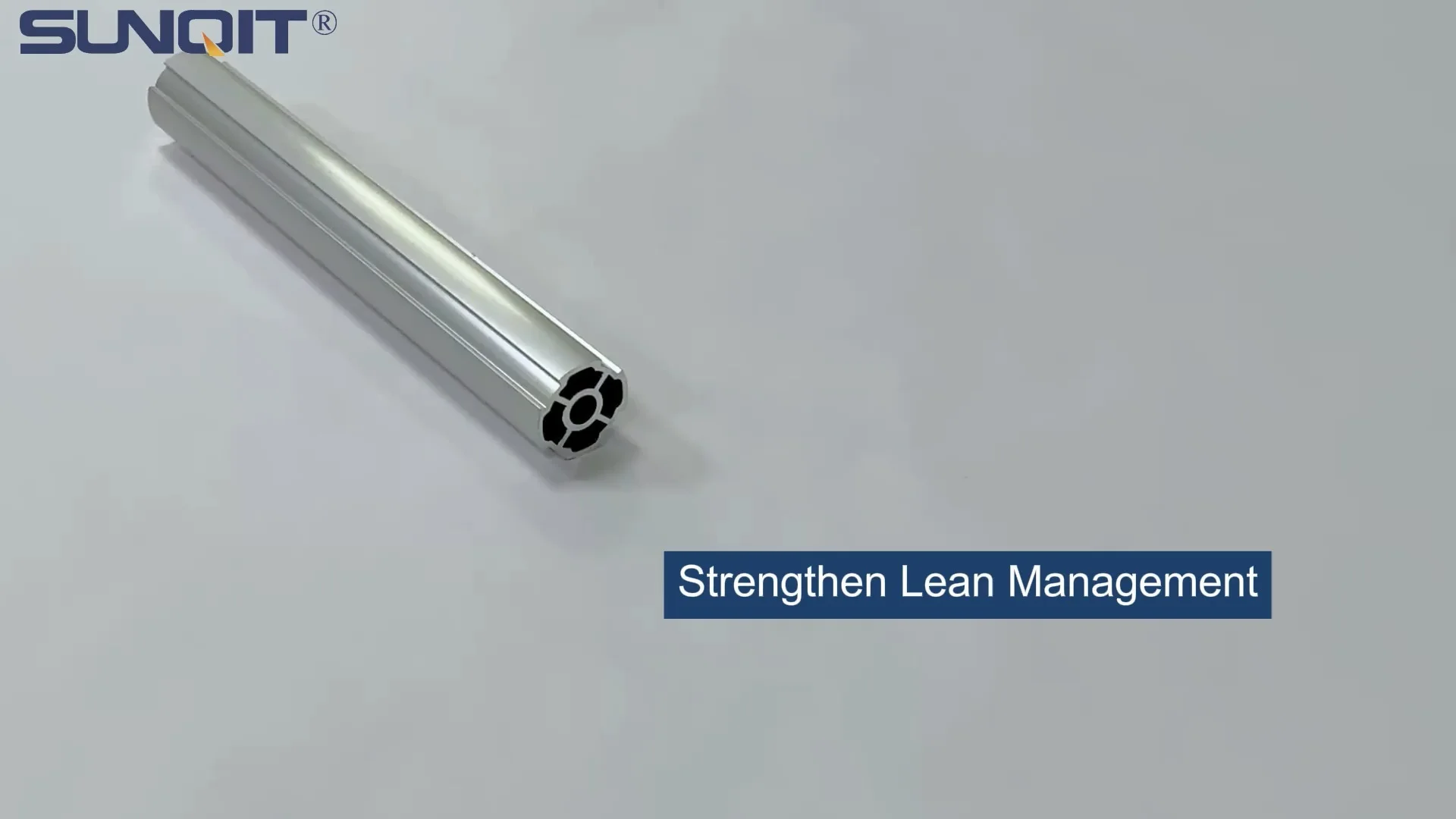
This product is called reinforced aluminum tube, and its bending strength is about twice that of the basic aluminum tube. The end face can process m1o threaded holes, install foot cups and other accessories, or convert internal and external screws in
In the fast-paced world of consumer electronics, where innovation cycles shrink and customer expectations soar, the difference between market leaders and also-rans often comes down to efficiency. Every second wasted on the production line, every unnecessary movement of materials, and every avoidable defect chips away at profitability and competitiveness. This is where lean management steps in—not as a buzzword, but as a transformative approach to building smarter, more responsive operations. From the moment a component arrives at the factory to the final packaging of a finished smartphone or laptop, lean principles guide every decision, turning chaos into order and waste into value. Let's explore how tools like lean systems, lean pipe workbenches, ESD workstations, flow racks, and conveyors are reshaping the consumer electronics manufacturing landscape.
The Heart of Lean: Building a Responsive Lean System
At its core, a lean system is about more than just buying tools—it's a mindset that prioritizes value above all else. In consumer electronics, where products are often delicate, high-cost, and time-sensitive, this means designing processes that eliminate waste in every form: overproduction, waiting, unnecessary transportation, excess inventory, defects, and even unused employee creativity. A well-designed lean system acts as the backbone of this effort, connecting people, processes, and equipment into a seamless ecosystem where every action serves a purpose.
Take, for example, a factory producing smartwatches. A traditional setup might stockpile components in distant warehouses, require workers to walk long distances to retrieve parts, and use fixed assembly lines that grind to a halt if one station breaks down. A lean system, by contrast, brings components closer to the line, uses modular workstations that adapt to changing production needs, and ensures materials flow continuously from one step to the next. It's not about working harder—it's about working smarter , with fewer bottlenecks and more flexibility to pivot when demand shifts or new models launch.
But a lean system doesn't exist in a vacuum. It relies on the right tools to bring its principles to life. And in the consumer electronics industry, few tools are as foundational as the humble lean pipe workbench and the specialized ESD workstation.
Assembly Line Excellence: Lean Pipe Workbenches and ESD Workstations
Ergonomics and Efficiency: The Lean Pipe Workbench Advantage
Walk into any modern electronics assembly plant, and you'll likely spot rows of sleek, modular workstations that look nothing like the clunky, one-size-fits-all benches of the past. These are lean pipe workbenches, and their popularity stems from a simple truth: in electronics manufacturing, where precision is everything, worker comfort and efficiency go hand in hand.
Lean pipe workbenches are built with modularity in mind. Made from lightweight yet durable materials like aluminum or steel pipes and joints, they can be customized to fit the exact needs of a task. Need a taller bench for a worker assembling large displays? Adjust the height. Adding a new tool holder for a specialized screwdriver? Snap on a (accessory) in minutes. Even better, many come with casters, allowing entire workstations to be repositioned in minutes when production lines need to be reconfigured for a new product model.
Consider the assembly of a laptop motherboard, a task that requires workers to handle tiny chips, resistors, and connectors for hours on end. A poorly designed workstation might force workers to hunch over, strain their eyes, or reach across cluttered surfaces—leading to fatigue, slower work, and higher error rates. A lean pipe workbench, however, can be outfitted with adjustable shelves, integrated lighting, and tool organizers that keep everything within arm's reach. The result? Happier workers, faster assembly times, and fewer mistakes—all critical in an industry where a single misplaced component can render a $500 motherboard useless.
ESD Protection: Why ESD Workstations Are Non-Negotiable
If lean pipe workbenches are about efficiency, ESD workstations are about survival—especially in consumer electronics. Electrostatic discharge (ESD) is a silent killer in manufacturing: a static charge as small as 3000 volts (barely enough to make your hair stand up) can destroy a sensitive microchip, while charges of 10,000 volts or more can damage components without any visible sign, leading to failures weeks or months after a product ships. For companies producing smartphones, tablets, or wearables—where PCBs (printed circuit boards) are packed with millions of microscopic transistors—ESD protection isn't an option; it's a requirement.
An ESD workstation is purpose-built to neutralize this threat. Unlike standard workbenches, these stations feature conductive surfaces, grounding straps for workers, and ionization equipment that dissipates static charges in the air. Even the smallest details matter: the mats are made from anti-static rubber, the tools are grounded, and the lighting fixtures don't generate static. In a typical smartphone assembly line, for example, ESD workstations are used for tasks like attaching camera modules, soldering microchips, and testing circuit boards. By preventing ESD-related defects, these workstations slash rework costs, reduce warranty claims, and ensure that products reach customers in perfect condition.
What makes ESD workstations even more valuable is their compatibility with lean principles. Many are built using the same modular lean pipe framework as standard workbenches, meaning they can be adapted as production needs change. Need to add a new testing station for a 5G module? Simply reconfigure the ESD workstation with additional shelving and grounding points. This flexibility ensures that even specialized, high-cost equipment like ESD stations don't become a barrier to continuous improvement.

Streamlining Material Flow: Flow Racks and Conveyors
Efficiency in assembly is critical, but it's only half the battle. In consumer electronics manufacturing, materials—from tiny capacitors to large display panels—must move quickly, safely, and precisely from storage to assembly to packaging. This is where flow racks and conveyors shine, turning the "hurry up and wait" chaos of traditional material handling into a smooth, predictable dance.
From Storage to Station: Flow Racks in Action
Imagine a factory where workers spend 20% of their day walking to a distant warehouse to fetch parts, only to find the bin they need is empty or contains the wrong component. This is the reality of many non-lean operations, where inventory is managed haphazardly and materials are treated as an afterthought. Flow racks, by contrast, are designed to bring materials to the worker, not the other way around.
Flow racks are shelving units with inclined levels fitted with roller tracks, allowing materials to slide forward as the front bin is emptied—a "first-in, first-out" (FIFO) system that ensures older inventory is used first, reducing waste from expired or obsolete components. In a laptop factory, for instance, a flow rack might be positioned right next to the assembly line, stocked with small parts like screws, USB ports, and battery connectors. As workers take parts from the front of the rack, gravity pulls the next bin forward, eliminating the need to search, reach, or wait for a material handler to restock.
The beauty of flow racks lies in their simplicity and adaptability. They can be customized to hold everything from tiny plastic bins to large cardboard boxes, and their modular design means they can be expanded or reconfigured as product lines change. For example, when a factory shifts from producing 13-inch laptops to 15-inch models, the flow racks can be adjusted to accommodate larger display panels without requiring a complete overhaul. This not only saves time and money but also ensures that material flow remains optimized even as production demands evolve.
Conveyors: The Silent Workhorses of Continuous Flow
If flow racks are the "feeders" of the assembly line, conveyors are the "arteries," carrying products and materials between stations with minimal human intervention. In consumer electronics, where products are often fragile and require gentle handling, conveyors are more than just transport—they're precision tools that ensure components move at the right speed, in the right orientation, and with zero damage.
There are countless types of conveyors, each suited to specific tasks. Roller conveyors, with their smooth-rolling wheels, are ideal for moving heavy items like PCBs or display assemblies. Belt conveyors, with their soft, flat surfaces, are perfect for delicate components like camera lenses or touchscreens. In some cases, factories use automated guided vehicle (AGV) conveyors—small, self-driving carts that follow magnetic strips or QR codes—to transport materials between distant stations, eliminating the need for manual forklifts.
Consider the production of a wireless headphone. The process starts with assembling the battery pack on one workstation, then moves to attaching the speakers, then to testing, and finally to packaging. Without conveyors, workers would have to carry each headphone between stations, risking drops, delays, and fatigue. With a roller conveyor system, however, the headphones glide smoothly from one station to the next, arriving exactly when the next worker is ready. The conveyor speed is synchronized with the assembly pace, ensuring no station is overwhelmed or underutilized—a key principle of lean's "takt time" (the rate at which products must be produced to meet customer demand).
Conveyors also play a critical role in reducing "transportation waste"—one of the seven deadly wastes of lean. In a traditional factory, materials might be moved back and forth between warehouses, assembly lines, and testing areas, adding unnecessary miles and time. Conveyors create a direct, linear path from start to finish, cutting down on travel time and minimizing the risk of damage. For example, a conveyor system in a smartwatch factory might carry partially assembled watches from the PCB station to the display attachment station, then to the battery installation station, and finally to packaging—all without a single detour.
| Aspect | Traditional Material Handling | Lean Material Handling (Flow Racks + Conveyors) | |
|---|---|---|---|
| Inventory Access | Workers walk to distant warehouses; bins often disorganized | Flow racks positioned at the line; FIFO system ensures easy access | |
| Transport Time | Manual carrying or forklifts; average 15-20 minutes per trip | Conveyors move materials in seconds; no human intervention needed | Conveyors move materials in seconds; no human intervention needed |
| Damage Risk | High (dropping, jostling during manual transport) | Low (gentle conveyor movement; specialized tracks for fragile items) | |
| Flexibility | Fixed paths; hard to reconfigure for new products | Modular conveyors and flow racks; reconfigurable in hours |

Packaging: Closing the Loop with Lean Principles
The final step in the manufacturing process—packaging—is often overlooked in lean discussions, but it's a critical opportunity to eliminate waste and enhance customer satisfaction. In consumer electronics, packaging must protect delicate products during shipping, communicate brand value, and be easy for customers to open—all while minimizing cost and environmental impact. Lean principles help achieve this balance by focusing on right-sized packaging, efficient packing processes, and waste reduction.
Lean pipe workbenches play a role here, too. Packaging stations are often outfitted with modular workbenches that hold boxes, protective foam, labels, and sealing tools within arm's reach. Workers don't waste time searching for tape or scissors; everything is organized, and the bench height is adjusted to prevent back strain. Flow racks near the packaging line stock boxes and inserts in various sizes, ensuring that only the necessary materials are on hand (no excess inventory) and that they're used in the order they arrive (FIFO, again, to avoid damage from).
Conveyors also streamline packaging by moving products from the final assembly station to the packaging line, then to the shipping dock. For example, a conveyor might carry a finished tablet to a packaging workstation, where a worker places it in a box with foam inserts, seals it, and applies a shipping label. The box then moves via another conveyor to a sorting station, where it's directed to the correct truck based on destination. This continuous flow eliminates bottlenecks and ensures that products are shipped as soon as they're ready, reducing storage costs and speeding up delivery times.

Real-World Impact: Case Studies in Consumer Electronics
To truly understand the power of these tools, let's look at a hypothetical but realistic example: a mid-sized consumer electronics company producing budget smartphones. Before implementing lean principles, the company struggled with long lead times (6 weeks from component arrival to shipping), high defect rates (5% of phones failed testing), and frequent stockouts of critical parts. Workers complained of fatigue from walking long distances, and the factory floor was cluttered with excess inventory.
The company's lean transformation began with redesigning its assembly line using a lean system framework. It installed lean pipe workbenches with ESD protection for PCB assembly, replacing fixed wooden benches. Flow racks were positioned next to each workstation, stocked with just enough components to meet 2 hours of production (just-in-time inventory). Roller conveyors connected the assembly stations, and AGV conveyors transported finished phones to the packaging line. Within six months, the results were striking:
- Lead times dropped to 3 weeks (a 50% reduction) due to faster material flow and less waiting.
- Defect rates fell to 1.5% (a 70% improvement) thanks to ESD workstations and standardized assembly processes.
- Worker productivity increased by 25% as less time was spent walking and searching for materials.
- Inventory costs decreased by 30% as excess stock was eliminated.
This isn't an isolated success story. Major players like Apple, Samsung, and Xiaomi have long embraced lean tools, and smaller manufacturers are following suit. The message is clear: in consumer electronics, where margins are tight and competition is fierce, lean isn't a luxury—it's a necessity.
Choosing the Right Partners: Why Supplier Collaboration Matters
Building a lean system isn't something you do alone. The quality of your lean pipe workbenches, ESD workstations, flow racks, and conveyors depends on the expertise of your suppliers. A reliable lean pipe supplier, for example, will offer not just products but also design support, helping you customize workbenches to your exact needs. A conveyor supplier with experience in electronics will understand the importance of gentle handling and precise speed control, avoiding generic solutions that could damage components.
When selecting suppliers, look for those who specialize in consumer electronics. They'll be familiar with industry-specific challenges, like ESD requirements, small-parts handling, and rapid product cycles. They'll also offer modular, scalable solutions that grow with your business—so you don't have to replace your entire system when you launch a new product. Finally, choose suppliers who prioritize customer support: if a conveyor breaks down or a workbench needs reconfiguration, you need a partner who can respond quickly to minimize downtime.
Conclusion: Lean as a Journey, Not a Destination
Strengthening lean management in consumer electronics is more than a one-time project—it's a never-ending journey of improvement. Tools like lean systems, lean pipe workbenches, ESD workstations, flow racks, and conveyors are powerful, but their true value comes from how they're used: by engaged workers, in processes designed to adapt, and with a relentless focus on adding value for the customer.
As consumer electronics continue to evolve—with foldable screens, AI-powered devices, and even more delicate components—the need for lean principles will only grow. Factories that embrace this mindset won't just survive; they'll thrive, turning challenges into opportunities and waste into innovation. After all, in a world where every second counts, lean isn't just about working faster—it's about working better , for your workers, your customers, and your bottom line.