- Company Articles
- Company Articles
- Strengthen Lean Management in Cross-Departmental Teams: Breaking Silos with Lean Tools

Strengthen Lean Management in Cross-Departmental Teams: Breaking Silos with Lean Tools
Related Product
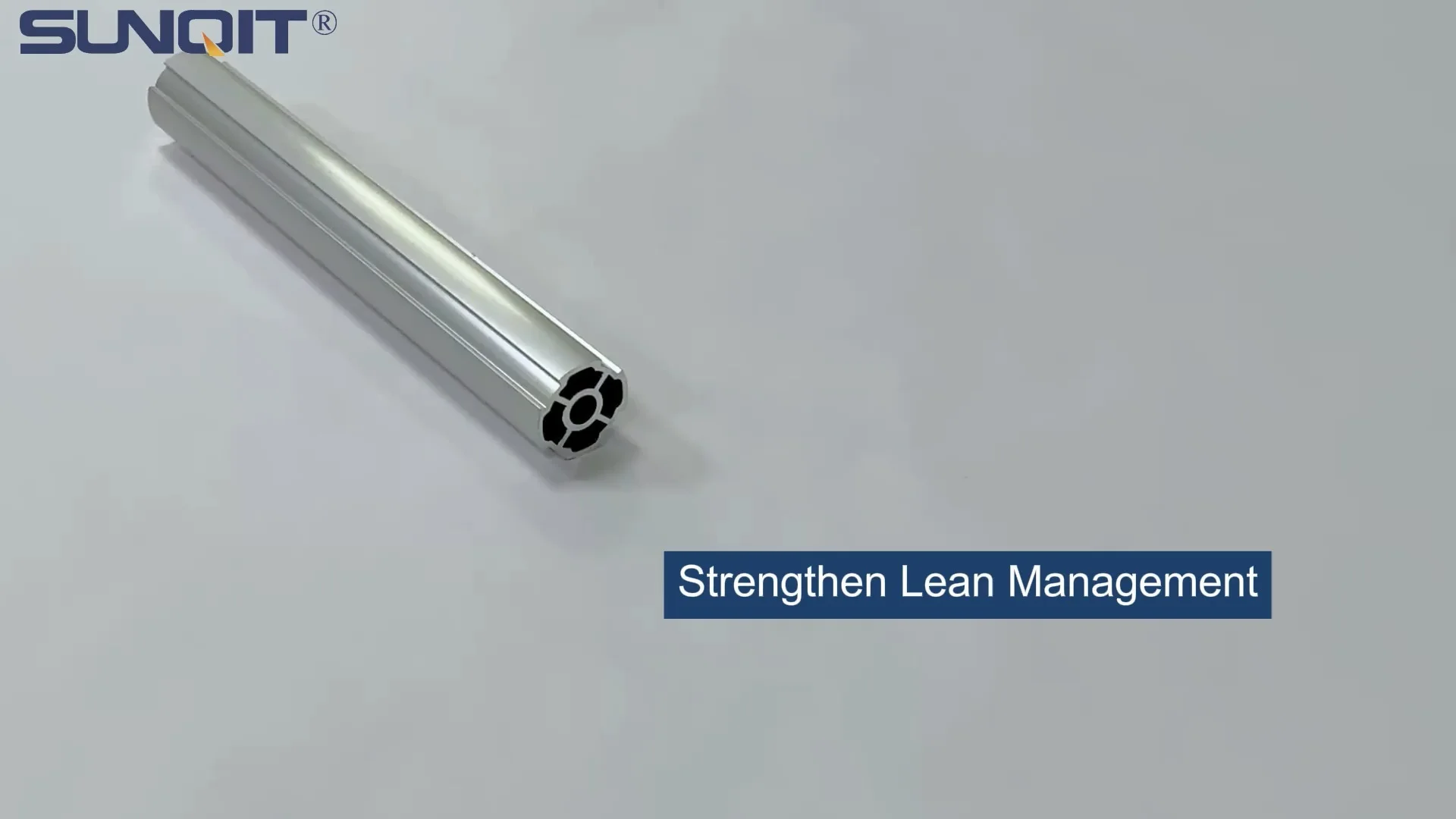
Strengthen Lean Management
This product is called reinforced aluminum tube, and its bending strength is about twice that of the basic aluminum tube. The end face can process m1o threaded holes, install foot cups and other accessories, or convert internal and external screws in
The Hidden Cost of Silos: When Departments Speak Different Languages
Picture this: It's a Tuesday morning at a mid-sized manufacturing facility. The sales team just closed a rush order, promising delivery by Friday. They fire off an email to production, assuming the floor can pivot quickly. But production, already swamped with a backlog, didn't see the note buried in their inbox. Meanwhile, the logistics team, unaware of the new order, scheduled a truck for Thursday—too early to ship the finished goods. By Wednesday afternoon, tensions flare: Sales blames production for delays, production blames logistics for poor scheduling, and logistics blames sales for overpromising. Sound familiar?
This scenario isn't just a workplace drama—it's the tangible cost of silos. When departments operate in isolation, sharing information haphazardly (or not at all), efficiency plummets, deadlines get missed, and employee morale takes a hit. In fact, a McKinsey study found that companies with siloed teams are 20% less productive than those with strong cross-departmental collaboration. The good news? Lean management isn't just about cutting waste from production lines—it's a powerful antidote to silos. And at the heart of this solution are lean tools designed to connect people, processes, and goals.
Lean Management: More Than Efficiency—It's About Connection
Lean management, born from the Toyota Production System, is often associated with terms like "kaizen" (continuous improvement) and "just-in-time" inventory. But at its core, lean is about creating systems that enable collaboration. It's about designing workflows that force teams to communicate because they're literally working from the same playbook. And while lean principles like "value stream mapping" help identify bottlenecks, the real magic happens when teams use physical and digital tools to align their efforts.
Enter the lean system —a framework of tools and practices that turn abstract principles into daily habits. From workbenches that centralize tasks to flow racks that visualize material movement, these tools don't just make work easier—they create shared accountability. When a sales rep can walk to the production floor and see a flow rack half-full of parts for their rush order, or a logistics manager can track a conveyor belt's progress in real time, suddenly, "the other department" stops feeling like a distant entity. They become partners in a shared goal.

Lean Tools as Bridges: How Workbenches, Flow Racks, and Conveyors Break Down Walls
Let's dive into the tools that make cross-departmental collaboration not just possible, but second nature. These aren't just pieces of equipment—they're conversation starters, visibility boosters, and trust builders.
1. The Workbench: Your Team's "Common Ground"
Walk into any well-run workshop, and you'll notice something: the workbench isn't just a table. It's a command center. A good lean workbench—like an ESD workstation designed for electronics assembly or a single-deck workbench with built-in tool storage—does more than hold parts. It standardizes how tasks get done, so someone from quality control can step in and understand a production associate's process at a glance. But here's the cross-departmental kicker: When workbenches are positioned strategically (say, near a production line and a logistics staging area), they become natural meeting points. A sales rep checking on an order can stand at the workbench and chat with the operator assembling their product, while a logistics coordinator stops by to confirm packaging specs. Suddenly, information flows face-to-face, not through forwarded emails.
Consider a case study from a medical device manufacturer I worked with last year. Their R&D and production teams had historically clashed over design changes—R&D would tweak a component without updating production, leading to rework. We installed adjustable workbenches in a shared "innovation zone" where engineers and production leads could prototype together. Within three months, design change errors dropped by 40%, and team members reported feeling "more like collaborators than critics." The workbench didn't solve all their problems, but it gave them a physical space to align.
2. Flow Racks: The "Status update" You Can See From Across the Floor
Ever tried to explain to a colleague in another department why a project is behind? It's tough to convey urgency when they can't see the bottleneck. That's where flow racks shine. A flow rack—with its inclined shelves and gravity-fed rollers—turns inventory levels into a visual story. When a bin of widgets on the top shelf is empty, it's not just a "stockout" to the warehouse team; it's a signal to purchasing that reordering is urgent, and to production that they might need to adjust their schedule. And because flow racks are often placed in high-traffic areas (think: near the shipping dock or production line), they're impossible to ignore.
A food packaging client once had a problem: Their procurement team was ordering raw materials based on spreadsheets, while production was using a separate inventory app. The result? Too much of one ingredient, not enough of another. We replaced their static shelving with a 3-row, 3-floor material rack (Flow Rack B, in their case) where each bin was labeled with reorder thresholds. Now, when a production operator pulls the last bag of flour from the rack, they flip a small red flag. Procurement, passing by on their morning rounds, sees the flag and immediately places an order. No more emails, no more missed updates—just a simple, visual cue that bridges two departments.
3. Conveyors: The "Rhythm Keepers" of Cross-Departmental Timing
If workbenches are the "common ground" and flow racks are the "status updates," then conveyors are the "metronome" that keeps everyone in sync. A well-designed conveyor system—whether it's a roller conveyor for heavy parts or a belt conveyor for delicate items—doesn't just move products from A to B. It sets a pace that departments can plan around. For example, a conveyor linking assembly to packaging ensures that packaging knows exactly when to expect the next batch of goods, so they can prep materials and staff accordingly. No more "surprise" deliveries that overwhelm the packaging line, and no more idle time waiting for work to arrive.
I saw this in action at a furniture manufacturer last year. Their assembly line and shipping departments were constantly at odds: Assembly would finish a batch of chairs at 3 PM, but shipping had already loaded the day's trucks and left for the day. The chairs sat overnight, delaying delivery. We installed a gravity roller conveyor that extended from the assembly line to a shipping staging area, with a built-in sensor that sent an alert to shipping's dashboard when a chair arrived. Now, shipping adjusts their loading schedule based on conveyor traffic, and assembly knows to prioritize larger batches earlier in the day. The result? On-time shipments increased by 25%, and the two teams—once rivals—now joke about "beating the conveyor" to meet daily goals.

From Tools to Teamwork: A Real-World Example
Let's pull this all together with a story from a client we'll call "TechWorks," a mid-sized electronics manufacturer. TechWorks struggled with silos between their production, quality control (QC), and customer service teams. Customer service would get complaints about faulty wiring, but by the time they notified QC, production had already shipped 50 more units with the same issue. QC blamed production for rushing, production blamed customer service for not flagging issues faster, and everyone blamed "the system."
Our solution? We started by redesigning their workflow around lean tools:
- Workbenches: We installed ESD workstations (grounded to prevent static damage) in a "QC-Production Hub." Now, QC inspectors sit at the same workbench as production operators, checking components as they're assembled. No more waiting for batches to be sent to a separate QC lab.
- Flow Racks: A 3-row, 3-floor material rack was placed near the hub, with color-coded bins: green for "passes QC," yellow for "needs review," and red for "reject." Customer service reps, who now do daily walkthroughs, can see red bins piling up and proactively update customers before complaints roll in.
- Conveyors: A small roller conveyor was added to link the hub to the shipping area, with a digital display showing how many units are pending QC. Shipping can adjust their truck schedules based on real-time output, while production knows if they're falling behind.
The results? Within six months, customer complaints dropped by 65%, and cross-departmental meetings (which used to devolve into blame games) became problem-solving sessions. As one production lead put it: "I don't just see numbers on a spreadsheet anymore. I see the QC inspector next to me flagging a wire, the customer service rep pointing to a red bin, and the shipping manager checking the conveyor. We're all looking at the same stuff, so we're all on the same page."

Implementing Lean Tools in Your Team: A Step-by-Step Guide
Ready to break silos with lean tools? Here's how to start:
| Step | Traditional Approach | Lean Approach with Tools | Why It Breaks Silos |
|---|---|---|---|
| 1. Map Your Value Stream | Each department maps their own process in isolation. | Hold a cross-departmental workshop to map the entire workflow (e.g., sales → production → shipping). Highlight handoff points where silos cause delays. | Teams see how their work impacts others—suddenly, "sales overpromising" becomes "how can we adjust production to support sales goals?" |
| 2. Choose Tools for Handoff Points | Use email/Excel to track handoffs (e.g., "Production to QC: 50 units sent"). | Install flow racks at handoff points (e.g., production to QC) with visual cues (color-coded bins, flags) to signal status. | Visual tools make delays obvious to everyone, so teams collaborate to fix issues before they escalate. |
| 3. Create Shared Workspaces | Departments sit in separate areas; meetings are rare. | Install workbenches in shared zones (e.g., a "collaboration corner") where cross-departmental teams work side-by-side. | Proximity breeds communication—casual conversations lead to problem-solving. |
| 4. Train Teams on Tool Ownership | Tools are "owned" by one department (e.g., "IT manages the conveyor"). | Train cross-departmental "tool champions" (e.g., a production rep and a logistics rep co-own the flow rack). | Shared ownership means shared responsibility—no more "that's not my job." |
Overcoming Resistance: "We've Always Done It This Way"
Let's be honest: Change is hard. Some team members will push back, saying, "Why fix what isn't broken?" or "This is just more work." Here's how to address it:
Start small: Don't overhaul everything at once. Begin with one tool in one high-conflict area (e.g., a flow rack between production and shipping). Let the results speak for themselves.
Involve the team in design: Ask frontline staff (the ones using the tools) what would make their jobs easier. If a production operator suggests a taller workbench, build it—they'll be more invested in using it.
Celebrate small wins: When the first cross-departmental project using the new tools succeeds, throw a pizza party or shout them out in a company meeting. Positive reinforcement turns skeptics into advocates.
Conclusion: Lean Tools Don't Just Build Systems—They Build Culture
Silos aren't just about bad communication—they're about a lack of shared purpose. A lean system filled with workbenches, flow racks, and conveyors doesn't just move parts and products; it moves teams closer to each other. When everyone can see the same workflow, touch the same tools, and solve problems in real time, "us vs. them" fades away. What's left? A team that feels connected, accountable, and proud of the work they do—together.
So, the next time you're stuck in a silo, remember: The solution might not be a new software platform or a company-wide memo. It might be as simple as a well-placed workbench, a flow rack with color-coded bins, or a conveyor that keeps everyone in rhythm. After all, the best teams don't just work for each other—they work with each other, one tool (and one conversation) at a time.