- Company Articles
- Company Articles
- Strengthen Lean Management in Electronics Repair: Custom Workstations for Efficiency

Strengthen Lean Management in Electronics Repair: Custom Workstations for Efficiency
Related Product
Strengthen Lean Management
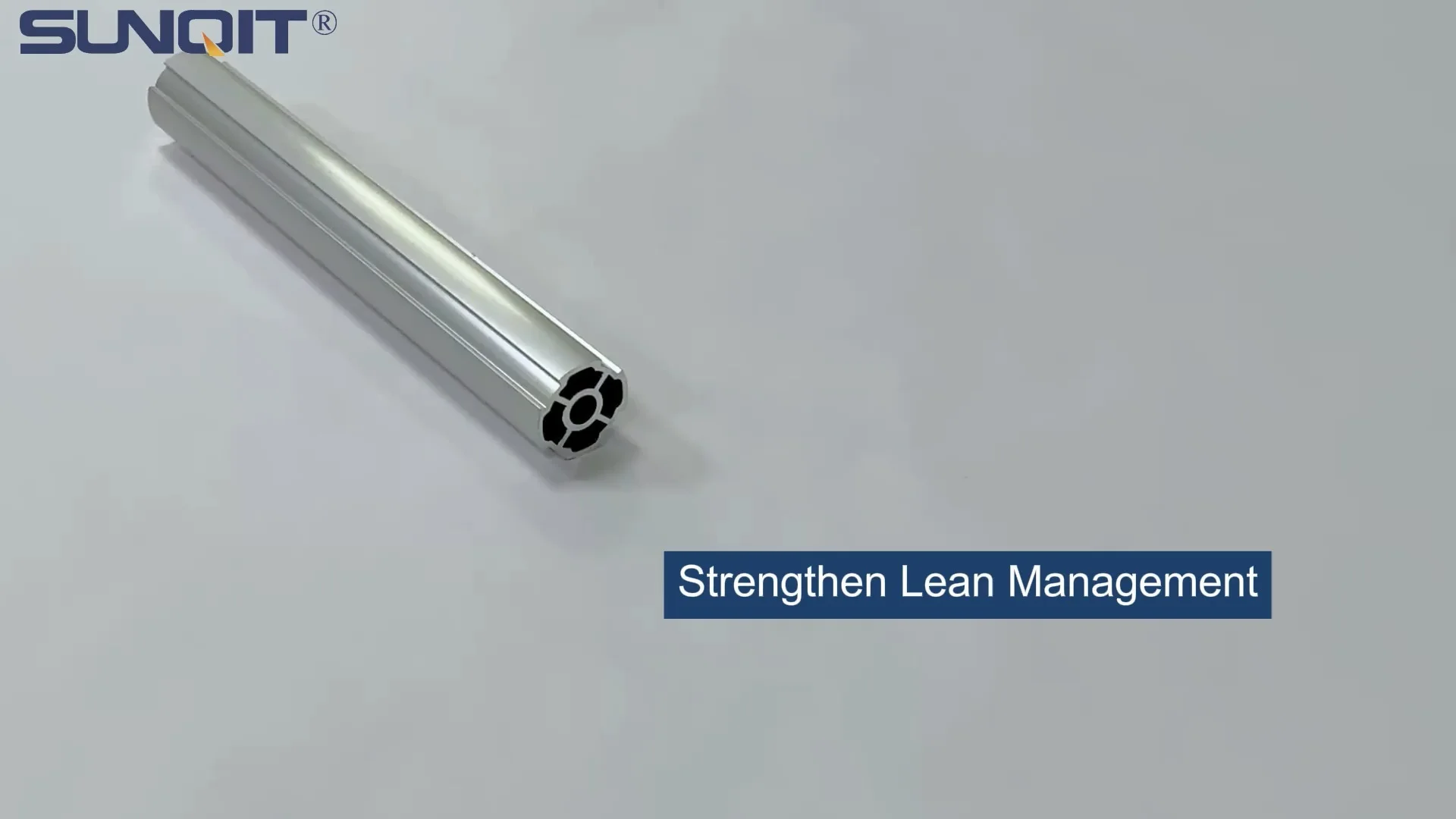
This product is called reinforced aluminum tube, and its bending strength is about twice that of the basic aluminum tube. The end face can process m1o threaded holes, install foot cups and other accessories, or convert internal and external screws in
Walk into any electronics repair shop, and you'll likely find a mix of chaos and precision. A technician hunches over a cluttered bench, fumbling for a specific screwdriver buried under piles of cables. Nearby, a static charge zaps a sensitive circuit board, rendering hours of work useless. Meanwhile, parts bins overflow onto the floor, and a backlog of devices waits—unorganized—for their turn. Sound familiar? For many repair facilities, this isn't just a daily reality; it's a silent productivity killer. But what if there was a way to turn this chaos into a streamlined, efficient process? Enter lean management, paired with custom workstations designed for the unique demands of electronics repair. In this article, we'll explore how integrating lean system principles with tools like esd workstation setups and lean pipe workbench solutions can transform your repair operations—reducing waste, minimizing errors, and empowering your team to work smarter, not harder.
Why Lean Management Matters in Electronics Repair
Lean management isn't just a buzzword borrowed from manufacturing floors; it's a mindset built on one core idea: eliminate waste. In electronics repair, "waste" takes many forms. There's the time wasted searching for tools, the cost of replacing static-damaged components, the frustration of rework due to disorganized workflows, and even the physical strain on technicians forced to work in uncomfortable, inefficient spaces. For a field where precision and speed are critical—whether repairing a $500 smartphone or a $50,000 industrial control panel—these inefficiencies add up fast.
Consider this: the average electronics repair involves 15–20 steps, from diagnosing the issue to testing the final product. Each step is a chance for waste to creep in. A misplaced part? That's "inventory waste." A technician waiting for a colleague to finish using a shared tool? That's "waiting waste." A static discharge frying a motherboard? That's "defect waste." Lean management targets these pain points by focusing on value stream mapping —identifying every action that adds value to the repair process and stripping away the rest. But here's the catch: lean isn't a one-size-fits-all solution. To work in electronics repair, it needs to be paired with tools that adapt to the industry's unique challenges—starting with the workstation itself.
The Heart of the Operation: Custom Workstations for Electronics Repair
In electronics repair, the workstation is more than just a table. It's the command center where diagnosis, disassembly, soldering, and testing happen. A poorly designed workstation becomes a bottleneck; a well-designed one becomes a productivity engine. The key? Customization. Unlike generic workbenches, repair stations need to address three critical needs: static protection , ergonomic efficiency , and modular flexibility . Let's break down how tools like esd workstation setups and lean pipe workbench systems tackle each.
1. ESD Workstations: Guarding Against the Silent Killer
Static electricity is the electronics repair technician's worst enemy. A single electrostatic discharge (ESD)—invisible to the eye—can damage microchips, corrupt data, or cause latent failures that surface months later. According to the ESD Association, static-related damage costs the electronics industry over $50 billion annually. For repair shops, this isn't just a financial hit; it's a blow to reputation. Clients trust you with their devices, and a static-damaged component is a broken promise.
An esd workstation isn't just a "nice-to-have" here—it's a necessity. These specialized setups integrate multiple layers of protection: anti-static mats that ground the technician, wrist straps that dissipate charge, and conductive flooring that prevents static buildup. But modern ESD workstations go further. They're designed to prevent static issues before they start, with features like ionizing fans to neutralize air particles and ESD-safe storage bins for sensitive parts. What makes them lean, though, is their adaptability. Unlike rigid, one-size-fits-all ESD tables, today's systems let you add or remove components as needed—say, swapping out a standard mat for a heat-resistant one when soldering, or attaching a grounding clip for a specific device model. This flexibility ensures you're never paying for features you don't use, aligning perfectly with lean's "no waste" ethos.
2. Lean Pipe Workbenches: Modularity Meets Durability
If ESD workstations protect against defects, lean pipe workbench solutions tackle another lean principle: flexibility . Traditional workbenches are fixed—built to a standard height, with limited storage, and impossible to reconfigure without power tools or a carpenter. But in electronics repair, workflows change constantly. One week, you're swamped with smartphone repairs; the next, you're troubleshooting industrial circuit boards. A bench that works for a 5-inch phone isn't ideal for a 2-foot motherboard.
Lean pipe workbenches solve this with a simple, genius design: lightweight, corrosion-resistant pipes (often aluminum or steel) and modular joints that snap together without welding or drilling. Think of it as adult Legos for your workshop. Need an extra shelf for parts bins? Add a few pipes and joints. Want to lower the bench height for seated work? Adjust the legs in minutes. Need to move the entire setup to a new location? Disassemble it, cart it over, and rebuild—no heavy lifting required. This modularity cuts down on "setup waste" (the time spent reconfiguring workspaces) and ensures your bench evolves with your needs. Plus, materials like aluminum (a staple in many lean pipe systems) are durable yet lightweight, making the benches easy to maneuver without sacrificing stability—critical when working with delicate tools and components.
Traditional vs. Lean Workstations: A Side-by-Side Comparison
| Metric | Traditional Workstation | Lean Pipe Workbench + ESD Setup |
|---|---|---|
| Setup Time | 4–6 hours (requires tools, permanent installation) | 30–60 minutes (no tools, snap-together joints) |
| Static Damage Risk | High (no integrated ESD protection) | Low (grounded mats, wrist straps, ionizers) |
| Reconfiguration Flexibility | Minimal (fixed structure, requires modification) | High (add/remove shelves, adjust height, swap components) |
| Tool Accessibility | Poor (tools scattered, no dedicated storage) | Excellent (integrated tool rails, hanging hooks, drawer organizers) |
| Worker Fatigue | High (fixed height, cluttered workspace) | Low (adjustable height, ergonomic layout, reduced reaching) |

Beyond the Bench: Building a Lean Ecosystem with Flow and Material Management
A great workstation is just the start. To truly embrace lean, you need to look at the entire repair process—from the moment a device arrives to when it's returned to the customer. This means optimizing how materials move, how information flows, and how tasks are prioritized. Here, tools like aluminum profile flow racks and conveyor systems become critical.
Let's start with material flow. In many repair shops, parts and tools are stored in a central room, requiring technicians to walk back and forth dozens of times a day. That's "transport waste"—time spent moving that doesn't add value to the repair. Aluminum profile flow racks solve this by bringing the parts to the technician. These racks use gravity to feed components forward, ensuring the next needed part is always at the front. Mounted near the lean pipe workbench, they eliminate unnecessary movement. Imagine a technician repairing a laptop: instead of trekking to the parts room for a new battery, they simply reach to the flow rack beside them. The rack is customized with dividers labeled by part type (e.g., "iPhone 13 batteries," "USB-C ports"), so there's no searching—just grab and go.
Conveyors take this a step further, especially in larger shops. A small, motorized conveyor belt can move devices from the intake area to the diagnosis station, then to the repair bench, and finally to testing—all without anyone lifting a finger. For example, a smartphone repair line might have three stations: check-in (where devices are logged and tagged), diagnosis (where issues are identified), and repair (where components are replaced). A conveyor connects these stations, with color-coded bins indicating priority level (e.g., red for rush repairs, green for standard). This not only speeds up throughput but also creates visual management—everyone can see where each device is in the process, reducing "waiting waste" and keeping the workflow transparent.

From Chaos to Clarity: A Real-World Lean Transformation
To understand the impact of lean systems and custom workstations, let's look at a case study. Meet TechFix, a mid-sized electronics repair shop in Chicago with 10 technicians and a reputation for quality—but struggling with inefficiencies. Before adopting lean, their workflow was typical: devices piled up in a "drop zone," technicians shared a single ESD bench (leading to wait times), and parts were stored in unlabeled bins. Static damage was a weekly occurrence, and repair times averaged 45 minutes per device—well above industry standards.
TechFix's manager, Maria, decided to invest in a lean overhaul. Here's what they did:
- Step 1: Install ESD Workstations – They replaced the shared bench with five dedicated esd workstation setups, each with anti-static mats, wrist straps, and ionizing fans. Each station was assigned to a technician based on their specialty (e.g., smartphones, laptops, industrial equipment).
- Step 2: Add Lean Pipe Workbenches – The new workstations were built using lean pipe frames with adjustable heights. Technicians could customize their setups: one added a shelf for tool organizers, another attached a monitor arm for repair guides, and a third added a small conveyor to move parts from the flow rack to their bench.
- Step 3: Implement Aluminum Profile Flow Racks – A wall of aluminum profile flow racks was installed behind the workstations, with bins labeled by part type and device model. Each bin had a minimum stock level, triggering a reorder when supplies ran low.
- Step 4: Add a Mini Conveyor System – A 10-foot conveyor belt connected the check-in desk to the diagnosis station, with color-coded bins for priority repairs. This eliminated the need for technicians to fetch devices, freeing up 2–3 hours of their day.
The results were staggering. Within three months:
- Repair times dropped from 45 minutes to 28 minutes per device (a 38% improvement).
- Static-related damage fell by 90%—from 5 incidents per week to less than 1.
- Technician satisfaction scores (measured via surveys) rose from 6/10 to 9/10, with comments like, "I no longer waste time looking for tools" and "My back doesn't hurt at the end of the day."
- Revenue increased by 25%, as the shop could handle more repairs with the same staff.
Maria summed it up: "We didn't just buy new workbenches—we changed how we think about work. Lean isn't about working harder; it's about removing the barriers that stop us from doing our best. The lean system gave us the framework, but the custom workstations made it actionable."

Ergonomics: The Hidden Lean Advantage
When we talk about lean management, we often focus on tools and workflows—but there's another critical component: the human element. A workstation that protects against static and streamlines materials is useless if it leaves technicians with chronic back pain or eye strain. In electronics repair, where precision work requires hours of sitting or standing in one position, ergonomics isn't just about comfort; it's about long-term productivity.
Lean pipe workbenches excel here. Their adjustable height feature means technicians can switch between sitting and standing throughout the day, reducing pressure on the lower back. Add-ons like footrests, monitor arms, and tool rails that position equipment at eye level cut down on neck and shoulder strain. For example, a technician repairing small circuit boards might lower the bench to elbow height, while someone working on a large TV screen could raise it to chest level. This adaptability isn't just "nice"—studies show that ergonomic workstations reduce fatigue by 40%, leading to fewer errors and higher focus.
ESD workstations also play a role. Anti-fatigue mats (often included in ESD setups) cushion feet during long standing sessions, while task lighting (adjustable and glare-free) reduces eye strain when soldering or inspecting tiny components. Even small touches, like angled work surfaces that tilt toward the technician, can make a big difference. As one TechFix technician put it, "I used to go home with a headache every night from squinting at small parts. Now, with the adjustable lighting and tilted work surface, my eyes feel fresh—even after a 10-hour day."
The Future of Lean Repair Workstations
As electronics repair evolves, so too will the tools that support it. The next generation of lean workstations will likely integrate smart technology, making workflows even more efficient. Imagine an esd workstation with built-in sensors that monitor static levels in real time, alerting the technician if a discharge is imminent. Or a lean pipe workbench with IoT-connected tool organizers that track inventory, automatically reordering screwdrivers or solder when supplies run low. For larger facilities, AI-powered conveyor systems could route devices based on technician availability, ensuring no one is overloaded.
Sustainability will also play a bigger role. Aluminum profile components are already eco-friendly—aluminum is 100% recyclable, and modular designs mean less waste when reconfiguring. Future workstations may use recycled materials for pipes and joints, or solar-powered ionizing fans to reduce energy use. For repair shops looking to align with green initiatives, this is a win-win: reducing environmental impact while cutting costs.
Finally, customization will become even more personalized. With 3D printing, technicians could design and print custom tool holders or parts bins tailored to their specific grip or workflow. Imagine a left-handed technician creating a asymmetrical tool rail that fits their hand movement, or a repair specialist for vintage electronics designing a bench with extra-deep shelves for large, outdated components. The possibilities are endless—and all rooted in lean's core idea: empower the people doing the work to shape their environment.
Ready to Transform Your Repair Shop?
Electronics repair is a field where precision and speed are everything. But precision shouldn't mean chaos, and speed shouldn't come at the cost of quality. By embracing lean management and investing in custom workstations—like esd workstation setups, lean pipe workbench solutions, and aluminum profile flow systems—you can turn your shop into a hub of efficiency. You'll reduce waste, minimize errors, and create a workspace where your technicians feel valued and empowered. And in the end, that's not just good for your bottom line—it's good for your clients, your team, and the future of your business.
So, take a look around your shop. What's the first lean change you could make? Maybe it's swapping out a cluttered bench for a modular lean pipe workbench. Or adding an ESD mat to protect those sensitive components. Whatever it is, start small. Lean is a journey, not a destination. And every step you take brings you closer to a repair process that's not just efficient—but human-centered .