- Company Articles
- Company Articles
- Strengthen Lean Management in Food Packaging: Hygienic Aluminum Pipe Workstations

Strengthen Lean Management in Food Packaging: Hygienic Aluminum Pipe Workstations
Related Product
Strengthen Lean Management
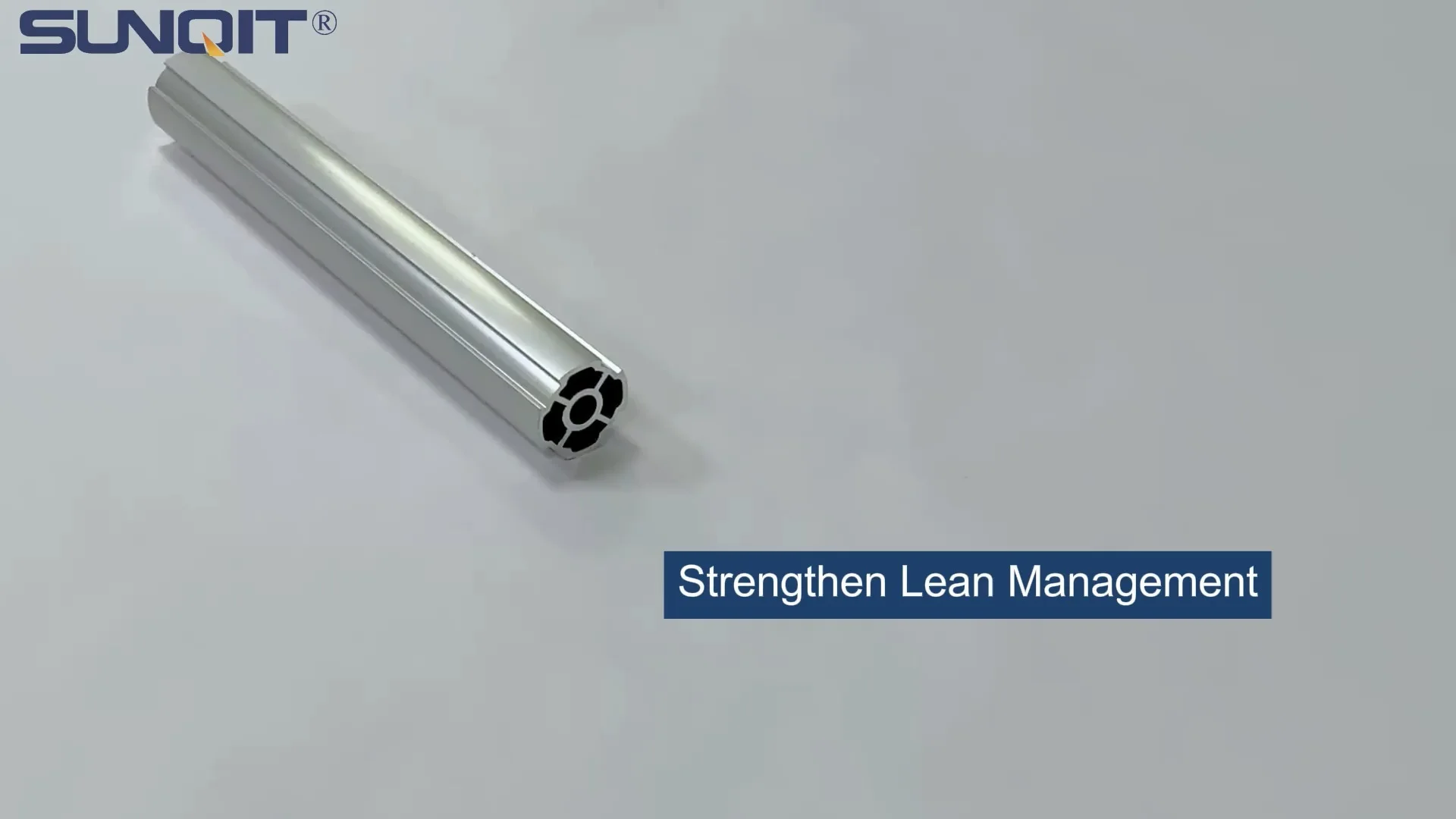
This product is called reinforced aluminum tube, and its bending strength is about twice that of the basic aluminum tube. The end face can process m1o threaded holes, install foot cups and other accessories, or convert internal and external screws in
How the right tools bridge efficiency, safety, and compliance in one of the world's most demanding industries
The Heartbeat of Food Packaging: Why Lean Management Isn't Optional
In the fast-paced world of food packaging, every second counts. From fresh produce to frozen meals, snack bars to bottled beverages, the industry runs on a delicate balance: speed to meet consumer demand, precision to ensure product quality, and unwavering adherence to safety standards that protect public health. But here's the thing—these goals often feel like they're pulling in opposite directions. A line that moves too fast might cut corners on sanitization. A focus on strict safety protocols might slow down production. That's where lean management steps in, not as a buzzword, but as a practical framework that turns chaos into cohesion.
Lean management, at its core, is about eliminating waste —whether that's wasted time, wasted materials, or wasted effort—while maximizing value. In food packaging, this translates to smoother workflows, fewer bottlenecks, and a production line that can pivot quickly without sacrificing safety. But lean isn't just about processes; it's about the physical spaces where those processes unfold. Walk into a facility that's mastered lean, and you'll notice something immediately: the workstations, racks, and conveyor systems feel intentional. They're designed to keep materials flowing, tools within reach, and contamination risks at bay. Now, walk into one that hasn't, and you'll see the opposite: cluttered workbenches, awkwardly placed storage, and workers spending precious minutes searching for supplies instead of packaging products.
The difference often comes down to the tools they use. Traditional workstations—think heavy wooden benches, rigid steel racks, or one-size-fits-all conveyor systems—were built for durability, not adaptability. They work… until they don't. When a new product line launches, or a regulatory update requires stricter hygiene measures, these systems become obstacles. They're hard to clean, harder to reconfigure, and worst of all, they can quietly undermine the very lean principles a facility is trying to uphold. So, what's the alternative? Enter the unsung hero of modern food packaging lean systems: the aluminum lean pipe workstation.
The Unique Challenges of Food Packaging: Why "Good Enough" Workstations Fall Short
Food packaging isn't just another manufacturing sector—it's a high-stakes environment where a single oversight can lead to costly recalls, damaged reputations, or even public health risks. That's why the challenges here are unlike any other. Let's break them down.
Hygiene first, always. Regulatory bodies like the FDA (Food and Drug Administration) or EFSA (European Food Safety Authority) don't mess around. They mandate strict standards for surfaces that come into contact with food or packaging materials: no cracks where bacteria can hide, no porous materials that absorb spills, and easy-to-sanitize finishes that can withstand daily wipe-downs with harsh chemicals. Traditional workstations often fail here. Wooden benches absorb moisture and harbor germs. Painted steel racks chip over time, leaving rust spots that flake off into products. Even stainless steel, while durable, can develop crevices in welded joints that become impossible to clean thoroughly.
Efficiency under pressure. Consumer demand in food packaging is relentless. Seasonal spikes (think holiday gift sets or summer snack rushes), last-minute order changes, and tight deadlines mean production lines need to shift gears quickly. A workstation that works perfectly for packaging 12-ounce cans might be useless for 8-ounce bottles. Rigid systems can't keep up, leading to downtime while workers retool or makeshift solutions that compromise safety.
Waste reduction with real stakes. In lean management, waste includes everything from excess inventory to unnecessary movement. In food packaging, waste also means product waste —spilled ingredients, damaged packages, or expired goods due to slow processing. A poorly designed flow rack might cause packages to tip over, or a workbench that's too low might lead to worker fatigue and more mistakes. Every error adds up, hitting both the bottom line and sustainability goals.
These challenges aren't just hurdles—they're interconnected. A workstation that's hard to clean takes longer to sanitize between shifts, cutting into production time. A rigid system that can't adapt leads to workarounds that create new waste. And all of it erodes the lean foundation a facility is trying to build. So, what if there was a workstation that addressed all three: hygiene, efficiency, and adaptability? That's where aluminum lean pipe comes in.

Aluminum Lean Pipe: The Building Block of Hygienic Lean Systems
Aluminum lean pipe—also called aluminum profile or modular pipe—isn't new, but its rise in food packaging is. And for good reason. Unlike traditional steel or wood, aluminum brings together three critical qualities: it's hygienic by design , flexible by nature , and durable enough to handle the daily grind of food production .
Let's start with the basics. Aluminum lean pipe is exactly what it sounds like: lightweight aluminum tubes, often with a smooth anodized finish, that connect using simple, tool-free joints. No welding, no drilling, no permanent fixtures. This modularity is a game-changer. Need to shorten a workbench to make space for a new conveyor? Unclip a few joints, remove a section, and you're done. Want to add a shelf above a workstation for ingredient storage? Snap on a few brackets and a crossbar. It's like building with industrial-grade Legos, but designed for the rigors of a food plant.
But modularity alone isn't enough for food packaging. The real magic is in the material itself. Aluminum is non-porous, which means it doesn't absorb liquids or harbor bacteria. Spill a sugary syrup or a dairy-based coating? Wipe it off with a sanitizing cloth, and the surface stays smooth and clean. No cracks, no stains, no hidden germs. Its anodized finish adds another layer of protection: it's scratch-resistant, so even after years of use, the surface remains intact, avoiding those hard-to-clean crevices we mentioned earlier. Compare that to wood, which swells with moisture and becomes a breeding ground for mold, or painted steel, which chips and exposes rust-prone metal. Aluminum doesn't just meet hygiene standards—it makes compliance easier .
Then there's durability. Don't let "lightweight" fool you. Aluminum lean pipe is surprisingly strong, with a high strength-to-weight ratio that can support heavy loads—think stacks of packaging materials, full ingredient bins, or even automated tools. And unlike steel, it won't rust, even in humid environments (looking at you, frozen food facilities). This longevity means fewer replacements, lower maintenance costs, and a workstation that grows with your business instead of becoming obsolete.
But perhaps the biggest advantage? Aluminum lean pipe doesn't just solve today's problems—it future-proofs your operation. When a new product line requires a taller workbench, or a regulatory update demands more space between workstations, you don't need to buy all-new equipment. You reconfigure what you have. That's lean in action: eliminating waste by maximizing the value of your existing tools.

From Workbench to Flow Rack: How Aluminum Lean Pipe Systems Transform the Line
A lean system in food packaging isn't just a single workstation—it's an ecosystem. Aluminum lean pipe shines here because it integrates seamlessly with other components to create a cohesive, waste-free flow. Let's take a closer look at the key players in this ecosystem.
The workbench: Where the magic happens. The workbench is the heart of any packaging line—the place where workers assemble boxes, label packages, or inspect finished products. An aluminum lean pipe workbench is designed with ergonomics in mind: adjustable height to reduce strain, built-in tool holders to keep essentials like tape guns or scissors within arm's reach, and a smooth, non-slip surface that's easy to sanitize. But what really sets it apart is customization. Need a cutout for a conveyor belt to feed packages directly to the next station? No problem. Want to add a shelf below for waste bins or extra materials? Just clip it on. Even accessories like ESD (Electrostatic Discharge) mats for sensitive packaging (think electronics in snack boxes) can be integrated, making the workbench adaptable to almost any task.
Flow racks: Keeping materials moving, not sitting. In lean terms, "inventory waste" is a big no-no. Materials should arrive at the workstation just in time to be used, not pile up and take up space. That's where flow racks come in. Traditional static racks hold materials in place, requiring workers to bend, reach, or walk to grab what they need. Aluminum lean pipe flow racks, on the other hand, use gravity or gentle roller tracks to slide materials forward as the front ones are taken. Imagine a rack with three levels, each holding stacks of cereal boxes. As the top-front box is taken, the next one slides into place—no bending, no searching, no wasted motion. And because they're built with aluminum lean pipe, these racks are lightweight enough to move if the line reconfigures, yet strong enough to hold heavy loads. Plus, their open design makes cleaning a breeze—no dark corners for dust or spills to hide.
Aluminum profiles: The backbone of flexibility. While aluminum lean pipe is the star, aluminum profiles deserve a shoutout too. These are the specialized extruded aluminum pieces—think T-slots, brackets, or angle connectors—that add even more versatility to the system. Need to mount a monitor above a workbench for digital SOPs (Standard Operating Procedures)? Use a T-slot profile to attach it securely. Want to create a partition between workstations to prevent cross-contamination? Snap together a few profiles and a clear plastic panel. Aluminum profiles turn "good enough" setups into tailored ones, ensuring every inch of your production floor works for you, not against you.

Traditional vs. Aluminum Lean Pipe Workstations: A Side-by-Side Reality Check
Still on the fence about whether aluminum lean pipe is worth the switch? Let's put it head-to-head with traditional workstations. The table below compares key factors that matter most in food packaging: hygiene, flexibility, durability, and cost over time.
| Factor | Traditional Workstations (Wood/Steel) | Aluminum Lean Pipe Workstations |
|---|---|---|
| Hygiene & Cleanability | Porous surfaces (wood) absorb spills; steel welds trap bacteria; chipping paint/rust creates contamination risks. Requires intensive scrubbing and often misses hidden germs. | Non-porous aluminum with smooth anodized finish; no welds or crevices. Wipes clean with standard sanitizers; meets FDA/EFSA hygiene standards with minimal effort. |
| Flexibility & Adaptability | Rigid, fixed design. Modifications require tools, welding, or replacement. Takes days/weeks to reconfigure for new products. | Tool-free, modular joints. Reconfigurable in minutes/hours. Adjust height, add/remove shelves, or repurpose for new tasks with minimal downtime. |
| Durability & Longevity | Wood warps with moisture; steel rusts in humid environments; finishes chip/corrode. Typically lasts 3–5 years before needing replacement. | Weather-resistant aluminum; scratch/impact-resistant anodized coating. Rust-proof and corrosion-free. Lasts 10+ years with minimal maintenance. |
| Cost Over Time | Lower upfront cost, but high long-term expenses: frequent replacements, maintenance (repainting, rust removal), and downtime during reconfigurations. | Slightly higher upfront cost, but lower total cost of ownership: no replacement for a decade, minimal maintenance, and zero downtime for reconfigurations. |
| Worker Productivity | Cluttered, static setups lead to wasted time searching for tools/materials; awkward ergonomics cause fatigue and slow workflows. | Ergonomic, customizable design keeps tools/materials within reach. Reduces movement waste; workers focus on packaging, not logistics. |
The data speaks for itself: aluminum lean pipe workstations aren't just a "nice-to-have"—they're a smart investment for food packaging facilities serious about lean management. They solve the unique challenges of the industry while supporting the very waste-reduction goals that make lean so powerful.
Real-World Impact: How One Bakery Boosted Efficiency (and Cut Waste) with Aluminum Lean Pipe
Let's ground this in a real story. Consider a mid-sized bakery in the Midwest that specializes in frozen pastries—think croissants, danishes, and breakfast sandwiches. A few years ago, they were struggling to keep up with demand. Their production line was a patchwork of old wooden workbenches, steel racks that had seen better days, and a conveyor system that frequently jammed. Workers were spending 20% of their shifts just moving materials from storage to the packaging line. Worse, a small recall due to a labeling error (caused by a cluttered workstation where labels got mixed up) had shaken their confidence.
They decided to overhaul their lean system, starting with the workstations. After researching options, they chose aluminum lean pipe workbenches and flow racks. The results? Within three months:
- Setup time for new products dropped by 45%. When they launched a line of mini croissants, they reconfigured their workbench heights and flow rack spacing in an afternoon—no tools, no contractors.
- Worker movement waste decreased by 30%. Flow racks positioned right next to workstations meant ingredients and packaging materials slid directly into place, cutting down on walking time.
- Cleaning time fell by 50%. The smooth aluminum surfaces wiped clean in minutes, freeing up staff to focus on packaging instead of scrubbing.
- No more recalls. The organized, clutter-free workbenches reduced labeling mix-ups and contamination risks.
The bakery's owner summed it up: "We thought we were saving money with our old setup, but we were just kicking the can down the road. The aluminum lean pipe system paid for itself in a year—between the time saved, the reduced waste, and the peace of mind around safety."
Choosing Your Partner: What to Look for in an Aluminum Lean Pipe Supplier
So, you're sold on aluminum lean pipe workstations—great! Now, the next step is finding the right supplier. Not all aluminum lean pipe systems are created equal, and choosing a partner that understands food packaging's unique needs can make all the difference. Here's what to prioritize:
Quality materials first. Not all aluminum is the same. Look for suppliers that use high-grade aluminum (6063-T5 is a common industry standard) with a thick anodized coating (at least 10 microns) for scratch and corrosion resistance. Ask about certifications—do their products meet FDA or EU 10/2011 food contact standards? If they can't provide documentation, keep looking.
Customization support. Every food packaging facility is different. A supplier that offers one-size-fits-all workstations isn't going to cut it. You need a partner that will work with you to design a system tailored to your products, space, and workflows. Do they offer 3D design tools or on-site consultations? Can they help you optimize your layout for lean flow?
Accessories matter. The best aluminum lean pipe systems are only as good as their accessories. Look for suppliers that carry a range of joints, brackets, casters, and specialized parts (like ESD mats or food-grade conveyor rollers). This ensures you can adapt your system over time without switching suppliers.
Reliability and lead times. In food packaging, downtime is costly. Choose a supplier with a reputation for on-time deliveries and consistent stock. Avoid those with long lead times—you don't want to wait weeks for a replacement joint or a new shelf when you need it.
Post-purchase support. Even the best systems need occasional tweaks. Does the supplier offer training for your team on reconfiguring the workstations? Do they have responsive customer service if you run into issues? A good partner sticks around after the sale.
Future-Proofing Your Facility: Why Aluminum Lean Pipe is More Than a Trend
The food packaging industry isn't slowing down. Consumer demand for variety (gluten-free, vegan, organic), sustainability (recyclable packaging, reduced plastic), and speed (same-day shipping, subscription boxes) is only growing. To keep up, facilities need systems that can evolve with these trends—not fight against them.
Aluminum lean pipe workstations are uniquely positioned to do this. Their modularity means you can add solar-powered lighting to workbenches as you move toward sustainability goals, or integrate IoT sensors to track material flow in real time. Their durability ensures they'll still be there when you scale up production or expand into new product categories. And their hygiene-friendly design will keep you compliant, even as regulations tighten.
But perhaps the biggest reason to invest now? The cost of waiting. Every day you stick with outdated workstations is a day you're losing efficiency, risking compliance, and missing out on the waste reductions that make lean management so powerful. Aluminum lean pipe isn't just a tool for today—it's an investment in the future of your business.
Conclusion: Lean, Hygienic, and Ready to Grow—The Aluminum Advantage
In food packaging, lean management isn't a luxury—it's a necessity. It's the difference between thriving and just surviving in a competitive market. But lean can't thrive in a workspace filled with rigid, unhygienic, or outdated tools. That's where aluminum lean pipe workstations come in. They're not just pieces of equipment; they're the foundation of a lean system that balances speed, safety, and adaptability.
From their non-porous, easy-to-clean surfaces that keep compliance checks stress-free, to their tool-free modularity that lets you reconfigure in minutes, to their long-lasting durability that saves money over time, aluminum lean pipe workstations are designed for the unique challenges of food packaging. They turn cluttered, inefficient spaces into streamlined hubs of productivity. They turn "we can't" into "we can—easily."
So, if you're ready to strengthen your lean management efforts, start with the space where your team spends most of their time: the workstation. Invest in a system that grows with you, protects your products, and makes lean more than just a goal—something you can see, touch, and feel every day. Your workers will thank you. Your bottom line will thank you. And most importantly, your customers—who trust you to deliver safe, high-quality products—will thank you too.