- Company Articles
- Company Articles
- Strengthen Lean Management in Home Appliance Production: Workbench E Implementation Tips

Strengthen Lean Management in Home Appliance Production: Workbench E Implementation Tips
Related Product
Strengthen Lean Management
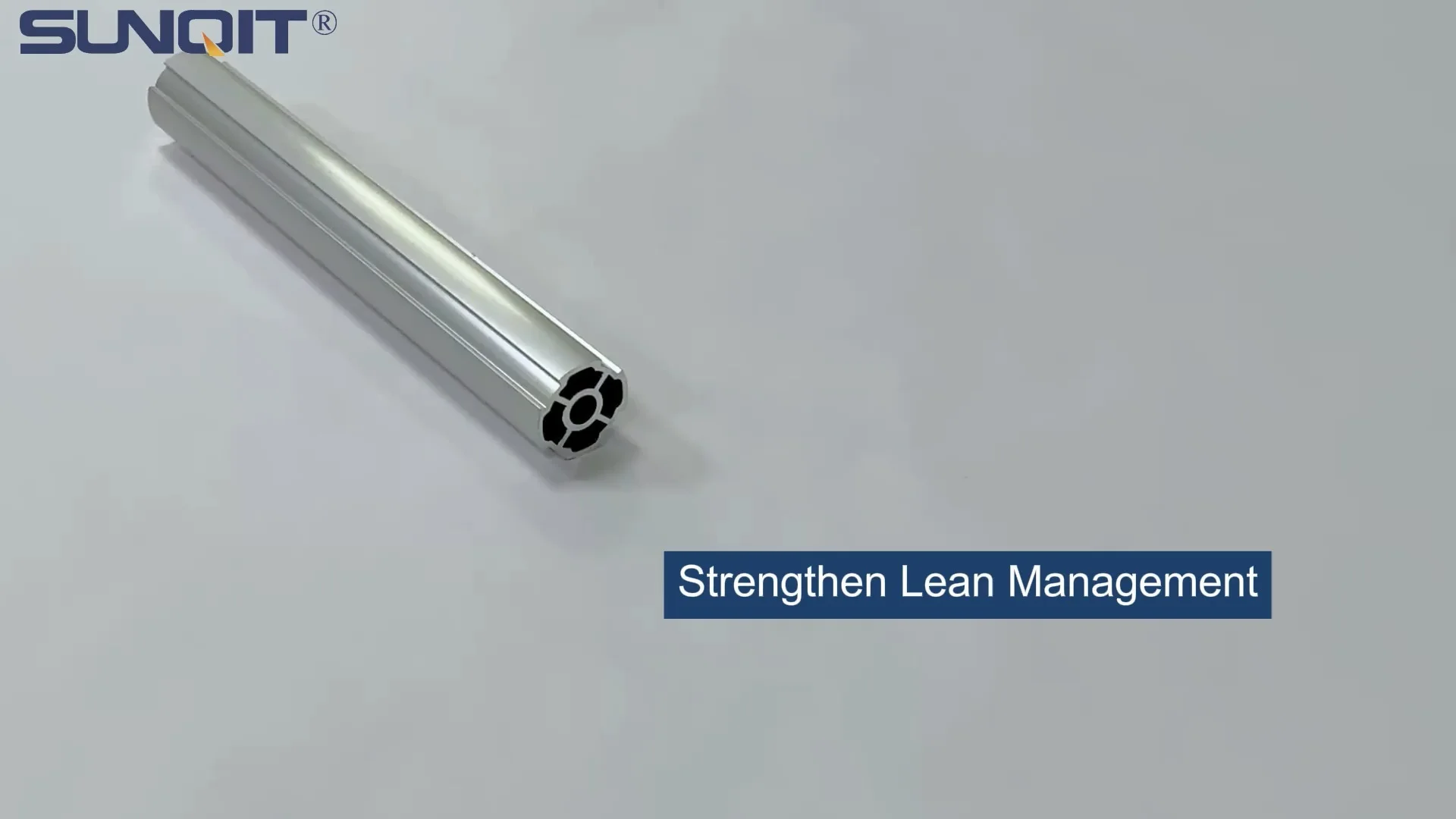
This product is called reinforced aluminum tube, and its bending strength is about twice that of the basic aluminum tube. The end face can process m1o threaded holes, install foot cups and other accessories, or convert internal and external screws in
Walk into any home appliance factory, and you'll witness a symphony of activity: workers assembling circuit boards for refrigerators, testing motor components for washing machines, and packaging ovens bound for living rooms around the world. But behind this chaos lies a critical challenge: how to produce more, faster, and with fewer errors—all while keeping costs in check. In an industry where margins are tight and consumer demand for innovation never slows, lean management has become the backbone of success. And among the many tools that make lean work, one stands out for its simplicity and impact: the Workbench E. In this article, we'll explore how this unassuming piece of equipment can transform your production line, streamline workflows, and strengthen your lean system from the ground up.
The Why: Lean Management in Home Appliance Production
Before diving into Workbench E, let's take a step back. What makes lean management so vital in home appliance manufacturing? Unlike industries with standardized products, home appliances require intricate assembly—often involving hundreds of parts, from tiny screws to large metal panels. This complexity creates ample room for waste: parts sitting idle on shelves (inventory waste), workers walking across the floor to fetch tools (motion waste), or defective units that need rework (defect waste). Lean management fights these inefficiencies by focusing on five core principles: value, value stream, flow, pull, and perfection. It's about designing processes that deliver exactly what the customer wants, exactly when they want it, with zero unnecessary steps.
But here's the truth: lean isn't just about big-picture strategies like value stream mapping or kaizen events. It's about the small, daily tools that shape how work gets done. A poorly designed workbench, for example, can turn a 5-minute task into a 15-minute ordeal—wasting time, energy, and morale. That's where Workbench E comes in. Built with lean principles in mind, it's more than just a table; it's a catalyst for better flow, less waste, and happier, more productive teams.
What Is Workbench E, Anyway?
If you're new to the term, Workbench E (officially labeled as "single deck-without caster") might sound like just another piece of factory furniture. But don't let the name fool you. This workbench is a masterclass in intentional design. Let's break down its key features:
- Single deck surface: A flat, uncluttered workspace designed for focused tasks—no shelves or drawers to distract from the job at hand.
- No casters: Unlike mobile workbenches, Workbench E is fixed in place, making it ideal for stations where stability is critical (think: soldering delicate electronics or aligning precision parts).
- Modular construction: Many models are built using aluminum profile, a lightweight yet durable material that allows for easy customization. Need to add a tool rail or a parts bin holder? Aluminum profile accessories make it simple—no welding or heavy modifications required.
In short, Workbench E is a blank canvas for lean productivity. It doesn't force workers to adapt to its design; instead, it adapts to their needs—whether they're assembling a microwave door or testing a dishwasher's water pump.

5 Implementation Tips for Workbench E: From Setup to Success
Implementing Workbench E isn't as simple as swapping out old workbenches and hitting "start." To truly strengthen your lean system, you need to plan intentionally. Here are five tips to ensure your Workbench E implementation delivers maximum value:
1. Design Around the Task (Not the Other Way Around)
The biggest mistake factories make is buying workbenches first and then trying to fit tasks into them. That's backwards. For Workbench E to shine, start by mapping out the specific tasks it will support. Let's say you're setting up a station for assembling washing machine control panels. What tools does the operator need within arm's reach? A screwdriver, a torque wrench, a pair of pliers? How many parts will be used per hour? 50? 100? These details dictate the workbench's layout.
For example, if parts arrive via a flow rack positioned to the left of the workbench, the left side of Workbench E should be clear to allow easy access. If the operator needs to read instructions from a screen, mount the monitor at eye level above the deck—no craning necks or squinting. Aluminum profile comes in handy here: use brackets and accessories to add tool hooks, cable management clips, or even a small shelf for the monitor. The goal? Reduce motion waste to almost zero. When everything the operator needs is within a 12-inch radius, tasks get done faster, and fatigue drops significantly.
2. Integrate with Material Flow Systems (Hello, Flow Racks!)
Lean thrives on "flow"—the idea that materials should move smoothly from one process to the next, with no delays. Workbench E can't achieve this alone; it needs to work in harmony with your material delivery systems, especially flow racks. A flow rack is a gravity-fed storage system that keeps parts organized and easily accessible, allowing operators to "pull" what they need as they need it (another lean principle: pull, not push).
Here's how to pair Workbench E with flow racks: Position the flow rack directly adjacent to the workbench, at the same height as the deck. This way, the operator can reach into the flow rack, grab a part, and place it on the workbench in one fluid motion. No bending, no stretching, no wasted steps. For example, if you're assembling refrigerator shelves, the flow rack might hold stacks of plastic brackets, metal supports, and screws. As the operator uses a bracket, the next one slides forward in the flow rack—no need to walk to a distant storage area.
Pro tip: Use color-coding to match flow rack bins with Workbench E zones. Red bins for critical parts, blue for tools—this reduces errors and speeds up training for new operators.
3. Prioritize Ergonomics (Happy Workers = Better Results)
Lean isn't just about efficiency—it's about people. An uncomfortable operator is a slow operator, and a slow operator creates bottlenecks. Workbench E's fixed design means you have one chance to get the height right, so don't guess. Measure! The ideal workbench height depends on the task: 36 inches for standing tasks (like heavy assembly), 40 inches for precision work (like wiring), or adjustable heights if tasks vary. Since Workbench E doesn't have casters, you can't raise or lower it on the fly, so invest in anti-fatigue mats for standing stations and footrests for seated ones.
Another ergonomic win: the workbench surface itself. Opt for a non-slip, easy-to-clean material (like rubber or laminated wood) to prevent parts from sliding around. Add a lip around the edges to catch dropped screws or washers—no more wasted time searching the floor. And don't forget lighting: a adjustable LED lamp mounted above Workbench E reduces eye strain, especially when working with small parts like circuit board components.
4. Build for Adaptability (Because Change Is Inevitable)
Home appliance trends shift fast. One year, customers want smart refrigerators with touchscreens; the next, they're demanding energy-efficient washing machines. Your production line needs to keep up, and Workbench E should too. That's why aluminum profile is such a game-changer. Unlike traditional steel workbenches, which are hard to modify, aluminum profile workbenches let you reconfigure on the fly.
For example, if your team starts assembling a new, larger oven model, you can easily add aluminum profile extensions to the sides of Workbench E to accommodate the bigger parts. Need to mount a new testing device? Drill-free connectors let you attach brackets in minutes. Even small changes—like adding a second tool rail or relocating a parts bin—can be done without stopping production for hours. This adaptability ensures Workbench E doesn't become obsolete when your product line evolves.
5. Train Teams (And Listen to Their Feedback)
You could have the fanciest Workbench E money can buy, but if your team doesn't know how to use it—or worse, resists using it—it's useless. Training is key. Start by involving operators in the design process: ask them where they want tools placed, how high the workbench should be, or what features would make their jobs easier. When people feel heard, they're more likely to embrace change.
Once Workbench E is installed, hold a short workshop: walk through the new layout, demonstrate how to use aluminum profile accessories, and explain how the changes reduce waste. Then, keep the conversation going. Set up a feedback box near the workbench and check in weekly: Is the flow rack positioned correctly? Does the surface get too slippery when cleaning? Small adjustments based on real-world use can turn a good implementation into a great one.

Traditional vs. Workbench E: A Quick Comparison
| Feature | Traditional Workbench | Workbench E (Single Deck-Without Caster) |
|---|---|---|
| Design Flexibility | Fixed layout; hard to modify without tools/welding. | Modular, with aluminum profile accessories for easy customization (add tool rails, bins, etc.). |
| Integration with Flow Racks | Often requires extra space for material movement; workers may need to reach across cluttered surfaces. | Flat, unobstructed deck allows seamless pairing with flow racks—parts move directly from rack to workbench. |
| Ergonomics | One-size-fits-all height; limited surface options. | Customizable height (during setup) and surface materials; built-in features like non-slip surfaces reduce strain. |
| Cost Over Time | Cheaper upfront, but expensive to replace/modify as needs change. | Slightly higher initial cost, but lower long-term costs due to adaptability and durability. |
Case Study: How a Major Appliance Maker Cut Waste by 32% with Workbench E
Let's put this into practice with a real-world example (names changed for privacy). "ApplianceCo" is a mid-sized manufacturer producing refrigerators and freezers. Like many factories, they struggled with motion waste: workers at their control panel assembly station were spending 20 minutes per hour walking to fetch parts from distant shelves. Defect rates were also high—5% of units required rework due to misaligned components.
ApplianceCo decided to test Workbench E. They started by mapping the assembly process, then designed a layout with a flow rack positioned 2 feet to the left of the workbench, stocked with the top 10 most-used parts. The workbench itself was built with aluminum profile, allowing them to add a tool rail above the deck and a small shelf for a digital instruction manual. Operators could now grab parts from the flow rack, tools from the rail, and reference instructions without turning their heads.
The results? Within 30 days, motion waste dropped by 32%—workers saved over 8 hours per week of walking time. Defect rates fell to 1.5% as the ergonomic setup reduced hand fatigue. Best of all, when ApplianceCo launched a new refrigerator model with a larger control panel, they easily extended the workbench using aluminum profile extensions—no downtime, no extra cost for a new bench.

The Bottom Line: Workbench E as a Lean Foundation
Strengthening lean management in home appliance production isn't about grand gestures—it's about the tools that shape daily work. Workbench E, with its focus on flexibility, flow, and ergonomics, is one of those tools. By designing it around your tasks, integrating it with flow racks, prioritizing your team's comfort, and building in adaptability, you're not just buying a workbench—you're building a lean system that can grow, evolve, and thrive in a fast-changing industry.
So, what's next? Take a walk through your production line today. Watch how workers interact with their current workbenches. Where do you see waste? Where do they struggle? Then, imagine Workbench E in that space—uncluttered, connected to your flow racks, and tailored to the people who use it. That's the future of lean home appliance production. And it starts with a single, well-designed workbench.