- Company Articles
- Company Articles
- Strengthen Lean Management in Low-Volume, High-Mix Production: Aluminum Pipe Systems

Strengthen Lean Management in Low-Volume, High-Mix Production: Aluminum Pipe Systems
Related Product
Strengthen Lean Management
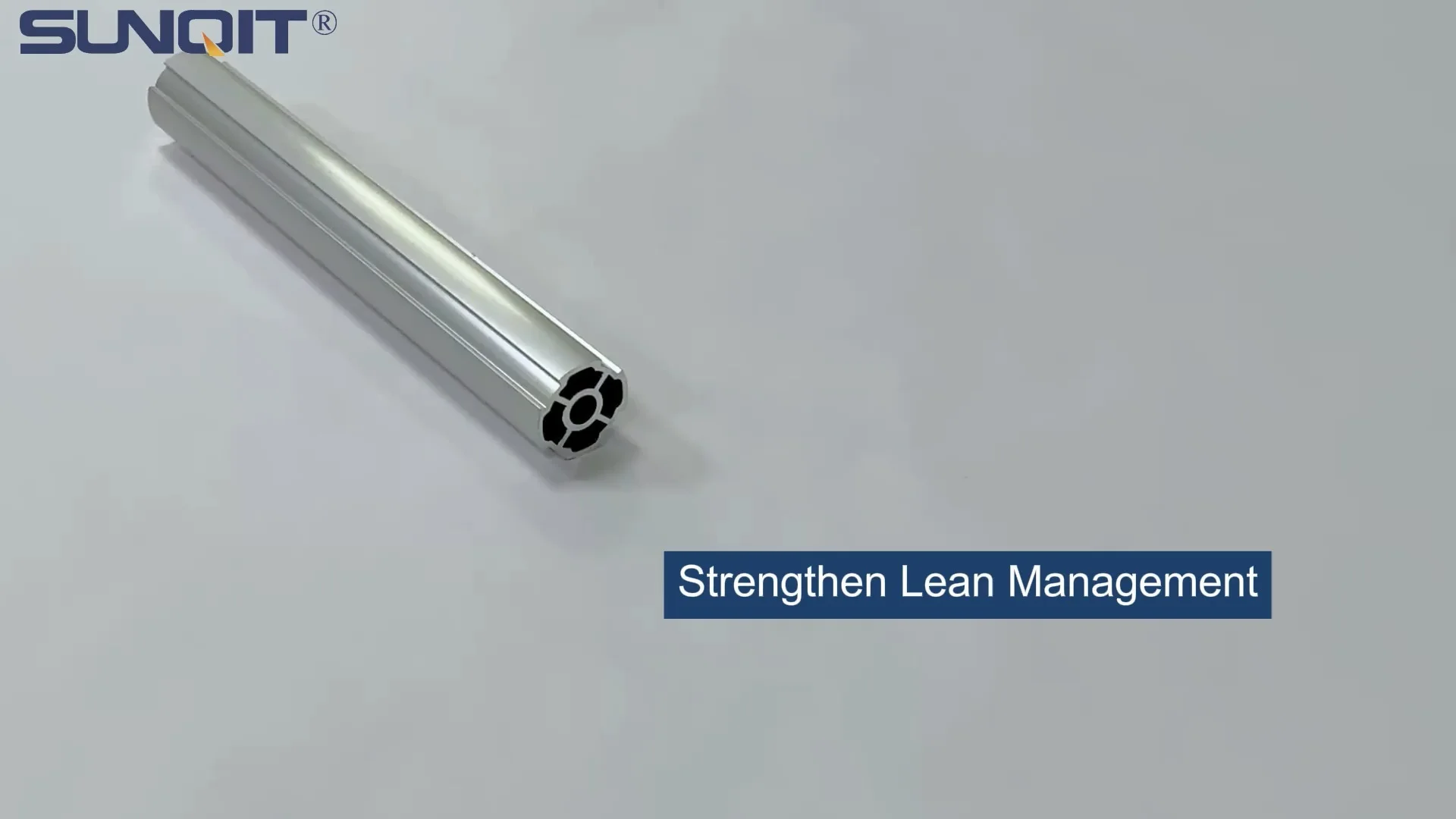
This product is called reinforced aluminum tube, and its bending strength is about twice that of the basic aluminum tube. The end face can process m1o threaded holes, install foot cups and other accessories, or convert internal and external screws in
The Puzzle of Low-Volume, High-Mix Production
In today's manufacturing landscape, "one-size-fits-all" production lines are becoming a thing of the past. More and more businesses—from electronics assembly to automotive parts, medical device manufacturing to custom machinery—are shifting toward low-volume, high-mix (LVHM) production. Picture this: small batch sizes, frequent product changes, and a constant need to adapt to evolving customer demands. It's a dynamic environment, but here's the catch: efficiency can't take a backseat. So, how do you maintain lean operations when your production floor feels like a revolving door of new products, materials, and workflows?
Traditional manufacturing setups, with their heavy, fixed steel workbenches, rigid conveyor belts, and permanently bolted flow racks, were built for stability—great for mass production, but a nightmare for LVHM. When you need to reconfigure a line every other week or adjust a workbench's height for a new product, those fixed systems become dead weight. They slow down setup times, create bottlenecks, and turn "continuous improvement"—a cornerstone of lean management—into a frustrating game of catch-up.
The solution? Lean management principles, yes—but paired with tools that are as flexible as your production needs. Enter aluminum pipe systems. Lightweight, modular, and infinitely adaptable, these systems are redefining how manufacturers implement lean in LVHM environments. Let's dive into how they work, why they matter, and how they can transform your production floor from a place of rigidity to one of agility.
Lean Management in LVHM: Why Flexibility is Non-Negotiable
Lean management, at its core, is about eliminating waste—whether that's time, materials, or unnecessary movement—and delivering maximum value to customers. But in LVHM production, waste often hides in plain sight: setup times that stretch into hours, workbenches that don't fit new product dimensions, flow racks that can't accommodate varying part sizes, and conveyors that grind to a halt when a new component needs to be routed differently.
For lean to thrive here, three principles become critical:
- Rapid Reconfiguration: The ability to adjust workstations, material flow paths, and production layouts in minutes, not days.
- Scalability: Adding or removing components (like extra shelves on a flow rack or extending a conveyor) without overhauls.
- Ergonomics & Adaptability: Workspaces that can be tweaked for different operators, products, or safety requirements (e.g., ESD protection for electronics).
Traditional steel or plastic systems often fall short here. Steel is heavy—reconfiguring a workbench might require a forklift and a team of workers. Plastic, while lighter, lacks the durability for heavy-duty use. Aluminum pipe systems, however, check all three boxes. Let's break down why.

Aluminum Pipe Systems: The Lean Enabler You've Been Looking For
Aluminum pipe systems—often called "aluminum lean pipe" or "aluminum extrusion profiles"—are exactly what their name suggests: lightweight, durable aluminum pipes (or profiles) paired with a range of connectors, joints, and accessories. Think of them as industrial Legos for manufacturers: you can snap together workbenches, flow racks, conveyors, and trolleys, then take them apart and rebuild them just as easily when needs change.
What Makes Aluminum Lean Pipe Different?
At first glance, you might wonder: "Why aluminum?" Let's compare it to traditional options:
| Feature | Traditional Steel Pipe | Plastic Pipe | Aluminum Lean Pipe |
|---|---|---|---|
| Weight | Heavy (hard to move/reconfigure) | Light (but less durable) | Lightweight (easy to handle, even alone) |
| Strength | High (but overkill for many LVHM tasks) | Low (not ideal for heavy parts) | High (extruded profiles resist bending; supports 50-200kg per shelf) |
| Corrosion Resistance | Low (prone to rust; needs painting) | High (but can warp in heat) | High (natural oxide layer; ideal for cleanrooms or humid environments) |
| Customization | Limited (welding/ drilling required) | Moderate (but joints can loosen over time) | Unlimited (snap-on joints; no tools needed for basic changes) |
The magic, though, isn't just the pipe itself—it's the ecosystem of accessories. From swivel casters that let you roll a workbench across the floor to roller tracks that turn a static shelf into a dynamic flow rack, aluminum pipe systems are designed for modularity. Need to add a shelf to a material rack? Screw on a few internal rotary aluminum joints. Want to adjust a conveyor's angle for a new product? Swap out the roller track placon mounts. It's lean in action: no waste, no waiting, just immediate adaptation.

3 Key Applications: How Aluminum Pipe Systems Drive Lean in LVHM
Let's get practical. How do these systems translate to real-world lean improvements? Let's focus on three critical areas: workbenches, flow racks, and conveyors—staples of any production floor, and where waste often accumulates in LVHM.
1. Workbenches: From Static to Smart
Workbenches are the heart of any production line—the place where operators assemble, test, or package products. In LVHM, a one-height-fits-all bench is a recipe for inefficiency. One day, you're assembling small circuit boards; the next, large mechanical parts. Operators hunch, strain, or waste time reaching for tools that don't fit the current setup.
Aluminum lean pipe workbenches solve this with customization . Need a taller bench for standing assembly? Swap out the legs for longer aluminum pipes. Adding ESD protection for sensitive electronics? Attach an ESD workbench top (like "Workbench E (Single Deck-Without Caster)" from many suppliers) and ground it. Want to add a tool rail or a bin for small parts? Snap on aluminum profile accessories like brackets or hooks. And when the product line changes? Disassemble the bench in 15 minutes and rebuild it to the new specs. No welding, no contractors, no downtime.
Ergonomics matter too. A study by the Occupational Safety and Health Administration (OSHA) found that adjustable workstations reduce operator fatigue by up to 30%, directly boosting productivity. Aluminum workbenches make ergonomic tweaks simple—no more "making do" with a bench that's 2 inches too short.
2. Flow Racks: Smoothing Material Flow, One Roller at a Time
Material handling is another LVHM pain point. When you're dealing with small batches, parts can get stuck in transit: a box of components sits on a shelf, waiting to be moved to the assembly line; a finished subassembly lingers because the flow rack is full of yesterday's parts. Lean's "just-in-time" (JIT) principle—having materials arrive exactly when needed—falls apart without a flexible way to route parts.
Aluminum flow racks, built with roller tracks and swivel roller balls, fix this. Imagine a "Material Rack B (3 Row and 3 Floor)" setup: each row uses 1-inch swivel roller balls or plastic roller track guide rails (yellow or grey, depending on your color-coding system). Parts glide smoothly from the back to the front, so operators always take the oldest stock first (FIFO—first in, first out), reducing waste from expired or obsolete materials.
But here's the LVHM win: these racks are adjustable. If a new part is taller, add an extra shelf using aluminum guide rails. If you need to move the rack closer to the assembly line, attach casters (swivel stem casters with brakes work great) and roll it into place. No more fixed shelving that becomes obsolete when product dimensions change.
3. Conveyors: Routing Parts Without the Rigidity
Conveyors are the arteries of production, moving parts from point A to B. In LVHM, though, "point A" and "point B" change constantly. One week, you're routing parts from the welding station to painting; the next, from assembly to testing. Fixed conveyors? They're like clogged arteries—they can't adapt, leading to bottlenecks or inefficient manual carrying.
Aluminum roller conveyors solve this with modularity. Using components like aluminum roller track (e.g., "38 Aluminum Roller Track Yellow" or "40 Steel Roller Track Black ESD Wheel"), you can build a conveyor that's as long or short as needed. Need to curve it around a new workstation? Use roller track connectors and placon mounts to adjust the angle. Switching from small parts to larger ones? Swap out 0.5-inch swivel roller balls for 1-inch ones. And when the line reconfigures? Disassemble the conveyor, pack up the parts, and rebuild it elsewhere. It's lean material flow, on demand.

Case Study: How a Small Electronics Manufacturer Cut Waste by 40%
The Challenge
A mid-sized electronics manufacturer in the U.S. was struggling with LVHM production. They produced custom circuit boards for medical devices, with batch sizes ranging from 10 to 500 units and over 200 product variations annually. Their production line relied on fixed steel workbenches and a single, non-adjustable conveyor. Setup times for new products averaged 4 hours, and operators frequently complained about ergonomic issues.
The Solution
The manufacturer partnered with a lean system supplier to switch to aluminum lean pipe systems. They replaced steel workbenches with adjustable aluminum workbenches (using "Basic Aluminum Tube" and "Internal Rotary Aluminum Joints"), added modular flow racks with roller tracks, and installed a reconfigurable aluminum roller conveyor.
The Results
- Setup Time: Reduced from 4 hours to 45 minutes (a 75% drop) by reconfiguring workbenches and conveyors.
- Waste Reduction: Scrapped parts due to operator error fell by 30% (ergonomic workbenches reduced fatigue).
- Space Savings: Modular flow racks and mobile workbenches freed up 20% of floor space, allowing for a new testing station.
- Scalability: When demand spiked for a new product line, they added 3 more workbenches in a day—no contractors needed.
This isn't an isolated success story. Across industries, manufacturers are finding that aluminum pipe systems turn lean from a buzzword into a daily reality. By pairing lean management principles with flexible tools, they're turning LVHM's challenges into opportunities for efficiency.
Choosing the Right Supplier: It's About More Than Parts
To unlock the full potential of aluminum pipe systems, partnering with the right supplier is key. Not all suppliers are created equal—some offer generic parts, while others specialize in lean solutions and provide design support. Here's what to look for:
- Range of Accessories: A good supplier should offer everything from basic joints (like "90° Aluminum Pipe Joint Inside Connection") to niche parts (e.g., "Stainless Steel Swivel Roller Balls 1 Inch" for specialized flow racks).
- Customization Support: Can they help design a workbench or conveyor tailored to your specific product dimensions? Look for suppliers with in-house engineers.
- Durability: Aluminum pipe thickness, joint strength, and caster quality matter. Ask for load capacity specs (e.g., "Caster Wheel" weight limits) to ensure they fit your needs.
- ESD Options: If you work with electronics, ESD workbenches and ESD roller tracks (like "40 Steel Roller Track Black ESD Wheel") are non-negotiable. Ensure your supplier offers these.
Remember: aluminum pipe systems are an investment in lean flexibility. Choosing a supplier that understands your LVHM challenges will ensure you get the most out of that investment.
Conclusion: Lean Management, Redefined for LVHM
Low-volume, high-mix production doesn't have to mean sacrificing lean efficiency. With aluminum pipe systems, manufacturers can build the flexible, adaptable production floors they need to eliminate waste, reduce setup times, and keep up with customer demands. Whether it's a custom workbench that adjusts in minutes, a flow rack that adapts to new parts, or a conveyor that reconfigures on the fly, these systems are the bridge between lean principles and real-world LVHM chaos.
The future of manufacturing is dynamic—and so should your tools. Aluminum pipe systems aren't just about pipes and joints; they're about empowering your team to do more with less, to adapt faster, and to turn every challenge into a step toward a leaner, more efficient operation. Ready to make the switch? Your production floor (and your bottom line) will thank you.