- Company Articles
- Company Articles
- Strengthen Lean Management in Machinery Manufacturing: Flexible Lines vs. Fixed Setups

Strengthen Lean Management in Machinery Manufacturing: Flexible Lines vs. Fixed Setups
Related Product
Strengthen Lean Management
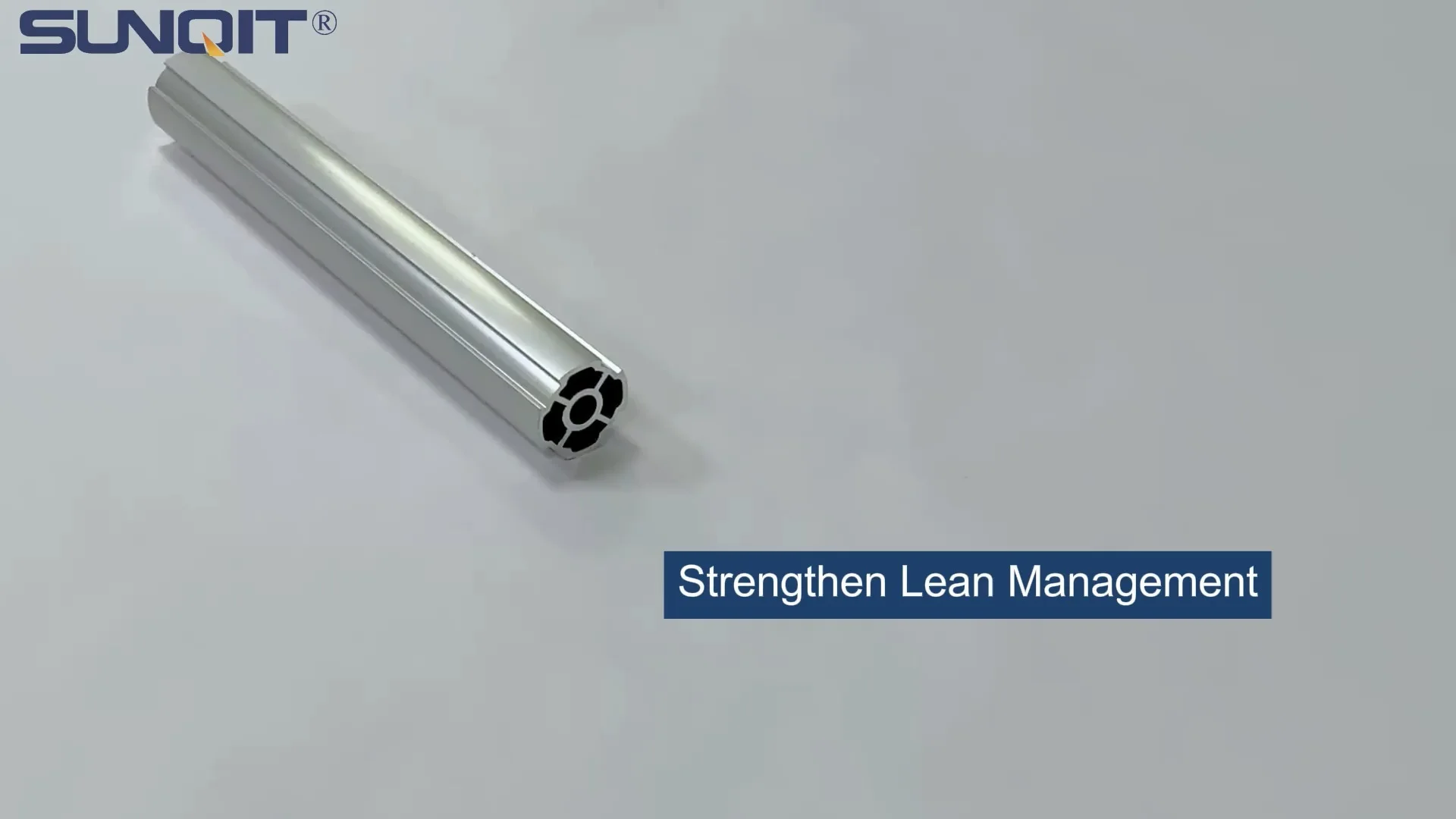
This product is called reinforced aluminum tube, and its bending strength is about twice that of the basic aluminum tube. The end face can process m1o threaded holes, install foot cups and other accessories, or convert internal and external screws in
Walk into any modern machinery manufacturing facility, and you'll feel it immediately—the hum of activity, the precision of moving parts, the quiet urgency of meeting deadlines. But behind that rhythm lies a critical question: How do we build systems that don't just produce goods, but adapt to the chaos of modern business? Customer demands shift overnight, new competitors emerge, and market trends pivot without warning. In this environment, lean management isn't just a buzzword; it's the lifeline that keeps factories efficient, profitable, and sustainable. Yet, even the best lean strategies stumble if they're built on the wrong foundation: the choice between flexible and fixed production setups. This isn't just about equipment—it's about how your team works, how quickly you can innovate, and whether your factory can grow with your ambitions. Let's dive into this choice, unpacking what each setup brings to the table, and how to decide which one strengthens your lean journey.
What is Lean Management, Anyway? More Than Just "Cutting Waste"
Before we compare setups, let's get clear on what lean management really means in machinery manufacturing. It's easy to reduce it to "cutting waste," but that's like calling a symphony "just notes." Lean is a mindset—a commitment to seeing every process through the eyes of value. What does the customer care about? What steps add nothing but time or cost? How can we make work easier, not harder, for the people on the floor? At its core, lean is about respect: for your customers (by delivering value), for your employees (by eliminating frustration), and for your resources (by using them wisely).
In machinery manufacturing, this translates to production lines that flow smoothly, workstations that minimize motion, and material handling that feels almost invisible. But here's the catch: those lines, stations, and handling systems—the setups —are the physical expression of your lean goals. A setup that's rigid and unchanging might crush your ability to adapt. One that's too flexible might become chaotic. So, let's start by understanding the two heavyweights in this ring: fixed setups and flexible setups.
Fixed Setups: The Steady Giants of Mass Production
Fixed setups are the veterans of manufacturing. Think of the classic automotive assembly line: a conveyor belt chugging along at a set speed, with robots and workers stationed at fixed points, each performing one repetitive task. These systems are built for one thing: consistency . They're designed, engineered, and installed to crank out the same product (or a very similar one) day in, day out, with minimal variation. If your demand is stable, your product design rarely changes, and you're chasing economies of scale, fixed setups can feel like a dream.
Let's break down their strengths. First, efficiency. When a line is optimized for a single product, every inch of space, every second of cycle time, is squeezed for maximum output. A fixed conveyor system, for example, can move parts from welding to painting to assembly without a single hiccup, because it's been calibrated to that exact workflow. This efficiency drives down per-unit costs—critical for high-volume, low-margin industries like appliance manufacturing. Second, quality control. With tasks standardized and tools fixed in place, human error drops. A worker who tightens the same bolt in the same spot 500 times a day develops muscle memory, reducing defects to near-zero.
But fixed setups come with a steep price: inflexibility . Imagine a factory that invested millions in a fixed assembly line for a popular industrial pump. For years, it ran like clockwork. Then, a new regulation required a smaller, more energy-efficient motor. Overnight, the line was obsolete. The conveyor belts were too short, the workstations too low, and the robotic arms couldn't reach the new motor's bolts. Retooling took six months and cost more than the original setup. By the time they restarted production, competitors with more adaptable systems had captured the market. That's the risk of fixed setups: they excel in stability, but stability is a rare commodity today.
Other downsides? High upfront investment. Building a fixed setup isn't just about buying equipment; it's about custom engineering, installation, and training. And if demand drops? You can't just shrink the line—you're stuck paying for space and machinery that's sitting idle. Employees, too, often feel the strain. Repetitive tasks in fixed positions can lead to burnout, and when workers aren't challenged, engagement plummets. Lean management thrives on continuous improvement, but in a fixed setup, suggesting a better way to arrange tools or reorder tasks often hits a wall: "The line's designed that way—we can't change it."

Flexible Setups: Agility as a Competitive Edge
If fixed setups are the steady giants, flexible setups are the nimble athletes. They're built on the idea that change is inevitable—and manageable. Instead of rigid, custom-built lines, flexible setups use modular components that can be rearranged, expanded, or repurposed with minimal effort. Think of it like building with Lego blocks: same basic pieces, endless configurations. At the heart of this flexibility are tools like aluminum profiles, modular workbenches, and adjustable flow racks—components designed to adapt, not just function.
Let's start with the star player: aluminum profile . These lightweight, durable extrusions are the backbone of flexible setups. With T-slots running along their length, they let you attach shelves, tool holders, monitors, or even small machines with just a few bolts. Need a taller workbench for a taller worker? Loosen the brackets, adjust the height, and tighten—done. Want to add a shelf for new tools? Slide a bracket into the T-slot, secure it, and you're ready. Unlike fixed steel frames, aluminum profiles are easy to cut, drill, and modify, so your setup grows with your needs.
Then there's the workbench —not the clunky, fixed tables of yore, but modular stations that adapt to tasks. A electronics manufacturer I worked with, for example, uses workbenches built from aluminum profiles. When they launched a new smartphone model, the assembly team reconfigured their benches in a single shift: raising some for better access to circuit boards, adding tool rails on others for specialized screwdrivers, and attaching anti-static mats to protect sensitive components. No custom engineering, no downtime—just a team collaborating to build the best workspace for the job. That's lean in action: empowering workers to eliminate waste (like bending over a too-low bench) on the fly.
Flow racks are another flexible workhorse. These aren't your grandfather's static shelving—they're dynamic systems where parts glide from storage to assembly via gravity or gentle rollers. Need to stock more of a popular component? Add a new level to the rack with aluminum profile brackets. Switching to a larger part? Adjust the roller spacing in minutes. One automotive supplier I visited uses flow racks to feed parts to their assembly line. When a customer ordered a limited run of a specialty truck, they reconfigured the racks to prioritize the new parts, cutting pick time by 30% and avoiding delays. Fixed racks would have required rebuilding entire sections—if they could be changed at all.
The benefits of flexible setups go beyond adaptability. They lower risk. Instead of sinking millions into a single fixed line, you invest in modular components that can be repurposed. If a product flops, you can reconfigure the setup for the next idea. Scalability, too, is a breeze. Need to boost production for a seasonal spike? Add a few more workbenches or extend a flow rack with extra sections. Demand dropping? Shrink the line without wasting space. Employees thrive here, too. When workers can adjust their stations, suggest improvements, and see their ideas implemented, engagement soars. A study by the Manufacturing Institute found that factories with flexible setups report 22% higher employee retention—critical in a tight labor market.
Of course, flexible setups aren't perfect. They often have higher initial costs than basic fixed equipment—quality aluminum profiles and modular components aren't cheap. And without proper planning, flexibility can devolve into chaos. A factory that buys a hodgepodge of modular parts without a clear workflow plan might end up with workbenches scattered randomly, tools misplaced, and workers wasting time hunting for supplies. Training is also key: employees need to understand how to safely reconfigure components, use tools like torque wrenches for aluminum profile brackets, and troubleshoot issues when a flow rack jams. But these are growing pains, not deal-breakers. With a little guidance, teams quickly master the art of adaptability.

Flexible vs. Fixed Setups: A Head-to-Head Comparison
To truly understand which setup strengthens your lean management efforts, let's put them side by side. The table below breaks down key factors, from cost to employee engagement, to help you weigh your options.
| Factor | Fixed Setups | Flexible Setups |
|---|---|---|
| Initial Investment | High: Custom engineering, installation, and specialized equipment. | Moderate: Modular components (aluminum profiles, workbenches, flow racks) with lower installation costs. |
| Changeover Time | Long (days to months): Requires retooling, redesign, and retraining. | Short (hours to days): Reconfigure modular components with basic tools; minimal retraining needed. |
| Scalability | Low: Hard to expand or shrink without major overhauls. | High: Add/remove components (e.g., extend a flow rack, add workbenches) as needed. |
| Suitability for Batch Size | Best for large, stable batches (10,000+ units). | Best for small-to-medium batches, mixed products, or variable demand. |
| Waste Reduction | Reduces waste in stable environments but creates waste (overproduction, idle time) during change. | Reduces waste from changeover, overproduction, and motion (via adaptable workstations). |
| Employee Engagement | Low: Repetitive tasks, limited input on process improvements. | High: Empowers workers to adjust setups, suggest changes, and own their workflow. |
| Maintenance Needs | High: Custom components require specialized technicians; downtime is costly. | Low: Standardized modular parts are easy to replace; teams can perform basic maintenance. |
| Long-Term ROI | Strong in stable markets but risky if demand or products change. | Strong in dynamic markets; components retain value and can be repurposed. |

Real-World Lessons: When Setups Make or Break Lean Success
Theory is helpful, but real stories show the impact of setup choices. Let's look at two manufacturers—one stuck in the fixed mindset, one embracing flexibility—and how their lean journeys unfolded.
Case 1: The Auto Parts Maker That Couldn't Pivot
A mid-sized auto parts manufacturer specialized in brake assemblies for sedans. For years, they ran a fixed assembly line with a dedicated conveyor system, fixed workstations, and custom tooling. Their lean efforts focused on optimizing this line—reducing cycle time, cutting defects, and minimizing inventory. It worked: they were profitable, and defects were under 0.5%. Then, the auto industry shifted. Consumers wanted SUVs and electric vehicles (EVs), which needed larger, lighter brake assemblies. The company's fixed line couldn't handle the new parts. The conveyor belts were too narrow, the robotic welders couldn't reach the new mounting points, and the workstations were designed for smaller components.
Management debated their options. Retooling the fixed line would cost $2 million and take four months. In the meantime, they'd lose customers. Alternatively, they could invest in flexible setups: aluminum profile workbenches, adjustable flow racks, and modular conveyor sections that could be reconfigured for both sedan and SUV brakes. The price tag? $1.2 million—cheaper, and they could start production in six weeks by reusing some existing tools. Skeptics argued, "Flexible setups are for small shops—we're a high-volume manufacturer." But with orders dropping, they took the leap.
The results were eye-opening. The new flexible line handled both old and new brake assemblies. When EV orders spiked six months later, the team reconfigured three workstations in a weekend to accommodate the EV-specific parts. Defects dropped further (to 0.3%) because workers could adjust their tools for better access. Employee turnover, which had been 15%, fell to 7% as teams collaborated on workflow improvements. By the end of the year, they'd recouped the investment and gained 10% market share from competitors still stuck in fixed setups. Their lean journey, once limited to optimizing a rigid line, now focused on continuous adaptation—and it paid off.
Case 2: The Startup That Built Flexibility Into Its DNA
A startup manufacturing custom industrial sensors faced a different challenge: unpredictable demand and constantly evolving product specs. Instead of building a fixed line, they started with flexible setups from day one. Their factory floor was a patchwork of aluminum profile workbenches, flow racks on casters, and mobile tool carts. When a customer ordered 50 sensors for a food processing plant, the team rearranged three workbenches into a U-shape, minimizing motion. When another customer needed 500 smaller sensors for medical devices, they extended the line by adding two more workbenches and reconfiguring the flow rack to hold smaller components.
Early on, there were hiccups. The team struggled with consistency—one workstation had tools arranged left to right, another right to left, leading to confusion. They solved this by creating "standardized flexibility": a set of guidelines for tool placement, bench height, and flow rack organization that could be adapted without losing order. They also invested in training: every employee learned to use the T-slot bolts for aluminum profiles, adjust roller spacing on flow racks, and troubleshoot basic issues. Within a year, the startup was handling 12 different sensor models with ease, and their lead times were 30% shorter than competitors with fixed setups. "Lean isn't about perfection," their operations manager told me. "It's about getting better at getting better—and flexible setups let us do that every day."
Choosing Your Setup: It's About Balance, Not Binary
So, which setup is right for you? The answer isn't "flexible good, fixed bad"—it's about aligning your setup with your reality. Here's how to think through the decision:
Start with Demand and Product Stability
If you produce one product in high, steady volumes (e.g., a standard motor for HVAC systems) and don't expect major design changes for 5+ years, a fixed setup might still make sense. The efficiency gains and low per-unit costs could outweigh the risk of inflexibility. But if your products change annually (or quarterly), or demand fluctuates wildly (e.g., seasonal spikes), flexible setups are the safer bet. Even in high-volume industries, many manufacturers are blending fixed and flexible: using fixed conveyors for core processes (like welding) and flexible workbenches for final assembly, where customization happens.
Consider Your Team's Skills and Culture
Flexible setups thrive in cultures of trust and empowerment. If your team is used to top-down decision-making and resist change, flexible setups might cause friction. Invest in training and change management first—teach employees about lean principles, let them lead small reconfiguration projects, and celebrate their wins. Conversely, if your team is already engaged and eager to improve, flexible setups will amplify their impact.
Calculate Total Cost of Ownership (TCO), Not Just Upfront Price
Fixed setups often look cheaper on paper, but TCO tells the real story. Factor in retooling costs, downtime during changes, and idle capacity when demand drops. For flexible setups, consider the long-term value of adaptability: How many product changes can you handle without retooling? How much faster can you launch new products? The auto parts manufacturer in our earlier case found that their flexible setup's TCO was 30% lower than a fixed line over five years, thanks to avoided retooling costs and increased sales.
Start Small, Iterate, and Scale
You don't have to overhaul your entire factory overnight. Start with a pilot project: convert one assembly line or work cell to flexible setups (e.g., replace fixed workbenches with aluminum profile models, add a modular flow rack). Measure the results—changeover time, defect rates, employee engagement—and adjust before rolling out to other areas. This "test and learn" approach reduces risk and builds buy-in from skeptical teams.
The Future of Lean Manufacturing: Flexibility as Standard
The writing is on the wall: the future belongs to factories that can adapt. Industry 4.0, with its smart sensors, AI-driven demand forecasting, and customization at scale, demands setups that can keep pace. Fixed setups, while still useful in niche cases, will become the exception, not the rule. Flexible setups, powered by innovations like lighter, stronger aluminum profiles, smarter flow rack designs, and IoT-integrated workbenches, will be the foundation of lean management.
Imagine a factory where workbenches adjust height automatically based on a worker's biometrics, flow racks reroute parts in real time based on AI demand predictions, and aluminum profile lines reconfigure themselves via robotics during night shifts. This isn't science fiction—it's the direction flexible setups are heading. And as these technologies become more affordable, even small and mid-sized manufacturers will join the shift.
But amid all this innovation, let's not forget the human element. Lean management is ultimately about people—their creativity, their problem-solving, their ability to care about the work they do. Fixed setups often treat workers as cogs in a machine; flexible setups treat them as partners in improvement. When a worker can say, "I rearranged my bench to cut down on reaching, and now we're 10% faster," they're not just improving production—they're owning their role in the company's success. That sense of ownership is the true strength of lean management, and flexible setups are the tool that unlocks it.
Conclusion: Build for Change, Not Perfection
Strengthening lean management in machinery manufacturing isn't about choosing between flexible and fixed setups—it's about choosing the setup that lets your team live lean. Fixed setups have their place, but in a world where change is constant, flexibility isn't a luxury; it's a necessity. Aluminum profiles, modular workbenches, adjustable flow racks—these aren't just tools. They're enablers of the lean mindset: waste reduction, continuous improvement, and respect for people.
So, walk through your factory today. Look at your lines, your workstations, your material handling systems. Ask: Do these setups empower my team to adapt? Can we pivot quickly if demand shifts or a new opportunity arises? If the answer is no, it might be time to embrace flexibility. The goal isn't to build the perfect setup—it's to build one that gets better, faster, and more human-centered with every change. After all, lean management isn't about reaching a finish line; it's about enjoying the journey of getting better. And with the right setup, that journey becomes a whole lot easier.