- Company Articles
- Company Articles
- Strengthen Lean Management in Metalworking: Aluminum Pipe Systems for Tool Organization

Strengthen Lean Management in Metalworking: Aluminum Pipe Systems for Tool Organization
Related Product
Strengthen Lean Management
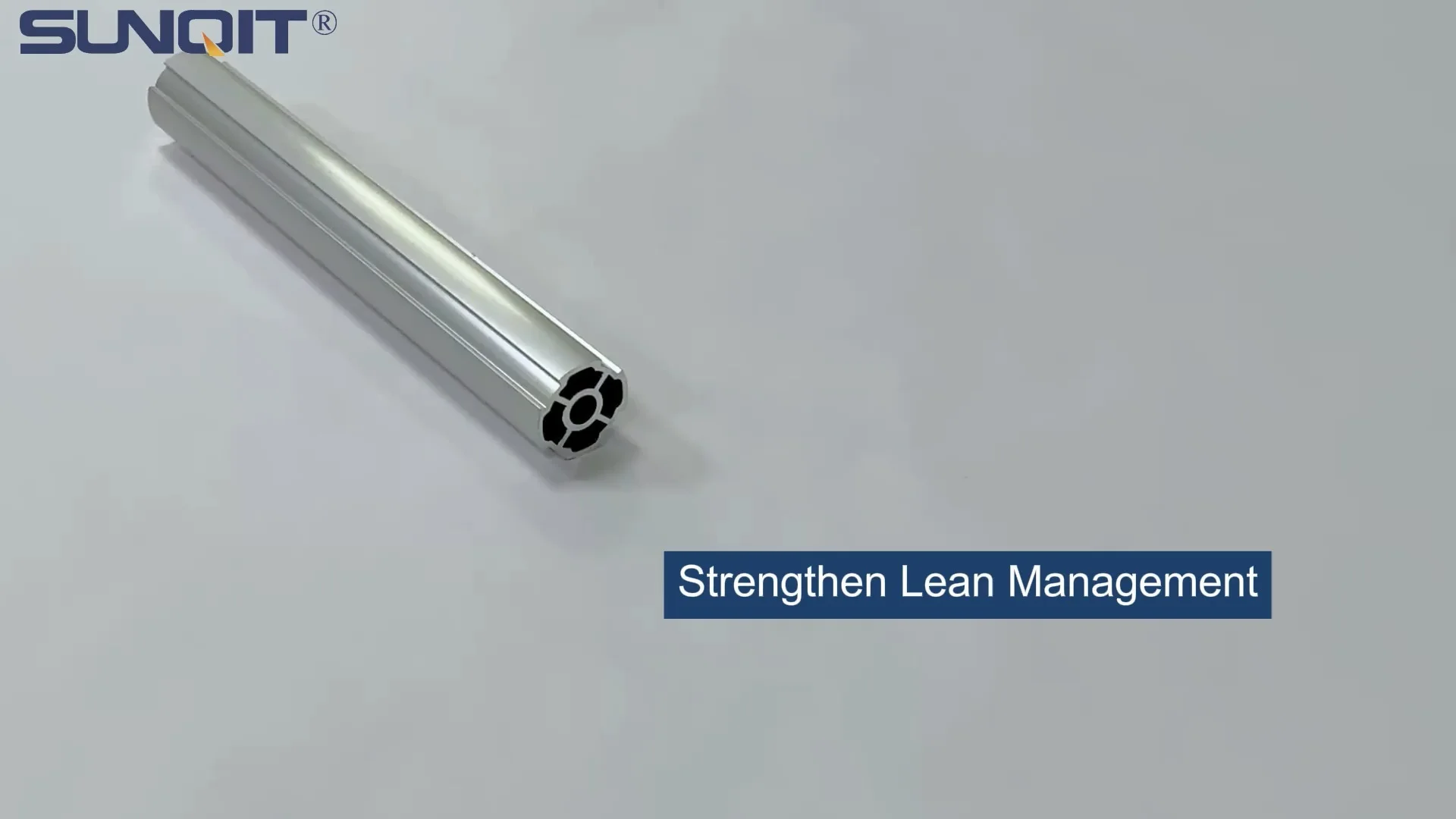
This product is called reinforced aluminum tube, and its bending strength is about twice that of the basic aluminum tube. The end face can process m1o threaded holes, install foot cups and other accessories, or convert internal and external screws in
Step into a typical metalworking shop, and you'll likely encounter a familiar scene: tools scattered across workbenches, materials stacked haphazardly on shelves, and workers pausing mid-task to hunt for a missing wrench or a specific component. In an industry where precision and efficiency are critical, these small inefficiencies add up—wasting time, increasing frustration, and chipping away at profitability. This is where lean management comes in, aiming to eliminate waste and streamline workflows. But lean principles alone aren't enough; they need the right tools to bring them to life. Enter aluminum lean pipe systems: a versatile, durable, and cost-effective solution that's transforming how metalworking shops organize tools, materials, and workflows.
The Struggle with Traditional Tool Organization in Metalworking
For decades, metalworking shops relied on rigid, one-size-fits-all storage solutions. Wooden shelves warp under heavy tools, fixed metal racks can't adapt when production needs change, and clunky workbenches offer little flexibility for custom tool placement. These systems often lead to "hidden waste": time spent searching for tools (studies show workers lose up to 20% of their shift to this), materials damaged from poor storage, and bottlenecks when a workstation can't adapt to a new project. Worse, they lock teams into outdated workflows, making it hard to implement lean practices like 5S (Sort, Set in Order, Shine, Standardize, Sustain) or continuous improvement.
Consider a small shop producing custom machine parts. One week, they're assembling small gears; the next, large brackets. With traditional fixed racks, the team might have to completely rearrange their workspace—or worse, work around the racks—slowing down production. Toolboxes overflow, and frequently used items end up on the floor for "easy access," creating safety hazards. This isn't just disorganization; it's a barrier to lean management's core goal: creating value with minimal waste.
Aluminum Lean Pipe: The Flexible Backbone of Lean Tool Organization
Aluminum lean pipe systems—composed of lightweight aluminum tubes, joints, and accessories—offer a radical departure from rigid storage. Unlike traditional steel or wood, aluminum lean pipe is designed for adaptability. Its modular design lets teams build, modify, and reconfigure workbenches, racks, and material handling systems in hours, not days. But what makes it so effective for lean management? Let's break it down.
At its core, aluminum lean pipe is a lightweight yet strong aluminum tube, often paired with aluminum profile accessories like brackets, clamps, and shelves. The tubes come in various diameters, and the joints (rotary, fixed, or adjustable) snap into place without welding or heavy tools—meaning a team can assemble a custom workbench or flow rack with just a hex key. This modularity aligns perfectly with lean's emphasis on flexibility: as production needs shift, the workspace shifts with them. Need to add a shelf for new tools? Swap out a joint. Repurpose a flow rack for a larger part? Disassemble and rebuild it in an afternoon.
Aluminum's natural resistance to corrosion is another boon for metalworking environments, where oils, coolants, and metal shavings can damage other materials. Unlike steel, it won't rust, and unlike wood, it won't absorb liquids or harbor bacteria—keeping workspaces cleaner and safer. And because aluminum is lighter than steel, these systems are easy to move (with the addition of casters) when floor layouts need updating, supporting lean's focus on optimizing workflow flow.

Applications: How Aluminum Lean Pipe Transforms Tool Organization
Aluminum lean pipe systems aren't just a single product—they're a toolkit for building custom solutions. Let's explore three key applications that deliver immediate lean benefits: workbenches, flow racks, and conveyors.
1. Aluminum Workbenches: Tool Organization at Your Fingertips
The workbench is the heart of any metalworking station, and aluminum lean pipe workbenches turn this space into a lean powerhouse. Unlike fixed wooden or steel benches, these workbenches are built to fit the task, not the other way around. Using aluminum profile accessories—like tool hooks, pegboards, and adjustable shelves—teams can mount frequently used tools (drills, calipers, wrenches) at eye level, within arm's reach. Drawer units and bins, attached via quick-connect brackets, keep smaller parts sorted and labeled. Even the work surface can be customized: add a non-slip mat for precision work or a steel top for heavy-duty tasks.
What truly sets these workbenches apart is their adaptability. A machinist working on small components might need a compact bench with built-in LED lighting; a welder might require a larger surface with heat-resistant padding. With aluminum lean pipe, both can be built from the same basic tubes and joints. When a project ends, the bench can be reconfigured for the next task—no need to buy new furniture. This reduces waste from unused equipment and ensures every inch of the workspace adds value.
2. Flow Racks: Streamlining Material Handling
In lean management, "material flow" is king: materials should move smoothly from storage to production, with minimal handling. Traditional static shelves disrupt this flow—workers have to bend, reach, or even climb to access items, risking injury and delays. Aluminum lean pipe flow racks solve this by using gravity to keep materials moving. These racks feature inclined shelves fitted with roller tracks, allowing bins or parts to slide forward as the front one is removed. This "first in, first out" (FIFO) system ensures older materials are used first (reducing waste from obsolescence) and keeps items at waist height, eliminating unnecessary bending or stretching.
For example, a shop producing automotive parts might use a 3-row, 3-floor flow rack (built with aluminum lean pipe and plastic roller track guide rails) to store different sizes of bolts. Each row is labeled, and bins slide forward automatically, so workers grab what they need without searching. When production shifts to a new part, the rack can be reconfigured with additional rows or taller shelves—no need to buy a new rack. This flexibility makes flow racks a cornerstone of lean material management.
3. Conveyors: Connecting Workstations for Seamless Flow
Even the most organized workbenches and flow racks can't eliminate waste if parts still need to be carried manually between stations. Aluminum lean pipe conveyors bridge this gap, creating a continuous flow of materials from one workstation to the next. These conveyors use roller tracks (often paired with aluminum guide rails) to move parts gently and efficiently—whether it's a small gear or a larger assembly. They're easy to integrate with existing workbenches and flow racks, and their modular design means they can be extended, shortened, or re-routed as production lines change.
For instance, a shop assembling hydraulic valves might set up a conveyor line where parts move from the machining station to the assembly workbench, then to quality control. Workers no longer waste time carrying heavy components; instead, they focus on value-adding tasks like precision assembly or inspection. Conveyors also reduce the risk of damage—parts glide smoothly on rollers, avoiding drops or bumps that could ruin a component.

Comparing Traditional vs. Aluminum Lean Pipe Systems: A Lean Perspective
To truly see the impact of aluminum lean pipe, let's compare it to traditional tool storage systems across key lean metrics:
| Feature | Traditional Tool Storage (Wood/Steel Racks) | Aluminum Lean Pipe Systems |
|---|---|---|
| Flexibility | Fixed design; cannot be reconfigured without rebuilding | Modular; easily disassembled and reconfigured in hours |
| Assembly Time | Requires welding, cutting, or heavy tools (1-3 days for a rack) | Tool-free assembly with snap-on joints (1-2 hours for a workbench) |
| Durability | Steel rusts; wood warps or rots (5-7 year lifespan) | Aluminum resists corrosion; reusable for 10+ years |
| Cost Over Time | High replacement costs; frequent repairs | One-time investment; reusable components lower long-term costs |
| Support for Lean Practices | Hard to adapt to 5S or continuous improvement | Built for 5S (visual organization, easy cleaning) and rapid workflow changes |
Case Study: How a Small Metal Shop Cut Waste by 30% with Aluminum Lean Pipe
Precision Parts Co., a 20-person metalworking shop in Ohio, was struggling with inefficiency. Workers spent 15-20 minutes per shift searching for tools, and material handling delays were causing missed deadlines. Their lean manager proposed switching to aluminum lean pipe systems, starting with workbenches and flow racks.
Within a week, the team assembled custom aluminum workbenches with tool hooks, pegboards, and adjustable shelves. Frequently used tools were mounted at eye level, and drawers were labeled for small parts. Flow racks replaced old wooden shelves, with roller tracks ensuring materials slid forward automatically. The results were striking: tool search time dropped to 5 minutes per shift, material handling errors decreased by 25%, and the shop met its next three deadlines early. "We didn't just organize our tools—we reorganized how we work," said the shop foreman. "The aluminum lean pipe system made lean feel doable, not just a buzzword."

Why Aluminum Lean Pipe Systems Are a Lean Investment
Some shops hesitate to invest in aluminum lean pipe, citing higher upfront costs compared to basic wooden shelves. But lean management teaches us to look at "total cost of ownership," not just initial price. Aluminum systems pay for themselves in three key ways:
1. Reduced Waste:
Less time searching for tools, fewer damaged materials, and lower labor costs add up to significant savings. A 2023 study by the Lean Manufacturing Institute found shops using modular aluminum systems reduced non-value-added time by 30% on average.
2. Longevity:
Aluminum resists corrosion and wear, lasting 10+ years compared to 5-7 years for wood or steel. When a project ends, the system is disassembled and reused, avoiding the cost of buying new storage.
3. Empowered Teams:
Lean isn't just about tools—it's about engaging workers in improving their space. Aluminum lean pipe systems let teams design their own workbenches and racks, fostering ownership and pride. When workers feel their input matters, they're more motivated to maintain organization and suggest further improvements.
Getting Started with Aluminum Lean Pipe: Tips for Metalworking Shops
Ready to strengthen your lean management with aluminum lean pipe? Start small: focus on a single workstation or a problem area (like a messy tool storage zone). Involve your team in the design—they know best where tools should go and how materials flow. Choose a reputable aluminum lean pipe supplier that offers a range of accessories (joints, roller tracks, casters) to ensure you can customize as needed. And don't forget training: teach your team how to assemble and modify the system so they can adapt it on the fly.
Conclusion: Aluminum Lean Pipe—Lean Management in Action
Lean management isn't about perfection; it's about progress—eliminating small wastes, improving flow, and creating a workspace that supports, rather than hinders, your team. Aluminum lean pipe systems embody this progress. They turn disorganized chaos into structured efficiency, rigid workflows into adaptable processes, and frustrated workers into engaged problem-solvers. In metalworking, where every second and every component counts, aluminum lean pipe isn't just a storage solution—it's a lean management tool that delivers real, measurable results.
So, step back and look at your shop. Is your current tool organization supporting lean, or holding it back? With aluminum lean pipe, you're not just buying a workbench or a rack—you're investing in a leaner, more profitable future.