- Company Articles
- Company Articles
- Strengthen Lean Management in Packaging Lines: How Flow Racks Improve Throughput

Strengthen Lean Management in Packaging Lines: How Flow Racks Improve Throughput
Related Product
Strengthen Lean Management
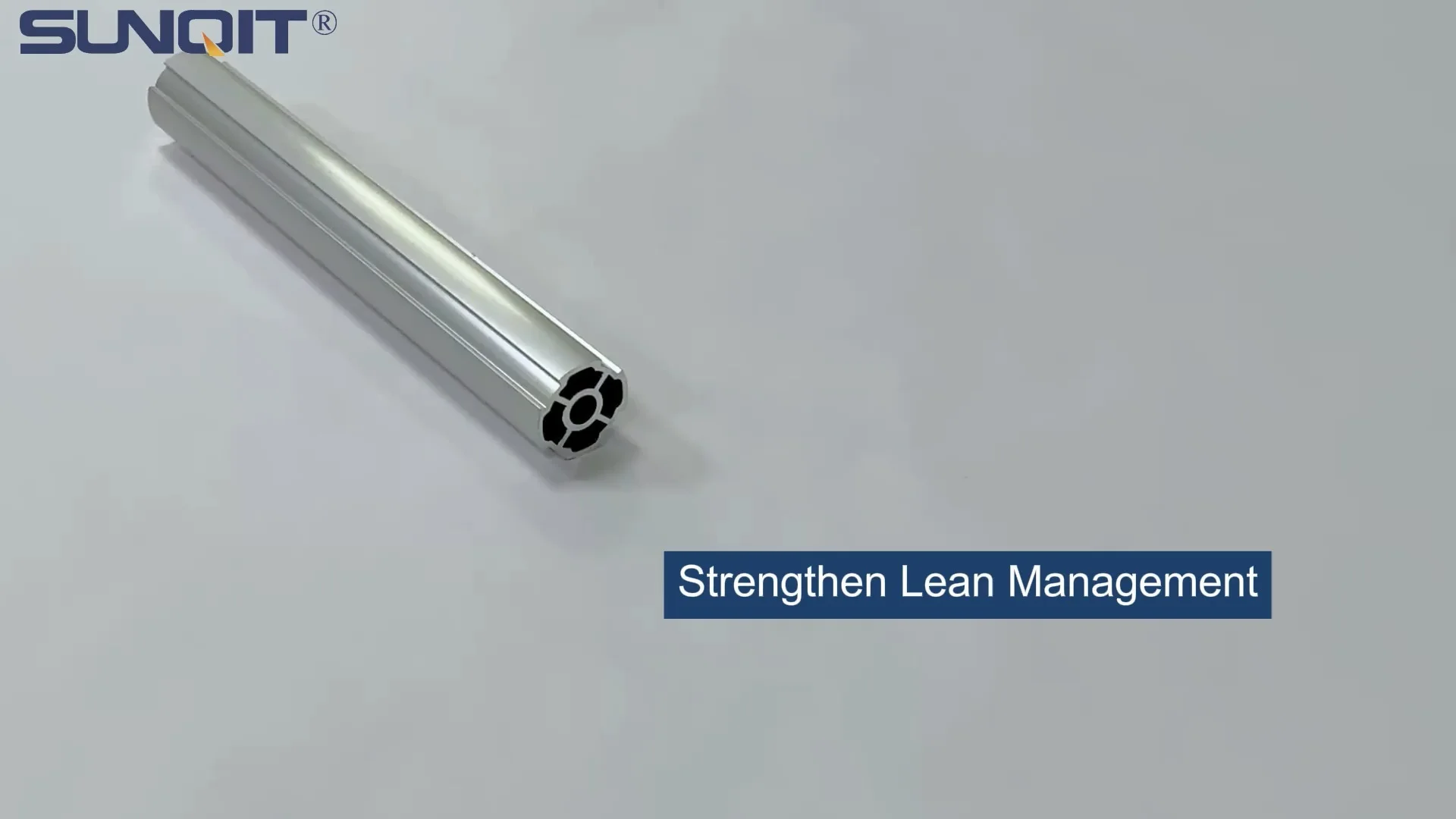
This product is called reinforced aluminum tube, and its bending strength is about twice that of the basic aluminum tube. The end face can process m1o threaded holes, install foot cups and other accessories, or convert internal and external screws in
In the fast-paced world of manufacturing and distribution, packaging lines are the final frontier between production and the customer. Yet for many facilities, these lines remain a hidden source of inefficiency—plagued by bottlenecks, wasted motion, and sluggish material flow. Enter lean management: a philosophy built on eliminating waste and maximizing value. But lean isn't just about buzzwords; it's about tools that transform how work gets done. Among these tools, one stands out for its ability to revolutionize packaging throughput: the flow rack . In this article, we'll explore how integrating flow racks into your lean system can turn chaotic packaging lines into models of efficiency, with help from components like roller track and strategic workbench setups.
The Cost of "Good Enough": Why Packaging Lines Struggle with Lean Principles
Walk into almost any packaging facility, and you'll likely hear the same refrains: "We've always done it this way," or "It's not perfect, but it works." But "works" often masks a litany of hidden costs. Let's break down the most common pain points that derail lean goals in packaging lines—and why traditional storage solutions are often the culprit.
1. The Hidden Toll of Wasted Motion
Ergonomics experts estimate that the average packaging worker spends 20-30% of their shift just moving materials: walking to a distant shelf to grab a box, bending to retrieve a roll of tape from the floor, or reaching across a cluttered workbench for a label gun. Each step, bend, or stretch is a missed opportunity to pack more units. In a line running 8 hours a day, that's nearly 2.5 hours of non-value-added work per employee—time that could be spent preparing orders instead of hunting for supplies.
2. Bottlenecks: When "First In" Becomes "First Stuck"
Packaging lines thrive on consistency, but inconsistency in material availability creates bottlenecks. Imagine a scenario: a worker at Station A needs small parts (like bubble wrap or packing peanuts) to protect fragile items. The parts are stored in a traditional static rack 20 feet away. By the time they walk there, grab the bin, and return, Station B—waiting for their finished packages—starts to pile up. Now multiply that by 10 workers across 3 shifts, and you've got a throughput problem that ripples through the entire facility.
3. Inventory Chaos: When "Just-In-Case" Becomes "Just-In-Mess"
To avoid stockouts, many facilities overstock packaging materials, leading to overflowing shelves, expired adhesives, or damaged boxes crushed under heavier items. Traditional racks offer no easy way to rotate stock, so older materials get buried, and workers grab whatever is closest—even if it's the wrong size or style. This not only wastes inventory but also increases the risk of shipping errors, which cost an average of $53 per incorrect package to resolve, according to industry reports.
"We used to have workers stacking boxes on the floor next to their stations because the racks were too far. Then we'd trip over them, or the boxes would get damaged. It felt like we were always putting out fires instead of packing orders." — Jamie, Packaging Supervisor at a mid-sized e-commerce fulfillment center
Flow Racks: The Lean Solution That Puts Materials in Motion
If traditional storage is the problem, flow racks are the solution. At their core, flow racks are dynamic storage systems designed to deliver materials directly to the point of use—without manual lifting, walking, or searching. They work on a simple principle: gravity. By angling shelves slightly, materials "flow" forward as items are removed, ensuring the oldest stock (first in) is used first (first out)—a critical FIFO principle for lean inventory management.
How Flow Racks Transform Material Flow
A typical flow rack consists of sloped lanes fitted with roller track —a series of wheels or rollers that allow boxes, bins, or packages to glide forward with minimal effort. When a worker takes the front item from a lane, the next one slides into place automatically. No more reaching, no more restocking from the back, and no more wasted trips to a distant storage area. The result? Materials are always within arm's reach of the workbench , turning "go get" time into "get to work" time.
Beyond Storage: Flow Racks as a Lean System Hub
Flow racks aren't just about storage—they're the backbone of a connected lean system . By positioning flow racks adjacent to packaging stations, facilities create a "U-shaped cell" layout, where workers can access everything they need without leaving their workspace. For example, a flow rack loaded with different box sizes, packing peanuts, and tape dispensers can feed directly into a workbench where orders are packed. From there, a conveyor belt can whisk finished packages to shipping—creating a seamless flow from material intake to order dispatch.
| Traditional Storage Setup | Flow Rack-Enabled Lean Setup |
|---|---|
| Workers walk 50+ steps per hour to retrieve materials | Materials delivered to within 1-2 steps of the workbench |
| Stock rotation relies on manual restocking (prone to errors) | FIFO automatically enforced via gravity flow |
| Cluttered workbenches due to "just-in-case" material piles | Workbenches stay organized; only active materials are accessible |
| Bottlenecks at 2-3 stations per line | Consistent flow reduces bottlenecks by 60-70% |
| Throughput limited by material retrieval time | Throughput increases by 25-40% (industry average) |

Inside the Flow Rack: How Roller Track Turns Gravity into Productivity
A flow rack is only as effective as its components, and the unsung hero here is the roller track . These tracks aren't just simple wheels; they're engineered to balance speed, control, and durability—ensuring materials flow smoothly without jamming or damaging products. Let's dive into what makes a quality roller track system and how it integrates with flow racks to supercharge throughput.
The Science of "Just Right" Flow
Not all roller tracks are created equal. The best ones are designed with precision: the angle of the rack, the spacing of the rollers, and even the material of the wheels all impact performance. For example, plastic roller tracks (like the yellow or grey guide rails often used in packaging) are ideal for lightweight items like poly mailers or small boxes, as they reduce noise and prevent scuffing. Heavier loads, such as bulkier cartons, may require steel roller tracks with reinforced bearings to handle the weight without slowing down.
Another key feature is adjustability. Many modern roller tracks come with customizable brackets and connectors, allowing facilities to tweak the slope or add side guides to prevent items from sliding off. This flexibility is critical in packaging, where box sizes and weights can vary day to day. A track that works for 12x12-inch boxes on Monday should also handle 8x8-inch envelopes on Tuesday—no reconfiguration required.
From Track to Workbench: Creating a Continuous Flow Loop
The magic of roller tracks lies in their ability to connect storage directly to work. Imagine a flow rack lane loaded with flat-rate shipping boxes, each sitting on a roller track. As a worker at the workbench takes the front box, the next one slides forward—no pulling, no lifting, no pausing. Meanwhile, empty bins from the workbench can be sent back along a lower roller track (or a separate return lane) to the staging area, creating a closed loop that minimizes material handling.
This loop is even more powerful when paired with ergonomic workbench design. A well-placed workbench should align with the height of the flow rack's roller tracks, so materials glide directly onto the workspace—eliminating the need to lift items onto the bench. Add features like built-in tool holders, adjustable height settings, and non-slip surfaces, and you've created a workstation where workers can focus on packing, not physical strain.

Real Results: How One Facility Boosted Throughput by 35% with Flow Racks
Numbers and theory are helpful, but nothing illustrates impact like a real-world example. Let's take a look at a mid-sized electronics distributor we worked with last year. Their packaging line was struggling with two major issues: frequent stockouts of critical packing materials (like anti-static bubble wrap) and workers spending 28% of their shift walking to retrieve items. Their goal was simple: increase daily order output from 800 to 1,100 packages without adding staff.
The Before: A Line Stuck in Neutral
Before the upgrade, the facility relied on static shelving located 30 feet from the packaging line. Workers would push carts to the shelves, load up on boxes, tape, and, then return to their workbenches. The result? Constant interruptions: a worker runs out of tape, so they pause to fetch more, causing a backup at their station. Meanwhile, the shelves were disorganized—older stock often got pushed to the back, leading to expired adhesive strips and wasted inventory.
The After: Flow Racks, Roller Tracks, and a Lean System Overhaul
We recommended a two-part solution: installing a 10-foot flow rack along the packaging line, fitted with roller tracks for different material sizes, and reorganizing the workbenches to align with the rack's output. Here's what changed:
- Material access: Workers now grab boxes, tape, and directly from the flow rack's roller tracks—steps reduced from 60 per hour to just 5.
- Stock rotation: The flow rack's FIFO design ensured older materials were used first, cutting waste from expired supplies by 75%.
- Bottlenecks eliminated: With materials always available, the line's two worst bottlenecks (stations 3 and 5) disappeared. What used to be a 20-minute backup between shifts shrank to 2 minutes.
"Within the first week, we noticed the difference. Workers weren't rushing around anymore—they were focused. By the end of the month, we hit 1,150 packages a day. We didn't add a single person; we just stopped wasting the time they already had." — Raj, Operations Manager at the electronics distributor
Three months later, the facility's throughput had increased by 35%, and worker satisfaction scores (measured via monthly surveys) rose by 40%. The flow rack, once seen as an "extra expense," paid for itself in under 6 months through labor savings and reduced waste.

Choosing the Right Flow Rack for Your Packaging Line: Key Considerations
Not every flow rack is a one-size-fits-all solution. To maximize throughput, you'll need to tailor your setup to your specific packaging needs. Here are the critical factors to consider:
1. Material Types and Sizes
Start by auditing your packaging materials: Are you handling small poly mailers, medium-sized boxes, or large bulk items? Lightweight items (under 10 lbs) work well with plastic roller tracks, while heavier loads may require steel tracks with ball bearings. For irregularly shaped items (like foam inserts), consider adding dividers or side guides to keep materials aligned on the roller track.
2. Throughput Volume
A line packing 500 orders a day has different needs than one packing 2,000. Higher volume lines may require double-deep flow rack lanes (to hold more stock) or multiple lanes per material type. You'll also want to calculate the "replenishment frequency"—how often the flow rack needs to be restocked—to avoid running out during peak hours.
3. Space Constraints
Flow racks come in various configurations: single-sided (for lines against a wall), double-sided (for island setups), or even mobile units (for flexible lines). Measure your available floor space, and don't forget vertical space—taller flow racks with multiple tiers can maximize storage without expanding the footprint.
4. Integration with Existing Lean Tools
Your flow rack shouldn't exist in a vacuum. How will it connect to your conveyor system? Can empty bins be returned via a lower roller track? Will the workbenches need to be repositioned to align with the rack's output? The best setups treat the flow rack as part of a larger lean system , not a standalone upgrade.
The Future of Lean Packaging: Beyond the Flow Rack
Flow racks are a powerful tool, but lean management is an ongoing journey. As technology advances, we're seeing exciting innovations that build on the foundation of flow racks and roller tracks. For example, smart flow racks with sensors can alert teams when stock is low, eliminating the need for manual checks. Robotics integration is also on the rise—autonomous carts that restock flow racks during off-hours, ensuring lines start each shift fully loaded.
But even with these advancements, the core principle remains: lean packaging is about making work easier for the people doing it. A flow rack that reduces walking, a roller track that eliminates lifting, a workbench that minimizes strain—these are the tools that turn "good enough" into "exceptional." And in a world where customer expectations are higher than ever, exceptional throughput isn't just a goal—it's the key to staying competitive.
Conclusion: Flow Racks as the Cornerstone of Lean Packaging
Packaging lines don't have to be a source of frustration. By embracing the flow rack as part of your lean system , you can transform chaos into order, wasted motion into productivity, and bottlenecks into smooth, steady throughput. With the right roller tracks, ergonomic workbenches, and a focus on continuous improvement, your packaging line can become a model of efficiency—one that delivers value to customers, reduces costs, and empowers your team to do their best work.
So the next time you walk your packaging floor, ask: Is this setup making it easier for my team to pack more orders, or is it holding them back? If the answer is the latter, it might be time to let gravity work for you—with a flow rack that turns lean principles into real results.