- Company Articles
- Company Articles
- Strengthen Lean Management in Remote Factories: Tools for Virtual Process Optimization

Strengthen Lean Management in Remote Factories: Tools for Virtual Process Optimization
Related Product
Strengthen Lean Management
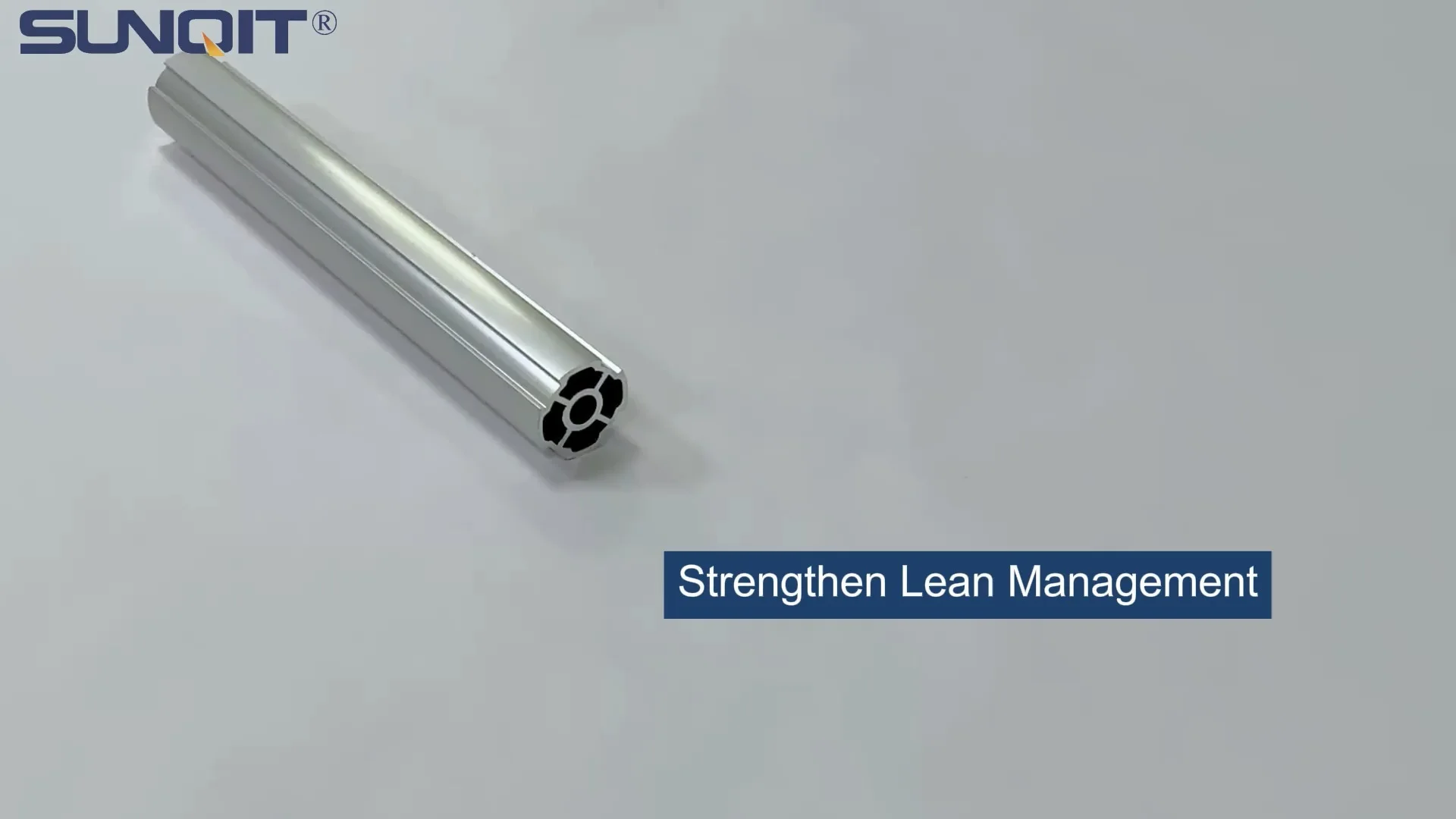
This product is called reinforced aluminum tube, and its bending strength is about twice that of the basic aluminum tube. The end face can process m1o threaded holes, install foot cups and other accessories, or convert internal and external screws in
In today's globalized manufacturing landscape, remote factories have become a cornerstone of operational flexibility. Whether your production lines span continents or your team coordinates across time zones, the goal remains the same: deliver quality products efficiently, minimize waste, and keep costs in check. But here's the catch—traditional lean management, with its emphasis on on-site observation and hands-on adjustments, struggles to thrive in remote settings. The distance creates blind spots, slows down feedback loops, and makes it harder to maintain the "flow" that lean so heavily relies on. So, how do you bridge that gap? The answer lies in pairing timeless lean principles with tools designed for virtual visibility and seamless process optimization. Let's dive into the tools that are redefining lean management for the remote factory era.
The Remote Lean Challenge: Why Traditional Methods Fall Short
Lean management, at its core, is about continuous improvement—identifying inefficiencies, streamlining workflows, and empowering teams to solve problems. But when your factory floor is miles away, those tasks get complicated. Imagine trying to conduct a gemba walk (the lean practice of observing work where it happens) over a lagging video call, or waiting hours for a team member to manually update a spreadsheet with production data. These delays and disconnects turn small inefficiencies into big bottlenecks.
Three key hurdles stand out for remote lean managers: visibility (knowing what's happening on the floor in real time), collaboration (ensuring teams across locations align on goals), and adaptability (adjusting processes quickly when issues arise). Without tools that address these, even the best lean intentions fizzle out. The good news? Modern lean tools—think integrated systems, smart material handlers, and flexible workstations—are built to tackle exactly these challenges. Let's break down the most impactful ones.
Tools That Transform Remote Lean: From Theory to Action
1. Lean Systems: Your Remote Command Center
A lean system isn't just a software platform—it's the backbone of remote lean management. Picture this: a dashboard that pulls data from every corner of your factory, from machine uptime to material flow, and presents it in real time to your team, whether they're in the next room or the next country. That's the power of an integrated lean system. Unlike siloed spreadsheets or manual logs, these systems centralize information, flag anomalies, and even predict bottlenecks before they disrupt production.
For example, if a workstation is falling behind schedule, the system sends an alert to both on-site operators and remote managers, who can then collaborate via built-in chat or video tools to troubleshoot. Some systems even integrate with IoT sensors on equipment, turning raw data into actionable insights—like noticing that a conveyor belt's speed drops by 5% every Tuesday afternoon, prompting a proactive maintenance check. In remote settings, this level of visibility isn't just helpful; it's essential. It turns "I think there's a problem" into "Here's exactly what's wrong, and here's how to fix it—now."
2. Flow Racks: Streamlining Material Flow, Virtually Tracked
Material handling is the lifeblood of lean manufacturing—get it wrong, and you're drowning in waste (think excess inventory, long lead times, or workers spending hours searching for parts). Enter flow racks : those sloped, gravity-fed storage systems that keep materials organized and easily accessible. But in a remote factory, a flow rack isn't just a metal structure—it's a data point. Modern flow racks come equipped with sensors or RFID tags that track stock levels in real time. When a bin of components runs low, the system automatically alerts the remote inventory team, who can then trigger a replenishment order—no need for on-site checks.
Here's why this matters for remote lean: it eliminates the "out of sight, out of mind" problem. A manager in Paris can see that the flow rack in their Vietnam factory is running low on capacitors, and adjust the production schedule before the line grinds to a halt. It also turns material flow into a measurable metric—you can track how long items spend in the rack, identify which parts are frequently delayed, and optimize the layout without stepping foot on the floor. Flow racks, in short, turn passive storage into active, data-driven process optimization.
3. Conveyors: Automated Movement with a Side of Data
Conveyors have been moving products for decades, but today's models are a far cry from the basic belt systems of the past. Modern conveyors are smart: they're equipped with cameras, speed sensors, and even AI that monitors for jams, misalignments, or slowdowns. For remote managers, this is a game-changer. Instead of waiting for a worker to report a stuck conveyor (and losing hours of production), the system sends an instant alert, complete with a timestamp and location. Some conveyors even adjust their speed automatically based on upstream demand—if the assembly line slows down, the conveyor slows too, reducing energy waste.
Take, for example, a food packaging plant using a smart conveyor system. If a sensor detects a package is misaligned (a common cause of jams), it pauses the belt and sends a photo to the remote maintenance team. The team can then guide an on-site operator through the fix via a live video feed, cutting downtime from 45 minutes to 10. Conveyors, in this way, don't just move products—they move data, keeping remote teams in the loop and in control.
4. Workbenches: Ergonomic, Connected, and Ready for Remote Collaboration
The workbench is where the rubber meets the road in manufacturing. It's where workers assemble products, inspect quality, and troubleshoot issues. In a remote setup, a poorly designed workbench becomes a silent productivity killer—ergonomic strain slows workers down, missing tools cause delays, and communication gaps lead to errors. That's why modern lean workbenches are built with two priorities: ergonomics (to keep workers efficient and healthy) and connectivity (to keep remote managers informed).
Imagine a workbench with built-in tablets that display digital work instructions, updated in real time by remote engineers. When a worker hits a snag, they can instantly flag the issue via the tablet, attaching photos or videos for the remote team. The bench might also have sensors that track how often tools are used (highlighting which ones are essential vs. redundant) or how long tasks take (uncovering hidden bottlenecks). For example, a electronics manufacturer noticed that workers at a specific workbench were spending 20% more time on wiring tasks. A remote review of the digital work instructions revealed a confusing diagram—fixing it cut task time by 15%. Workbenches, in this sense, become collaboration hubs, bridging the physical and virtual worlds.
5. Aluminum Profiles: Flexibility for a Changing Factory
Lean manufacturing thrives on flexibility—being able to reconfigure production lines, adapt to new product designs, or scale up/down quickly. In remote factories, this flexibility is even more critical, as on-site changes take longer to plan and execute. That's where aluminum profiles shine. These lightweight, modular metal rails (think of them as industrial Legos) can be assembled into workbenches, flow racks, shelving, or even entire production cells—no welding or heavy tools required. For remote managers, this means they can design a new layout using 3D modeling software, share the plans with on-site teams, and have the new structure built in hours, not days.
Here's a real-world example: a medical device company needed to pivot production from ventilators to test kits during a surge in demand. Their remote engineering team used aluminum profiles to redesign the assembly line layout in a 3D model, then walked the on-site team through the build via video call. The entire reconfiguration took 8 hours, compared to the 3 days it would have taken with traditional steel structures. Aluminum profiles also reduce waste—they're reusable, so when a line is retired, the profiles can be disassembled and repurposed. For remote lean managers, this flexibility isn't just convenient; it's a competitive advantage.

Comparing the Tools: Which One Delivers What?
With so many tools in the mix, it's helpful to see how they stack up against the key challenges of remote lean. The table below breaks down their primary functions, virtual integration features, and the lean principles they support:
| Tool | Primary Function | Virtual Integration | Key Lean Principle Supported |
|---|---|---|---|
| Lean System | Centralizes data from across the factory | Real-time dashboards, alerts, and collaborative problem-solving tools | Continuous improvement (kaizen), visibility (gemba) |
| Flow Rack | Organizes and feeds materials to production lines | RFID/sensors for real-time inventory tracking | Just-in-time (JIT) production, waste reduction (muda) |
| Conveyor | Moves products between workstations | Speed sensors, jam detection, and AI-driven alerts | Flow (muri), efficiency (mura elimination) |
| Workbench | Supports hands-on assembly and inspection | Digital work instructions, task-tracking sensors | Standardized work, ergonomics (respect for people) |
| Aluminum Profile | Builds modular, adaptable structures | 3D modeling for remote design and reconfiguration | Flexibility (heijunka), waste reduction (reusability) |

Case Study: How a Global Electronics Firm Used These Tools to Cut Waste by 30%
Let's put this into context with a real example. A mid-sized electronics manufacturer with factories in Mexico and Malaysia was struggling with remote lean management. Lead times were inconsistent, inventory levels were bloated, and cross-team collaboration felt like pulling teeth. Their solution? A strategic rollout of the tools we've discussed.
First, they implemented a lean system that connected all their machines, flow racks, and workbenches into a single dashboard. Within weeks, they noticed that the Malaysia factory's flow racks for circuit boards were frequently stockouts, causing production delays. The system traced the issue to slow shipping from their supplier, so they adjusted their reorder points and added a local backup supplier—cutting stockouts by 70%.
Next, they upgraded to smart conveyors in Mexico, which flagged a recurring jam at the soldering station. A remote analysis revealed that the conveyor speed was mismatched with the soldering machine's cycle time. By syncing the two, they reduced jams by 85% and freed up 2 hours of daily production time.
Finally, they replaced rigid steel workbenches with aluminum profiles in both factories. When a new product line was introduced, the remote engineering team designed a custom workbench layout in 3D, and the on-site teams assembled it in a day—no external contractors needed. This flexibility cut setup time for new lines from 2 weeks to 2 days.
The result? Over six months, the company reduced overall waste by 30%, improved on-time delivery by 25%, and saw a 15% boost in employee satisfaction (thanks to less frustration with inefficient tools). And the best part? The remote management team now spends less time fire-fighting and more time on strategic improvement—exactly what lean is supposed to enable.

Implementing the Tools: Tips for Remote Success
Adopting these tools isn't just about buying new equipment—it's about changing how your team works. Here are a few tips to ensure a smooth transition:
- Start with visibility: Before adding flow racks or conveyors, invest in a lean system that gives you a clear picture of current processes. You can't optimize what you can't see.
- Involve on-site teams: Remote managers might design the system, but on-site workers know the floor best. Ask for their input on where flow racks should go or how workbenches can be improved—they'll be more invested in the changes.
- Train for digital literacy: Not everyone is comfortable with new tech. Offer training sessions (recorded, for remote teams) on how to use the lean system, read sensor data, or assemble aluminum profiles.
- Measure, then iterate: Set clear metrics (e.g., "reduce conveyor downtime by 20%") and check in weekly. Use the data from your tools to refine processes—lean is a journey, not a destination.
The Future of Remote Lean: Beyond the Tools
As technology evolves, so will remote lean management. We're already seeing AI-powered predictive maintenance for conveyors, augmented reality (AR) glasses that let remote managers "walk" the factory floor via a worker's perspective, and blockchain for transparent, real-time supply chain tracking. But no matter how advanced the tech gets, the core of lean—respect for people, continuous improvement, and waste reduction—will remain. The tools are just enablers.
So, if you're managing a remote factory, don't let distance be an excuse for sloppy lean practices. With the right systems, flow racks, conveyors, workbenches, and aluminum profiles, you can build a lean operation that's not just efficient, but resilient—able to adapt to changes, collaborate across borders, and deliver value, no matter where your team is located. The future of manufacturing is remote, and the future of remote manufacturing is lean. It's time to build it.