- Company Articles
- Company Articles
- Strengthen Lean Management to Reduce Waste: Practical Strategies for 3C Factories

Strengthen Lean Management to Reduce Waste: Practical Strategies for 3C Factories
Related Product
Strengthen Lean Management
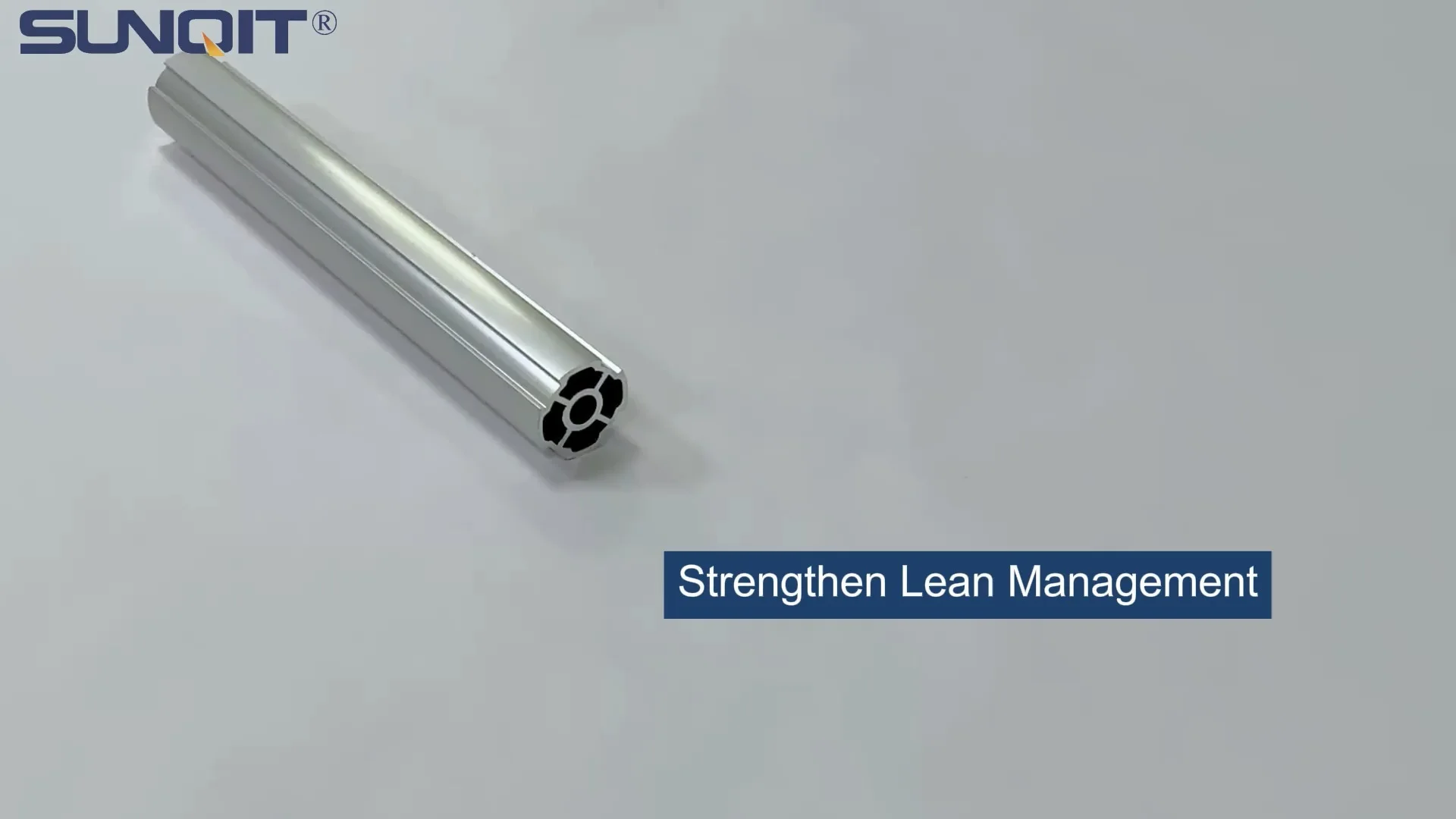
This product is called reinforced aluminum tube, and its bending strength is about twice that of the basic aluminum tube. The end face can process m1o threaded holes, install foot cups and other accessories, or convert internal and external screws in
Introduction: The Hidden Cost of Waste in 3C Manufacturing
In the fast-paced world of 3C manufacturing—where smartphones, laptops, and consumer electronics fly off production lines at breakneck speeds—efficiency isn't just a buzzword. It's the difference between meeting tight deadlines, staying competitive, and watching profit margins shrink. Yet, for many factories, waste remains an invisible drain: parts piling up in unused inventory, workers walking extra steps to fetch tools, assemblies scrapped due to static damage, and bottlenecks that turn smooth workflows into frustrating delays.
Lean management, born from the Toyota Production System, isn't about cutting corners or overworking teams. It's about respecting people and eliminating waste —two principles that hit especially close to home in 3C factories, where precision and speed are non-negotiable. But here's the truth: lean isn't a one-size-fits-all template. It's a mindset, a lean system of continuous improvement that adapts to the unique chaos of electronics production. Let's dive into how 3C factories can turn waste into opportunity with practical, human-centered strategies.
The 8 Wastes: Why 3C Factories Struggle (and How to Fight Back)
Before we fix what's broken, we need to see it. Let's break down the "8 Wastes" through the lens of a typical 3C factory:
- Overproduction: Cranking out more circuit boards than the next station can handle, leaving piles of inventory collecting dust (and static).
- Waiting: A worker pauses assembly because the next batch of screens is stuck in a distant warehouse.
- Transportation: Parts shuttled back and forth between floors, losing time and risking damage.
- Defects: A smartphone fails testing because static from a workbench zapped a sensitive chip.
- Inventory: Shelves overflowing with unused connectors, tying up capital and space.
- Motion: A technician bending, reaching, and twisting to grab tools scattered across a cluttered bench.
- Overprocessing: Inspecting a component three times when once would suffice.
- Unused Talent: Line workers noticing inefficiencies but never being asked for input.
These wastes aren't just numbers on a spreadsheet. They're the reason Maria, a line operator with 10 years of experience, goes home exhausted after a shift of constant walking. They're why Raj, a production manager, stays late reworking schedules to make up for bottlenecks. The good news? Each waste has a solution—one that starts with designing workflows around people , not just processes.

Strategy 1: Tame Chaos with the Lean Pipe Workbench
Walk into most 3C assembly lines, and you'll find workbenches that tell a story: sticky notes peeling off metal surfaces, tools tossed into mismatched bins, cables snaking across the table like unruly vines. For a worker assembling microchips smaller than a fingernail, this chaos isn't just messy—it's dangerous. A misplaced tweezer or a bent cable can derail an entire unit.
Enter the lean pipe workbench —not just a table, but a customizable command center built for the way 3C workers actually move. Unlike rigid, one-size workbenches, these setups use lightweight aluminum or steel pipes and joints to adapt to tasks in real time. Need a shelf for bins of screws? Snap on a pipe. Want a tool rail at eye level? Adjust the height. Add a static-dissipative mat, and suddenly you've got a workspace that fights defects and fatigue.
Real Story: How a Lean Pipe Workbench Cut Motion Waste by 40%
At a Shenzhen-based smartphone factory, Line 5 was struggling with high turnover. New hires took weeks to hit speed, and veterans complained of sore backs. The root cause? A cluttered workbench where tools were stored under the table, requiring workers to bend down 20+ times per hour. The team swapped out old benches for lean pipe workbenches with overhead tool racks, under-shelf bins, and adjustable heights. Within a month, motion waste dropped by 40%, and new hires were productive in half the time. "It's like the bench was designed
for me
," one operator said. "I don't waste time hunting for tools—I just focus on building."
The magic of lean pipe workbenches lies in their flexibility. 3C factories rarely produce the same product forever; a line making smartwatches today might switch to tablets tomorrow. With modular pipes and joints, reconfiguring a bench takes hours, not days. No more idle lines waiting for custom furniture—just a workspace that evolves with your team.

Strategy 2: Let Materials Flow with Flow Racks and Conveyors
Imagine this: A worker on the final assembly line needs a batch of camera lenses. They radio the warehouse, wait 15 minutes, and a trolley arrives—only to find the lenses are the wrong model. Sound familiar? In 3C manufacturing, material flow is the lifeblood of production. When it stalls, everything stalls.
Flow racks and conveyors aren't just about moving parts—they're about delivering the right part, at the right time, to the right person . Let's start with flow racks: these gravity-fed systems use tilted shelves and rollers to ensure "first in, first out" (FIFO) inventory. No more digging through bins to find the oldest batch of capacitors; parts glide forward as needed, reducing inventory and the risk of obsolescence.
Pair flow racks with conveyors, and you've got a material highway that eliminates "walking waste." In a typical 3C factory, workers might spend 20% of their shift fetching parts. Conveyors turn that lost time into productive work: circuit boards glide from soldering to testing, screens move from inspection to assembly, and rejects are routed to rework stations—all without a single cart push.
From Bottlenecks to Flow: A Before-and-After Snapshot
| Metric | Before (Traditional Setup) | After (Flow Racks + Conveyors) | Improvement |
|---|---|---|---|
| Time to fetch parts per shift | 120 minutes | 30 minutes | 75% reduction |
| Inventory levels (components) | 2 weeks of supply | 3 days of supply | 80% reduction |
| Line throughput (units/hour) | 45 units | 65 units | 44% increase |
But here's the catch: flow racks and conveyors aren't set-it-and-forget-it. A 3C factory making high-end laptops needs different storage than one churning out budget headphones. Work with suppliers to design systems that fit your parts—smaller bins for screws, wider rollers for circuit boards, and brakes on conveyors to prevent jams with delicate components. The goal? Make material flow so seamless, workers barely notice it's happening.

Strategy 3: Protect Sensitive Electronics with ESD Workstations
Static electricity is the silent killer of 3C manufacturing. A single spark—too small to feel or see—can fry a microchip, turning a nearly finished smartphone into scrap. For factories, this means rework, wasted materials, and missed deadlines. Yet many still treat electrostatic discharge (ESD) protection as an afterthought: a token wristband here, a grounding mat there, but no cohesive strategy.
An ESD workstation changes that. More than just a "safe zone," it's a complete ecosystem designed to neutralize static at every step: grounded work surfaces, ionizers to dissipate charges in the air, wrist straps that alert managers if they're disconnected, and even ESD-safe bins for scrap. In 3C manufacturing, where a single defect can cost $50+ in materials and labor, this isn't optional—it's essential.
Case Study: How ESD Workstations Cut Defects by 60%
A Vietnam-based factory producing wireless earbuds was losing 15% of units to "mystery defects." Tests showed static damage, but the team couldn't pinpoint why—until they observed the line. Workers were placing finished earbuds on regular plastic trays, which built up static as they slid across the bench. The fix? ESD workstations with grounded trays, ionizing fans, and continuous monitoring. Within three months, defect rates plummeted by 60%, saving over $100,000 annually. "We used to think defects were just part of the job," the quality manager noted. "Now, we know they're preventable."
But ESD protection isn't just about equipment—it's about culture. Train teams to treat grounding straps like safety goggles: non-negotiable. Label ESD zones clearly, and empower workers to stop production if something feels off. After all, the person assembling the product is the first line of defense against static damage.
And here's a pro tip: Integrate ESD workstations with your lean system . For example, pair ESD-safe lean pipe workbenches with flow racks that also dissipate static, creating a continuous "clean zone" from part intake to final assembly. When lean and ESD protection work hand in hand, you're not just reducing waste—you're building trust in the quality of every product that leaves your factory.
Strategy 4: Empower Teams to Drive Continuous Improvement
Lean management isn't a top-down mandate. It's a conversation. The workers on the line—the ones tightening screws, testing screens, and troubleshooting jams—know better than anyone where the waste hides. Yet in too many factories, their insights are overlooked.
Start small: Hold daily 5-minute huddles where teams share one problem and one idea. "The flow rack by Station 3 jams when we load heavy batteries," a worker might say. "What if we add a lower roller to guide them in?" Act on these ideas quickly—even small wins (like adjusting a roller) build momentum. Over time, expand to monthly kaizen events, where cross-functional teams (operators, engineers, managers) map workflows and brainstorm solutions.
Remember the lean pipe workbench example? That change came from a line operator who complained about bending to reach tools. When managers listened, they didn't just fix a bench—they sent a message: "Your voice matters." That's the heart of lean: respecting people enough to let them shape their work.
Conclusion: Lean Isn't a Destination—It's a Journey
Reducing waste in 3C manufacturing isn't about perfection. It's about progress. A lean system that starts with a few lean pipe workbenches , grows into flow racks that keep materials moving, and matures with ESD workstations that protect your products. It's about workers who feel valued, processes that adapt to change, and a factory that doesn't just survive—but thrives.
So, where do you start? Pick one waste that keeps you up at night—maybe it's the piles of inventory in the corner or the constant rework from static damage—and tackle it with your team. Measure the results, celebrate the wins, and keep asking: "How can we make this better tomorrow?"
In the end, lean management is about more than efficiency. It's about building a factory where every person, every process, and every product has purpose. And in the competitive world of 3C manufacturing, that's the ultimate competitive advantage.