- Company Articles
- Company Articles
- Strengthen Lean Management with Conveyor Systems: Tailored for Your Production Needs

Strengthen Lean Management with Conveyor Systems: Tailored for Your Production Needs
Related Product
Strengthen Lean Management
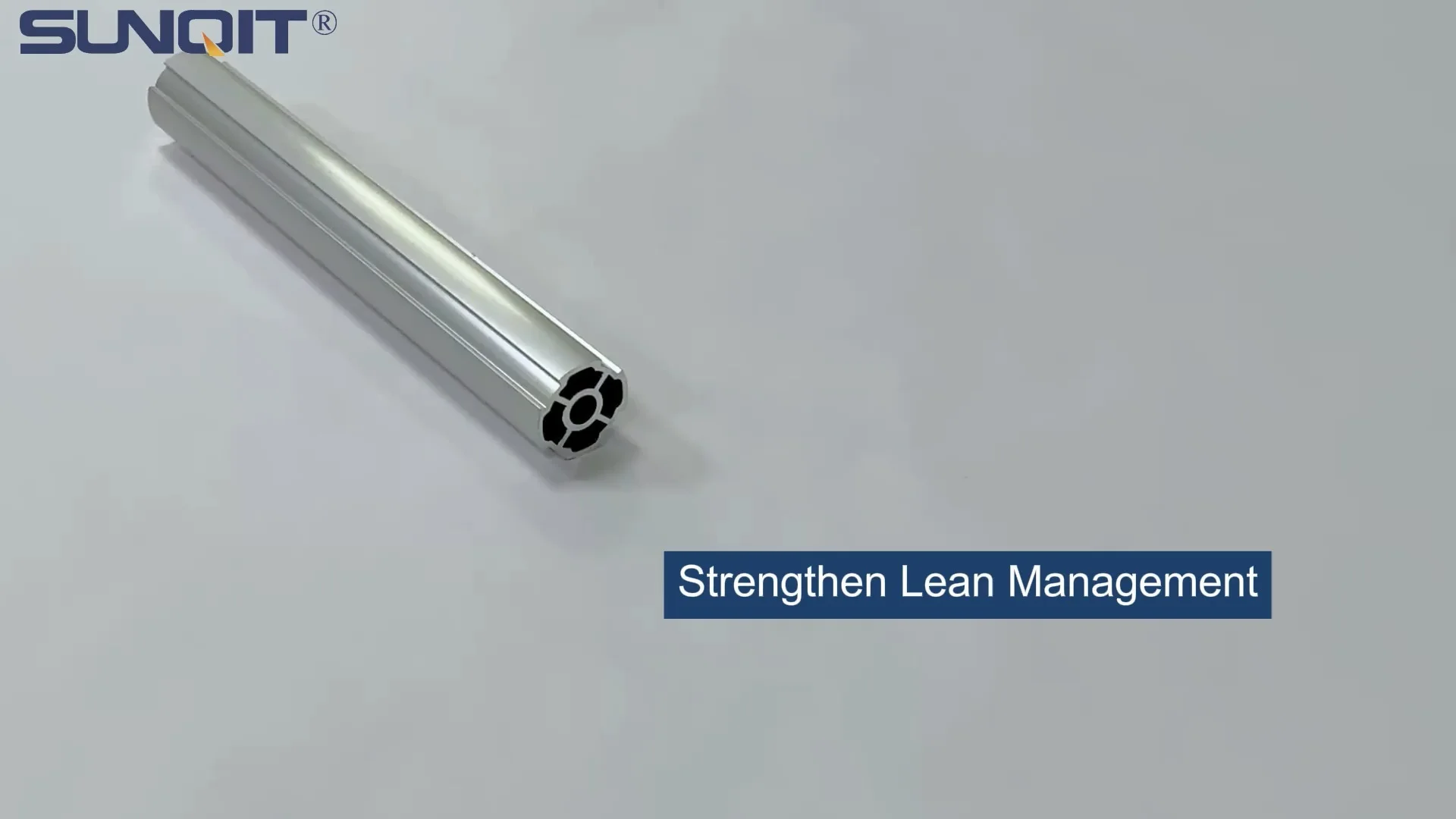
This product is called reinforced aluminum tube, and its bending strength is about twice that of the basic aluminum tube. The end face can process m1o threaded holes, install foot cups and other accessories, or convert internal and external screws in
The Heartbeat of Production: Why Lean Management Feels Like a Daily Balancing Act
Walk into any production facility, and you'll feel it immediately—the hum of machines, the rhythm of workers moving in sync, the quiet urgency of deadlines lingering in the air. For managers and frontline teams alike, lean management isn't just a buzzword; it's the daily pursuit of doing more with less—less waste, less stress, less time spent fixing what shouldn't break in the first place. But here's the thing: lean theory often glows on whiteboards, but on the factory floor? It can feel like trying to herd cats. Parts get stuck in bottlenecks. Workers spend precious minutes walking back and forth for materials. Stations feel cluttered, and adjusting to new orders means hours of reconfiguring workspaces. Sound familiar?
The problem isn't that lean principles are flawed. It's that the tools supporting them often feel rigid, outdated, or just plain disconnected from how real people work. That's where conveyor systems step in—not as cold, mechanical add-ons, but as the quiet enablers of lean's promise. When paired with the right companions—flow racks, lean pipe workbenches, and adaptable lean pipe setups—conveyors don't just move parts. They create a flow that lets your team breathe, focus, and turn "almost efficient" into "consistently excellent."
Conveyor Systems: More Than "Moving Belts"—The Backbone of Lean Flow
Let's start with the basics: What does a conveyor system *really* do for lean management? At its core, lean is about eliminating waste, and one of the biggest hidden wastes is "motion"—the unnecessary movement of people or materials. Think about Maria, an assembler at a small electronics plant I visited last year. Every hour, she'd stop her work, walk 50 feet to the storage area, rummage through a bin for capacitors, and trudge back. By lunch, she'd logged over a mile of walking—time she wasn't soldering, testing, or adding value. Then the plant installed a simple roller conveyor that fed parts directly to her station. Suddenly, those 50-foot treks vanished. Maria's output jumped by 15%, and she smiled more. "I feel like I'm *building* again," she told me, "not just fetching."
That's the magic of conveyors: they turn "go get" into "here it is." But their role in lean goes deeper. Conveyors enforce *pull systems*—materials move only when the next station needs them, preventing overstock and clutter. They standardize workflows, so every part arrives at the same height, the same speed, reducing errors from inconsistent handling. And modern conveyors, especially those designed with lean in mind, are modular. Need to adjust for a new product? Add a section, reposition a roller track, or swap a belt—no need to rebuild the entire line. This flexibility is gold for lean, where adaptability is key to staying competitive.
Waste Reduced, Value Amplified:
Conveyors cut down on motion waste, but they also tackle waiting (no more idling while parts arrive), overprocessing (fewer damaged parts from manual transport), and even defects (consistent part delivery reduces mishandling). It's not just about speed—it's about creating a system where your team can focus on what they do best.

Flow Racks & Workbenches: The Conveyor's Silent Partners in Efficiency
A conveyor alone is powerful, but it's even stronger when paired with tools that keep materials organized and workstations ergonomic. Enter flow racks and workbenches—two unsung heroes of lean that turn conveyor systems into complete ecosystems. Let's talk about flow racks first. Imagine a busy auto parts facility where bins of screws, washers, and gaskets are stacked haphazardly on shelves. Workers dig through piles, knocking over bins, wasting time. Now picture those same parts in a flow rack: angled shelves with roller tracks that let bins slide forward as the front one is emptied. No more reaching, no more searching—parts are always at eye level, ready to load onto the conveyor. That's a flow rack in action, turning "chaos" into "order" and feeding the conveyor with precision.
Then there's the workbench—the place where the actual magic of assembly happens. A poorly designed workbench forces workers into awkward postures, slows down tasks, and becomes a catch-all for clutter. But a lean pipe workbench? It's a game-changer. Built with lightweight, durable lean pipe and joints, these workbenches are customizable to the inch. Need a shelf for tools above? Add a few pipes and a joint. Want a roller track along the edge to feed parts from the conveyor directly onto the workspace? Snap it on. Height adjustable? No problem. I visited a furniture manufacturer last month that swapped their old wooden workbenches for lean pipe versions. The team adjusted the height to match each worker's elbow level, added tool hooks, and integrated a small conveyor section on the side. The result? A 20% drop in reported back pain and a 10% faster assembly time. "It's like the bench was made for *us*," one worker said. "Not the other way around."
Together, conveyors, flow racks, and lean pipe workbenches create a "cell" where everything a worker needs—parts, tools, workspace—is within arm's reach. No more stretching, bending, or hunting. It's lean management made tangible, right where the work happens.

Lean Pipe: The Flexible Glue That Makes Lean Systems Stick
If conveyors are the backbone, and flow racks/workbenches are the muscles, then lean pipe is the connective tissue that holds it all together. Lean pipe—often made of aluminum or steel with a plastic coating—is lightweight, strong, and infinitely adaptable. What makes it special? The joints. Simple, twist-to-lock connectors let you build almost anything: a workbench, a turnover trolley, a material rack, or even a custom conveyor support structure. No welding, no drilling, no waiting for a contractor. A team can reconfigure a lean pipe setup in an hour, not a week.
Take a small bakery that produces custom cake decorations. Their production needs change weekly—one day, tiny sugar flowers; the next, large fondant toppers. With lean pipe, they built a modular workbench that adjusts height for different tasks, added a mini aluminum roller track to move trays from decorating to packaging, and even created a mobile flow rack for fondant tools. When a big order comes in, they snap on extra pipe sections to expand the workspace. When things slow down, they break it down and store the pipes—no wasted space. That's the beauty of lean pipe: it grows with you, shrinks with you, and evolves as your lean goals evolve.
And let's not forget accessories—caster wheels that turn a static workbench into a mobile station, roller track connectors that link flow racks to conveyors, or end caps that protect workers from sharp edges. These small parts might seem trivial, but they're what make lean pipe systems *practical*. They turn "this could work" into "this works, and it's safe, and it's comfortable."

Tailoring Your Lean System: From Mom-and-Pop Shops to Mega Factories
Lean management isn't one-size-fits-all, and neither are conveyor systems. A boutique toy maker with 10 employees needs a different setup than a automotive plant with 500. The key is matching the conveyor (and its supporting tools) to your production volume, product type, and space. Let's break down common options:
conveyor-table">
| Conveyor Type | Best For | Lean Benefit |
|---|---|---|
| Roller Conveyor | Heavy parts (metal, machinery), high-volume transport | Low maintenance, gravity or motor-driven options for pull systems |
| Belt Conveyor | Fragile items (electronics, glass), irregular shapes | Soft, consistent transport reduces damage; adjustable speed for precision |
| Chain Conveyor | Hot or oily parts (engine components, forging) | Durable, handles harsh environments without jamming |
| Flexible Conveyor | Small spaces, frequent reconfigurations (e-commerce, warehouses) | Folds or bends to fit tight areas; easy to store when not in use |
For example, a medical device manufacturer dealing with small, delicate parts might opt for a belt conveyor paired with an ESD workbench (to prevent static damage) and a flow rack with dividers for tiny components. A furniture factory, moving heavy wooden panels, would lean into roller conveyors and stainless steel roller balls to glide materials smoothly. And a startup with limited space? A mobile lean pipe workbench on casters, paired with a mini aluminum roller track that can be wheeled into place when needed.
The secret is to start with your workflow, not the equipment. Map out where parts get stuck, where workers move the most, and what's frustrating your team. Then build your system around those pain points. A good lean system supplier will ask questions like, "What keeps you up at night?" or "What's one thing you wish you could stop doing tomorrow?" because they know the best solutions solve real problems, not just check boxes.
From Theory to Reality: How Lean Systems Transform Daily Work
Let's bring this to life with a story. A mid-sized appliance manufacturer was struggling with their refrigerator assembly line. Bottlenecks formed at the door installation station because parts arrived in batches—workers would rush to install 20 doors, then wait 30 minutes for the next batch. The plant manager, Raj, was skeptical about "fancy conveyor systems" until he visited a peer's facility using a roller conveyor paired with a flow rack. The flow rack held door components in sequence, and the conveyor fed them one at a time to the installation station. No more batches, no more waiting. Raj's team installed a similar setup, and within a week, door installation time dropped by 25%. "The line just flows now," Raj said. "And the best part? My team isn't stressed anymore. They're talking, laughing—actually enjoying the work again."
Another example: a textile factory using lean pipe workbenches. Their old workstations were fixed-height, so taller workers hunched, shorter ones strained. Repetitive strain injuries were common. They switched to adjustable lean pipe workbenches with footrests and added a small conveyor to bring fabric rolls to each station. Six months later, injury reports were down by 40%, and employee retention improved. "It's not just about the benches," the HR manager told me. "It's that we showed our team we care about *how* they work, not just *how much* they work. That's lean too—respect for people."
Choosing Your Lean Partner: Why the Right Supplier Matters
You could buy conveyor parts online, piece together a system, and hope for the best. But lean management is a journey, not a one-time purchase. That's why partnering with a reputable lean system supplier is critical. A good supplier doesn't just sell you a conveyor or a lean pipe joint—they listen. They visit your facility, walk the line with you, and help you design a system that fits *your* space, *your* team, and *your* goals. They offer training so your team knows how to adjust the conveyor or reconfigure the flow rack. They stand behind their products, so if a roller track jams or a lean pipe joint wears out, they're there to fix it fast.
Look for suppliers who specialize in lean solutions, not just generic industrial equipment. Ask about their experience with your industry—electronics, food processing, automotive. Check reviews from other small or medium businesses (not just enterprise clients) to see if they deliver on flexibility and support. Remember: the cheapest conveyor might save you money today, but a poorly designed system will cost you in wasted time, frustrated workers, and missed deadlines tomorrow.
Conclusion: Lean Management Isn't a Destination—It's a Journey, and Conveyors Are Your Compass
At the end of the day, lean management is about people. It's about creating workplaces where teams feel supported, efficient, and proud of what they build. Conveyor systems, flow racks, lean pipe workbenches—these aren't just tools. They're enablers. They turn the abstract ideals of lean into daily realities: less waste, more value, happier workers.
So whether you're running a small workshop or a large factory, remember this: lean doesn't require a complete overhaul. Start small. Install a conveyor to feed one station. Add a flow rack to organize your most used parts. Build a lean pipe workbench that fits your tallest (and shortest) team member. Watch what happens. The changes might seem incremental at first, but over time, they'll compound—into better output, lower stress, and a production line that feels less like a battle and more like a symphony.
And when that happens, you'll realize: lean management isn't about being perfect. It's about being better—for your team, your customers, and your business. And with the right conveyor system by your side, better is always within reach.