- Company Articles
- Company Articles
- Strengthen Lean Management with Modular Workstations: Adaptable for Changing Production Needs

Strengthen Lean Management with Modular Workstations: Adaptable for Changing Production Needs
Related Product
Strengthen Lean Management
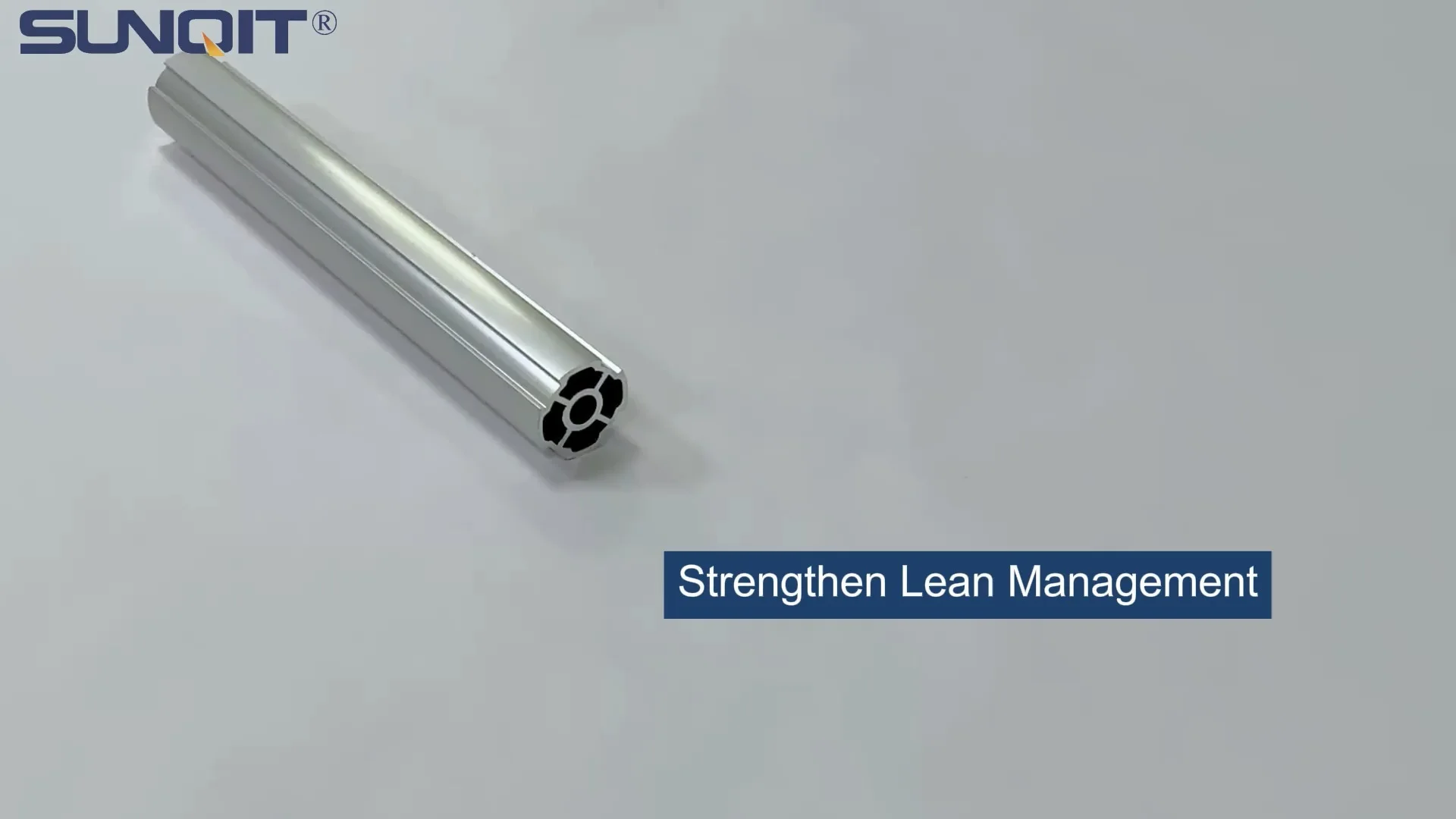
This product is called reinforced aluminum tube, and its bending strength is about twice that of the basic aluminum tube. The end face can process m1o threaded holes, install foot cups and other accessories, or convert internal and external screws in
In the fast-paced world of manufacturing, where customer demands shift overnight and production lines must pivot at a moment's notice, the ability to adapt isn't just a competitive advantage—it's survival. For decades, lean management has been the gold standard for reducing waste and boosting efficiency, but traditional rigid production setups often act as a bottleneck, trapping teams in inflexible workflows that struggle to keep up with modern market realities. Enter modular workstations: the unsung heroes that bridge the gap between lean principles and the need for adaptability. By leveraging components like lean pipe workbenches, aluminum profiles, flow racks, and conveyors, these systems empower businesses to build production lines that grow, change, and evolve right alongside their needs. Let's dive into how modular workstations are redefining lean management for the better.
The Evolution of Lean Management: Why Static Systems No Longer Cut It
Lean management, born from the Toyota Production System, revolutionized manufacturing by focusing on eliminating waste—whether that's excess inventory, unnecessary motion, or unproductive downtime. For years, this meant streamlining fixed production lines to run like well-oiled machines, churning out large batches of identical products with minimal waste. But today's market has flipped the script. Customers want customization, shorter product lifecycles demand frequent line changes, and small-batch production is becoming the norm. Suddenly, those "well-oiled machines" feel more like straightjackets.
Consider a scenario many production managers know all too well: A electronics plant invests in a state-of-the-art assembly line for a new smartphone model, only to have the design updated six months later. The fixed steel workstations, welded conveyors, and custom-built material racks that once boosted efficiency now become obstacles. Reconfiguring the line means hiring contractors, halting production for weeks, and sinking thousands into modifications—all while competitors with more agile setups are already shipping the updated model. This isn't just waste; it's a failure to align lean principles with the reality of modern manufacturing.
The core issue? Traditional workstations are built for permanence, not progress. They're designed around a single product, a single workflow, and a single moment in time. Lean management, however, is about continuous improvement—and continuous improvement demands flexibility. This is where modular workstations step in. By prioritizing adaptability, they turn lean from a static set of rules into a dynamic, living practice that can evolve with your business.
What Are Modular Workstations, Anyway? Breaking Down the Basics
At their core, modular workstations are exactly what they sound like: production setups built from interchangeable, reusable components that can be easily assembled, disassembled, and reconfigured. Think of them as the "Lego sets" of manufacturing—versatile building blocks that let you create custom workspaces without the need for welding, heavy machinery, or specialized labor. Let's break down the key components that make these systems tick, starting with the stars of the show: lean pipe workbenches, aluminum profiles, flow racks, and conveyors.
Lean Pipe Workbenches: The Backbone of Flexibility
If modular workstations had a MVP, it would be the lean pipe workbench. These workhorses are built using lightweight, durable pipes (often steel or aluminum) and a variety of joints, allowing teams to construct custom work surfaces, shelves, tool holders, and more—all without a single weld. The magic lies in the simplicity of their design: pipes slot into joints that lock securely in place, but can be easily loosened and rearranged when needs change. Need a taller bench for a new assembly process? Swap out the vertical pipes for longer ones. Adding a shelf for tools? Attach a few T-joints and horizontal pipes. Even better, many lean pipe workbenches come with casters, turning a stationary workstation into a mobile unit that can be rolled to wherever it's needed most.
Take, for example, a small automotive parts shop that produces both brake calipers and suspension components. In the morning, the team might use a lean pipe workbench with a flat surface and overhead tool rack for assembling calipers. By afternoon, they can reconfigure the same bench: lower the height, add a tilted shelf for suspension part diagrams, and attach a bin rail for small hardware. The entire process takes 20 minutes, requires no special tools, and doesn't disrupt the workflow. This isn't just flexibility—it's lean management in action, eliminating the waste of having separate workstations for every task.
Aluminum Profiles: Strength Meets Lightweight Versatility
While lean pipe workbenches excel at simplicity, aluminum profiles take modularity to the next level. These extruded aluminum beams, often with a T-slot design, are lightweight yet surprisingly strong—think of them as the "upgrade" for workstations that need a bit more durability or precision. Unlike traditional steel, aluminum resists corrosion, making it ideal for clean environments like electronics or food packaging plants. But the real game-changer is the T-slot: a groove running along the length of the profile that lets you attach accessories—shelves, LED lights, tool hooks, even monitors—with just a bolt and a nut. No drilling, no cutting, no hassle.
Imagine a medical device manufacturer that produces both small syringes and larger diagnostic tools. For syringe assembly, they might use aluminum profile workstations with low, ergonomic surfaces and built-in magnifying lamps attached via T-slot brackets. When switching to diagnostic tools, they can raise the work surface using extension profiles, add heavy-duty shelves for larger components, and even mount barcode scanners to track inventory—all in under an hour. Aluminum profiles don't just adapt to tasks; they adapt to people, letting workers customize their stations for comfort and efficiency, which studies show can boost productivity by up to 15%.
Flow Racks: Keeping Materials Moving, Waste Out
What good is a flexible workstation if the materials needed to keep it running are stuck in a static, hard-to-reach corner? That's where flow racks come in. These gravity-fed storage systems use inclined shelves with rollers or ball bearings to let materials glide from the back (where they're stocked) to the front (where they're used), ensuring first-in, first-out (FIFO) inventory management and eliminating the need for workers to bend, reach, or walk to retrieve parts. When paired with modular workstations, flow racks become an extension of the lean workflow—delivering materials directly to the point of use, reducing motion waste, and keeping workspaces clutter-free.
A furniture manufacturer, for instance, might use flow racks alongside lean pipe workbenches to supply wood panels, screws, and adhesives to assembly stations. As workers take panels from the front of the rack, gravity pulls the next one forward, so there's never a gap in production. When the manufacturer introduces a new line of smaller tables, they can easily adjust the flow rack's shelf height and add dividers to accommodate smaller panels—no need to buy a whole new rack. It's lean material handling at its finest: ensuring the right parts are in the right place, at the right time, with zero unnecessary movement.
Conveyors: Connecting Workstations, Streamlining Flow
Even the most flexible workstations and flow racks need a way to move materials between stations—and that's where modular conveyors shine. Unlike traditional fixed conveyors, these systems use lightweight sections (often roller or belt-based) that can be linked together, extended, or rearranged to match the layout of your modular workstations. Need to connect assembly to testing? Add a few roller conveyor sections. Launching a new product that requires an extra inspection step? insert a conveyor branch. When the line changes, simply disconnect the sections and rebuild—no concrete, no bolts, no downtime.
A toy manufacturer illustrates this perfectly. During peak season, they run three parallel assembly lines for action figures, each with a modular conveyor feeding into a central packaging station. When demand shifts to dolls in the off-season, they can reconfigure two of the lines into a single, longer line for doll assembly, rerouting the conveyors to feed into a specialized packaging area with smaller boxes. The entire reconfiguration takes a day, not a week, and uses the same conveyor sections they already own. This isn't just efficient—it's a masterclass in eliminating waste, as the same equipment serves multiple purposes year-round.

How Modular Workstations Supercharge Lean Principles: The Synergy in Action
Now that we've covered the components, let's talk about why they matter for lean management. Modular workstations don't just add flexibility—they amplify the core principles of lean, turning "reduce waste" from a goal into a daily reality. Here's how:
Eliminating Motion Waste: Workstations That Move With You
One of the biggest sources of waste in manufacturing is unnecessary motion—workers walking to retrieve tools, bending to reach parts, or stretching to access equipment. Modular workstations attack this head-on by letting you design workspaces around the human body, not the other way around. A lean pipe workbench with adjustable height ensures workers aren't hunching or straining. Flow racks positioned within arm's reach eliminate trips to the stockroom. Even better, mobile workstations with casters let teams bring the workbench to the material, not the material to the workbench. Studies show this can reduce motion waste by up to 35%, freeing up hours of productive time each week.
Slashing Inventory Waste: Right-Sized Storage, Right Where You Need It
Traditional material racks often force teams to overstock—after all, if you can't easily adjust shelf heights or add bins, you're tempted to keep extra parts on hand "just in case." Flow racks, paired with modular workstations, fix this by enabling precise, just-in-time inventory. Since flow racks are gravity-fed, the oldest parts are always at the front, reducing the risk of obsolescence. And because you can add or remove shelves as needed, you're never stuck with more storage space than you need. A electronics manufacturer using this setup reported cutting inventory holding costs by 25% in the first year alone—all by storing only what they needed, exactly where they needed it.
Accelerating Continuous Improvement: Empowering Teams to Experiment
Lean management isn't just about top-down changes—it's about empowering frontline workers to identify and solve problems. Modular workstations make this possible by putting the tools for improvement directly in their hands. A line worker who notices a bottleneck can rearrange a lean pipe workbench during a lunch break. A team lead can add a shelf to a flow rack to reduce clutter. Even better, since reconfigurations are low-cost and low-risk, teams feel encouraged to experiment—turning "what if?" into "let's try it." This culture of experimentation is where true continuous improvement thrives.
Minimizing Downtime: From "Shut Down" to "Shift Gears"
In traditional setups, changing a production line means shutting down for days or weeks. In lean terms, this is "downtime waste"—time when no value is being created. Modular workstations slash this waste by letting you reconfigure on the fly. Need to switch from producing Part A to Part B? Loosen a few joints, swap out a shelf, and you're back up in an hour. Even better, many teams keep spare components on hand, so they can build a new workstation alongside the existing one, then swap them out during a short break. A food packaging plant using this approach reduced changeover time from 8 hours to 45 minutes, letting them run 3 more batches per day—all without adding overtime.

Real-World Results: Case Studies That Prove the Impact
Still not convinced? Let's look at two businesses that transformed their operations with modular workstations. These aren't hypothetical—they're real-world examples of how adaptability translates to bottom-line results.
Case Study 1: Automotive Parts Manufacturer Cuts Costs by 30% With Lean Pipe Workbenches
A mid-sized automotive parts manufacturer in Michigan was struggling with high changeover costs and frequent production delays. Their production line, built with fixed steel workstations, required 2-3 days of downtime and $10,000 in contractor fees every time they switched between producing brake pads and rotors. Workers were also spending 20% of their shift walking to retrieve tools and materials, leading to fatigue and errors.
The solution? They invested in lean pipe workbenches, flow racks, and mobile casters from a trusted lean pipe supplier. Within a month, they saw dramatic changes: reconfiguring the line now takes 2 hours (done by the production team themselves), cutting downtime by 95%. Flow racks positioned at each workstation reduced walking time by 60%, and tool holders attached to the workbenches eliminated "lost tool" incidents. Over the first year, the company saved $120,000 in changeover costs alone, and productivity increased by 18%. As the plant manager put it: "We used to see changeovers as a necessary evil. Now, they're just another part of the day—quick, easy, and almost invisible."
Case Study 2: Electronics Plant Adapts to Custom Orders With Aluminum Profile Workstations
A California-based electronics plant specializing in custom circuit boards was losing business to competitors who could turnaround small-batch orders faster. Their fixed workstations couldn't handle the variety of board sizes and component types, leading to long setup times and frequent errors. The team was stuck: either turn down profitable custom orders or risk delays that damaged customer trust.
They turned to aluminum profile workstations, choosing a supplier that offered a wide range of T-slot accessories—adjustable shelves, tool panels, and even ESD (electrostatic discharge) mats to protect sensitive components. The results were immediate: workers could now adjust workstation height, add specialized tool holders, and reposition lighting in under 30 minutes for each new order. A small-batch order that once took 3 days to setup now takes 2 hours. The plant's on-time delivery rate jumped from 75% to 98%, and they've expanded their custom order business by 40% in six months. "We used to think custom meant complicated," said the production lead. "Now, with these workstations, custom just means different—different parts, different layout, same simple process."

Choosing the Right Modular Workstation Components: Key Considerations
Ready to dive into modular workstations? Here are a few tips to ensure you choose the right components for your needs:
Start With Your "Why": Define Your Flexibility Needs
Before buying anything, ask: What changes do we anticipate? Will we need to switch between products? Scale production up or down? Move workstations to new locations? Answering these questions will help you prioritize components. For example, if you need frequent height adjustments, aluminum profiles with T-slot brackets are better than basic lean pipes. If mobility is key, casters are a must.
Choose a Reputable Supplier (Or Two)
Not all modular components are created equal. Look for suppliers that specialize in lean systems and offer a full range of accessories—you don't want to buy pipes from one supplier and find their joints don't fit another's shelves. A good supplier will also provide technical support, helping you design your first workstation and troubleshoot as you grow. Don't be afraid to ask for references or case studies from similar businesses.
Invest in Quality, But Don't Overbuy
Modular components are built to last, but that doesn't mean you need the most expensive option for every task. A basic lean pipe workbench might be perfect for light assembly, while aluminum profiles make sense for heavy-duty tasks. Start small: build one workstation, test it, and expand as you see results. Remember, the goal is to eliminate waste—including the waste of buying components you don't need yet.
Traditional vs. Modular Workstations: A Side-by-Side Comparison
| Feature | Traditional Workstations | Modular Workstations |
|---|---|---|
| Initial Setup Time | 2-4 weeks (requires contractors/welding) | 1-3 days (assembled by in-house team) |
| Reconfiguration Difficulty | Hard (requires tools, welding, or new parts) | Easy (tool-free, no special skills needed) |
| Cost Over 5 Years* | High (includes reconfiguration, downtime, and replacement costs) | Low (reusable components, minimal downtime, no replacement needed) |
| Adaptability to New Products | Low (often requires full workstation replacement) | High (reconfigure in hours/days for new tasks) |
| Employee Satisfaction | Medium (fixed setups may cause discomfort) | High (customizable, reduces fatigue and frustration) |
*Based on industry averages for a mid-sized manufacturing plant with annual reconfigurations.
The Future of Lean Management: Where Modular Workstations Are Headed
As manufacturing continues to evolve, modular workstations are poised to become even more integral to lean management. Here's what to watch for in the coming years:
Smart Integration: IoT and Modular Workstations
Imagine a lean pipe workbench with built-in sensors that track how often tools are used, or a flow rack that alerts you when stock is low. This is already happening. Smart modular components with IoT connectivity are turning workstations into data hubs, providing real-time insights into workflow efficiency. For example, a conveyor equipped with sensors can detect bottlenecks and automatically adjust speed, or alert managers when maintenance is needed—preventing downtime before it starts.
Sustainability: Greener Materials, Less Waste
Modular workstations are inherently sustainable—by reusing components, you reduce the need for new materials—but suppliers are taking this further. Look for aluminum profiles made from recycled materials, lean pipes with eco-friendly coatings, and even biodegradable joint materials. Some suppliers are even offering take-back programs for old components, ensuring they're recycled or repurposed instead of ending up in landfills.
3D Printing: Custom Accessories, On-Demand
Need a specialized bracket or tool holder that's not available off the shelf? 3D printing is making custom modular accessories accessible to even small manufacturers. Many suppliers now offer digital files for common components, letting you print replacements or custom parts in-house. This takes customization to a whole new level—no more waiting for a supplier to ship a niche accessory; just print it when you need it.
Final Thoughts: Lean Management Isn't Static—And Neither Should Your Workstations
At the end of the day, lean management is about more than reducing waste—it's about building a business that can thrive in an unpredictable world. Traditional workstations, with their focus on permanence, stand in the way of that. Modular workstations, with their flexibility, empower it. They turn lean from a set of rules into a mindset: adapt, experiment, and keep moving forward.
Whether you're a small shop looking to take on custom orders or a large manufacturer struggling with changeover times, the message is clear: your workstations should work for you, not against you. With lean pipe workbenches, aluminum profiles, flow racks, and conveyors, you're not just building workspaces—you're building a foundation for continuous improvement. And in today's manufacturing landscape, that's the most valuable lean tool of all.