- Company Articles
- Company Articles
- Strengthen Lean Management with Visual Controls: Using Accessories for Transparent Processes

Strengthen Lean Management with Visual Controls: Using Accessories for Transparent Processes
Related Product
Strengthen Lean Management
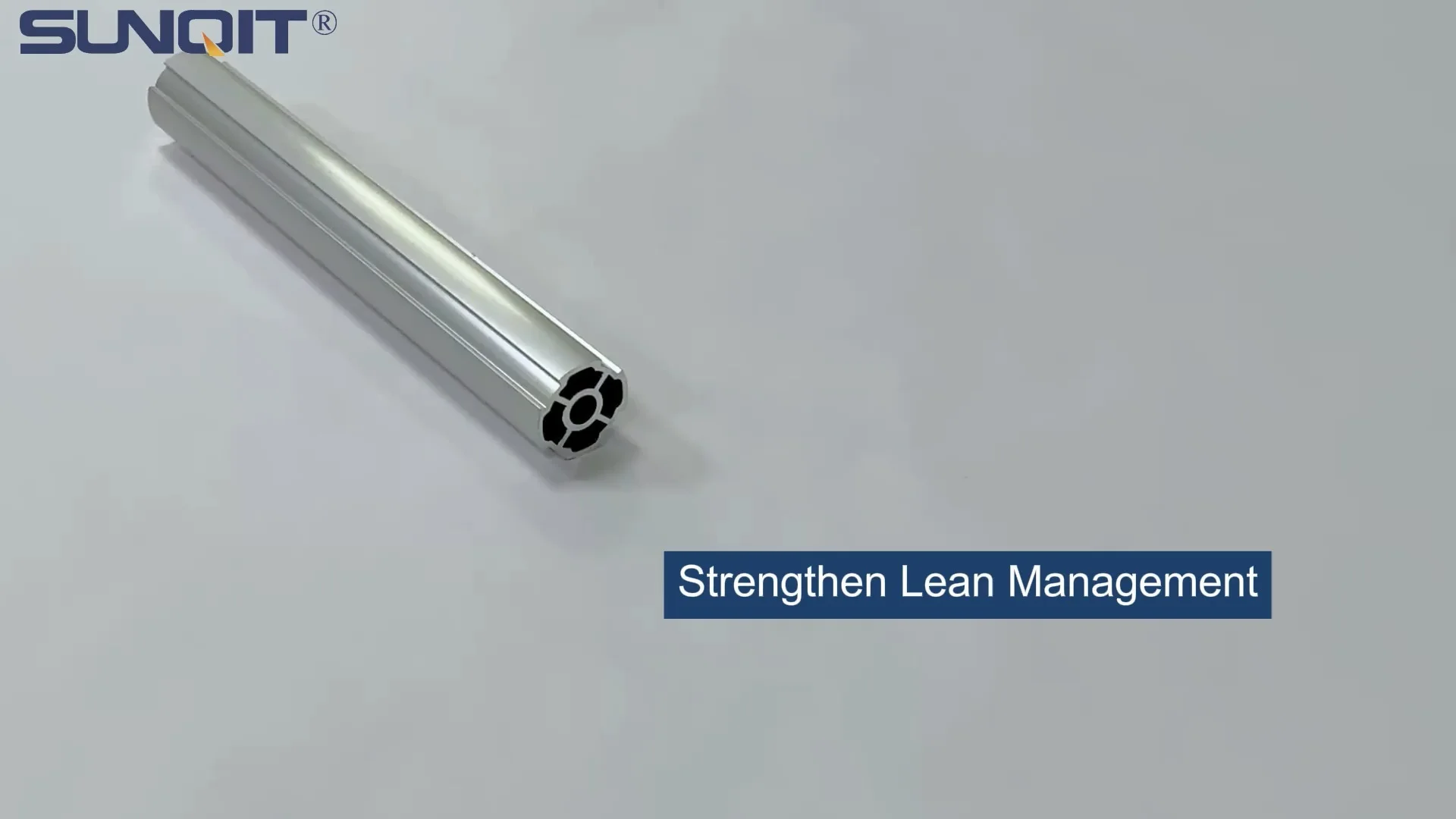
This product is called reinforced aluminum tube, and its bending strength is about twice that of the basic aluminum tube. The end face can process m1o threaded holes, install foot cups and other accessories, or convert internal and external screws in
How the right tools turn chaos into clarity on the factory floor
Walk into any manufacturing facility that's embraced lean management, and you'll likely hear the same goal repeated: "Eliminate waste." But here's the thing—waste thrives in the dark. When processes are hidden, materials unmarked, and workflows unclear, even the best lean intentions fall flat. That's where visual controls come in. They're not just about or painting lines on the floor; they're about creating a workplace where every team member can see, at a glance, what's working, what's not, and what needs to move next. And at the heart of these visual controls? The accessories that turn abstract lean principles into tangible, daily practices.
In this article, we'll explore how tools like the lean pipe workbench, flow rack, and conveyor systems aren't just pieces of equipment—they're the eyes of your lean system. We'll dive into how aluminum profiles enhance flexibility, why choosing the right lean system supplier matters, and how these elements come together to build a culture of transparency. Because lean isn't just about cutting costs; it's about empowering people with the clarity to do their best work.
The Hidden Cost of Invisibility in Lean Management
Lean management has revolutionized manufacturing by focusing on value—what your customer cares about—and stripping away everything else. But even teams that master 5S (Sort, Set in Order, Shine, Standardize, Sustain) or Kaizen (continuous improvement) can hit a wall: lack of visibility. Imagine a scenario where a operator needs a specific part, but it's buried in a bin labeled "miscellaneous." Or a supervisor trying to track a delayed order, only to find the work-in-progress (WIP) has been sitting idle on a back shelf for hours. These aren't just minor inconveniences; they're waste in action—waste of time, waste of labor, and waste of morale.
Transparency isn't a buzzword here. It's the foundation of accountability. When a team can see bottlenecks forming on a conveyor belt, or notice that a flow rack is running low on components, they don't need a manager to tell them to act—they can solve problems themselves. That's the power of visual controls: they turn passive observers into active problem-solvers. And the right accessories make this possible by designing visibility into the very structure of your workspace.
From Workbench to Warehouse: The Accessories That Build Transparency
Let's start with the most personal space in manufacturing: the workstation. For an operator, a cluttered, disorganized workbench isn't just frustrating—it's a barrier to productivity. Enter the lean pipe workbench. Unlike rigid, one-size-fits-all tables, these workbenches are built with modularity in mind. Using lightweight yet durable pipes and joints, they can be customized to fit the exact needs of the task at hand. Need a shelf for tools? Add it. A bin for defective parts? Snap it on. But the real visual magic? Color-coding. By using different colored pipes or bins, teams can instantly distinguish between tools (red), raw materials (blue), and finished goods (green). Suddenly, "Where's the wrench?" becomes a question no one has to ask—because it's right there, in the red bin, exactly where it should be.
Now, expand that visibility to the entire production line with flow racks. Traditional shelving hides materials behind closed doors or in deep bins, making it impossible to tell at a glance if stock is running low. Flow racks, on the other hand, use gravity to feed materials forward, so the next part is always visible and accessible. Picture a flow rack in an automotive plant: as soon as the front bin of screws is empty, the next one slides down, sending a clear signal to the material handler: "Restock here." No more overstocking, no more stockouts—just a visual queue that keeps the line moving. And when paired with clear labels and standardized bin sizes, flow racks turn inventory management from a guessing game into a visual check.
Then there's the conveyor system—the backbone of material flow. A well-designed conveyor doesn't just move parts from A to B; it tells a story. Is a section of the conveyor backed up? That's a visual alert that a downstream station is falling behind. Are parts accumulating at the start? Maybe the upstream process is overproducing. By integrating features like colored dividers or sensors that trigger lights when flow is disrupted, conveyors become real-time dashboards. For example, a food packaging plant might use a conveyor with yellow guide rails to separate vegetarian products and grey rails for non-vegetarian—eliminating cross-contamination risks with a simple, visual distinction.

Aluminum Profiles: The Unsung Heroes of Flexible Transparency
If lean pipe workbenches, flow racks, and conveyors are the stars of visual control, aluminum profiles are the supporting cast that makes their flexibility possible. Unlike traditional steel or wood, aluminum profiles are lightweight, corrosion-resistant, and infinitely adaptable. Their T-slot design allows for quick adjustments—add a shelf here, a tool holder there, or reconfigure a workstation in minutes to fit a new product line. This isn't just about convenience; it's about keeping your visual controls dynamic. In lean, processes evolve, and your tools need to evolve with them.
Take, for example, a electronics manufacturer that shifts from assembling smartphones to tablets. A workbench built with aluminum profiles can be retooled in hours, with new bins, lighting, and cable management systems added without welding or heavy machinery. The visual cues—color-coded bins, labeled tool positions—stay consistent, but the structure adapts. This adaptability reduces the waste of "waiting" for new equipment and ensures that visual controls never become outdated. It's why so many lean system suppliers prioritize aluminum profiles: they're built for the reality of modern manufacturing—constant change.

Choosing the Right Lean System Supplier: More Than Just a Vendor
You could have the best visual control ideas in the world, but if your accessories are poorly made or your supplier doesn't understand your needs, they'll fail. That's why selecting a lean system supplier isn't a transaction—it's a partnership. A great supplier doesn't just sell you a flow rack or a conveyor; they listen to your pain points, observe your workflows, and recommend solutions that integrate seamlessly into your existing lean practices.
Look for suppliers who prioritize customization. A one-size-fits-all flow rack might work for a competitor, but your unique product sizes or workflow patterns demand tailored solutions. Ask about their experience with visual controls specifically—do they offer accessories like roller track connectors that enhance material flow visibility? Can they help design color-coding systems that align with your 5S standards? And don't overlook after-sales support. When you need to reconfigure a workstation or replace a worn part, a responsive supplier keeps your transparency from breaking down.
| Accessory Type | Key Features | Role in Visual Control | Ideal Use Case |
|---|---|---|---|
| Lean Pipe Workbench | Modular design, color-coded bins, customizable tool placement | Organizes tools and materials for at-a-glance access; reduces search time | Assembly lines, quality control stations |
| Flow Rack | Gravity-fed shelving, clear bin labeling, front-loading design | Shows stock levels instantly; enforces first-in-first-out (FIFO) material flow | Raw material storage, distribution centers |
| Conveyor System | Colored guide rails, sensors for flow disruption, visible WIP tracking | Highlights bottlenecks; standardizes material movement paths | Packaging lines, cross-docking facilities |
| Aluminum Profile | T-slot design, lightweight, corrosion-resistant, quick adjustments | Enables dynamic reconfiguration of visual controls as processes evolve | Custom workstations, adaptable flow racks |
Case Study: How a Small Auto Parts Manufacturer Cut Waste by 30% with Visual Accessories
Let's put this all into perspective with a real-world example. Consider "Precision Parts Co.," a family-owned auto parts manufacturer with 50 employees. They'd implemented 5S but struggled with recurring issues: tools went missing, materials were mislabeled, and production delays were common because no one could see where bottlenecks were forming. Their lean coordinator, Maria, knew they needed better visual controls—but where to start?
First, Maria partnered with a lean system supplier to replace their old wooden workbenches with lean pipe workbenches. Each workstation was color-coded: red bins for defective parts, blue for tools, and green for completed components. Tool shadows (outlines of each tool painted on the bench) ensured everything had a home. Next, they installed flow racks in the warehouse, with clear labels and tilted shelves so the oldest parts were always at the front. Finally, they added a simple conveyor system with yellow plastic guide rails for engine parts and grey rails for transmission parts, making it impossible to mix up orders.
The results were striking. Within three months, tool search time dropped by 40%, and material mislabeling incidents fell to zero. Operators reported feeling "more in control" because they could see exactly what needed attention. Most notably, production delays decreased by 30%—not because they added more workers, but because the team could now spot and solve problems before they escalated. As Maria put it: "We didn't just buy workbenches and racks; we gave our team eyes to see waste. That's the power of visual lean."

Beyond the Tools: Building a Culture of Visual Awareness
At the end of the day, accessories like lean pipe workbenches and flow racks are just tools. Their true power comes from the people who use them. Even the most sophisticated visual controls will fail if your team doesn't engage with them. That's why building a culture of visual awareness is critical. Train your team to read the "visual language" of the workplace: a red light on a conveyor means stop, an empty bin on a flow rack means restock, and a tool out of its shadow means it needs to be returned.
Encourage feedback, too. Your frontline operators know best what visual cues work and what don't. Maybe the color-coding on the lean pipe workbench is confusing, or the flow rack's bin size is too small for the parts they use. By involving them in refining these systems, you're not just improving visibility—you're fostering ownership. After all, lean is about respect for people, and respect means listening to the experts who live your processes every day.
Conclusion: Transparency as the Heartbeat of Lean
Lean management isn't a destination; it's a journey of continuous improvement. And every journey needs clear directions. Visual controls, powered by the right accessories, are those directions—guiding your team toward less waste, more value, and greater pride in their work. From the lean pipe workbench where an operator assembles a part to the flow rack that feeds materials just-in-time, these tools don't just make processes visible—they make them human.
So, as you look to strengthen your lean system, remember: transparency isn't about surveillance. It's about trust. Trust that your team has the information they need to succeed, trust that waste will be spotted and addressed, and trust that your processes are always evolving for the better. And when you pair that trust with the right accessories—from aluminum profiles to conveyors—you're not just building a leaner operation; you're building a workplace where everyone can see the path to success.
In the end, lean is about people. And people thrive when they can see clearly.