- Company Articles
- Company Articles
- Sustainability Focus: Lean Pipe Clamp B's Reusability for Green Manufacturing

Sustainability Focus: Lean Pipe Clamp B's Reusability for Green Manufacturing
Related Product
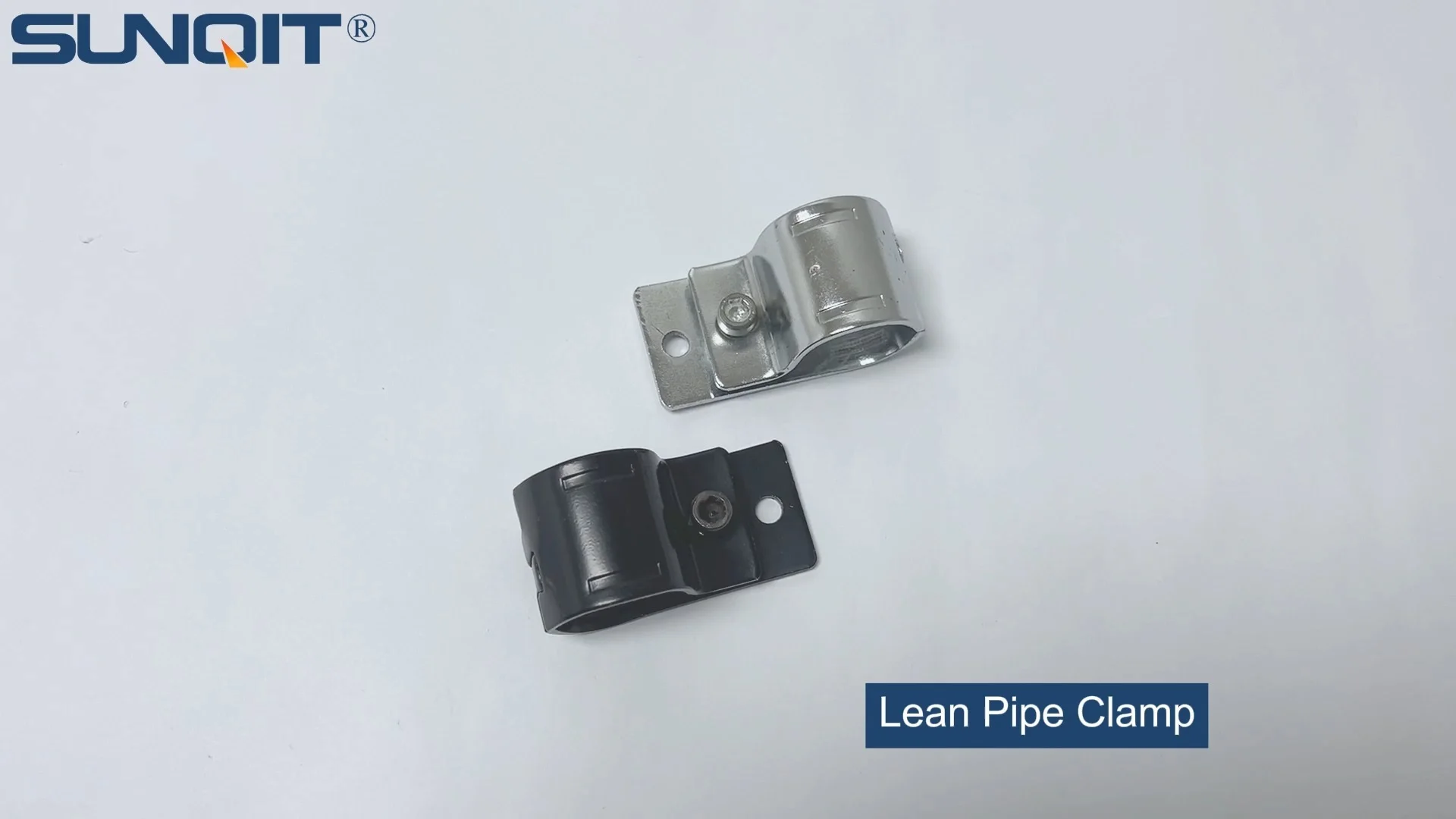
Lean Pipe Clamp
Lean pipe clamp is used for rack system hang monitor or other panel for workbenck, flowrack in production daily use.
In an era where the phrase "sustainability" has shifted from a buzzword to a business imperative, manufacturers worldwide are rethinking every aspect of their operations. From raw material sourcing to production line design, the pressure to reduce waste, cut carbon footprints, and embrace circularity has never been stronger. Yet, for many, the challenge lies in balancing these green goals with the need for efficiency, flexibility, and cost-effectiveness. Enter the world of lean manufacturing—a philosophy built on eliminating waste—and its unsung hero: the lean pipe clamp B . This small but mighty component is quietly revolutionizing how factories approach sustainability, proving that sometimes the most impactful green solutions are the ones that work seamlessly within existing systems.
The Urgency of Green Manufacturing: Why Waste Reduction Matters Now
Before diving into the specifics of lean pipe clamp B, it's critical to understand why sustainability in manufacturing has become non-negotiable. The numbers speak for themselves: the manufacturing sector accounts for approximately 28% of global energy consumption and 22% of greenhouse gas emissions, according to the International Energy Agency. Meanwhile, the Ellen MacArthur Foundation estimates that only 9% of the world's economy is circular, meaning the vast majority of materials used in production end up as waste after a single use. For factory managers, this isn't just an environmental concern—it's a financial one. Disposing of waste, purchasing new materials, and complying with increasingly strict environmental regulations eat into profit margins, while consumers and investors alike now prioritize brands with strong sustainability credentials.
Traditional manufacturing setups often exacerbate these issues. Fixed workbenches, rigid conveyor systems, and custom-built material racks are designed for a specific product or process. When production lines change—and in today's fast-paced market, they change frequently—these structures become obsolete. They're either scrapped, contributing to landfill waste, or require costly overhauls to repurpose. This "build-and-discard" cycle is not only environmentally damaging but also inefficient, trapping companies in a loop of constant reinvestment in inflexible infrastructure.
Lean Systems: Where Efficiency Meets Sustainability
Lean manufacturing, pioneered by Toyota in the 1950s, was initially focused on maximizing efficiency by minimizing "muda"—the Japanese term for waste. Over time, however, it has become clear that lean principles and sustainability are deeply intertwined. At its core, lean is about creating more value with fewer resources, which aligns perfectly with the goal of reducing environmental impact. A well-designed lean system eliminates not just process waste (like overproduction or waiting time) but also material waste, by prioritizing modularity, adaptability, and reusability.
Consider a typical lean production line: it's built using lightweight, modular components that can be easily reconfigured as needs change. Unlike traditional fixed structures, these systems are designed to evolve. A workbench today might become a material rack tomorrow; a conveyor section can be repurposed to feed a new machine next month. This flexibility doesn't just save time and money—it drastically cuts down on waste. Instead of replacing an entire setup, manufacturers can simply rearrange existing parts, extending the lifespan of each component and reducing the demand for new raw materials.

Meet Lean Pipe Clamp B: The Unsung Hero of Modular Sustainability
At the heart of these modular lean systems lies the lean pipe clamp B . To the untrained eye, it might look like just another metal bracket, but its design is a masterclass in sustainability. Let's break down what makes this clamp so special. First, it's engineered for compatibility: designed to work with aluminum lean pipe (a lightweight, durable material), it allows for quick assembly and disassembly without welding, drilling, or specialized tools. This means that when a production line needs to be reconfigured, workers can simply loosen the clamp, adjust the pipes, and retighten—no cutting, no gluing, no waste.
But the real genius of lean pipe clamp B is its reusability. Unlike one-time-use fasteners or adhesives, this clamp is built to withstand repeated cycles of assembly and disassembly. Made from high-grade steel with a corrosion-resistant coating, it retains its strength and functionality even after years of use. This durability is key to circularity: a single clamp can serve multiple purposes over its lifetime, moving from a workbench frame to a trolley handle to a material rack support, without losing performance. In fact, many manufacturers report reusing clamps for a decade or more, significantly reducing the need for replacements.
Another standout feature is its versatility. Lean pipe clamp B isn't limited to one type of connection or pipe size. It pairs seamlessly with various lean pipe joint designs, allowing for 90-degree angles, T-junctions, and even adjustable rotations. This flexibility means that the same clamp can be used in countless configurations, from simple shelving units to complex conveyor systems. For factory managers, this translates to fewer unique parts to stock, less inventory waste, and a more agile response to changing production needs.

Aluminum Lean Pipe: The Perfect Partner for Clamp B's Sustainability Mission
While lean pipe clamp B is the star of the show, it can't shine without a strong supporting cast—and that's where aluminum lean pipe comes in. Aluminum is already celebrated for its eco-friendly properties: it's 100% recyclable, requires 95% less energy to recycle than to produce from raw bauxite, and retains its quality through endless recycling loops. When paired with clamp B, it becomes a powerhouse for sustainable manufacturing.
Aluminum lean pipe's lightweight nature reduces transportation emissions during delivery, and its corrosion resistance ensures that pipes last longer, even in harsh factory environments. But its real benefit, when combined with clamp B, is its adaptability. Unlike steel pipes, which are heavy and difficult to maneuver, aluminum pipes are easy to handle, making reconfiguration quick and labor-efficient. This not only saves time but also reduces the risk of worker fatigue or injury, adding a human-centric layer to sustainability—because a green factory should also be a safe one.
Consider this scenario: a electronics manufacturer needs to shift from producing smartphones to tablets, requiring a wider workbench surface. With a traditional wooden or steel workbench, this would mean purchasing a new bench, scrapping the old one, and generating waste. With aluminum lean pipe and clamp B, however, the solution is simple: loosen the clamps, add longer pipes to the frame, reattach the clamps, and the workbench is ready. No waste, no new materials, just a quick adjustment. It's this "adapt, don't replace" mindset that makes the aluminum lean pipe and clamp B combination a cornerstone of green manufacturing.

Reusability in Action: How Clamp B Cuts Waste Across the Production Lifecycle
To truly appreciate the impact of lean pipe clamp B, let's walk through a typical production lifecycle and see how it reduces waste at every stage. Imagine a small automotive parts supplier that produces brake components. Their initial setup includes a assembly line with workbenches, material racks, and trolleys—all built using aluminum lean pipe and clamp B.
Stage 1: Assembly – Unlike traditional welded steel frames, which require cutting, grinding, and painting (generating dust, fumes, and chemical waste), the aluminum pipes and clamp B are assembled by hand. No power tools, no toxic emissions, just workers tightening clamps with basic wrenches. This alone cuts down on production-related waste and energy use.
Stage 2: Operation – Over the next two years, the assembly line runs smoothly. When a new brake model is introduced, the line needs to be adjusted to accommodate larger components. Instead of building a new line, workers disassemble the existing workbenches, reconfigure the pipes using the same clamp B units, and add a few extra pipes (sourced from a local supplier that recycles aluminum). The entire process takes a day instead of a week, and no waste is sent to landfill.
Stage 3: End-of-Line – After five years, the supplier expands to a larger facility. Rather than leaving the old setup behind, they disassemble the entire system—clamps, pipes, joints, and all—and transport it to the new location. Once there, they reuse 90% of the components to build a more efficient line, with only a few new pipes and clamps needed for the larger space. The remaining 10% (damaged pipes or worn joints) is recycled, with the aluminum melted down and repurposed into new pipes.
Compare this to a traditional setup using fixed steel frames: the initial assembly would generate metal shavings, paint waste, and energy from welding. Reconfiguring for a new model would require cutting the steel, generating scrap metal waste. Moving to a new facility would mean leaving the heavy frames behind, where they'd likely end up in a landfill. The difference in waste generation is staggering—and it's all thanks to the reusability of clamp B and its aluminum partners.
The Numbers Speak: Quantifying Clamp B's Environmental Impact
Sustainability is often criticized for being hard to measure, but when it comes to lean pipe clamp B, the data tells a clear story. Let's look at some real-world metrics from manufacturers that have adopted modular lean systems with clamp B:
- Waste Reduction: A study by the Lean Manufacturing Institute found that factories using modular lean systems with reusable clamps reduced material waste by an average of 42% compared to fixed systems. This includes a 65% drop in scrap metal from reconfigurations and a 38% reduction in packaging waste (since clamps and pipes are shipped unassembled, using less packaging).
- Carbon Footprint: By extending the lifespan of components, manufacturers using clamp B report a 29% lower carbon footprint per unit of production. This is due to reduced demand for new raw materials (aluminum production is energy-intensive) and fewer emissions from transportation (since reused components don't require shipping new parts).
- Cost Savings: While the upfront cost of aluminum lean pipe and clamp B is slightly higher than traditional steel, the long-term savings are significant. A mid-sized electronics manufacturer reported saving $120,000 over five years by reusing clamps and pipes instead of replacing fixed workbenches. This includes savings on materials, labor for reconfiguration, and waste disposal fees.
A Closer Look: Traditional vs. Lean Pipe Systems (A Comparison Table)
| Metric | Traditional Fixed Steel Systems | Modular Lean Systems (Clamp B + Aluminum Pipe) |
|---|---|---|
| Assembly Time | 3-5 days (requires welding, painting) | 1-2 days (tool-free assembly) |
| Reusability | Low (welded frames cannot be disassembled) | High (clamps allow repeated assembly/disassembly) |
| Waste per Reconfiguration | 150-200 kg (scrap metal, paint waste) | 5-10 kg (minimal, mostly recyclable) |
| Lifespan of Components | 3-5 years (corrosion, wear from fixed use) | 10-15 years (reusable, corrosion-resistant) |
| Carbon Footprint (per year) | High (new material production, frequent replacements) | Low (reuse reduces raw material demand) |
Beyond the Factory Floor: Clamp B's Ripple Effect on Supply Chains
The sustainability benefits of lean pipe clamp B don't stop at the factory gate—they extend upstream to suppliers and downstream to customers. For suppliers of aluminum pipes and clamps, the demand for reusable components has incentivized more sustainable practices, such as using recycled aluminum in pipe production and reducing packaging waste. Some suppliers have even started take-back programs, where worn clamps are collected, refurbished, and resold at a discount, closing the loop on the product lifecycle.
Downstream, customers benefit from more sustainable products. When manufacturers reduce waste and energy use, they often pass these savings on to buyers, making eco-friendly products more affordable. Additionally, companies that adopt lean systems with clamp B can earn sustainability certifications (like ISO 14001), which are increasingly required by retailers and consumers. This not only boosts brand reputation but also opens doors to new markets that prioritize green suppliers.
Perhaps most importantly, the shift to reusable systems like clamp B fosters a culture of sustainability within organizations. When workers see that their employer values reusability—by investing in tools that reduce waste and make their jobs easier—they're more likely to adopt green habits themselves, from recycling packaging to suggesting process improvements. This cultural shift is critical for long-term sustainability, as it turns green practices from a top-down mandate into a bottom-up movement.
Challenges and Misconceptions: Overcoming Barriers to Adoption
Despite its many benefits, lean pipe clamp B isn't without its skeptics. Some manufacturers worry that modular systems are less stable than fixed ones, or that the upfront cost is too high. Let's address these concerns head-on.
Myth 1: "Modular systems are flimsy compared to welded steel." This couldn't be further from the truth. While aluminum is lighter than steel, it's surprisingly strong—especially when paired with the secure grip of clamp B. Modern lean pipe systems are tested to withstand heavy loads (up to 500 kg per shelf in some cases) and meet strict safety standards. In fact, the flexibility of modular systems can make them safer: if a component is damaged, it can be replaced individually, rather than risking a collapse of the entire structure.
Myth 2: "The upfront cost is too high." It's true that aluminum lean pipe and clamp B cost more initially than low-grade steel or wood. However, as we've seen, the long-term savings in materials, labor, and waste disposal more than offset this. A case study by a leading automotive supplier found that the payback period for switching to modular systems was just 14 months, with ongoing savings for years after.
Myth 3: "Reusability is too time-consuming." On the contrary, reconfiguring a modular system with clamp B is faster than building a new fixed setup. Without welding or cutting, workers can adjust a workbench or rack in hours, not days. This agility is a competitive advantage in today's fast-changing market, where the ability to pivot quickly can mean the difference between winning and losing a contract.
Future Trends: Where Lean Pipe Clamp B and Sustainability Go Next
As technology advances and sustainability goals become more ambitious, the role of lean pipe clamp B is set to grow. Here are three trends to watch:
1. Smart Clamps with IoT Integration: Imagine a clamp that can track its usage, report when it needs maintenance, or even alert workers when a structure is overloaded. Early prototypes of "smart" lean pipe clamps with sensors are already in development, promising to further extend component lifespans and improve safety.
2. Bio-Based Materials: While aluminum is already recyclable, researchers are exploring bio-based plastics for clamp components, reducing reliance on petroleum-based materials. These bioplastics would retain the strength of traditional plastics but decompose naturally at the end of their lifespan, further cutting waste.
3. Circular Supply Chains: Suppliers are beginning to offer "clamp as a service" models, where manufacturers rent clamps and pipes instead of buying them. At the end of a project, the components are returned, refurbished, and reused, creating a fully circular system with zero ownership waste.
Conclusion: Small Clamps, Big Impact—The Future of Green Manufacturing
In the grand scheme of manufacturing, the lean pipe clamp B is a small component. But as we've explored, its impact on sustainability is anything but minor. By prioritizing reusability, compatibility, and durability, it embodies the circular economy principle of "make, use, reuse, recycle"—all while supporting the efficiency and flexibility that lean manufacturing demands.
For manufacturers looking to embrace sustainability without sacrificing performance, the message is clear: start small. Invest in modular systems built around reusable components like clamp B and aluminum lean pipe. Train workers to see reconfiguration as an opportunity, not a chore. Measure the impact, share the results, and watch as small changes lead to big reductions in waste and emissions.
In the end, sustainability isn't about grand gestures—it's about the cumulative effect of thousands of small, intentional choices. And in that regard, the lean pipe clamp B is more than just a tool. It's a symbol of a better way forward: one where manufacturing and the planet thrive together.