- Company Articles
- Company Articles
- Sustainability of Gusset Alp 3030: Recyclable Aluminum for Eco-Friendly Production

Sustainability of Gusset Alp 3030: Recyclable Aluminum for Eco-Friendly Production
Related Product
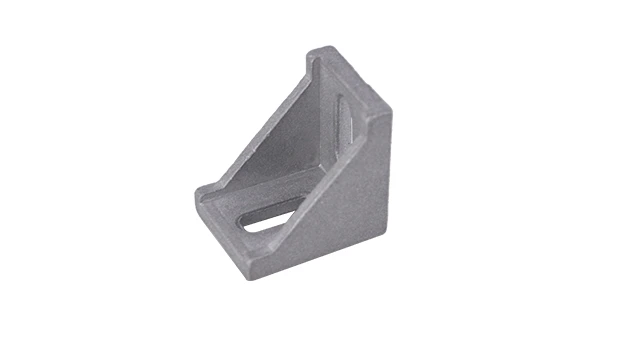
Gusset ALP 3030
The 3030 bracket/Gusset is an external fastening method that creates a 90 degree connection. 3030 means this size is used for 30 series aluminum profile with a quick connection by bolt and nut.
Walk into any modern manufacturing facility today, and you'll likely notice a quiet revolution unfolding. It's not just about faster machines or smarter software—though those play a part. It's about something more foundational: the materials and components that build the backbone of production lines. More than ever, factory managers, engineers, and sustainability officers are asking one critical question: How can we build better, without costing the planet?
In a world grappling with climate change, stricter environmental regulations, and a growing consumer demand for eco-conscious products, sustainability isn't just a "nice-to-have"—it's a business imperative. And that's where components like the Gusset Alp 3030 come into play. You might not have heard of it yet, but this unassuming piece of hardware is quietly redefining what it means to build lean, green, and future-ready production systems. Let's dive into why this small but mighty aluminum extrusion profile matters, and how it's helping manufacturers turn sustainability goals into everyday reality.
What Even Is a Gusset Alp 3030?
First things first: Let's demystify the name. "Gusset Alp 3030" might sound like technical jargon, but it's actually quite straightforward. A gusset is a classic engineering solution—think of it as a reinforcement bracket, designed to add strength and stability to corners and joints in structures. You've probably seen them in action without realizing it: in the corners of a bookshelf, the joints of a metal workbench, or even the frame of a bicycle. Their job? To distribute weight, reduce stress, and keep things from wobbling or bending over time.
Now, the "Alp 3030" part. That refers to its size and material. This isn't just any gusset—it's made from aluminum extrusion profile , specifically designed to pair with 30mm x 30mm aluminum profiles (hence "3030"). Aluminum extrusion is the process where raw aluminum is heated and pushed through a die to create custom cross-sectional shapes—think of it like squeezing toothpaste through a tube, but with metal. The result? Lightweight, strong, and incredibly versatile components that form the building blocks of everything from workbenches to conveyor systems.
So, the Gusset Alp 3030 is a specialized reinforcement bracket, crafted from extruded aluminum, built to lock into 3030 aluminum profiles. Simple enough, right? But here's where it gets interesting: unlike traditional steel brackets or plastic alternatives, this little component packs a sustainability punch that's hard to beat. To understand why, we need to start with the star of the show: aluminum itself.
Aluminum: The Unsung Hero of Sustainable Manufacturing
If sustainability had a poster child, aluminum might just be it. Here's a mind-blowing fact: aluminum is infinitely recyclable . That's not an exaggeration. Unlike plastic, which degrades over time and loses quality with each recycling loop, or steel, which can be recycled but often requires more energy, aluminum can be melted down, reshaped, and reused again and again—without losing a single ounce of its strength or quality. It's like the Goldilocks of materials: strong enough to support heavy loads, lightweight enough to reduce energy use in transport, and endlessly recyclable.
Let's put that into numbers. Producing aluminum from raw bauxite ore is energy-intensive—it takes about 15,000 kWh of electricity to make one ton of new aluminum. But recycling aluminum? That same ton only requires 5% of that energy—roughly 750 kWh. To put that in perspective: recycling one ton of aluminum saves enough energy to power a typical U.S. home for over 10 years. And the carbon footprint? Recycling aluminum cuts CO2 emissions by a staggering 95% compared to producing it from scratch. That's the kind of impact that adds up quickly, especially for manufacturers using tons of materials annually.
But aluminum's sustainability story doesn't end with recycling. Its lightweight nature also plays a role. Aluminum is about one-third the weight of steel, which means structures built with aluminum profiles (and Gusset Alp 3030 brackets) are easier to move, require less fuel to transport, and put less strain on machinery—all of which translate to lower energy use across the supply chain. And because it's resistant to corrosion, aluminum components last longer, reducing the need for frequent replacements and the waste that comes with them.
"We used to replace steel workbench brackets every 2-3 years because they'd rust or bend under heavy tools. Switching to aluminum profiles with Gusset Alp 3030? We're going on 5 years now, and they still look brand new. Less waste, less downtime, and our maintenance team couldn't be happier." — Maria Gonzalez, Plant Manager at a mid-sized electronics manufacturer in Ohio

Gusset Alp 3030 + Lean Systems: A Match Made for Waste Reduction
If aluminum is the sustainable material, then lean system principles are the perfect partner. Lean manufacturing—made famous by Toyota's production system—focuses on eliminating waste ("muda" in Japanese) in all forms: overproduction, excess inventory, unnecessary motion, and yes, material waste. It's about doing more with less, and building systems that adapt quickly to change.
Here's where the Gusset Alp 3030 shines. Traditional manufacturing setups often rely on fixed, custom-built structures. Need a new workbench for a new product line? You'd order a steel frame, welded on-site, and once it's built, it's fixed . If your needs change—say, you need to reconfigure the line for a smaller batch size—you're stuck. That old workbench might end up in a landfill, and you'd have to start from scratch with new materials. Talk about waste.
Aluminum extrusion profiles, paired with Gusset Alp 3030 brackets, flip that script. They're modular by design. Think of them as industrial Legos: you can snap together a workbench today, take it apart next month, and rebuild it as a material rack or a conveyor support tomorrow. The Gusset Alp 3030 ensures those joints stay strong no matter how many times you reconfigure, so you're not sacrificing durability for flexibility.
This modularity is a lean dream come true. Let's say your team designs a new product that requires a taller workbench. Instead of buying a whole new bench, you can simply adjust the height by swapping out a few aluminum profiles and reusing the Gusset Alp 3030 brackets. No waste, no extra materials, no waiting for custom fabrication. It's why companies that adopt lean systems are increasingly turning to aluminum extrusion profiles—they align perfectly with the "continuous improvement" mindset at the heart of lean.
And when the day finally comes that a structure has served its purpose? Unlike steel (which often gets rusty and hard to recycle) or plastic (which may not be recyclable at all), the aluminum profiles and Gusset Alp 3030 brackets can be melted down and turned into new components. That's the circular economy in action: nothing goes to waste, and materials keep adding value long after their first use.

Beyond the Factory Floor: Real-World Impact
Enough theory—let's talk real impact. Take a mid-sized automotive parts supplier I worked with last year. They were struggling to meet their sustainability targets, in part because their old steel workbenches and material racks were heavy, hard to move, and prone to rust. Every time they reconfigured their production line (which happened quarterly, thanks to shifting customer orders), they'd end up scrapping 20-30% of their old steel structures. The cost wasn't just financial—those scrap piles were a PR headache, too, as clients started asking for proof of eco-friendly practices.
Their solution? A full switch to aluminum extrusion profiles, with Gusset Alp 3030 brackets reinforcing every joint. The results were eye-opening: within a year, they reduced waste from line reconfigurations by 85%. Instead of scrapping old steel, they disassembled the aluminum structures and reused the profiles and brackets for new setups. When some components finally wore out (after 6+ years of use!), they sent them to a local recycler, who paid them for the scrap aluminum—turning waste into a small revenue stream.
But the benefits went beyond waste reduction. The lighter aluminum structures were easier for workers to move, cutting down on workplace injuries and reducing the need for heavy machinery to reposition equipment. Energy costs dropped, too: the plant's forklifts, which used to spend hours moving steel racks, now ran 30% less, trimming fuel consumption. And when clients toured the facility, the sleek, modular aluminum setups became a selling point—proof that the supplier was serious about sustainability.
This isn't an isolated case. From electronics manufacturers in Asia to food packaging plants in Europe, companies are discovering that small components like the Gusset Alp 3030 are key to scaling sustainability. They're not just building better production lines—they're building a better bottom line, too.
How Does It Stack Up? A Material Showdown
Still not convinced that aluminum extrusion profiles with Gusset Alp 3030 are the way to go? Let's put them head-to-head with traditional materials. The table below breaks down how they compare to steel and plastic—two common alternatives—across key sustainability and performance metrics.
| Metric | Gusset Alp 3030 (Aluminum Extrusion Profile) | Steel Brackets | Plastic Brackets |
|---|---|---|---|
| Recyclability | Infinitely recyclable; 95% energy savings vs. new production | Recyclable, but energy-intensive; quality degrades with each cycle | Mostly non-recyclable (or downcycled to lower-quality products) |
| Durability | Resistant to corrosion; lasts 5-10+ years with proper care | Strong but prone to rust; requires painting/coating | Weak to heat/chemicals; degrades in sunlight (UV exposure) |
| Weight | 1/3 the weight of steel; easy to handle/move | Heavy; requires machinery for repositioning | Light, but less rigid (may bend under heavy loads) |
| Modularity | Fully modular; reusable/reconfigurable 100+ times | Fixed (welded); cannot be reconfigured without destruction | Some modularity, but joints weaken with reuse |
| Environmental Impact | Low carbon footprint (especially when recycled); no toxic coatings | High CO2 emissions during production; toxic paints/coatings may leach | Made from fossil fuels; microplastics risk when degraded |
The verdict? Aluminum extrusion profiles with Gusset Alp 3030 brackets outperform steel and plastic across nearly every category that matters for sustainability. They're lighter, stronger, more flexible, and infinitely recyclable. And while the upfront cost might be slightly higher than plastic (or comparable to steel), the long-term savings—from reduced waste, lower energy use, and fewer replacements—make them a smart investment.
The Future of Making: Why Small Components Matter
Sustainability in manufacturing isn't about grand gestures—it's about the thousands of small choices that add up. A single Gusset Alp 3030 bracket might not seem like much, but when multiplied across hundreds of workbenches, thousands of material racks, and millions of production lines worldwide, the impact is enormous. It's the difference between a linear "take-make-waste" system and a circular one, where materials are kept in use for decades, not dumped after a few years.
Looking ahead, the demand for these kinds of sustainable components will only grow. Governments are cracking down: the EU's Circular Economy Action Plan, for example, mandates that by 2030, 70% of construction and demolition waste must be recycled, and manufacturers will face stricter rules on product lifecycle transparency. Consumers, too, are voting with their wallets—60% of global shoppers say they'd pay more for products from sustainable brands, according to a 2023 Nielsen study.
For manufacturers, this isn't just pressure—it's opportunity. Companies that invest in modular, recyclable components today will be ahead of the curve tomorrow. They'll avoid costly retrofits when regulations tighten, attract eco-conscious clients, and build more resilient supply chains that aren't dependent on scarce or volatile raw materials.
And let's not forget the human element. At the end of the day, manufacturing is about people—people building products, people using them, people living on this planet. When a factory worker can reconfigure their workstation in an hour instead of waiting weeks for a new steel bench, that's empowerment. When a sustainability officer can report a 50% drop in waste to their CEO, that's pride. When a parent knows the products they buy are made with materials that won't harm their child's future, that's peace of mind.
Wrapping Up: Small Bracket, Big Change
So, what's the takeaway? The Gusset Alp 3030 isn't just a bracket. It's a symbol of a better way to make things—one that's kind to the planet, kind to workers, and kind to the bottom line. It's proof that sustainability doesn't require sacrificing strength, flexibility, or innovation. In fact, it's the opposite: by choosing materials like aluminum extrusion profiles and designing for modularity, we can build production systems that are more adaptable, more efficient, and more resilient than ever before.
Whether you're a plant manager looking to cut waste, an engineer designing the next generation of workbenches, or just someone who cares about how the things we use are made, remember this: every component counts. And the Gusset Alp 3030? It's a component that's counting—towards a greener, leaner, and more hopeful future for manufacturing.
So the next time you walk through a factory, take a closer look at those sleek aluminum structures. Chances are, there's a Gusset Alp 3030 holding them together. And now you'll know: that small bracket is doing big things—for the planet, for the people who build with it, and for the future we're all working toward.