- Company Articles
- Company Articles
- The Environmental Impact of Heavy Duty Split Foot Seats: Sustainability

The Environmental Impact of Heavy Duty Split Foot Seats: Sustainability
Related Product
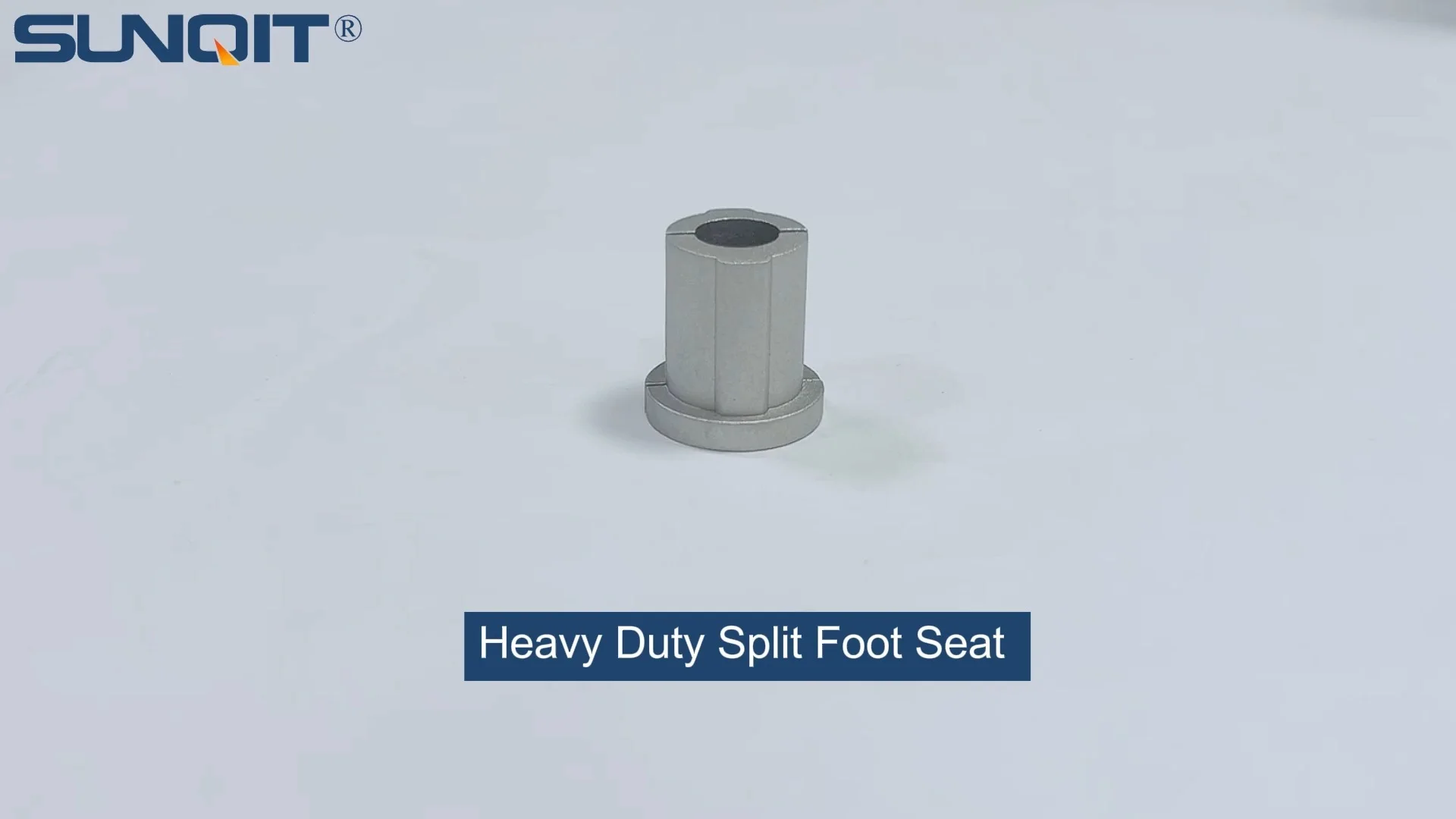
Heavy Duty Split Foot Seat
M10 aluminum heavy duty split foot deat with foot adjuster for workbench and flow rack.
Walk through any busy manufacturing plant, warehouse, or distribution center, and you'll likely spot them: sturdy workbenches lined with tools, conveyor belts gliding with components, and material racks stacked with inventory. What keeps these essential structures grounded—quietly bearing the weight of daily operations—are often unassuming but critical components like the heavy duty split foot seat. These unheralded workhorses anchor everything from aluminum profile workbenches to stainless steel pipe series material racks, ensuring stability even under the heaviest loads. But beyond their functional role, there's a deeper story to tell: how these small but mighty components intersect with sustainability, and the environmental impact of the choices made in their design, materials, and manufacturing.
In an era where industries worldwide are racing to reduce their carbon footprints, every component matters—including the ones we rarely notice. Heavy duty split foot seats, though humble in appearance, offer a window into the broader push for greener manufacturing. From the aluminum extrusion profiles used in their construction to the lean system principles guiding their production, the sustainability journey of these components is a microcosm of the industrial world's shift toward eco-consciousness. Let's dive in.
What Are Heavy Duty Split Foot Seats, and Why Do They Matter?
Before we explore their environmental impact, let's clarify what a heavy duty split foot seat is—and why it's so crucial. Simply put, these are structural supports designed to stabilize industrial equipment. Imagine a workbench in an electronics assembly line: it holds circuit boards, tools, and maybe a conveyor feeder. The split foot seat sits at the base of the workbench legs, spreading the weight across the floor to prevent tipping, reduce vibration, and protect the surface below. Similarly, on a material rack built with stainless steel pipe series, these foot seats anchor the structure, ensuring it stays upright even when loaded with heavy cartons or parts.
But their role isn't just about stability. Heavy duty split foot seats also contribute to ergonomics and safety. By keeping workbenches and racks level, they reduce strain on workers who stand for hours, and minimize the risk of accidents from wobbly equipment. In short, they're the silent guardians of efficiency and safety on the factory floor.
Now, consider scale: a single manufacturing plant might use hundreds, even thousands, of these foot seats. Multiply that by factories worldwide, and the cumulative environmental impact of their production—from raw material extraction to end-of-life disposal—becomes significant. That's why examining their sustainability isn't just a niche concern; it's a critical part of the industrial sector's broader commitment to the planet.
Materials Matter: Aluminum Profile vs. Stainless Steel Pipe Series
The first chapter in the sustainability story of heavy duty split foot seats lies in their materials. Two options dominate the market: those made from aluminum profile (often aluminum extrusion profile) and those crafted from stainless steel pipe series. Each comes with its own environmental pros and cons, rooted in how the materials are sourced, processed, and recycled.
Aluminum Profile: Lightweight, Recyclable, but Energy-Intensive to Make
Aluminum is a favorite in industrial design for its strength-to-weight ratio, corrosion resistance, and versatility—traits that make aluminum extrusion profile an ideal choice for heavy duty split foot seats. But its sustainability credentials are a mixed bag. Let's start with the downside: extracting and processing aluminum is energy-intensive. Bauxite, the ore from which aluminum is derived, must be mined (often in environmentally sensitive areas), then refined into alumina, and finally smelted into aluminum metal. This process requires massive amounts of electricity—so much so that aluminum production accounts for roughly 2% of global industrial energy use.
Yet, aluminum's saving grace is its recyclability. Unlike many materials, aluminum can be melted down and reused repeatedly without losing quality. Recycled aluminum (or "secondary aluminum") requires just 5% of the energy needed to produce new aluminum from bauxite. That's a staggering 95% energy savings—a statistic that has made aluminum extrusion profile a darling of sustainable manufacturers. For heavy duty split foot seats, this means that if they're made from recycled aluminum, their carbon footprint plummets.
Take, for example, a lean system supplier that specializes in aluminum profile components. By sourcing recycled aluminum for their split foot seats, they not only reduce reliance on virgin ore but also cut down on greenhouse gas emissions. Some suppliers even go a step further, using aluminum extrusion profile made with renewable energy—like hydroelectric power in regions with abundant water resources—to power smelting, further shrinking the carbon footprint.
Stainless Steel Pipe Series: Durable but Energy-Heavy
Stainless steel, another common material for heavy duty split foot seats, is prized for its unmatched durability and resistance to rust and corrosion—qualities that make stainless steel pipe series components ideal for harsh environments, like food processing plants or outdoor warehouses. But like aluminum, its production comes with environmental trade-offs.
Stainless steel is an alloy of iron, chromium, and other metals. Producing it starts with mining iron ore, which is then processed into steel—a step that releases significant CO2. Adding chromium (to make it "stainless") adds another layer of energy use, as chromium mining and refining are resource-intensive. All told, stainless steel production emits roughly 1.8 tons of CO2 per ton of steel—far higher than aluminum's 1.4 tons per ton (for primary aluminum), though aluminum closes the gap when recycled material is used.
Where stainless steel pipe series shines, however, is in longevity. A heavy duty split foot seat made from stainless steel can last decades, even in tough conditions, reducing the need for frequent replacements. This durability lowers the "replacement cycle" impact—fewer seats mean less material extraction and manufacturing over time. Additionally, stainless steel is 100% recyclable, though its recycling rate (around 85% globally) lags slightly behind aluminum's (nearly 90%).
| Material | Carbon Footprint (per ton, primary production) | Recyclability Rate | Energy Savings with Recycling | Typical Lifespan (Industrial Use) |
|---|---|---|---|---|
| Aluminum Profile (Aluminum Extrusion Profile) | 12-15 tons CO2e | ~90% | 95% vs. primary production | 15-20 years |
| Stainless Steel Pipe Series | 1.8-3 tons CO2e | ~85% | 75% vs. primary production | 20-25 years |
The table above highlights the key trade-offs. Aluminum extrusion profile offers superior recyclability and energy savings when recycled, while stainless steel pipe series boasts a longer lifespan and lower primary production emissions (per ton). So, which is "greener"? The answer depends on context: a facility prioritizing short-term energy savings might lean toward recycled aluminum, while one needing ultra-durable components in a corrosive environment might opt for stainless steel. Either way, the choice of material is the first step in reducing environmental impact.

Manufacturing: Lean System Principles and the Path to Less Waste
Materials set the foundation, but how heavy duty split foot seats are made matters just as much. Here, lean system principles take center stage. Lean manufacturing—a methodology focused on minimizing waste while maximizing value—has long been a cornerstone of efficient production. But in recent years, it has also emerged as a powerful tool for sustainability. By reducing waste, optimizing energy use, and streamlining processes, lean system suppliers are cutting both costs and carbon footprints.
Waste Reduction: From Scrap to Savings
Traditional manufacturing often generates significant scrap—unused material trimmed from aluminum extrusion profiles or stainless steel pipe series during cutting, drilling, or shaping. A lean system approach targets this waste head-on. For example, a supplier making heavy duty split foot seats from aluminum profile might use computer-aided design (CAD) to nest parts more efficiently on a sheet of aluminum extrusion profile, reducing the amount of material that ends up as scrap. Any leftover aluminum or stainless steel can then be recycled, closing the loop and minimizing landfill waste.
Some lean system suppliers take this further by "upcycling" scrap into smaller components. A sliver of leftover aluminum extrusion profile, for instance, might be repurposed into a bracket or a connector, rather than being melted down. This not only reduces recycling energy use but also turns waste into value—proving that sustainability and profitability can go hand in hand.
Energy Efficiency: Powering Production with Renewables
Lean systems also focus on energy optimization. Factories that produce heavy duty split foot seats are increasingly switching to renewable energy sources—solar panels on rooftops, wind turbines nearby, or purchasing green energy from utilities—to power their extrusion presses, cutting machines, and assembly lines. For example, a lean system supplier in Europe might run its aluminum extrusion profile production entirely on wind energy, slashing the carbon footprint of each foot seat it makes.
Even small changes add up. Installing energy-efficient lighting, upgrading to variable-speed motors on machinery, and insulating factories to reduce heating and cooling needs all contribute to lower energy use. These steps not only reduce emissions but also lower operational costs, making sustainability a win-win for manufacturers.
Supply Chain Sustainability: Partnering with Responsible Suppliers
Lean systems extend beyond the factory walls to the supply chain. Manufacturers of heavy duty split foot seats are increasingly vetting their suppliers—from aluminum extrusion profile producers to stainless steel pipe series distributors—to ensure they adhere to sustainable practices. This might mean choosing aluminum profile suppliers that use recycled materials, or stainless steel pipe series vendors that source ore from mines with strong environmental and labor standards.
By collaborating with like-minded partners, lean system suppliers create a ripple effect of sustainability. A heavy duty split foot seat made with recycled aluminum extrusion profile from a supplier using solar power, for example, has a far lower footprint than one made with virgin materials from a coal-powered plant. It's a reminder that sustainability is a team sport—and every link in the chain counts.

Lifecycle Assessment: From Cradle to Grave (and Beyond)
To truly understand the environmental impact of heavy duty split foot seats, we need to look at their entire lifecycle: from raw material extraction to manufacturing, use, and eventual disposal. This "cradle-to-grave" assessment reveals where the biggest opportunities for sustainability lie.
Durability: The Power of Longevity
One of the most impactful ways a heavy duty split foot seat contributes to sustainability is simply by lasting a long time. A well-made seat, whether from aluminum profile or stainless steel pipe series, can serve for 15–25 years in an industrial setting. That longevity reduces the need for frequent replacements, which in turn cuts down on the energy and materials required to produce new seats. For example, a seat that lasts 20 years instead of 10 halves its lifecycle carbon footprint—no small feat.
Durability also reduces maintenance needs. Unlike plastic or painted steel alternatives, aluminum profile and stainless steel pipe series resist rust, corrosion, and wear, meaning they rarely need repainting or repairs. This not only saves time and money but also avoids the environmental impact of maintenance chemicals (like paints or lubricants) and the waste from discarded, damaged components.
End-of-Life: Closing the Loop Through Recycling
Even the most durable heavy duty split foot seat will eventually reach the end of its useful life. When that happens, its environmental impact depends largely on whether it can be recycled. Here, aluminum profile and stainless steel pipe series shine.
Aluminum, as we've noted, is nearly infinitely recyclable. A split foot seat made from aluminum extrusion profile can be collected, melted down, and reshaped into a new extrusion profile—all without losing strength or quality. The same goes for stainless steel pipe series components: they can be recycled into new stainless steel products, from kitchen appliances to industrial machinery.
But recycling isn't automatic. For end-of-life materials to be reused, they need to be properly collected and sorted. That's why forward-thinking manufacturers are designing products with disassembly in mind. A heavy duty split foot seat might be held together with bolts instead of welds, making it easier to take apart and separate aluminum profile from stainless steel hardware. Some lean system suppliers even offer take-back programs, collecting old foot seats from customers to ensure they're recycled properly.

Innovations in Sustainable Design: The Future of Heavy Duty Split Foot Seats
The sustainability journey of heavy duty split foot seats doesn't end with materials and manufacturing. Innovators are pushing the envelope, finding new ways to reduce environmental impact through design tweaks, material science, and circular economy models.
Recycled Content: Boosting Post-Consumer Recyclates
One of the most promising trends is the use of higher percentages of recycled content in aluminum extrusion profiles and stainless steel pipe series. Some manufacturers now use 70% or more recycled aluminum in their profiles, drastically cutting the carbon footprint of each heavy duty split foot seat. For example, a seat made with 100% recycled aluminum extrusion profile has a carbon footprint up to 95% lower than one made with virgin aluminum—an extraordinary difference.
Stainless steel producers are following suit, increasing the use of recycled scrap in their alloys. While stainless steel recycling is more complex (due to its mix of metals), advances in sorting technology are making it easier to recover high-quality scrap, paving the way for higher recycled content in stainless steel pipe series components.
Eco-Friendly Coatings and Finishes
Even the coatings on heavy duty split foot seats are getting a green makeover. Traditional finishes, like powder coatings, can contain volatile organic compounds (VOCs) or require energy-intensive curing. Today, suppliers are switching to low-VOC powders, water-based coatings, or even no coatings at all—relying on the natural corrosion resistance of aluminum profile or stainless steel pipe series to protect the seat. For example, anodized aluminum extrusion profiles use an electrochemical process to create a protective oxide layer, eliminating the need for paints or solvents.
Modular Design: Adapting to Changing Needs
Another innovation is modular design. Heavy duty split foot seats that can be adjusted or modified to fit different equipment reduce the need for custom-made components. For instance, a single split foot seat design might work with both aluminum profile workbenches and stainless steel pipe series material racks, simply by swapping out a bracket or adjusting a bolt. This flexibility extends the seat's lifespan, as it can be repurposed when equipment is upgraded or replaced.
Conclusion: Small Components, Big Impact
Heavy duty split foot seats may not grab headlines, but their role in sustainable manufacturing is undeniable. From the aluminum extrusion profiles and stainless steel pipe series used in their construction to the lean system principles guiding their production, these components are a testament to the industrial world's progress toward greener practices. By choosing recyclable materials, optimizing manufacturing, and designing for longevity, manufacturers are proving that even the smallest parts can contribute to a larger sustainability goal.
As consumers, businesses, and regulators continue to demand more from industries, the pressure to innovate will only grow. The future of heavy duty split foot seats—and industrial components everywhere—lies in circularity: designing products that use recycled materials, last longer, and can be recycled again. It's a future where sustainability isn't an afterthought, but the foundation of every decision.
So, the next time you walk through a factory or warehouse, take a moment to look down. The heavy duty split foot seats holding up the workbenches and racks beneath you might just be quietly supporting more than equipment—they're supporting a greener planet, one stable base at a time.