- Company Articles
- Company Articles
- The Environmental Impact of Using Reusable Lean Pipe Fixed Clamps

The Environmental Impact of Using Reusable Lean Pipe Fixed Clamps
Related Product
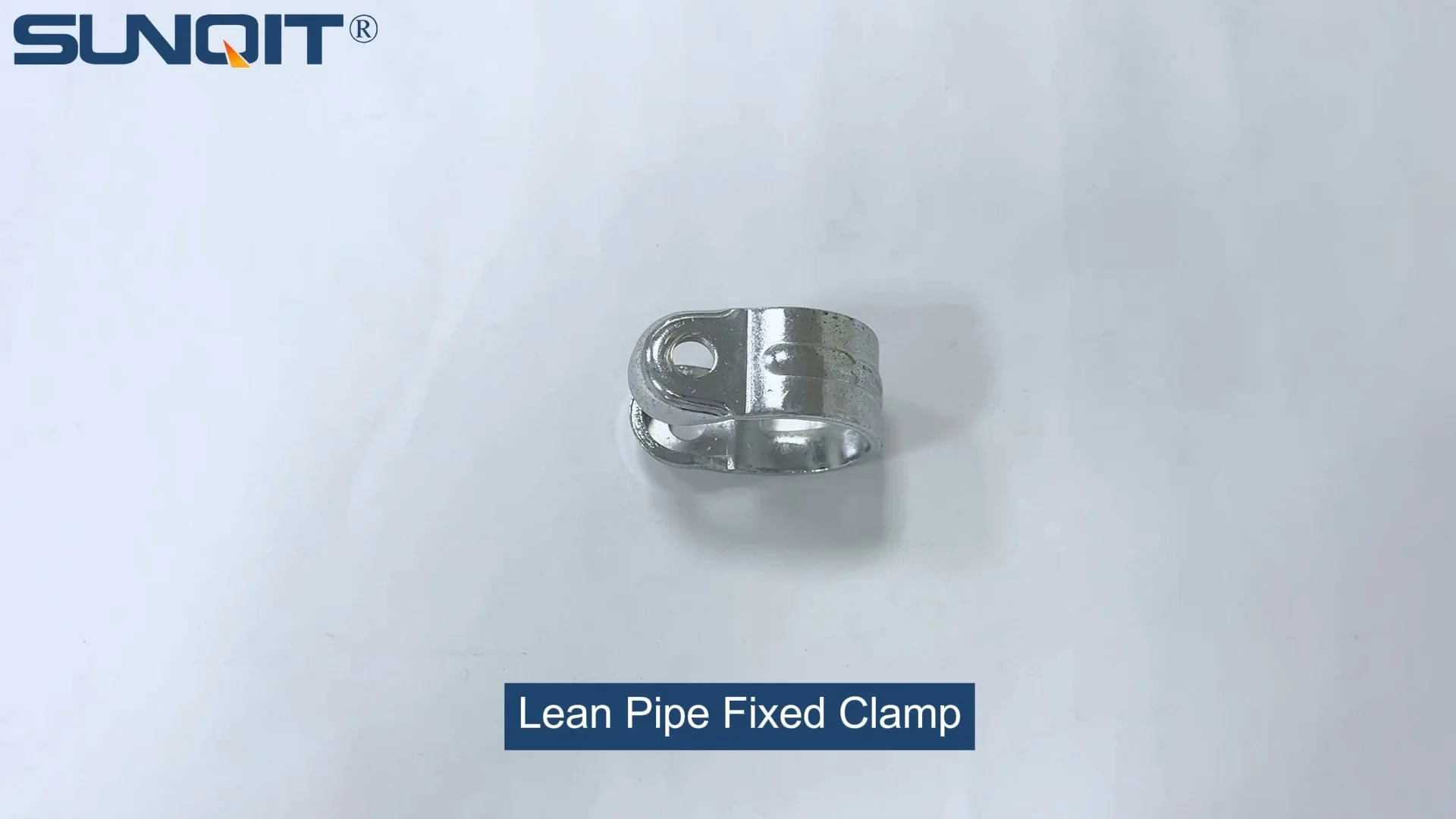
Lean Pipe Fixed Clamp
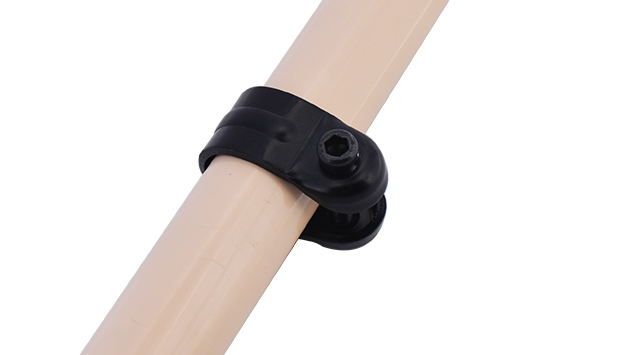
Lean pipe fixed clamp is used for pipe connector fixing the correct position during workbench flow rack hand trolley assemble work.
Introduction: Small Parts, Big Change in Sustainable Manufacturing
In today's manufacturing landscape, the push for sustainability isn't just a trend—it's a critical shift driven by climate concerns, regulatory pressures, and consumer demand for eco-conscious products. While large-scale initiatives like renewable energy adoption or carbon-neutral factories often grab headlines, the true backbone of sustainable manufacturing lies in the details: the tools, components, and everyday systems that keep production lines running. One such unsung hero? The reusable lean pipe fixed clamp.
For those unfamiliar, lean pipe systems—composed of pipes, joints, and accessories like fixed clamps—are the building blocks of modular workstations, flow racks, material handling trolleys, and assembly lines. They're designed for flexibility, allowing teams to reconfigure layouts quickly as production needs change. But beyond efficiency, the choice to use reusable lean pipe fixed clamps over disposable alternatives carries profound environmental implications. From reducing landfill waste to cutting energy consumption, these small components play a big role in minimizing the industry's carbon footprint.
This article explores how reusable lean pipe fixed clamps, when paired with compatible materials like aluminum lean pipe or stainless steel pipe series, contribute to greener manufacturing. We'll dive into their environmental benefits, compare them to traditional disposable options, and highlight real-world applications where they've made a tangible difference. By the end, it'll be clear why these unassuming clamps are more than just tools—they're a cornerstone of sustainable production.
What Are Reusable Lean Pipe Fixed Clamps, and Why Do They Matter?
Let's start with the basics: What exactly is a lean pipe fixed clamp? Put simply, it's a connector that joins lean pipes (hollow tubes made of materials like aluminum, steel, or plastic) to form sturdy, modular structures. Unlike one-time-use plastic ties or adhesives, fixed clamps are designed to be disassembled, reused, and reconfigured multiple times. They're part of a broader ecosystem of lean pipe and accessories, including joints, casters, and roller tracks, that together create adaptable workspaces.
The "reusable" aspect is key here. Traditional manufacturing setups often rely on permanent fixtures or disposable fasteners that get discarded when a production line is retooled. A factory might, for example, use plastic zip ties to secure pipes to a workbench; when the workbench is rearranged, those ties are cut and thrown away, adding to waste streams. Reusable lean pipe fixed clamps, by contrast, can be loosened, removed, and reattached to new configurations—sometimes hundreds of times over their lifespan.
But their impact goes beyond just reducing waste from fasteners. When paired with durable materials like aluminum lean pipe or stainless steel pipe series, these clamps enable the creation of long-lasting, low-maintenance systems. Aluminum, for instance, is lightweight, corrosion-resistant, and highly recyclable, while stainless steel offers unmatched durability in harsh industrial environments. Together, the clamp and pipe form a system that's not just efficient for production, but also kind to the planet.
The Hidden Environmental Cost of Disposable Fasteners
To understand why reusable lean pipe fixed clamps are a game-changer, it helps to first examine the environmental toll of their disposable counterparts. Let's take plastic fasteners—zip ties, adhesive clips, or one-time-use plastic clamps—as a common example. These products are cheap, easy to use, and widely available, which is why they've long been a go-to in manufacturing. But their convenience comes at a steep cost.
Consider a mid-sized electronics factory with 50 workstations. Each workstation might use 20 plastic zip ties to secure cables, pipes, or tool holders. If the factory reconfigures its layout twice a year (a common practice in agile manufacturing), that's 50 workstations × 20 ties × 2 reconfigurations = 2,000 zip ties discarded annually. Multiply that by thousands of factories worldwide, and the numbers become staggering. The EPA estimates that industrial plastic waste accounts for over 25% of all plastic trash generated in the U.S., much of which ends up in landfills or incinerators, releasing greenhouse gases as it decomposes.
Then there's the energy and resources required to produce these disposable fasteners. Plastic is derived from petroleum, a non-renewable resource, and its production involves energy-intensive processes like refining and polymerization. A single plastic zip tie might seem insignificant, but when scaled, the carbon footprint adds up. A 2022 study by the Ellen MacArthur Foundation found that the production of plastic fasteners and small industrial components contributes over 1.2 million tons of CO2 emissions globally each year—equivalent to the emissions of 250,000 cars.
Even "biodegradable" plastic alternatives often fall short. Many require industrial composting facilities to break down, which are scarce in most regions, meaning they end up in landfills anyway. And once discarded, these fasteners can't be recycled effectively due to their small size and mixed materials, making them a dead end for circular economy efforts.

Three Key Environmental Benefits of Reusable Lean Pipe Fixed Clamps
Reusable lean pipe fixed clamps address these issues head-on, offering a more sustainable alternative that benefits both the planet and manufacturers' bottom lines. Let's break down their most significant environmental advantages:
1. Drastic Reduction in Waste Generation
The most obvious benefit is waste reduction. A high-quality reusable clamp, made from materials like aluminum or stainless steel, can last 10 years or more with proper care. Compare that to a plastic zip tie, which might last 6 months at most before breaking or being discarded during reconfiguration. In the earlier example of a factory with 50 workstations, switching to reusable clamps could eliminate 2,000 zip ties per year—over 20,000 ties over a decade. Multiply that across an industry, and the waste savings are monumental.
But it's not just the clamps themselves. When a lean pipe system is reconfigured, the pipes, joints, and accessories (including clamps) are all reused. This means fewer raw materials are extracted, processed, and transported to replace old components. A 2019 study by the Lean Manufacturing Institute found that manufacturers using modular lean systems reduced their industrial waste by an average of 35% compared to those using fixed, disposable setups—much of that due to reusable fasteners like fixed clamps.
2. Lower Energy Consumption Across the Lifecycle
Producing a single reusable lean pipe fixed clamp requires more energy upfront than producing a plastic zip tie—there's no denying that. Aluminum and stainless steel production involves mining, smelting, and machining, which are energy-intensive processes. But when you factor in lifespan, reusable clamps come out far ahead in terms of energy efficiency.
Let's do the math: A plastic zip tie might require 5 kWh of energy to produce (including raw material extraction and manufacturing). A reusable aluminum clamp, by contrast, might require 50 kWh to produce—but it lasts 100 times longer (10 years vs. 1 month for a zip tie used in a frequently reconfigured setup). Over a decade, the zip tie approach would require 120 ties (1 per month) × 5 kWh = 600 kWh, while the aluminum clamp uses just 50 kWh. That's a 92% reduction in energy consumption over the product lifecycle.
Add to that the energy saved from reduced transportation (fewer shipments of replacement fasteners) and lower landfill usage (less waste to haul and process), and the energy benefits become even clearer. Aluminum's recyclability further amplifies this: when a clamp finally reaches the end of its life, it can be melted down and reused to make new clamps or other products, requiring just 5% of the energy needed to produce new aluminum from raw ore.
3. Support for Circular Economy Principles
The circular economy—an economic system aimed at eliminating waste and reusing resources—is at the heart of sustainable manufacturing. Reusable lean pipe fixed clamps embody this principle by design. They're not just "reusable" in the sense of being used multiple times; they're part of a closed-loop system where components are repaired, repurposed, or recycled rather than discarded.
For example, a lean pipe supplier might offer a take-back program for old clamps, refurbishing them (replacing worn parts, re-coating if needed) and reselling them at a discount. Or, when a clamp is too damaged to reuse, its aluminum or stainless steel can be recycled into new clamps or other industrial components. This stands in stark contrast to plastic fasteners, which often end up in landfills or oceans, contributing to the "take-make-waste" linear economy.

Material Matters: Why Aluminum Lean Pipe and Stainless Steel Clamps Are Eco-Stars
Not all reusable clamps are created equal. The materials used to make them play a huge role in their environmental impact. Two materials stand out as leaders in sustainability: aluminum (often used in aluminum lean pipe systems) and stainless steel (part of the stainless steel pipe series). Let's explore why:
Aluminum Lean Pipe and Clamps: Lightweight, Recyclable, and Durable
Aluminum is a sustainability standout for several reasons. First, it's incredibly lightweight, which reduces transportation emissions—whether the clamps are being shipped from the supplier to the factory or moved around the production floor. Second, it's naturally resistant to corrosion, meaning clamps made from aluminum require little maintenance and can withstand harsh industrial environments without degrading. This longevity further reduces the need for replacements.
But aluminum's biggest environmental advantage is its recyclability. Unlike plastic, which degrades in quality when recycled (a process called "downcycling"), aluminum can be recycled infinitely without losing strength or purity. Recycling aluminum uses just 5% of the energy required to produce new aluminum from bauxite ore, according to the Aluminum Association. For a lean pipe fixed clamp made from recycled aluminum, the carbon footprint is up to 95% lower than one made from virgin aluminum.
Many manufacturers now prioritize aluminum lean pipe systems with recycled content. A leading lean pipe supplier, for instance, might offer clamps made from 70% recycled aluminum, further reducing the environmental impact. When paired with other aluminum accessories—like aluminum guide rails or aluminum profile brackets—these systems create a fully recyclable, low-waste setup.
Stainless Steel Pipe Series: Durability for the Long Haul
For factories in particularly demanding environments—think food processing, pharmaceuticals, or heavy machinery—stainless steel pipe series clamps are often the go-to choice. Stainless steel is resistant to rust, chemicals, and high temperatures, making it ideal for applications where hygiene or durability is critical. While it requires more energy to produce than aluminum, its longevity is unmatched: a stainless steel clamp can last 20 years or more in heavy use.
Like aluminum, stainless steel is highly recyclable. Over 80% of stainless steel scrap is recycled globally, according to the International Stainless Steel Forum. When a stainless steel clamp is retired, it's melted down and reused, with no loss in quality. This closed-loop system ensures that the energy and resources invested in producing the clamp are stretched over decades, minimizing its lifecycle impact.
Real-World Impact: How One Factory Cut Waste by 40% with Reusable Clamps
To put these benefits into perspective, let's look at a real-world example (adapted from a case study shared by a leading lean system supplier). A mid-sized automotive parts manufacturer in the Midwest was struggling with high waste and rising costs from frequent production line reconfigurations. Their workbenches and material racks relied on plastic fasteners and wooden shelves, which were often damaged or discarded during retools.
In 2021, the factory switched to a modular lean system using aluminum lean pipe, stainless steel pipe series components, and reusable lean pipe fixed clamps. They replaced wooden shelves with aluminum profile workbenches and flow racks built with reusable clamps. The results were striking:
- Waste reduction: Trash from production line reconfigurations dropped by 40% in the first year, as clamps, pipes, and accessories were reused instead of discarded.
- Cost savings: The factory saved $12,000 annually on replacement fasteners and shelving, with the lean system paying for itself in under 2 years.
- Energy use: By reducing shipments of replacement parts, the factory cut its transportation-related CO2 emissions by 15%.
- Worker satisfaction: Teams reported faster reconfiguration times (down from 8 hours to 2 hours per line) and fewer injuries from handling heavy, disposable materials.
The factory's sustainability manager noted, "We didn't realize how much waste we were generating from 'small' things like zip ties and broken wooden shelves until we switched to reusable clamps. It's not just better for the planet—it's made our operations smoother and more cost-effective."
Lifecycle Analysis: Reusable vs. Disposable Clamps
To visualize the environmental impact difference, let's compare the lifecycle of a reusable aluminum lean pipe fixed clamp with a disposable plastic zip tie. The table below breaks down key metrics over a 10-year period:
| Metric | Reusable Aluminum Clamp | Disposable Plastic Zip Tie (1 per month) |
|---|---|---|
| Production Energy | 50 kWh (1 clamp, recyclable aluminum) | 600 kWh (120 ties, virgin plastic) |
| Waste Generated | 0.05 kg (scrap from initial production, recyclable) | 6 kg (120 ties, non-recyclable) |
| CO2 Emissions | 15 kg (production + transportation) | 180 kg (production + transportation + landfill) |
| Recyclability | 100% recyclable (can be reused to make new clamps) | 0% recyclable (ends in landfill or incinerator) |
| Total Cost (USD) | $15 (1 clamp) | $60 (120 ties at $0.50 each) |
The data speaks for itself: over 10 years, the reusable aluminum clamp uses 92% less energy, generates 99% less waste, and emits 92% less CO2 than the disposable zip tie approach. And while the upfront cost of the clamp is higher ($15 vs. $0.50 per tie), the total cost over a decade is 75% lower. For manufacturers, this is a win-win: sustainability and savings go hand in hand.
Challenges and Solutions: Overcoming Barriers to Adoption
Despite their clear benefits, reusable lean pipe fixed clamps aren't without challenges. The most common barrier is upfront cost: a single reusable clamp can cost 10–20 times more than a plastic zip tie, which can be daunting for budget-conscious manufacturers. There's also the learning curve: teams used to quick, disposable fasteners may need training to properly install, adjust, and maintain reusable clamps to maximize their lifespan.
Fortunately, these challenges are manageable with the right approach:
- ROI education: Manufacturers should calculate the total cost of ownership (TCO) over 5–10 years, including waste disposal fees, replacement costs, and energy savings. As shown in the earlier example, the TCO of reusable clamps is often lower than disposable options within 2–3 years.
- Supplier partnerships: Working with a reputable lean pipe supplier can help. Many suppliers offer bulk discounts, financing options, or trade-in programs for old, disposable systems. They may also provide training for teams on clamp maintenance (e.g., lubricating joints, proper torque settings) to extend clamp life.
- Pilot programs: Starting small—with a single production line or workbench—allows manufacturers to test reusable clamps and measure results before scaling. This reduces risk and builds internal buy-in.
The Future of Sustainable Manufacturing: Reusable Clamps as a Catalyst
As the manufacturing industry continues its shift toward circular economy principles, reusable lean pipe fixed clamps will play an increasingly central role. They're not just a tool for efficiency—they're a symbol of a broader commitment to reducing waste, conserving resources, and building resilient supply chains.
Looking ahead, we can expect to see even more innovation in this space. Lean pipe suppliers are already experimenting with clamps made from 100% recycled materials, or with built-in sensors to monitor wear and tear (extending lifespan further). Governments may introduce incentives for manufacturers using reusable fasteners, such as tax breaks or reduced waste disposal fees. And as consumers demand more transparency about product sustainability, manufacturers will likely highlight their use of lean systems and reusable components as a selling point.
In the end, the choice to use reusable lean pipe fixed clamps is about more than just "going green"—it's about building smarter, more efficient, and more sustainable factories. Every clamp reused, every piece of waste avoided, and every kilowatt-hour saved brings us one step closer to a manufacturing future that works for both people and the planet.
Conclusion: Small Clamps, Big Impact
Reusable lean pipe fixed clamps may be small in size, but their environmental impact is enormous. By replacing disposable fasteners with durable, recyclable alternatives, manufacturers can cut waste, reduce energy use, and lower costs—all while contributing to a more sustainable future. Whether paired with aluminum lean pipe, stainless steel pipe series, or other eco-friendly materials, these clamps prove that sustainability in manufacturing doesn't have to mean sacrificing efficiency or profitability.
So the next time you walk through a factory, take a closer look at the workbenches, flow racks, and assembly lines. Chances are, the difference between a sustainable operation and one stuck in the past lies in the details—in the clamps that hold it all together. And with reusable lean pipe fixed clamps leading the way, that future looks greener than ever.