- Company Articles
- Company Articles
- Turning Angle Code 2020: Key to Achieving Lean Six Sigma in Production

Turning Angle Code 2020: Key to Achieving Lean Six Sigma in Production
Related Product
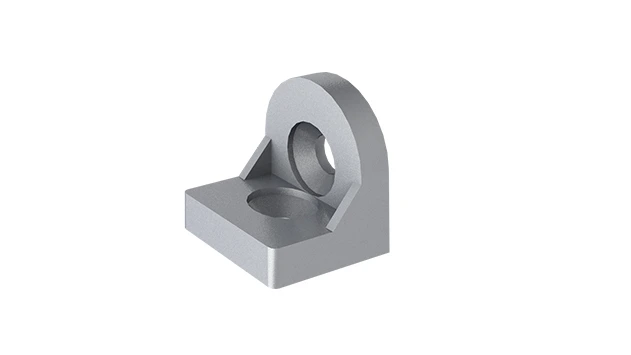
Urning Angle Code 2020
The turning angle aluminum profile connector provides a 90 degree hidden corner connection. 2020 it is means this size is used for 20 series aluminum profile.The corner code comes with set screws that allow for quick, easy connections.
In the fast-paced world of manufacturing, where every second counts and efficiency is the name of the game, Lean Six Sigma has become more than just a buzzword—it's a lifeline. Production teams worldwide strive to eliminate waste, reduce variation, and streamline processes to deliver higher quality products at lower costs. But here's the thing: achieving those Lean Six Sigma goals isn't just about big-picture strategies or expensive software. Often, it's the smallest, most unassuming components that hold the power to transform a struggling production line into a well-oiled machine. Enter the Turning Angle Code 2020 —a humble yet mighty player in the realm of lean manufacturing. In this article, we'll explore how this unassuming aluminum profile accessory acts as a cornerstone for building flexible, efficient, and waste-free production systems, seamlessly integrating with aluminum profiles , workbenches , and flow racks to bring Lean Six Sigma principles to life.
What Exactly is Turning Angle Code 2020?
Before we dive into its role in Lean Six Sigma, let's get to know the star of the show: Turning Angle Code 2020. If you've ever walked through a modern factory or warehouse, you've likely seen its handiwork without even realizing it. This small, precision-engineered component is part of the aluminum profile accessories family, designed specifically to connect 2020 series aluminum profiles at precise angles—most commonly 90 degrees, though its versatility allows for adjustments to fit unique layouts. Think of it as the "glue" that holds modular production systems together, but with a twist: it's not permanent. Made from high-grade aluminum, it's lightweight yet durable, resistant to corrosion, and built to withstand the daily wear and tear of busy production floors.
What sets Turning Angle Code 2020 apart from traditional connectors? Unlike welding, which locks structures into fixed shapes, or flimsy plastic brackets that warp under pressure, this angle code uses a simple yet ingenious design: T-slot compatibility. 2020 aluminum profiles feature grooves (T-slots) along their length, and Turning Angle Code 2020 slides into these slots, securing with bolts or screws to create a tight, stable joint. The result? A connection that's strong enough to support heavy tools or materials but easy enough to disassemble and reconfigure when production needs change. For anyone who's ever watched a team spend hours dismantling a rigid workstation to accommodate a new product line, this flexibility is nothing short of revolutionary.
Why Lean Systems Can't Afford to Overlook It
Lean Six Sigma is built on two core pillars: Lean , which focuses on eliminating waste (muda) like overproduction, waiting, and unnecessary movement, and Six Sigma , which targets reducing process variation to improve quality. To achieve both, production systems need to be flexible , adaptable , and efficient . That's where Turning Angle Code 2020 comes in. Let's break down how it directly supports these lean goals:
1. Eliminating "Waste of Inflexibility"
One of the most hidden yet costly wastes in manufacturing is inflexibility. Traditional production setups—think fixed steel workbenches or welded material racks—are designed for one specific task. When a product design changes, or demand shifts, these structures become obsolete, forcing teams to either invest in new equipment (waste of overproduction) or spend valuable time jury-rigging solutions (waste of motion and waiting). Turning Angle Code 2020 solves this by enabling modular systems. With it, a single aluminum profile frame can be reconfigured in hours to become a workbench, a flow rack, or a turnover trolley. For example, a electronics manufacturer producing smartphones might use the same base structure for assembling screens in the morning and testing batteries in the afternoon—no new tools, no wasted materials, just quick adjustments to the angle codes and profiles.
2. Reducing "Waste of Movement"
Lean principles emphasize optimizing the flow of materials and people to minimize unnecessary movement. A poorly designed workstation forces operators to reach, bend, or walk extra steps to access tools or components—all of which add up to wasted time and increased fatigue. Turning Angle Code 2020 allows for the creation of ergonomic workbenches tailored to human movement. By adjusting the angles and heights of aluminum profile frames, teams can position tools at chest level, materials within arm's reach, and work surfaces at the ideal height for standing or sitting. A study by the Manufacturing Extension Partnership found that ergonomic, flexible workstations reduce operator movement by up to 35%—translating to hours of saved time per week and fewer workplace injuries.
3. Supporting "Continuous Improvement" (Kaizen)
Kaizen, the Japanese philosophy of continuous improvement, is at the heart of Lean Six Sigma. It encourages teams to regularly evaluate and tweak processes to get better over time. But how can a team experiment with a new layout if their workstation is bolted to the floor? Turning Angle Code 2020 turns every production line into a "lab" for innovation. Operators can suggest small changes—adding a shelf, repositioning a conveyor, or angling a flow rack to speed up material flow—and see them implemented the same day. This not only fosters a culture of ownership but also accelerates the pace of improvement. As one plant manager put it: "Before, we'd spend months planning a workstation upgrade. Now, with Turning Angle Code 2020, we can test a new design on Monday, refine it on Tuesday, and roll it out company-wide by Friday."

A Perfect Match: Turning Angle Code 2020 and Aluminum Profiles
To truly appreciate the impact of Turning Angle Code 2020, it's important to understand its partnership with aluminum profiles . Aluminum profiles are the backbone of modular manufacturing systems—lightweight, strong, and infinitely customizable. But without the right connectors, they're just pieces of metal. Turning Angle Code 2020 is the connector that unlocks their full potential. Let's take a closer look at this synergy:
| Feature | Traditional Steel Structures with Welding | Aluminum Profiles with Turning Angle Code 2020 |
|---|---|---|
| Flexibility | Fixed; cannot be reconfigured without cutting/welding | Modular; reconfigurable in minutes with basic tools |
| Weight | Heavy (hard to move; requires forklifts) | Lightweight (easily adjusted by 1-2 people) |
| Cost Over Time | High (new structures needed for changes) | Low (reusable components; minimal new purchases) |
| Setup Time | Days (welding, painting, curing) | Hours (bolt-together assembly) |
| Sustainability | Wasteful (scrapped when obsolete) | Eco-friendly (recyclable aluminum; minimal waste) |
What makes this combination so effective for Lean Six Sigma? It's all about scalability . A small team can start with a single workbench built from 2020 aluminum profiles and Turning Angle Code 2020, then expand to a full production line by adding more profiles and connectors as needed. There's no need to overinvest in equipment upfront—just grow as demand grows. This aligns perfectly with the lean principle of "just-in-time" resource allocation, avoiding the waste of overproduction (in this case, overbuying equipment).
Another key advantage is precision. Aluminum profiles are extruded to exact specifications, and Turning Angle Code 2020's design ensures consistent angles and connections every time. This reduces variation in workstation setups, a critical factor for Six Sigma's focus on quality control. When every workbench is built to the same ergonomic standards using the same components, operators experience less fatigue, make fewer errors, and produce more consistent results. It's a small detail, but in high-volume manufacturing, consistency is everything.

Real-World Applications: From Workbenches to Flow Racks
Turning Angle Code 2020 isn't just a theoretical tool—it's transforming production floors across industries. Let's explore two common applications where it shines: workbenches and flow racks —two staples of manufacturing that directly impact efficiency and waste reduction.
Workbenches: The Heart of the Production Line
Workbenches are where the magic happens—where operators assemble, test, and package products. A poorly designed workbench can slow down even the most skilled team, while a well-designed one can turn chaos into calm. With Turning Angle Code 2020, workbenches become customizable powerhouses. For example, a automotive parts manufacturer might use 2020 aluminum profiles and angle codes to build a workbench with:
- Adjustable height : Using angle codes to connect leg profiles at different lengths, allowing operators of varying heights to work comfortably.
- Tool rails : Angled arms (secured with Turning Angle Code 2020) holding screwdrivers, wrenches, and power tools within easy reach, eliminating the need to walk to a tool chest.
- Integrated storage : Shelves and bins mounted to the bench frame, keeping components organized and reducing "waste of searching" for parts.
- ESD protection : For electronics manufacturing, adding conductive materials to the aluminum profiles (grounded via the angle codes) to prevent static electricity from damaging sensitive components.
One manufacturer of medical devices reported a 28% increase in assembly speed after reconfiguring their workbenches with Turning Angle Code 2020. By angling the work surface slightly downward to reduce neck strain and adding tool rails above, operators spent less time adjusting their posture and more time focused on assembly. The result? Faster production, fewer defects, and happier employees—all lean wins.
Flow Racks: Streamlining Material Flow
Flow racks (or gravity-fed racks) are essential for lean material handling, allowing components to slide from the back to the front as they're used—ensuring first-in, first-out (FIFO) inventory and reducing the need for operators to reach or bend. But a flow rack is only as good as its structure. Wobbly frames or misaligned roller tracks lead to jams, slowdowns, and damaged parts. Turning Angle Code 2020 solves this by providing a stable base for mounting roller tracks and guides.
Consider a warehouse distributing small parts to an assembly line. Using 2020 aluminum profiles and Turning Angle Code 2020, teams can build flow racks with adjustable angles—steeper for lightweight plastic parts, gentler for heavier metal components—to control the speed of material flow. The angle codes ensure the frame stays square and stable, even when fully loaded, preventing the rack from tipping or sagging. And if the assembly line moves or the parts change, the entire rack can be disassembled, moved, and reassembled in a new location with minimal effort. This flexibility is a game-changer for facilities with limited space or frequent layout changes.
A case in point: a food packaging plant was struggling with bottlenecks at their labeling station. Their old steel flow rack was fixed at a single angle, causing bottles to either jam (too steep) or get stuck (too flat). By switching to an aluminum frame built with Turning Angle Code 2020, they adjusted the angle by 5 degrees, eliminated jams, and increased throughput by 20% in a single day. No new rack, no downtime—just a quick tweak to the connectors. That's the power of modularity.
The Bottom Line: Benefits for Production Teams
At the end of the day, the value of Turning Angle Code 2020 lies in how it empowers production teams to work smarter, not harder. Let's summarize the key benefits that make it a must-have for any Lean Six Sigma initiative:
1. Faster Setup and Changeover Times
Traditional manufacturing setups can take days or weeks to modify. With Turning Angle Code 2020, changeovers happen in hours. A team can disassemble a workbench, reconfigure the aluminum profiles, and have a new workstation ready for the next shift—no specialized skills required. This agility is critical in today's market, where product life cycles are shorter than ever.
2. Lower Total Cost of Ownership
While aluminum profiles and Turning Angle Code 2020 may have a slightly higher upfront cost than cheap steel or plastic, their reusability drives long-term savings. A single set of components can be repurposed dozens of times, eliminating the need to buy new equipment for every product change. Over five years, manufacturers report saving 40-60% on workstation and material handling costs compared to traditional setups.
3. Improved Safety and Ergonomics
Wobbly workbenches or unstable racks are accident waiting to happen. Turning Angle Code 2020's secure connections reduce the risk of collapses, while the ability to adjust heights and angles minimizes strain on operators. This leads to fewer workplace injuries, lower workers' compensation costs, and a more engaged team.
4. Sustainability and Corporate Responsibility
Lean manufacturing and sustainability go hand in hand, and Turning Angle Code 2020 supports both. Aluminum is 100% recyclable, and modular systems generate far less waste than disposable steel structures. Companies using these components often see improvements in their environmental metrics, which is increasingly important for customers, regulators, and ESG investors.
Case Study: How One Manufacturer Cut Waste by 30% with Turning Angle Code 2020
To put these benefits into perspective, let's look at a real-world example. A mid-sized automotive parts supplier was struggling with inefficiencies in their assembly line. Their main challenges: rigid steel workstations that couldn't adapt to new part designs, frequent bottlenecks at material flow racks, and high turnover due to operator fatigue from poor ergonomics. Their Lean Six Sigma team identified "waste of inflexibility" and "waste of movement" as top priorities and recommended a switch to modular systems using 2020 aluminum profiles and Turning Angle Code 2020.
The implementation was phased over three months. First, they replaced four fixed steel workbenches with aluminum profiles and angle codes, allowing operators to adjust heights and add tool holders. Next, they converted their material flow racks to adjustable aluminum frames, reducing jams and improving FIFO inventory. Finally, they trained teams to reconfigure the systems themselves, empowering operators to suggest and implement small improvements.
The results were striking:
- Setup time for new part runs dropped from 8 hours to 2 hours—a 75% reduction.
- Operator movement waste decreased by 30%, as tools and materials were now within arm's reach.
- Workplace injuries related to lifting and reaching fell by 45%.
- Total equipment costs for the year decreased by $85,000, as they reused 80% of the aluminum components for new setups.
"The biggest surprise wasn't the cost savings—it was how much happier the team was," said the plant manager. "When operators can adjust their workstations to fit their needs, they take more ownership of the process. That pride translates to better quality and faster production. Turning Angle Code 2020 didn't just change our equipment; it changed our culture."
Conclusion: The Small Component with a Big Impact
In the world of Lean Six Sigma, success often hinges on the details. Turning Angle Code 2020 may be small in size, but its impact on production efficiency, flexibility, and waste reduction is enormous. By enabling modular, adaptable systems built on aluminum profiles, it empowers teams to eliminate waste, reduce variation, and continuously improve—all while keeping costs low and morale high.
Whether you're building a single workbench or a full production line, don't overlook the power of the right connector. Turning Angle Code 2020 isn't just a component; it's a tool for transformation. It's proof that sometimes, the key to achieving big goals lies in the smallest, most thoughtful innovations. So the next time you walk through your production floor, take a closer look at the structures holding everything together. Could a simple angle code be the missing piece in your Lean Six Sigma journey? Chances are, the answer is yes.