- Company Articles
- Company Articles
- What Is Strengthen Lean Management? Core Principles for Modern Manufacturing

What Is Strengthen Lean Management? Core Principles for Modern Manufacturing
Related Product
Strengthen Lean Management
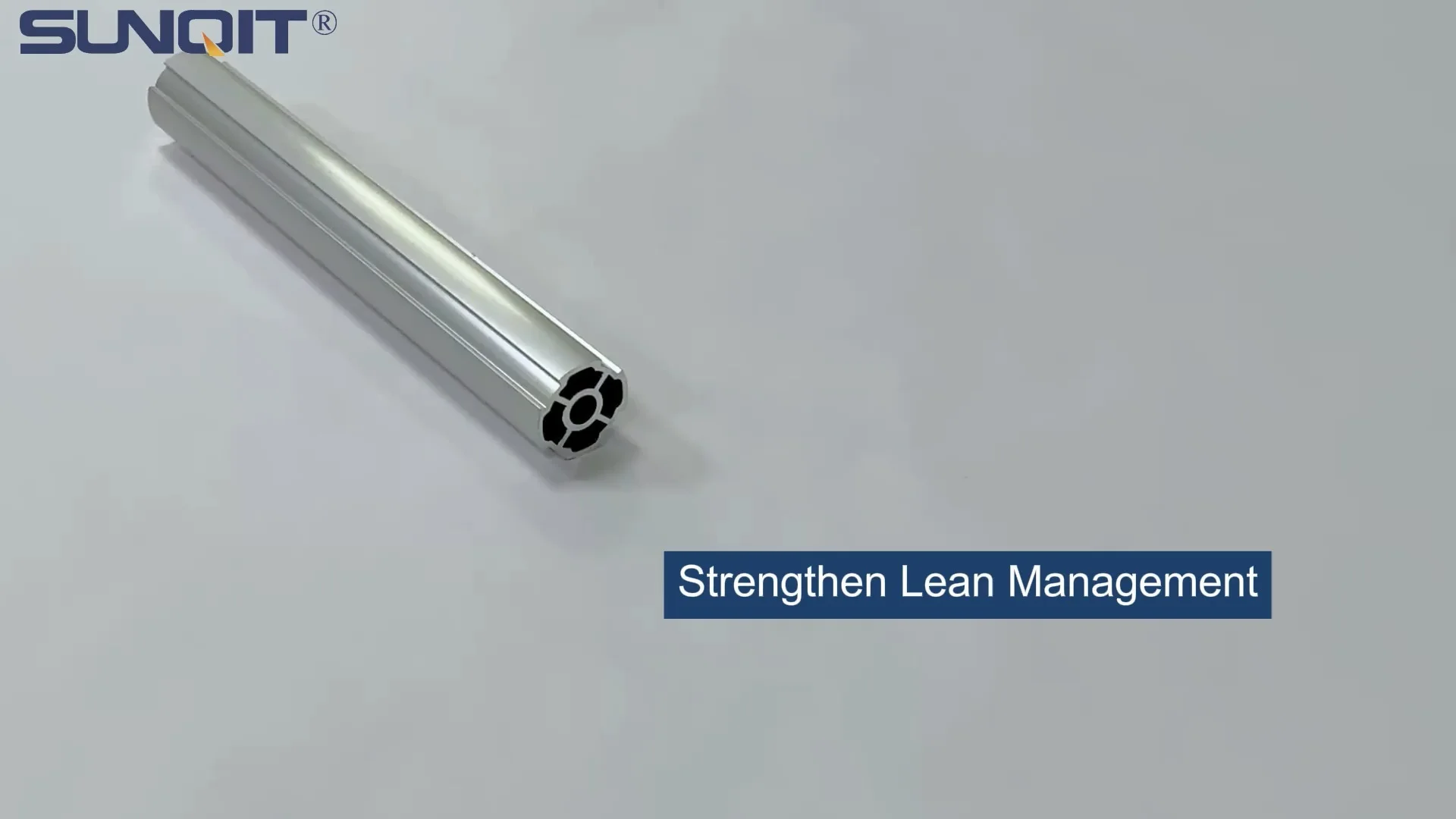
This product is called reinforced aluminum tube, and its bending strength is about twice that of the basic aluminum tube. The end face can process m1o threaded holes, install foot cups and other accessories, or convert internal and external screws in
Walk into any successful manufacturing facility today, and you'll notice something different from a decade ago. The floors are cleaner, workflows feel intentional, and employees move with purpose—not just busyness. Behind this shift often lies a commitment to strengthen lean management —an evolved approach to operations that goes beyond "cutting waste" to building resilient, people-centered, and future-ready systems. In an era where customer expectations change overnight and supply chains feel perpetually fragile, strengthening lean management isn't just a choice; it's the backbone of staying competitive. Let's unpack what this means, why it matters, and how core principles like adaptable workspaces, streamlined material flow, and employee empowerment are reshaping modern manufacturing.
From "Lean" to "Strengthened Lean": What's Changed?
Traditional lean management, born from Toyota's Production System in the mid-20th century, revolutionized manufacturing by focusing on eliminating seven wastes: overproduction, waiting, transport, defects, inventory, motion, and overprocessing. It was a game-changer, but as manufacturing evolved—with smaller batch sizes, customization demands, and digital tools—so did the need to strengthen these principles. Strengthen lean management isn't about discarding the old playbook; it's about supercharging it with flexibility, data, and human-centric design. Think of it as lean 2.0: same core goal (maximizing value, minimizing waste), but with new tools to tackle modern challenges—like building workspaces that adapt in hours, not months, or using real-time data to spot inefficiencies before they become crises.
At its heart, strengthening lean management is about three things: adaptability (systems that bend without breaking), empowerment (employees as problem-solvers, not just workers), and integration (connecting physical workflows with digital insights). And while the principles are universal, the tools to execute them have evolved dramatically. Today, that might mean swapping rigid, one-size-fits-all workstations for modular lean pipe workbenches , or replacing static storage with dynamic flow racks that keep materials moving exactly where they're needed, exactly when.
Core Principles of Strengthen Lean Management
Strengthening lean management isn't a vague concept—it's built on actionable principles that bridge old wisdom with new needs. Below, we break down five core principles, how they differ from traditional lean, and why they matter in 2024.
| Core Principle | Traditional Lean Focus | Strengthened Lean Evolution | Real-World Application |
|---|---|---|---|
| 1. Adaptive Workspace Design | Fixed layouts optimized for mass production. | Modular, reconfigurable spaces that shift with demand. | Using lean pipe workbenches with quick-connect joints to rearrange assembly lines in hours for new product runs. |
| 2. Data-Driven Material Flow | Manual tracking of inventory and transport. | IoT-integrated conveyors and flow racks that signal low stock or bottlenecks in real time. | Conveyor systems with sensors that alert teams when parts are running low, cutting "waiting" waste by 40%. |
| 3. Employee-Led Continuous Improvement | Top-down process changes. | Frontline teams trained to identify and solve inefficiencies daily. | A line worker suggesting a flow rack redesign to reduce reaching motions, cutting errors by 15%. |
| 4. Sustainable Resource Allocation | Minimizing waste to cut costs. | Minimizing waste while prioritizing eco-friendly materials (e.g., aluminum profiles for durability and recyclability). | Replacing plastic workbench components with aluminum, reducing landfill waste by 30% annually. |
| 5. Resilient Supply Chain Integration | Localized, just-in-time inventory. | Agile systems that adapt to global disruptions (e.g., port delays, material shortages). | Using adjustable flow racks to reroute materials from alternative suppliers during a shipment hold. |

Principle 1: Adaptive Workspace Design—The Foundation of Flexibility
Walk into a factory stuck in traditional lean, and you'll likely see workbenches bolted to the floor, tool racks welded in place, and assembly lines that haven't changed layout in years. This rigidity worked for mass production, but today's market demands customization : 100-unit runs of a specialty part one week, 500 of a standard component the next. Strengthening lean management here means building workspaces that adapt as fast as your orders do —and that's where tools like lean pipe workbenches and modular aluminum systems shine.
Take a mid-sized electronics manufacturer in Ohio, for example. Two years ago, their assembly line for circuit boards was fixed: a single long bench with tools mounted permanently above. When a client requested a custom board with new components, the team spent three days rearranging tools, rerouting cables, and adjusting lighting—wasting 72 production hours. Today, they use lean pipe workbenches with lightweight aluminum frames and quick-release joints. When a custom order comes in, two workers can reconfigure the bench in under an hour: adding a second tier for new tools, swapping out a static shelf for a flow rack to hold small parts, and even adjusting the height to fit taller components. The result? Setup time dropped by 95%, and they now take on 30% more custom orders without adding shifts.
But adaptability isn't just about speed—it's about employee comfort . Traditional workbenches often force workers into one-size-fits-all postures, leading to fatigue and errors. Strengthened lean workspaces solve this with adjustable heights, ergonomic tool placement, and even swappable accessories (like anti-fatigue mats or LED task lights). A study by the Manufacturing Ergonomics Institute found that companies using modular lean pipe workbenches reported 22% fewer workplace injuries and 18% higher employee retention—proof that flexibility benefits people, not just processes.

Principle 2: Data-Driven Material Flow—From "Push" to "Pull" (with a Digital Boost)
Material flow is the lifeblood of manufacturing. When parts sit idle in a warehouse, or workers wait 20 minutes for a component, value drains away. Traditional lean tackled this with "just-in-time" (JIT) inventory, but it relied on manual forecasts and paper-based tracking—prone to human error. Strengthen lean management takes JIT a step further by merging it with real-time data , turning "push" systems (where materials are sent based on a schedule) into "smart pull" systems (where materials arrive because they're needed).
Consider a automotive parts plant in Michigan that struggled with "waiting" waste. Their old system used a weekly schedule to deliver plastic moldings to the assembly line, but if a machine broke or demand spiked, the line would either starve (no parts) or drown (too many, cluttering the floor). Today, they've integrated flow racks with tiny IoT sensors that track part levels. When a bin hits 20% capacity, the sensor sends an alert to the warehouse team, who then use a conveyor system to deliver a refill—no paper, no delays. The conveyor itself has built-in RFID tags, so managers can see exactly where parts are in real time on a dashboard. In six months, waiting waste dropped by 35%, and inventory holding costs fell by $120,000 annually.
But data-driven flow isn't just about sensors. It's about designing flow paths that make sense . A common mistake is forcing materials to take the shortest physical route, not the most efficient one. For example, a food packaging plant in Texas once had a conveyor that moved boxes directly from filling to labeling—a straight line on paper. But the line curved around a maintenance closet, creating a bottleneck where boxes jammed weekly. By rerouting the conveyor to loop around the closet (adding 10 feet but eliminating curves), jams stopped, and throughput increased by 18%. The lesson? Data helps, but it works best when paired with eyes-on-the-ground observation.
Case Study: How Flow Racks and Conveyors Transformed a Medical Device Plant
A medical device manufacturer in California made surgical tools, but their material flow was a mess: small parts (screws, washers) were stored in bins on shelves 15 feet from the assembly line. Workers spent 20% of their day walking to grab parts, and misplaced bins caused 12% of defects. To strengthen their lean system, they installed flow racks along the assembly line—angled shelves where bins slide forward as the top one is emptied, so parts are always within arm's reach. They paired this with a mini conveyor that carried larger components (like tool handles) directly from the warehouse to the line, triggered by a button at each workstation. Within three months, walking time dropped by 80%, defects fell by 15%, and employees reported feeling "less like errand runners and more like craftsmen."

Principle 3: Employee-Led Continuous Improvement—The "Secret Sauce" of Strengthened Lean
If there's one myth about lean management, it's that it's a "top-down" system—executives dictating changes, workers following orders. Strengthen lean management flips this on its head: it recognizes that the people closest to the work (the line operators, the warehouse staff, the quality inspectors) know best where waste hides. The goal isn't to "train" employees to follow rules, but to empower them to rewrite the rules.
Consider a furniture manufacturer in North Carolina with a high defect rate in their chair assembly. For months, managers blamed "careless workers" and added more inspections. But when they finally asked the assembly team for input, a 10-year veteran named Maria pointed out the problem: the flow rack holding chair legs was too low, forcing workers to bend and twist to grab them, leading to misalignments. She suggested raising the rack by 12 inches and adding dividers to separate left and right legs. The change cost $200 in materials and took two hours to install. Defects dropped by 40% in the first week. "I'd seen the issue for years," Maria later said, "but no one ever asked."
Strengthened lean systems formalize this kind of input with "kaizen events"—short, focused workshops where teams identify and solve problems—but they go further by embedding improvement into daily work. For example, at a Wisconsin metal fabrication plant, every shift ends with a 5-minute "huddle" where workers share one "win" (a waste they eliminated) and one "stuck" (a problem they need help with). Managers then prioritize these "stucks" and report back within 24 hours. This simple habit turned into 127 small improvements in a year—from adding a lean pipe workbench near the welding station to reduce walking, to switching to a conveyor with softer rollers to prevent scratches on delicate parts. The result? Productivity rose by 25%, and employee satisfaction scores hit an all-time high.
Principle 4: Sustainable Resource Allocation—Lean Meets "Green"
Ten years ago, "sustainability" in manufacturing was often an afterthought—something companies did to check a box. Today, it's a business imperative: customers demand eco-friendly products, and regulators are cracking down on waste. Strengthen lean management merges waste reduction with sustainability, proving that "green" and "lean" aren't competing goals—they're two sides of the same coin.
A key tool here is material choice. Traditional lean sometimes prioritized cheap, single-use materials (like plastic bins or wooden pallets) to cut costs, but these often ended up in landfills. Strengthened lean systems opt for durable, recyclable materials—like aluminum profiles —that last longer and minimize waste. Take a packaging company in Oregon: they used to replace plastic flow rack shelves every 2–3 years, as the plastic cracked under heavy boxes. Switching to aluminum profiles (which are 3x stronger and 100% recyclable) meant shelves lasted 10+ years, and when they did wear out, the aluminum was melted down and reused. Over a decade, this saved $120,000 in replacement costs and kept 8 tons of plastic out of landfills.
But sustainability isn't just about materials—it's about energy and water use, too. Strengthened lean systems often integrate energy-efficient tools: LED lighting in workspaces, variable-speed motors in conveyors (that slow down when not in use), and even rainwater harvesting to wash equipment. A study by the Lean Green Alliance found that manufacturers combining lean and sustainability practices reduced energy costs by 18% and water use by 22%—proving that doing good for the planet also does good for the bottom line.
Principle 5: Resilient Supply Chain Integration—Preparing for the Unexpected
The past three years (think: pandemic, port delays, material shortages) taught manufacturers a harsh lesson: rigid supply chains break. Traditional lean's "just-in-time" model, which relies on precise, predictable deliveries, struggled when the world felt unpredictable. Strengthen lean management fixes this by building resilience into the supply chain—not by stockpiling inventory (which is wasteful) but by creating flexible systems that adapt when disruptions hit.
Take a medical supply company in Pennsylvania that makes IV stands. When their primary supplier of steel tubing faced a six-week shutdown due to a fire, they almost missed a critical order for hospitals. Today, they've strengthened their lean system by qualifying three alternative suppliers (two domestic, one international) and designing their lean pipe workbench assembly line to use either steel or aluminum profiles with minimal retooling. When a recent storm delayed a steel shipment, they quickly switched to aluminum tubing, sourced from a local supplier, and met the order deadline. "Resilience isn't about avoiding problems," their operations manager notes. "It's about having a Plan B (and C) that's easy to activate."
Another example: a toy manufacturer in Georgia that uses flow racks with color-coded bins for parts from different suppliers. If a bin from Supplier A is empty (due to a delay), workers can grab the same part from Supplier B's bin—no need to stop production. They also use digital tools to track supplier performance in real time: if a supplier consistently delivers late, the system flags it, and the team proactively shifts orders to more reliable partners. This "early warning" system has cut supply chain disruptions by 60%.
Why Strengthen Lean Management Isn't Just for "Big Manufacturers"
You might think: "This sounds great, but we're a small shop—we can't afford fancy conveyors or aluminum profiles." The truth? Strengthen lean management is scalable. It's not about spending millions; it's about thinking differently . A 10-person machine shop in Iowa, for example, strengthened their lean system with $500 worth of lean pipe workbench kits from a local supplier, reconfiguring their workspace to cut walking time by 40%. A family-owned bakery in Texas used secondhand flow racks to organize ingredients, reducing "expired flour" waste by $1,200 a year. The tools matter less than the mindset: seeing waste as a problem to solve, not a fact of life.
The Bottom Line: Strengthening Lean = Future-Proofing Your Business
In a world of constant change—new technologies, shifting customer demands, global disruptions—manufacturers can't afford to stand still. Strengthen lean management isn't just about "being efficient"; it's about building a culture, systems, and workspaces that grow stronger with every challenge. It's about workbenches that adapt, flow racks that communicate, and employees who feel ownership over their work. It's about turning "good enough" into "ready for whatever comes next."
So, where do you start? Pick one principle—say, adaptive workspace design—and try a small experiment: swap out a fixed bench for a lean pipe workbench , or ask a team to rearrange their tools for better flow. Measure the results (time saved, errors reduced, smiles increased). Then build from there. Strengthening lean management isn't a destination; it's a journey—one that pays off in happier employees, better products, and a business that doesn't just survive, but thrives.