- Company Articles
- Company Articles
- Why Strengthen Lean Management? Top Risks of Ignoring Lean Practices in Manufacturing

Why Strengthen Lean Management? Top Risks of Ignoring Lean Practices in Manufacturing
Related Product
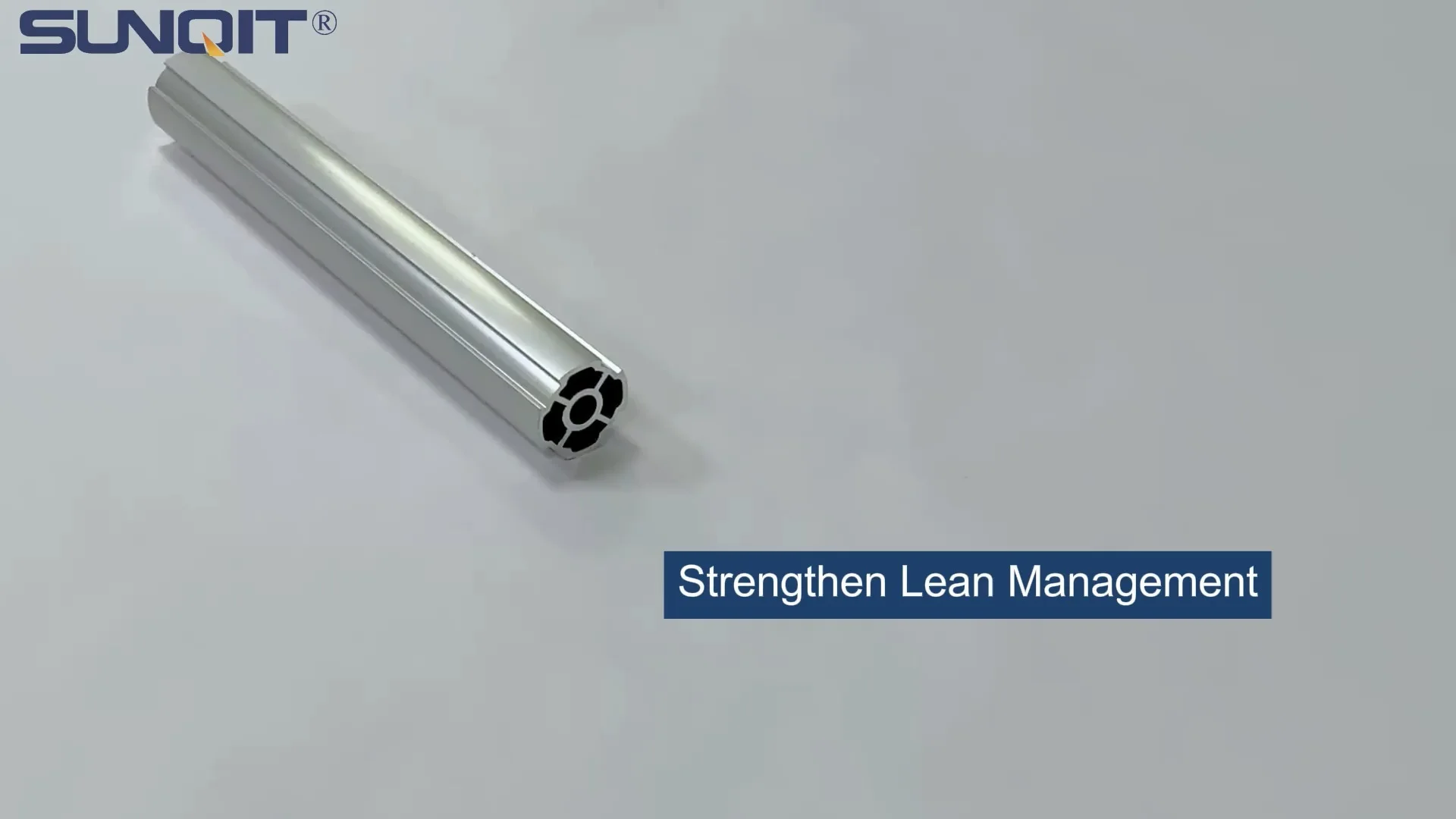
Strengthen Lean Management
This product is called reinforced aluminum tube, and its bending strength is about twice that of the basic aluminum tube. The end face can process m1o threaded holes, install foot cups and other accessories, or convert internal and external screws in
In the fast-paced world of manufacturing, where margins are tight and competition is fierce, the difference between thriving and merely surviving often comes down to efficiency. For decades, lean management has stood as a guiding philosophy for businesses aiming to cut waste, boost productivity, and foster resilience. At its core, lean isn't just a set of tools—it's a mindset centered on continuous improvement, respect for people, and delivering value to customers. But what happens when manufacturers overlook or deprioritize these principles? The risks aren't just abstract; they're tangible, costly, and can erode a company's foundation from the inside out.
From cluttered workspaces that slow down production to safety hazards that put workers at risk, ignoring lean practices creates a domino effect of problems. In this article, we'll explore the top risks of neglecting lean management in manufacturing, and how integrating key components like lean systems , flow racks , and ESD workbenches can mean the difference between operational chaos and a streamlined, profitable operation.
Risk 1: Operational Waste Piling Up—The Silent Profit Drain
Waste, or "muda" as it's known in lean terminology, is the arch-enemy of efficiency. Toyota, the pioneer of lean manufacturing, identified seven core types of waste: overproduction, waiting, transportation, defects, inventory, motion, and overprocessing. When lean practices are ignored, these wastes don't just exist—they multiply, turning small inefficiencies into major profit leaks.
Take overproduction, for example. Without a lean system's focus on "pull" (producing only what customers demand), factories often fall into the trap of churning out more products than needed to "keep machines busy." This leads to excess inventory, tying up capital in unsold goods and increasing storage costs. Meanwhile, workers waste time managing stockpiles instead of focusing on value-adding tasks.
Then there's motion waste—the unnecessary movement of workers or equipment. Imagine a assembly line where tools are scattered across the floor, or materials are stored in a back room instead of at the point of use. Workers spend precious minutes walking, reaching, or searching, instead of assembling products. Over a shift, this adds up to hours of lost productivity. Here's where tools like flow racks become game-changers. A well-designed flow rack organizes materials in a first-in, first-out (FIFO) system, placing components at eye level and within arm's reach. Without it, workers might trek 20 extra steps per task—multiply that by 500 tasks a day, and you're looking at 10,000 unnecessary steps, draining energy and slowing output.
Even "waiting" waste—when workers or machines sit idle due to bottlenecks—thrives in non-lean environments. A machine operator might wait 15 minutes for a part because the previous station is backed up, or a truckload of raw materials might sit in the loading dock because there's no clear process for unloading. In a lean system, tools like kanban boards and synchronized production schedules minimize waiting by ensuring each step feeds into the next seamlessly. Without these safeguards, waiting becomes the norm, not the exception.
| Type of Waste | Impact Without Lean Practices | How Lean Tools Mitigate It |
|---|---|---|
| Overproduction | Excess inventory, tied-up capital, storage costs | Lean system "pull" production (kanban) aligns output with demand |
| Motion | Worker fatigue, increased errors, time wasted searching for tools | Flow racks organize materials at the point of use, reducing movement |
| Defects | Rework, scrap, customer returns, damaged reputation | Standardized workbenches (e.g., ESD workbenches) reduce errors in sensitive tasks |
The bottom line? Unchecked waste doesn't just hurt efficiency—it hits the bottom line. Studies estimate that manufacturers lose 20-30% of their revenue to wasteful practices. For a mid-sized factory with $10 million in annual revenue, that's $2-3 million in avoidable losses. Lean management isn't just about "saving time"—it's about protecting your profit margin.
Risk 2: Compromised Workplace Safety and Ergonomics—A Human and Financial Cost
Manufacturing is inherently hands-on, and when workspaces aren't designed with safety and ergonomics in mind, the consequences are dire. Ignoring lean principles often means cutting corners on workstation design, leading to injuries, lost productivity, and even legal liabilities.
Consider the ESD workbench —a critical tool in electronics manufacturing. ESD (electrostatic discharge) can damage sensitive components like microchips, costing manufacturers billions annually in scrap and rework. A proper ESD workbench is grounded to dissipate static electricity, protecting both products and workers. Without it, a single static shock could ruin a batch of circuit boards, leading to delays and customer dissatisfaction. But the risks go beyond product damage: poorly designed workbenches with awkward heights or sharp edges force workers into unnatural postures, increasing the risk of repetitive strain injuries (RSIs) like carpal tunnel syndrome. The Bureau of Labor Statistics reports that RSIs account for over 30% of workplace injuries, with average recovery times of 21 days. For a factory with 100 workers, that's 2100 lost workdays per year—equivalent to over 8 full workweeks of downtime.
Ergonomics isn't just about comfort; it's about efficiency. A lean-designed workspace adjusts to the worker, not the other way around. Adjustable-height ESD workbenches, for example, let workers stand or sit, reducing fatigue during long shifts. When workers are comfortable, they're more focused, make fewer errors, and stay with the company longer. In contrast, a factory with cluttered, unergonomic workstations sees higher turnover—costing an average of $4,000 to replace each hourly worker, according to industry data.
Safety and lean go hand in hand. Lean's emphasis on "5S" (Sort, Set in Order, Shine, Standardize, Sustain) creates organized, clutter-free environments where hazards are easy to spot and address. Without 5S, tools lie scattered, spills go uncleaned, and emergency exits get blocked—turning minor incidents into major accidents. In 2023, OSHA fines for safety violations averaged $15,625 per serious violation; for repeat offenders, that number jumps to $156,259. For a small manufacturer, a single fine could wipe out months of profits.

Risk 3: Bottlenecks and Disrupted Material Flow—The Death of On-Time Delivery
Manufacturing is a symphony of moving parts—literally. Materials need to flow from receiving to production to shipping seamlessly. When lean practices are ignored, this flow breaks down, creating bottlenecks that turn "on-time delivery" into a pipe dream.
Imagine a factory that relies on manual material transport instead of a structured lean system with conveyors and flow racks. Raw materials arrive at the loading dock but sit there for hours because there's no clear process to move them to the production floor. Once they do arrive, workers have to hunt through disorganized storage areas to find what they need. By the time assembly starts, the production schedule is already behind. This isn't just inefficiency—it's a breakdown in the entire value stream.
Flow racks are a cornerstone of lean material flow. By gravity-feeding materials to the point of use, they ensure that the next part is always ready, eliminating waiting waste. A study by the Lean Enterprise Institute found that factories using flow racks reduced material retrieval time by 40%, cutting production lead times by an average of 25%. Without them, workers waste 15-20% of their shift just moving materials—a statistic that hits home when you realize that an 8-hour shift becomes just 6.4 hours of actual work.
Bottlenecks also form when production lines aren't balanced. In a non-lean setup, one station might process 10 units per hour while the next can only handle 5, creating a backlog. Lean's "takt time" (the rate at which products must be made to meet customer demand) balances workloads, ensuring each station keeps pace. Without this balance, deadlines slip, customers get frustrated, and competitors step in to take your market share. In today's just-in-time (JIT) economy, a single late delivery can cost a manufacturer a long-term client—especially in industries like automotive or aerospace, where supply chains are tightly synchronized.

Risk 4: Inability to Adapt to Market Changes—Stagnation in a Fast-Paced World
Markets change overnight. A new competitor launches a cheaper product, customer preferences shift, or a global crisis disrupts supply chains. Manufacturers that ignore lean principles are stuck with rigid systems that can't pivot—dooming them to fall behind.
Lean systems thrive on flexibility. Modular tools like aluminum lean pipes and adjustable flow racks let factories reconfigure production lines in hours, not weeks. For example, a furniture manufacturer using lean pipe workbenches can switch from making chairs to tables by simply rearranging the bench layout and repositioning flow racks for new materials. Without this flexibility, a factory might need to invest in new equipment or shut down production for days to adapt—missing market opportunities in the process.
The COVID-19 pandemic highlighted this risk starkly. Manufacturers with lean systems quickly repurposed lines to make PPE, using modular conveyors and workbenches to shift from automotive parts to face shields. Those without lean practices struggled to adapt, losing market share to more agile competitors. A McKinsey survey found that 67% of manufacturers with strong lean practices maintained or increased revenue during the pandemic, compared to just 32% of non-lean manufacturers.
Adaptability isn't just about surviving crises—it's about seizing opportunities. A toy manufacturer that can't quickly retool for holiday demand will miss peak sales; a medical device maker that can't scale production for a new product launch will lose ground to competitors. Lean systems turn "we can't" into "we can"—and in business, that's the difference between growth and decline.

Risk 5: Diminished Employee Morale—The Hidden Cost of Disorganization
Employees are a manufacturer's most valuable asset—but they're also the first to feel the impact of poor lean practices. A disorganized, inefficient workplace breeds frustration, disengagement, and high turnover.
Think about it: Would you want to work in a factory where you spend 20 minutes searching for tools every morning, or where your workbench causes wrist pain by lunchtime? Probably not. When workers are forced to operate in chaotic environments, their motivation plummets. Gallup's State of the American Workplace report found that disengaged employees are 18% less productive and 37% more likely to miss work than engaged employees. For a factory with 500 workers, that's 3700 lost workdays per year—enough to delay 10,000+ units of production.
Lean management empowers employees by giving them ownership of their workspaces. The 5S methodology, for example, encourages workers to "sort" and "set in order" their stations, creating a sense of pride and control. When employees see their input leading to smoother operations, they're more invested in the company's success. In contrast, a non-lean factory treats workers like cogs in a machine, ignoring their insights and leaving them feeling undervalued. The result? High turnover, which costs manufacturers $15,000+ per hourly worker in recruitment, training, and lost productivity.
Morale isn't just a "soft" metric—it's a bottom-line driver. Engaged employees make 41% fewer errors, according to Gallup, and are 59% less likely to leave. For a manufacturer struggling with quality issues or high turnover, strengthening lean practices isn't just about fixing processes—it's about rebuilding a team that's motivated to succeed.
Strengthening Lean Management: An Investment, Not an Expense
Ignoring lean practices in manufacturing isn't just a choice to "save time" or "cut costs"—it's a choice to accept inefficiency, waste, and risk. From operational drains like excess inventory to human costs like injuries and low morale, the price of neglect is far higher than the investment in lean tools and training.
But lean management isn't about overhauling your entire operation overnight. It starts with small, intentional steps: implementing 5S in one department, installing a flow rack to organize materials, or upgrading to an ESD workbench to protect products and workers. Over time, these steps add up, creating a culture of continuous improvement where waste is spotted and eliminated, and employees are empowered to contribute.
In the end, lean management is more than a set of tools—it's a promise to your employees, your customers, and your bottom line. It's a promise to work smarter, not harder; to value people as much as profits; and to build a business that can thrive, no matter what the market throws its way. So why strengthen lean management? Because the alternative—ignoring it—isn't just risky. It's unsustainable.