- Company Articles
- Industry articles
- Industry standards
- A Complete Guide to 3030a EU Standard Aluminum Profile Specifications

A Complete Guide to 3030a EU Standard Aluminum Profile Specifications
Related Product
3030A EU Standard Aluminum Profile
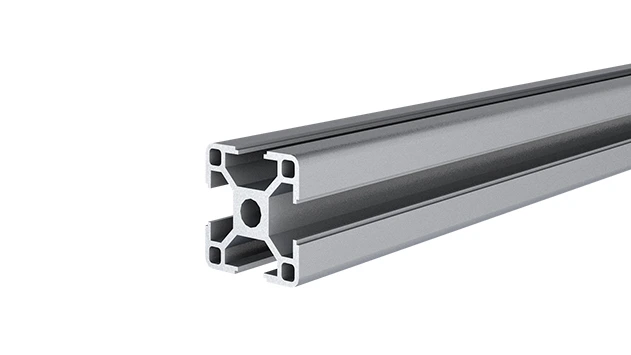
3030 is a 3.00 x 3.00CM fractional 30 series square extrusion T-slot profile with four open T-slots, each side with 3.00cm face. The profile has align-a-grooves to assist in aligning connecting profiles.
Walk into any modern manufacturing facility, workshop, or even a DIY enthusiast's garage, and you'll likely spot a common thread: sleek, modular structures that seem to adapt effortlessly to any task. From workbenches that hold heavy machinery to material racks that organize tools with precision, these setups owe their versatility to one unsung hero: the aluminum extrusion profile. And among the countless options available, the 3030a EU Standard Aluminum Profile stands out as a workhorse—reliable, adaptable, and built to meet the rigorous demands of industrial and commercial use. In this guide, we'll dive deep into what makes the 3030a profile a staple in lean systems, workbench construction, and beyond, exploring its specifications, applications, and why it's a top choice for engineers, manufacturers, and hobbyists alike.
What Is the 3030a EU Standard Aluminum Profile?
Before we get into the nitty-gritty of specs, let's start with the basics: What exactly is the 3030a EU Standard Aluminum Profile? In simple terms, it's a type of aluminum extrusion—meaning it's formed by pushing heated aluminum through a die to create a specific cross-sectional shape. The "3030a" refers to its dimensions (we'll break that down later), while "EU Standard" indicates it meets strict European manufacturing and quality benchmarks. This isn't just any piece of metal; it's a precision-engineered component designed for modularity, strength, and compatibility with a wide range of aluminum profile accessories.
Think of it as the building block of modular systems. Unlike rigid, one-size-fits-all structures, the 3030a profile lets you mix and match components—connectors, end caps, gussets, and more—to create everything from a simple shelving unit to a complex production line workbench. Its popularity in lean manufacturing systems, in particular, stems from this flexibility: lean systems thrive on minimizing waste and maximizing efficiency, and the 3030a profile's adaptability means you can reconfigure your setup as your needs change, without having to start from scratch.
Key Specifications of the 3030a EU Standard Aluminum Profile
To truly understand why the 3030a profile works so well, let's look at its core specifications. These details aren't just numbers—they're the reason it balances strength, weight, and versatility so effectively.
| Specification | Details | Why It Matters |
|---|---|---|
| Cross-Sectional Dimensions | 30mm x 30mm (width x height) | Provides a stable base for medium-load applications, balancing size and weight. |
| Wall Thickness | Typically 1.5mm–2.0mm (varies by manufacturer) | Thicker walls enhance load-bearing capacity; 1.5mm is standard for most uses, while 2.0mm suits heavier loads. |
| Weight per Meter | Approx. 0.8kg–1.2kg (depending on wall thickness) | Light enough for easy handling during assembly, yet sturdy enough to support tools, materials, and equipment. |
| Material Grade | 6063-T5 Aluminum Alloy | Known for excellent corrosion resistance, strength, and machinability—ideal for both indoor and outdoor use. |
| Surface Treatment | Anodized (clear, silver, or colored options) | Anodizing adds a protective layer, improving durability and resistance to scratches and wear. |
| Tolerance | ±0.1mm on dimensions (EU standard) | Precision tolerances ensure components fit together seamlessly, critical for modular assembly. |
Let's unpack a few of these. The 30mm x 30mm cross-section is a sweet spot for many applications. It's narrow enough to fit into tight spaces (like workbench corners) but wide enough to support significant weight—think of a workbench top loaded with power tools or a material rack holding heavy boxes. The wall thickness, usually 1.5mm, strikes a balance: too thin, and it might bend under stress; too thick, and it becomes unnecessarily heavy. For projects that need extra oomph (like industrial shelving), some suppliers offer 2.0mm wall variants, but the 1.5mm version is the most common for general use.
The material grade, 6063-T5, is another standout feature. Aluminum alloys are classified by their composition, and 6063 is prized for its extrudability (meaning it can be shaped into complex profiles easily) and excellent corrosion resistance. The "T5" refers to the heat treatment process it undergoes—artificially aging the aluminum to increase its strength without making it brittle. This makes the 3030a profile tough enough to handle daily wear and tear in busy workshops, yet lightweight enough to move around when reconfiguring your setup.

Material Composition and Mechanical Properties
Beyond the basics, the 3030a profile's performance hinges on its material makeup. Let's take a closer look at what's in 6063-T5 aluminum and how it translates to real-world use:
- Aluminum (97.5–99%): The primary component, providing lightweight and malleability.
- Magnesium (0.45–0.9%): Boosts strength and corrosion resistance—key for profiles used in humid or industrial environments.
- Silicon (0.2–0.6%): Improves extrudability, ensuring the profile maintains its shape and precision during manufacturing.
- Iron (max 0.3%): Added in small amounts to enhance durability without compromising the alloy's workability.
These elements work together to give the 3030a profile impressive mechanical properties. For context, it typically has a tensile strength of 180–220 MPa (megapascals), which means it can withstand around 18–22 kilograms of force per square millimeter before breaking. That's more than enough for most applications: a standard workbench built with 3030a profiles can easily support 100–200kg, depending on how it's assembled. Its yield strength (the point at which it starts to bend permanently) is around 140–180 MPa, so you don't have to worry about it warping under heavy loads during daily use.
Surface Treatments: More Than Just Aesthetics
You might notice that most 3030a profiles have a smooth, matte finish—often silver, black, or even custom colors. This isn't just for looks; the surface treatment plays a big role in the profile's longevity and functionality. The most common treatment is anodizing, a process that creates a protective oxide layer on the aluminum's surface.
Anodizing works by submerging the profile in an electrolytic solution and passing an electric current through it. This causes the aluminum to oxidize, forming a hard, porous layer that can be dyed (hence the color options) and sealed. The result? A finish that's scratch-resistant, corrosion-resistant, and easy to clean. Unlike paint, which can chip or peel, anodized layers are part of the metal itself, so they won't wear off over time. This is especially important in industrial settings where profiles might come into contact with chemicals, moisture, or heavy tools.
Some suppliers also offer powder coating as an alternative, which involves applying a dry powder to the profile and curing it with heat. Powder coating can provide a thicker, more vibrant finish, but it's less common for 3030a profiles since anodizing offers better durability for modular systems. For most users, the standard anodized finish is more than sufficient.
Applications: Where the 3030a Profile Shines
Now that we understand the specs, let's talk about how the 3030a profile is actually used. Its versatility means it pops up in a wide range of settings, but here are some of its most common applications:
Lean Manufacturing Systems
Lean manufacturing is all about streamlining processes, reducing waste, and staying agile—and the 3030a profile is a perfect fit. In lean systems, it's used to build everything from material flow racks (to keep parts moving efficiently) to workstations tailored to specific tasks. For example, a lean workbench built with 3030a profiles can be outfitted with tool holders, LED lights, and even ESD (electrostatic discharge) mats to protect sensitive electronics—all without needing to weld or drill custom holes. Because the profile is modular, if the production line changes, you can simply disassemble and reconfigure the workbench rather than buying a new one.
Workbenches and Assembly Stations
Whether you're assembling circuit boards in a tech factory or repairing appliances in a workshop, a sturdy workbench is essential. The 3030a profile excels here because it balances strength and customization. A typical workbench might use 3030a profiles for the frame, with a plywood or aluminum honeycomb panel top. Add casters (from the caster and accessories range) and you've got a mobile workbench that can be moved to where it's needed. Want to add a shelf for tools? Just attach a few more profiles and a crossbar using 90° aluminum profile connectors. It's that easy.
Material Racks and Shelving
Storage is a challenge in any workspace, but the 3030a profile turns it into an opportunity. Material racks built with 3030a can be customized to fit your space: tall and narrow for tight corners, or wide and low for heavy items. Pair the profile with roller tracks (like the 38 aluminum roller track with side guides) and you've got a gravity-fed shelf system that lets materials glide to the front, reducing the need to reach or lift. Retailers even use these racks to display products—their clean, modern look fits well in stores, too.
DIY and Hobby Projects
It's not just industrial users who love the 3030a profile. Hobbyists and DIYers swear by it for everything from 3D printer enclosures to custom garage storage. Its lightweight nature makes it easy to cut with a miter saw, and aluminum profile accessories like end caps and gussets mean you don't need advanced tools to build something sturdy. Plus, since it's affordable compared to steel, it's a budget-friendly option for weekend projects.
Aluminum Profile Accessories: Making the 3030a Profile Even More Versatile
A profile is only as good as the accessories that go with it, and the 3030a shines here thanks to its compatibility with a huge range of aluminum profile accessories. Let's highlight some of the most useful ones:
- Connectors: These are the "glue" of modular systems. 90° aluminum profile connectors let you join two profiles at a right angle, while 45° connectors add flexibility for angled structures. There are even 135° connectors for corner joints and T-slot connectors for adding crossbars.
- End Caps: These simple plastic or aluminum caps fit over the ends of the profile, protecting fingers from sharp edges and preventing dust or debris from getting inside. The 3030 aluminum profile end cap is a must-have for any project.
- Gussets: For extra stability, gussets (like the gusset alp 3030) reinforce joints, making structures more rigid. They're especially useful for workbenches or racks that hold heavy loads.
- Wheels and Casters: Add casters (from the caster and accessories line) to turn a static structure into a mobile one. Look for swivel casters with brakes for easy maneuvering and stability when in use.
- Panels and Covers: Attach aluminum honeycomb panels or acrylic sheets to the profile using T-slot nuts and bolts to create enclosed spaces (like machine guards) or work surfaces.
The beauty of these accessories is that they're designed to work together seamlessly. You don't have to worry about compatibility issues—if it's labeled as an aluminum profile accessory, it will likely fit the 3030a profile (just double-check the slot size, which is standard for EU profiles).
How Does the 3030a Compare to Other Aluminum Profiles?
With so many aluminum profiles on the market—like the smaller 2020, larger 4040, or heavy-duty 4080—why choose the 3030a? Let's break down the differences to help you decide:
- 2020 Profile (20mm x 20mm): Smaller and lighter, ideal for lightweight projects like 3D printer frames or small shelves. But it lacks the 3030a's load capacity—great for hobbyists, but not industrial use.
- 4040 Profile (40mm x 40mm): Larger and stronger, with a higher weight capacity. It's better for heavy machinery or large storage racks, but it's also heavier and more expensive. The 3030a is a better middle ground for most medium-load needs.
- 3030a vs. Non-Standard Profiles: Some manufacturers sell "3030" profiles that don't meet EU standards. These might have inconsistent wall thickness or poor tolerances, leading to wobbly structures or ill-fitting accessories. The EU standard 3030a guarantees quality and compatibility.
In short, the 3030a profile hits the sweet spot: it's strong enough for industrial use, light enough for easy handling, and affordable enough for small businesses and DIYers. Unless you're building something extremely light or extremely heavy, it's likely the right choice.
Installation Tips: Getting the Most Out of Your 3030a Profile
Assembling with 3030a profiles is straightforward, but a few tips can save you time and frustration:
- Measure Twice, Cut Once: Aluminum is easy to cut with a miter saw or hacksaw, but make sure your measurements are precise. A 1mm error can throw off your entire structure.
- Use the Right Tools: A hex key set (for T-slot bolts) and a rubber mallet (to gently tap connectors into place) are essential. Avoid over-tightening bolts—this can strip the threads or warp the profile.
- Start with a Frame: Build the basic frame first (e.g., the four corners of a workbench) before adding crossbars or shelves. This ensures the structure is square and stable.
- Check for Level: Use a spirit level to make sure your frame is straight—especially important for workbenches, where an uneven surface can cause tools or materials to slide.
- Label Your Parts: If you're building something complex, label the profiles and connectors with tape to avoid mixing up pieces during assembly.
Maintenance: Keeping Your 3030a Profile in Top Shape
Aluminum profiles are low-maintenance, but a little care goes a long way:
- Clean Regularly: Wipe down the profile with a damp cloth and mild soap to remove dust, grease, or fingerprints. Avoid abrasive cleaners, which can scratch the anodized finish.
- Check Connections: Over time, bolts and connectors can loosen (especially on mobile structures). Tighten them with a hex key every few months to keep the structure stable.
- Protect from Impact: While the 3030a is strong, heavy impacts can bend the profile. Use corner guards or bumpers if the structure is near high-traffic areas.
- Recycle When Replacing: Aluminum is 100% recyclable—if you ever need to replace a profile, take it to a recycling center instead of throwing it away.
Why Choose the 3030a EU Standard Aluminum Profile?
At this point, you might be wondering: With so many options, why invest in the 3030a EU Standard profile? Here's the bottom line:
- Quality You Can Trust: EU standards ensure consistent dimensions, material quality, and performance—no surprises or weak spots.
- Unmatched Versatility: Pair it with aluminum profile accessories, roller tracks, casters, and more to build almost anything you need.
- Cost-Effective: It's more affordable than larger profiles (like the 4040) but still strong enough for most applications, making it a budget-friendly choice for businesses and hobbyists.
- Sustainable: Aluminum is recyclable, and modular systems reduce waste by letting you reuse components.
- Future-Proof: As your needs change, you can expand or reconfigure your structure—no need to buy new materials.
Conclusion: The 3030a Profile—Your Partner in Modular Innovation
The 3030a EU Standard Aluminum Profile isn't just a piece of metal; it's a tool for innovation. Whether you're building a lean manufacturing system to boost productivity, a custom workbench for your workshop, or a storage rack to organize your space, it offers the strength, flexibility, and quality you need. Its compatibility with aluminum profile accessories, adherence to EU standards, and balance of size and strength make it a standout choice in the world of modular construction.
So, the next time you walk into a facility with a sleek, efficient setup, take a closer look—chances are, the 3030a profile is holding it all together. And if you're looking to build something better, stronger, or more adaptable, it might just be the building block you've been searching for.