- Company Articles
- Industry articles
- Industry standards
- Additive Manufacturing Compatibility with 2040 EU Standard Aluminum Profile

Additive Manufacturing Compatibility with 2040 EU Standard Aluminum Profile
Related Product
2040 EU Standard Aluminum Profile
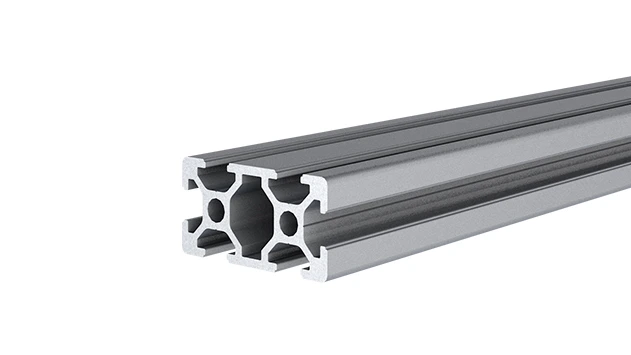
2040 is a 2.00 x 4.00CM fractional 20 series square extrusion T-slot profile with four open T-slots, two side with 2.00cm face, the other side with 4.00cm face. The profile has align-a-grooves to assist in aligning connecting profiles.
In today's fast-paced manufacturing landscape, the pressure to deliver customized, efficient, and cost-effective solutions has never been higher. Enter two game-changers: additive manufacturing (AM) and modular aluminum profiles. While additive manufacturing—better known as 3D printing—has revolutionized how we create complex, on-demand parts, modular aluminum systems have long been the backbone of flexible production lines, workbenches, and material handling setups. But what happens when these two innovations intersect? Specifically, how does additive manufacturing enhance the capabilities of one of the most versatile profiles in the industry: the 2040 EU standard aluminum profile? Let's dive in.
Understanding the 2040 EU Standard Aluminum Profile: A Workhorse of Modern Manufacturing
Before we explore the synergy with additive manufacturing, let's get to know the star of the show: the 2040 EU standard aluminum profile. If you've ever walked through a factory, warehouse, or even a tech startup's prototyping lab, chances are you've seen this profile in action—even if you didn't realize it. Measuring 20mm in width and 40mm in height, this extrusion is part of the broader family of aluminum extrusion profiles, designed to be lightweight, strong, and infinitely configurable.
What makes the 2040 profile so popular? For starters, its dimensions strike a perfect balance between strength and versatility. It's sturdy enough to support workbenches, shelving, and even light-duty conveyor systems, yet lightweight enough to be easily assembled and reconfigured without heavy machinery. Then there's the T-slot design—a series of longitudinal slots along its length that allow for quick attachment of accessories, brackets, and components using bolts, nuts, or specialized connectors. This T-slot system is the secret sauce behind its modularity: no welding, no drilling, just simple, tool-free adjustments.
As an EU standard profile, it also benefits from interoperability. Manufacturers across Europe (and increasingly globally) adhere to strict dimensional tolerances, meaning a 2040 profile from one lean system supplier will fit seamlessly with aluminum profile accessories from another. This standardization reduces headaches for production managers, who can mix and match components without worrying about compatibility issues. From end caps and rubber strips to corner brackets and hinges, the ecosystem of aluminum profile accessories built around the 2040 profile is vast—but additive manufacturing is about to make it even more expansive.
Additive Manufacturing: Redefining "On-Demand" in Production
Additive manufacturing isn't just a buzzword—it's a paradigm shift. Unlike subtractive manufacturing, which cuts, drills, or mills material away from a solid block, AM builds parts layer by layer, using materials like plastic, resin, or even metal. This process unlocks three key advantages that are particularly relevant to modular aluminum systems: design freedom, reduced lead times, and low-volume efficiency.
Design freedom is perhaps the most exciting. With AM, there's no need to simplify a part's geometry to fit traditional manufacturing constraints. Need a bracket with a complex curve to route cables around a workbench? A tool holder with custom notches for specific screwdrivers? A connector that angles at 135 degrees instead of the standard 90? All possible with 3D modeling and a desktop printer. This level of customization was once reserved for high-budget, high-volume projects, but AM brings it to small businesses and even individual workshops.
Then there's lead time. In traditional manufacturing, ordering a custom aluminum bracket might take weeks—waiting for a supplier to machine it, ship it, and deliver. With AM, that same bracket can be designed in a few hours, printed overnight, and installed the next morning. For manufacturers dealing with tight deadlines or unexpected equipment modifications, this speed is a game-changer. It's not just about making parts faster; it's about reducing downtime and keeping production lines moving.
Finally, low-volume efficiency. Traditional manufacturing often requires economies of scale—producing hundreds or thousands of identical parts to justify setup costs. AM thrives on the opposite: it's cost-effective even for single-part production. This is critical for modular systems, where customization often means small batches of unique accessories. Why stockpile 50 different bracket designs when you can print one on demand?

The Compatibility Factor: Why 2040 Profiles and AM Were Made for Each Other
So, how do these two innovations—2040 EU standard aluminum profiles and additive manufacturing—work together? The answer lies in their shared focus on flexibility, customization, and efficiency. Let's break down the key areas of compatibility:
1. T-Slot Design Meets 3D-Printed Versatility
The T-slot system of the 2040 profile was practically designed with additive manufacturing in mind. Those longitudinal slots aren't just for standard bolts—they're a blank canvas for custom 3D-printed inserts, brackets, and connectors. Imagine a scenario where a production line needs a specialized sensor mount for quality control. Instead of searching through catalogs of aluminum profile accessories (and settling for a "close enough" option), an engineer can design a mount that fits the sensor's exact dimensions, print it in ABS or PETG, and slide it into the T-slot. No machining, no minimum order quantities, just a perfect fit.
This compatibility extends to even the smallest details. For example, aluminum profile rubber strips are commonly used to seal T-slots and prevent debris buildup. But what if a particular application requires a strip with a notched section to route a cable? A 3D printer can produce a custom rubber-like T-slot seal in hours, tailored to that exact need. The same logic applies to end caps: standard 2040 aluminum profile end caps are functional, but a 3D-printed end cap could include integrated cable management or a built-in label holder for quick part identification.
2. Material Synergy: Lightweight, Strong, and Cost-Effective
Aluminum is prized for its strength-to-weight ratio, and 3D-printed materials can be chosen to complement this. For non-load-bearing parts like cable organizers or tool holders, PLA (a biodegradable plastic) might suffice for prototyping. For more durable applications—like brackets supporting tools on a workbench—ABS or PETG offer better impact resistance and heat tolerance. Even metal 3D printing (using materials like aluminum or stainless steel) can be used for load-bearing components, though this is currently more common in industrial settings.
The beauty is that 3D-printed parts don't need to match the aluminum's strength unless they're carrying heavy loads. This allows manufacturers to save on material costs by using lighter, cheaper 3D printing filaments for non-critical components, while relying on the 2040 profile itself for structural integrity. It's a division of labor that maximizes efficiency: the aluminum profile provides the backbone, and 3D-printed parts add the custom flair.
3. Iterative Design and Rapid Prototyping
One of the biggest challenges in manufacturing is getting a design right the first time. With traditional aluminum profile accessories, modifying a bracket or connector means retooling, which is time-consuming and expensive. Additive manufacturing eliminates this barrier by enabling rapid iteration. An engineer can print a prototype bracket, test it on the 2040 profile workbench, identify flaws (e.g., a slot that's slightly too narrow, a corner that digs into the operator's arm), tweak the design in CAD, and print a revised version the same day.
This iterative process is invaluable for lean manufacturing, where continuous improvement is key. A workbench that starts with basic 3D-printed tool holders can evolve over weeks as operators provide feedback, with each new iteration becoming more ergonomic and efficient. By the time the design is finalized, the manufacturer can either continue printing the part in-house or send the CAD file to a supplier for mass production—if mass production is even needed. In many cases, low-volume, on-demand printing remains the most cost-effective option.
Real-World Applications: 2040 Profiles + AM in Action
To understand the impact of this compatibility, let's look at some practical applications where 2040 EU standard aluminum profiles and additive manufacturing are already making waves. These examples span industries, from automotive and electronics to pharmaceuticals and logistics, highlighting the versatility of this powerful combination.
Workbenches: Ergonomic, Custom, and Operator-Centric
Workbenches are the heart of any production line, and the 2040 profile is a staple here—often used in configurations like the "Workbench E (single deck-without caster)" from many lean system suppliers. But standard workbenches come with standard accessories: generic tool trays, fixed-height shelves, and one-size-fits-all power strips. Additive manufacturing changes this by putting customization in the hands of the operators who use the workbench daily.
Take a small electronics manufacturer assembling circuit boards, for example. Each operator might use a unique set of tools: a soldering iron, tweezers, wire cutters, and a magnifying glass. With 3D printing, the manufacturer can design individual tool holders that clip into the T-slots of the 2040 profile workbench, positioning each tool exactly where the operator's hand falls naturally. No more reaching across the bench or fumbling in a crowded tray. Even better, if an operator is taller or left-handed, their tool holder can be printed with adjusted angles or heights—no need to order a new workbench.
Ergonomics extend beyond tool placement, too. 3D-printed armrests, wrist pads, or even footrests can be attached to the 2040 profile frame, reducing strain during long shifts. These parts can be printed in soft, rubber-like materials for comfort, then easily swapped out if they wear down or if a new operator with different needs takes over the station.
Material Racks and Storage: Tailored to Your Parts, Not the Other Way Around
Material racks—like the "Material Rack B (3 row and 3 floor)" commonly used in warehouses—are another area where 2040 profiles and AM shine. Traditional racks use adjustable shelves, but the dividers and bins are often generic, forcing parts to fit into pre-sized spaces. With 3D printing, every shelf can be customized to the exact dimensions of the parts it holds.
Consider a pharmaceutical manufacturer storing small vials of medication. Standard bins might allow vials to shift during transport, risking breakage. By 3D printing custom dividers with notches sized for each vial diameter, the manufacturer can secure the vials in place, reducing waste and improving inventory accuracy. These dividers can be printed in different colors to color-code batches or expiration dates, further streamlining operations. And because they're lightweight and printed on demand, adding or removing dividers is as simple as sliding them into the T-slots of the 2040 profile rack.
The same logic applies to larger components, too. Automotive suppliers, for instance, often deal with irregularly shaped parts like gaskets or brackets. 3D-printed storage inserts can be designed with recesses that mirror the part's geometry, ensuring a snug fit and preventing damage. These inserts can even include RFID tags or QR codes (3D-printed directly into the part) for easy tracking via inventory management systems.
| Feature | Traditional 2040 Profile Setup | AM-Integrated 2040 Profile Setup |
|---|---|---|
| Customization Level | Limited to standard aluminum profile accessories (e.g., generic brackets, dividers) | Unlimited: 3D-printed parts tailored to specific tools, parts, or operator needs |
| Lead Time for New Accessories | 1–4 weeks (ordering, shipping, delivery) | 1–2 days (design, print, install) |
| Cost (Low-Volume Production) | Higher (minimum order quantities, shipping fees for small parts) | Lower (no minimums, in-house printing eliminates shipping) |
| Flexibility | High (reconfigurable with standard parts), but limited by accessory availability | Extremely high (reconfigurable with custom parts designed for the task at hand) |
| Waste Production | Higher (excess material from machining, packaging waste from shipped parts) | Lower (additive manufacturing produces minimal waste; 3D-printed parts can be recycled) |
Conveyor Systems and Material Handling
Even conveyor systems—often built with 2040 profiles for lightweight frames—benefit from additive manufacturing. Roller tracks, for example, rely on precise alignment to ensure smooth part movement. If a section of the track becomes misaligned or worn, a 3D-printed shim or spacer can be printed to adjust the height or angle, saving the cost of replacing the entire track. Similarly, guide rails (like the "plastic roller track guide rail yellow" or "aluminum guide rail A" from supplier catalogs) can be augmented with 3D-printed bumpers or diverters to redirect parts at specific points along the conveyor.
Turnover trolleys, another common application for 2040 profiles, can be customized with 3D-printed handles shaped for operator comfort, or with custom-sized bins that fit perfectly into the trolley's frame. Even casters—the wheels that make trolleys mobile—can benefit: 3D-printed caster accessories like brake levers or dust covers can be designed to fit non-standard caster models, extending the life of existing equipment.
Benefits for Lean System Suppliers: Adding Value in a Competitive Market
While much of the focus has been on end-users, lean system suppliers stand to gain significantly from embracing additive manufacturing alongside 2040 EU standard aluminum profiles. In a market where competitors offer similar profiles and accessories, AM provides a way to differentiate with unique, value-added services.
First, suppliers can offer "design-to-print" services, helping customers create custom 3D-printed accessories for their 2040 profile setups. This could involve providing CAD templates for common parts (e.g., bracket bases, T-slot inserts) that customers can modify, or offering in-house design support for more complex projects. By positioning themselves as partners in customization, suppliers build deeper relationships with clients and reduce the risk of losing business to competitors with lower prices but less service.
Second, additive manufacturing reduces inventory costs. Traditional suppliers must stock hundreds (if not thousands) of aluminum profile accessories to meet customer demand, tying up capital and warehouse space. With AM, suppliers can print many low-volume or niche parts on demand, keeping only the most popular accessories in stock. This "just-in-time" production model lowers storage costs and reduces waste from obsolete inventory—especially important for seasonal or trend-driven industries where demand for specific parts can fluctuate.
Finally, AM enables suppliers to offer faster lead times. A customer needing a custom bracket for a 2040 profile workbench might wait weeks for a traditional supplier to machine it. A supplier with in-house 3D printing can deliver the part in days, or even hours for urgent orders. This speed is a powerful selling point, particularly for customers in industries with tight production schedules or frequent design changes.
Challenges and Considerations: Navigating the Learning Curve
Of course, integrating additive manufacturing with 2040 EU standard aluminum profiles isn't without its challenges. For many manufacturers, the biggest hurdle is the initial investment in 3D printing equipment and training. While desktop FDM printers have become more affordable (starting at a few hundred dollars), industrial-grade printers capable of producing durable, heat-resistant parts can cost tens of thousands. There's also the learning curve: engineers and operators need to learn CAD design, slicing software (which prepares 3D models for printing), and post-processing techniques like sanding or painting.
Material selection is another consideration. Not all 3D-printed materials are created equal, and choosing the wrong one can lead to failed parts. For example, PLA is great for prototypes but melts at low temperatures, making it unsuitable for workbenches near heat sources like soldering irons. PETG or nylon might be better for those applications, but they're more expensive and require higher printing temperatures. Testing is crucial: manufacturers should validate 3D-printed parts for load-bearing capacity, chemical resistance, and durability before deploying them in production.
Surface finish is a smaller but still important issue. 3D-printed parts often have a layered texture, which can make them feel rough or cause friction when sliding into T-slots. Post-processing—like sanding, vapor smoothing, or applying a clear coat—can improve the finish, but adds time and labor. Some manufacturers opt to design parts with slightly oversized dimensions, then sand them down to a smooth fit, but this requires careful calibration.
Despite these challenges, the long-term benefits often outweigh the upfront costs. Many manufacturers find that even a basic desktop 3D printer pays for itself within months by reducing the need to order custom parts from suppliers. And as AM technology continues to advance—with faster printers, stronger materials, and more user-friendly software—the barriers to entry are only getting lower.
The Future: Where 2040 Profiles and AM Go Next
Looking ahead, the compatibility between 2040 EU standard aluminum profiles and additive manufacturing is only set to grow stronger. Here are a few trends to watch:
1. Metal 3D Printing for Load-Bearing Components
While plastic 3D printing dominates today, metal AM is becoming more accessible. In the next decade, we'll likely see 2040 profile systems integrated with 3D-printed aluminum or stainless steel brackets, connectors, and even structural components. This would expand the profile's load-bearing capabilities, making it suitable for heavier applications like industrial shelving or automated guided vehicle (AGV) frames.
2. AI-Driven Design Tools
Artificial intelligence is already transforming CAD design, and soon AI tools will be able to generate optimal 3D-printed parts for 2040 profiles based on user inputs. For example, an engineer could specify "design a tool holder for a 2040 workbench that holds a soldering iron, tweezers, and wire cutters," and the AI would generate a lightweight, ergonomic design optimized for 3D printing. This would reduce design time from hours to minutes, making customization accessible to even non-experts.
3. Sustainability Through Circular Manufacturing
Both aluminum profiles and additive manufacturing are inherently sustainable—aluminum is 100% recyclable, and AM produces minimal waste compared to subtractive methods. In the future, we'll see more closed-loop systems where old 3D-printed parts are ground down and reused as filament, and worn 2040 profiles are recycled into new extrusions. This circular approach will appeal to manufacturers looking to reduce their carbon footprint and meet increasingly strict environmental regulations.
Conclusion: Building the Factory of the Future, One Layer at a Time
The compatibility between additive manufacturing and 2040 EU standard aluminum profiles isn't just a technical curiosity—it's a glimpse into the future of manufacturing. It's a future where production lines are no longer constrained by off-the-shelf parts, where workbenches adapt to operators rather than the other way around, and where "custom" doesn't mean "expensive." It's a future where lean system suppliers thrive by offering not just products, but solutions—solutions that combine the reliability of standardized aluminum extrusion profiles with the limitless potential of 3D printing.
For manufacturers, this means more flexibility, lower costs, and happier, more productive operators. For suppliers, it means differentiation, deeper customer relationships, and a seat at the table as manufacturing evolves. And for the industry as a whole, it's a step toward a more agile, sustainable, and innovative future—one T-slot and one 3D-printed layer at a time.
So whether you're a small workshop looking to upgrade your workbench or a large manufacturer rethinking your material handling systems, the message is clear: the 2040 EU standard aluminum profile and additive manufacturing are more than compatible—they're a match made in manufacturing heaven. It's time to start building.