- Company Articles
- Industry articles
- Industry standards
- Aerospace Tooling: Precision Applications of 2040 EU Standard Aluminum Profile

Aerospace Tooling: Precision Applications of 2040 EU Standard Aluminum Profile
Related Product
2040 EU Standard Aluminum Profile
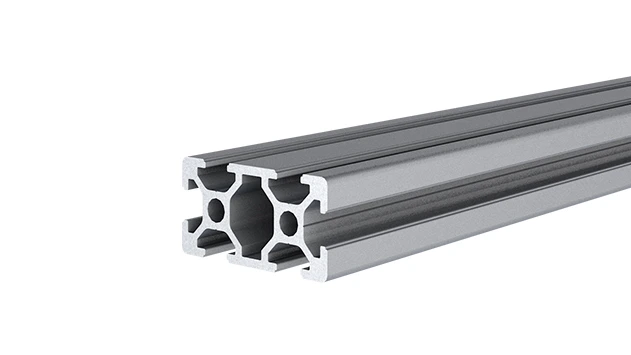
2040 is a 2.00 x 4.00CM fractional 20 series square extrusion T-slot profile with four open T-slots, two side with 2.00cm face, the other side with 4.00cm face. The profile has align-a-grooves to assist in aligning connecting profiles.
The Critical Role of Tooling in Aerospace Manufacturing
In the high-stakes world of aerospace manufacturing, where a single millimeter of error can compromise safety and performance, tooling isn't just equipment—it's the backbone of precision. Whether assembling a lightweight composite wing, calibrating avionics systems, or inspecting turbine blades for microscopic defects, the tools and workstations used directly impact efficiency, quality, and compliance. Aerospace manufacturers face unique challenges: tight tolerances (often measured in microns), heavy regulatory scrutiny, and the need to adapt quickly to evolving aircraft designs. Traditional tooling—often made of steel or wood—has long struggled to keep up. Steel is durable but cumbersome, making reconfiguration slow and labor-intensive. Wood, while cheap, lacks the structural integrity for heavy loads and precise alignment. Enter modular aluminum profiles, and in particular, the 2040 EU Standard Aluminum Profile—a material that's quietly revolutionizing how aerospace tooling is designed, built, and used.
Imagine stepping onto a modern aerospace factory floor. Gone are the days of fixed, immovable steel benches and clunky material carts. Instead, you'll find sleek, adaptable workstations that glide into place, roller tracks that transport sensitive components with featherlight precision, and tool racks that reconfigure in minutes to accommodate a new aircraft model. At the heart of this transformation is the 2040 EU Standard Aluminum Profile, a versatile building block that combines strength, precision, and flexibility in a way no traditional material can match. Let's dive into why this unassuming extruded aluminum bar has become a cornerstone of aerospace tooling—and how it's reshaping the industry from the ground up.
Meet the 2040 EU Standard Aluminum Profile: A Game-Changer in Precision Engineering
Material Composition and Core Properties
First, let's get to know the star of the show: the 2040 EU Standard Aluminum Profile. As the name suggests, it's an extruded aluminum profile with standardized dimensions—20mm in width and 40mm in height—manufactured to strict European union quality standards. But its appeal goes far beyond its size. Made from high-grade aluminum alloy (typically 6063-T5, known for its excellent extrudability and mechanical properties), this profile strikes a near-perfect balance between lightweight design and structural rigidity. At just 1.2kg per meter, it's significantly lighter than steel (which weighs around 7.8kg per meter for a similar profile), yet it boasts a tensile strength of 180 MPa—more than enough to support the heavy loads common in aerospace, like engine components or large composite panels.
What truly sets the 2040 profile apart, though, is its precision. Thanks to advanced extrusion techniques, each profile has consistent cross-sectional dimensions, with tolerances as tight as ±0.1mm. For aerospace tooling, where alignment is everything, this consistency is non-negotiable. Whether you're building a jig to hold a fuselage section during welding or a fixture to align drill holes in a wing spar, knowing that every 2040 profile will fit together exactly as intended eliminates the guesswork and rework that once plagued manufacturing teams.
The T-Slot Advantage: Flexibility at Its Finest
Walk up to a 2040 profile, and you'll notice a defining feature: a T-shaped slot running along its length. This slot isn't just a design quirk—it's the key to the profile's modularity. Unlike traditional tooling, which requires welding, drilling, or bolting to modify, the T-slot allows for quick, tool-free attachment of accessories. Need to add a shelf to a workbench? Slide a T-nut into the slot, bolt on the shelf bracket, and you're done. Want to mount a roller track for material transport? Secure it with a few brackets, and it's ready to go. This "build-as-you-go" approach transforms tooling from a fixed asset into a dynamic system that adapts to changing needs—critical in an industry where aircraft models evolve rapidly, and production runs for specialized components can be short.
But the T-slot isn't just about speed; it's about precision, too. Accessories like brackets, hinges, and clamps lock into the slot with minimal play, ensuring that even complex assemblies—like a multi-level material rack or a curved workstation—maintain their alignment over time. For aerospace technicians, this means less time adjusting equipment and more time focusing on the intricate work of assembling and inspecting aircraft parts.

Building the Backbone: Workbenches Tailored for Aerospace Assembly
Designing for Precision: How 2040 Profiles Shape Aerospace Workbenches
In aerospace manufacturing, the workbench is more than a table—it's a command center. Technicians spend hours here, assembling delicate avionics, soldering wiring harnesses, or inspecting turbine blades under magnification. The ideal workbench must be stable, adjustable, and ergonomic, with built-in storage for tools and parts. Traditional steel workbenches often miss the mark: they're heavy, so height adjustment is limited; their surfaces are prone to rust, which can contaminate sensitive components; and adding custom features (like ESD protection or integrated lighting) requires costly modifications.
2040 EU Standard Aluminum Profile workbenches solve these problems and more. Let's break down why they've become the go-to choice for aerospace assembly lines. First, stability. By combining 2040 profiles with heavy-duty aluminum profile accessories—like gusset plates for reinforcement and adjustable feet for leveling—manufacturers can build workbenches that remain rock-solid even when supporting loads up to 500kg. This stability is critical when working with precision tools, like coordinate measuring machines (CMMs) or torque wrenches, where vibration can throw off measurements.
Ergonomics is another win. Since 2040 profiles are lightweight, workbench height can be adjusted using manual cranks or electric lifts, ensuring technicians of all heights can work comfortably—reducing fatigue and the risk of repetitive strain injuries. Add a non-slip, ESD-safe worktop (often made of phenolic resin or aluminum honeycomb panel), and you've got a surface that protects sensitive electronics from static discharge while standing up to harsh cleaning agents used in aerospace facilities.
But the real magic is in customization. A workbench for assembling cockpit displays might include built-in cable management channels (using T-slot accessories to route wires neatly), LED task lighting mounted along the back rail, and a shelf for holding calibration tools. A bench for inspecting composite parts, on the other hand, could feature a tilted surface to reduce neck strain, integrated magnifying lamps, and drawers for storing inspection gauges. And if production needs change—say, the facility shifts from assembling narrow-body to wide-body aircraft components—the workbench can be reconfigured in hours, not days. Simply unbolt the accessories, adjust the frame, and add new components as needed. No welding, no cutting, no downtime.
Streamlining Material Flow: Roller Tracks in Aerospace Production Lines
From Parts Delivery to Assembly: The Role of Roller Tracks
In aerospace manufacturing, material handling is a dance of precision and care. Delicate components—like titanium fasteners, carbon fiber panels, or avionic circuit boards—must be transported from storage to assembly stations without damage, while heavier items (like engine casings or landing gear components) need to move efficiently to avoid bottlenecks. Roller tracks, often overlooked, are the unsung heroes of this process, enabling smooth, controlled movement of parts across the factory floor. And when paired with 2040 aluminum profiles, they become even more effective.
Traditional roller tracks are often made of steel, which is durable but heavy and prone to corrosion in humid factory environments. They're also hard to customize—if you need a track with a specific angle or length, you're looking at custom fabrication. 2040 aluminum profile roller tracks, by contrast, are lightweight, corrosion-resistant, and infinitely adaptable. The 2040 profile serves as the track's frame, providing a rigid base that can be mounted to the floor, workbenches, or overhead racks. The rollers themselves—often made of plastic (for lightweight parts) or steel (for heavy loads)—are attached using brackets that slide into the T-slot, allowing for quick adjustments to roller spacing or height.
Consider a scenario where a facility is assembling landing gear components. These parts are heavy (some weigh over 100kg) and require precise positioning at the assembly station. A steel roller track might struggle with the weight, bending over time and causing uneven movement. A 2040 aluminum track, reinforced with aluminum profile accessories like cross-braces and end supports, can handle the load while remaining lightweight enough to reposition if the assembly line is rearranged. The rollers, mounted on ball bearings, ensure smooth movement, reducing the risk of jolts that could damage sensitive hydraulic components inside the landing gear.
But roller tracks aren't just for heavy parts. In avionics assembly, where components like flight control computers or radar modules are sensitive to static and physical shock, plastic roller tracks with soft, non-conductive rollers (often yellow or grey, to signal ESD safety) are used to transport parts gently. The 2040 profile frame, paired with static-dissipative accessories, ensures the track itself doesn't generate static, protecting the electronics from damage. And because the track is modular, it can be curved, split, or extended with minimal effort—perfect for navigating around obstacles on the factory floor.
Mobility Without Compromise: Caster Wheels and Agile Workstations
Why Caster Wheels Matter in Dynamic Aerospace Environments
Aerospace factories are dynamic places. A workstation that's assembling wing flaps today might need to move to the engine bay tomorrow to support a maintenance check. A material cart loaded with fasteners might start at the storage area, then move to the assembly line, and finally to the quality inspection station. In this context, mobility isn't a luxury—it's a necessity. But traditional mobile tooling often sacrifices stability for movement: think of a steel cart with flimsy wheels that wobbles under load, making precise work impossible. 2040 aluminum profile workstations, paired with high-quality caster wheels, solve this paradox, offering both mobility and rock-solid stability.
Caster wheels might seem like a small detail, but in aerospace tooling, they're critical. A good caster needs to handle heavy loads (often 200kg or more per wheel), swivel smoothly to navigate tight spaces (like between aircraft fuselages), and lock securely to keep the workstation stable during use. 2040 profiles, with their T-slot design, pair perfectly with heavy-duty caster wheels. The casters mount to the profile's base using brackets that slide into the T-slot, ensuring a secure connection with minimal play. Many caster wheels for aerospace applications also feature dual-locking mechanisms: a swivel lock to keep the wheel from turning, and a wheel lock to prevent rolling—essential when a technician is using a torque wrench or aligning a component with micrometer precision.
Take, for example, a mobile workbench used for engine maintenance. This workstation might carry tools, spare parts, and a laptop for diagnostic software—easily 300kg in total. With steel casters, the bench might be hard to push, and the wheels could mark the factory floor. With aluminum profile-compatible caster wheels, though, the bench glides smoothly, thanks to precision ball bearings in the wheel hubs. The casters, often made of polyurethane (which is non-marking and shock-absorbent), protect the floor while reducing vibration that could affect sensitive tools. When the technician reaches the engine, a quick flip of the locks secures the bench in place, turning it into a stable platform for work.
Mobility also enhances collaboration. In many aerospace facilities, teams work in pods—designers, engineers, and technicians collaborating on a single component. A mobile workstation with caster wheels can be wheeled into the pod, allowing everyone to access tools and parts without leaving the area. This reduces time wasted walking between stations and fosters real-time problem-solving—a critical advantage in a industry where deadlines are tight and margins for error are slim.
Beyond the Basics: How Aluminum Profile Accessories Elevate Tooling Systems
A 2040 aluminum profile is only as good as the accessories that bring it to life. Aluminum profile accessories—everything from brackets and hinges to end caps and gussets—turn a simple extrusion into a fully functional tooling system. In aerospace manufacturing, where precision and reliability are non-negotiable, these accessories aren't afterthoughts; they're essential components that ensure the entire system works as one.
Consider end caps, for instance. The 2040 profile's T-slot is open at the ends, which can collect dust, debris, or moisture—all of which can compromise the fit of accessories over time. 2040 aluminum profile end caps, made of durable plastic or aluminum, snap into place, sealing the slot and protecting it from contaminants. In cleanroom environments, where even a speck of dust can ruin a composite layup, this simple accessory is indispensable.
Hinges are another example. In aerospace inspection, workstations often need fold-down shelves or access panels to reach components from multiple angles. Traditional hinges require drilling and bolting, which weakens the profile and makes alignment tricky. Aluminum profile hinges, designed to fit into the T-slot, mount quickly and pivot smoothly, with adjustable tension to keep shelves in place at any angle. A technician inspecting a turbine blade, for example, can fold down a shelf to hold inspection tools, then fold it up when not in use—saving space without sacrificing functionality.
Then there are brackets and connectors. 90° aluminum profile connectors, for instance, allow two profiles to join at a right angle with minimal play, ensuring that a workbench's frame remains square even under heavy loads. Gussets—triangular brackets that reinforce corners—add extra stability, critical for workstations that support heavy equipment like CNC machines or laser scanners. And for curved assemblies (like tooling for aircraft fuselages, which have complex, aerodynamic shapes), flexible connectors allow profiles to bend slightly while maintaining structural integrity.
The beauty of these accessories is their interoperability. A bracket used on a workbench can also be used on a roller track or a material rack, reducing the need for specialized parts and simplifying inventory management. For aerospace manufacturers, this means lower costs, faster repairs, and the ability to prototype new tooling designs quickly using off-the-shelf components.
Traditional vs. 2040 Aluminum Profile Tooling: A Practical Analysis
To truly understand the impact of 2040 EU Standard Aluminum Profile tooling, let's compare it to traditional options. The table below breaks down key features, highlighting why aerospace manufacturers are making the switch.
| Feature | Traditional Steel Tooling | Wood Tooling | 2040 Aluminum Profile Tooling |
|---|---|---|---|
| Weight (per meter) | 7.8kg (heavy, hard to move) | 2.5kg (light but weak) | 1.2kg (lightweight, easy to reconfigure) |
| Assembly Time | 8–12 hours (requires welding/drilling) | 2–4 hours (simple but imprecise) | 1–2 hours (tool-free with T-slot accessories) |
| Customization Ease | Poor (requires cutting/welding; permanent modifications) | Limited (easily damaged; not reusable) | Excellent (modular; reconfigure with basic tools) |
| Load Capacity | High (up to 1000kg/m) | Low (up to 100kg/m) | High (up to 800kg/m with reinforcement) |
| Durability | High (prone to rust without coating) | Low (warps, rots, or chips easily) | High (corrosion-resistant; no coating needed) |
| Precision | Medium (welding introduces warping) | Poor (inconsistent dimensions) | High (tolerances of ±0.1mm; minimal play in connections) |
| Long-Term Cost | High (expensive to modify; short lifespan for custom tooling) | Medium (cheap upfront, but frequent replacement) | Low (reusable; minimal maintenance; long lifespan) |
As the table shows, 2040 aluminum profile tooling strikes a balance that traditional materials can't match. It's lightweight enough to reconfigure, strong enough to handle heavy loads, and precise enough to meet aerospace tolerances—all while keeping long-term costs low. For manufacturers, this translates to faster production, fewer errors, and the agility to adapt to new challenges.
Durability and Compliance: Meeting Aerospace Industry Standards
Aerospace manufacturing isn't just about building parts—it's about building trust. Every component, from the smallest fastener to the largest fuselage section, must meet strict industry standards, like ISO 9001, AS9100 (the aerospace-specific quality management system), and NADCAP (for special processes like welding or heat treatment). Tooling is no exception. If a workstation or roller track fails during production, it can lead to defective parts, production delays, or even regulatory penalties. 2040 EU Standard Aluminum Profile tooling is designed with compliance in mind, offering the durability and traceability aerospace manufacturers need.
Let's start with material traceability. Reputable aluminum profile suppliers provide certificates of compliance (CoCs) for every batch of 2040 profiles, detailing the alloy composition, extrusion process, and mechanical properties. This traceability is critical for aerospace manufacturers, who must document the origin of all materials used in production—even tooling. In the event of an audit, a CoC for the 2040 profiles used in a workbench or roller track provides proof that the material meets EU standards for strength, corrosion resistance, and dimensional accuracy.
Durability is another compliance driver. Aerospace tooling is subjected to harsh conditions: constant use, exposure to coolants and cleaning agents, and temperature fluctuations (especially in facilities with climate-controlled composite curing areas). 2040 aluminum profiles, made from 6063-T5 alloy, are naturally corrosion-resistant, thanks to a thin oxide layer that forms on the surface. Unlike steel, they don't require painting or coating to prevent rust, reducing maintenance costs and eliminating the risk of paint chips contaminating parts. The profiles are also scratch-resistant, ensuring that even after years of use, they maintain their structural integrity and precision.
ESD compliance is another area where 2040 profiles shine. Many aerospace components—like circuit boards, sensors, and composite materials—are sensitive to electrostatic discharge, which can damage electronics or ignite volatile chemicals. 2040 profiles can be paired with ESD-safe accessories, like conductive caster wheels, static-dissipative worktops, and grounding brackets, to create a system that safely channels static electricity away from components. This is critical for meeting standards like ANSI/ESD S20.20, which governs electrostatic control in electronics manufacturing.
Future Trends: Innovations in Aluminum Profile Tooling for Aerospace
Lightweighting and Sustainability: The Next Frontier
The aerospace industry is in the midst of a lightweighting revolution. Airlines and manufacturers are racing to reduce aircraft weight to lower fuel consumption and emissions, with composite materials, 3D-printed parts, and advanced alloys leading the charge. Tooling, too, is following this trend—and 2040 aluminum profiles are at the forefront. While already lightweight, ongoing innovations in profile design (like hollow cores or thinner walls, without sacrificing strength) are making them even lighter. For example, some manufacturers are developing 2040 profiles with internal ribbing, which increases rigidity while reducing material use—a win for both performance and sustainability.
Sustainability is another growing focus. Aerospace manufacturers are setting ambitious carbon neutrality goals, and tooling is part of the equation. Aluminum is 100% recyclable, and the energy required to recycle it is just 5% of what's needed to produce new aluminum. This means that at the end of a 2040 profile's lifespan (which can be decades), it can be melted down and reused, reducing waste and carbon footprint. Additionally, the modularity of aluminum profile tooling reduces the need for new tooling production—instead of scrapping a steel workbench when it's no longer needed, manufacturers can disassemble the 2040 profile system and reuse the components to build something new.
Smart Tooling: Integrating Sensors and IoT with 2040 Profiles
The future of aerospace tooling isn't just physical—it's digital. Smart factories, powered by the Internet of Things (IoT), are transforming manufacturing by collecting real-time data on equipment performance, production rates, and quality. 2040 aluminum profiles, with their T-slot design, are the perfect platform for integrating smart technology. Sensors can be mounted directly into the T-slot to monitor everything from workstation vibration (to detect imbalance) to temperature (to ensure composite curing environments are stable). Data from these sensors is sent to a central dashboard, allowing managers to predict maintenance needs, optimize workflows, and identify bottlenecks before they slow production.
Imagine a roller track equipped with load sensors. As a component moves along the track, the sensors measure its weight, ensuring it's within the design specifications. If a part is too heavy (indicating a manufacturing defect) or too light (suggesting missing components), the track sends an alert, stopping the part before it reaches the assembly line. This "in-process" quality control reduces waste and ensures only parts move forward—critical in aerospace, where rework is costly and time-consuming.
Conclusion: The 2040 Profile as a Cornerstone of Modern Aerospace Tooling
In the fast-paced, high-precision world of aerospace manufacturing, tooling is the bridge between design and reality. It's what turns blueprints into functional aircraft, and ideas into innovations. For too long, manufacturers relied on rigid, outdated tooling materials that held back progress. Today, the 2040 EU Standard Aluminum Profile is changing that. With its unique combination of lightweight design, modularity, precision, and durability, it's become more than just a building material—it's a catalyst for change.
From workbenches that adapt to technicians' needs to roller tracks that move parts with surgical precision, from mobile stations with caster wheels that glide across factory floors to accessories that turn simple profiles into complex systems, 2040 aluminum profile tooling is redefining what's possible in aerospace manufacturing. It's enabling faster production, tighter quality control, and the agility to keep up with an industry that never stands still.
As aerospace continues to push the boundaries of technology—with electric aircraft, hypersonic travel, and reusable rockets on the horizon—tooling will only grow more important. And at the heart of that tooling, you'll find the 2040 EU Standard Aluminum Profile: quiet, unassuming, and indispensable. Because in aerospace, precision isn't just a goal—it's everything. And with 2040 profiles, precision has never been more accessible.