- Company Articles
- Industry articles
- Industry standards
- Aluminum Foot Base Dimensions: Standard Sizes for Lean Tube Workstations

Aluminum Foot Base Dimensions: Standard Sizes for Lean Tube Workstations
Related Product
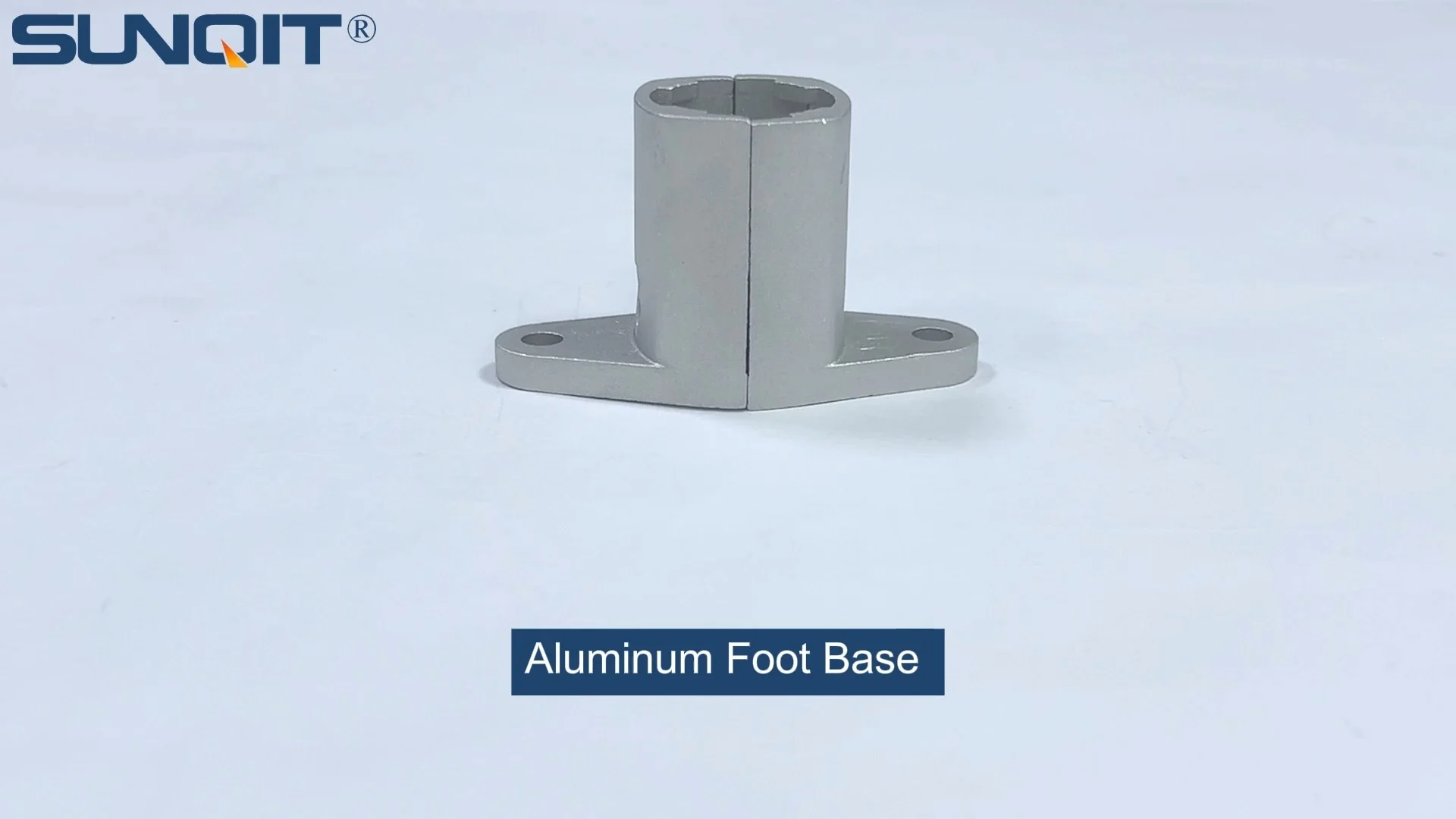
Aluminum Foot Base
Aluminum foot base to connect 28mm aluminum pipe and fixed it on the ground and prevent pipe fall and move.
Introduction: The Foundation of Efficient Workspaces
In the world of lean manufacturing, where efficiency, flexibility, and adaptability are paramount, the humble workbench often takes center stage. But behind every sturdy, well-organized lean tube workstation lies an unsung hero: the aluminum foot base. These unassuming components are the literal foundation that supports everything from delicate electronics assembly to heavy-duty automotive part fabrication. While they might not grab headlines like the latest automated tools or cutting-edge software, the dimensions of an aluminum foot base directly impact a workstation's stability, load capacity, and overall functionality.
Aluminum foot bases are designed to work seamlessly with aluminum lean pipes, forming the backbone of modular workstations that can be reconfigured as production needs change. Unlike traditional steel bases, aluminum offers a winning combination of lightweight durability, corrosion resistance, and sleek aesthetics—qualities that make it ideal for modern manufacturing environments. But to truly leverage these benefits, understanding standard foot base dimensions is key. Whether you're a plant manager upgrading production lines, a small business owner setting up a new workshop, or a procurement specialist sourcing components from a lean pipe workbench supplier, knowing what size foot base you need can mean the difference between a workstation that enhances productivity and one that becomes a source of frustration.
What Is an Aluminum Foot Base, and Why Does It Matter?
At its core, an aluminum foot base is a structural component that anchors a lean tube workstation to the floor, distributing the weight of the workstation, tools, materials, and even operators across a stable platform. Think of it as the workstation's "feet"—if they're too small, uneven, or poorly sized, the entire structure can wobble, tip, or wear unevenly over time. Made from high-grade aluminum alloys (often 6061 or 6063-T5 for optimal strength-to-weight ratio), these bases are engineered to withstand the rigors of daily use while remaining lightweight enough to facilitate easy reconfiguration.
One of the key advantages of aluminum foot bases is their compatibility with aluminum profile accessories. From T-slot brackets to joint connectors, these accessories rely on precise dimensions to attach securely to the foot base, ensuring that shelves, tool holders, and work surfaces stay firmly in place. For example, a foot base with misaligned bolt holes won't properly secure the aluminum lean pipes that form the workstation's frame, leading to instability that could compromise both product quality and operator safety.
Key Takeaway: Aluminum foot bases are more than just "feet"—they're critical interfaces between the workstation and the floor, dictating load capacity, stability, and compatibility with other components. Choosing the right dimensions ensures your workstation can handle the demands of your workflow while remaining adaptable to future changes.

Breaking Down Standard Dimensions: Height, Width, Depth, and Beyond
When it comes to aluminum foot bases, dimensions aren't arbitrary. They're the result of decades of industry experience, ergonomic research, and standardization efforts by manufacturers and suppliers. While custom sizes are available for unique applications, most workstations rely on a few common measurements that balance functionality, compatibility, and cost-effectiveness. Let's break down the most critical dimensions and what they mean for your workstation.
Height: From Floor to Frame
The height of an aluminum foot base is measured from the bottom of the base (which sits on the floor) to the top surface where the aluminum lean pipes or workstation frame attach. Standard heights typically range from 80mm to 250mm, with most falling between 100mm and 200mm. Lower heights (80–120mm) are ideal for workstations that need to sit close to the floor, such as those used for small parts assembly or material storage racks. Higher heights (150–250mm) are better suited for standing workbenches, where ergonomics demand that the work surface be at a comfortable height for operators (typically 800–900mm from the floor, depending on the operator's height).
Adjustable-height foot bases are also common, featuring threaded inserts that allow you to tweak the height by 10–20mm to compensate for uneven floors. This adjustability is especially valuable in older facilities where floor levelness can vary, ensuring the workstation remains stable even on imperfect surfaces.
Width and Depth: Spreading the Load
Width (the horizontal dimension parallel to the workstation front) and depth (the dimension perpendicular to the front) determine how much surface area the foot base has to distribute weight. These dimensions are closely tied to the size of the workstation top or frame. For example, a compact workbench used for electronics assembly might have a top that's 600mm wide and 400mm deep, paired with foot bases that are 150mm wide and 100mm deep. A larger workstation for automotive parts, with a top 1200mm wide and 800mm deep, would require foot bases 250–300mm wide and 200–250mm deep to prevent tipping.
As a general rule, wider and deeper foot bases offer higher load capacities, as they spread the weight over a larger area. However, there's a trade-off: larger bases take up more floor space, which can be a constraint in tight production areas. Most lean pipe workbench suppliers offer a range of width/depth combinations to balance these needs, with common sizes including 150x100mm, 200x120mm, 250x150mm, and 300x200mm.
Bolt Hole Specifications: The Key to Compatibility
Even the most perfectly sized foot base is useless if it can't connect to the rest of the workstation. That's where bolt hole dimensions come in. These holes, typically drilled or tapped into the top surface of the foot base, allow you to secure aluminum lean pipes, frames, or work surfaces using screws, bolts, or specialized aluminum profile accessories. The two most critical bolt hole specifications are thread size and spacing.
Thread sizes are standardized to match common fasteners, with M8 (8mm diameter) and M10 (10mm diameter) being the most prevalent. M8 threads are suitable for lighter loads, while M10 threads provide extra strength for heavy-duty applications. Spacing between holes is equally important, as it must align with the T-slots or pre-drilled holes in aluminum lean pipes and profiles. The most common spacing is 50mm or 100mm on center, which matches the standard spacing of T-slots in many aluminum profiles—ensuring compatibility with a wide range of aluminum profile accessories from brackets to tool hooks.

Standard Aluminum Foot Base Sizes: A Reference Table
To make it easier to compare options, we've compiled a table of standard aluminum foot base sizes, along with their typical load capacities, applications, and compatible aluminum lean pipe diameters. Keep in mind that these are general guidelines—always consult your lean pipe workbench supplier for specific product specs, as load capacities can vary based on material thickness and design.
| Size (H x W x D, mm) | Thread Size | Load Capacity (Static, kg) | Primary Application | Compatible Aluminum Lean Pipe Diameter (mm) |
|---|---|---|---|---|
| 80 x 120 x 80 | M8 | 100 | Small parts assembly, lightweight workbench | 28 |
| 100 x 150 x 100 | M8 | 150 | Electronics assembly workbench, lab workstation | 28, 30 |
| 120 x 200 x 120 | M8/M10 | 250 | Medium-duty assembly workbench, packing station | 28, 30, 38 |
| 150 x 250 x 150 | M10 | 400 | Heavy assembly workstation, automotive component assembly | 30, 38 |
| 180 x 300 x 180 | M10 | 500 | Material handling workbench, tool storage station | 38, 40 |
| 200 x 350 x 200 | M10 | 600 | Heavy-duty production line workstation, pallet handling | 38, 40, 45 |
| 250 x 400 x 250 | M12 | 800+ | Industrial machinery workbench, heavy parts inspection | 45, 50 |

Factors That Influence Foot Base Size Selection
Choosing the right foot base size isn't just about picking a number from a table—it requires considering several key factors that impact your workstation's performance. Let's explore the most important ones:
1. Load Capacity Requirements
The single most critical factor is the maximum load the workstation will need to support. This includes the weight of the work surface, tools, materials, and any operators who might stand or sit on the workstation (for seated workbenches). Always err on the side of caution: if you expect a maximum load of 250kg, choose a foot base rated for at least 300kg to account for occasional overloading or dynamic forces (like dropping a heavy tool). Undersizing the foot base can lead to bending, wobbling, or even collapse—risks that no production manager can afford.
2. Workstation Type and Application
The type of work being done directly impacts foot base size. For example:
- Assembly workbenches: Require stability for precise tasks (e.g., soldering, wiring). Medium-sized bases (120–150mm height) with M10 threads are common.
- Material storage racks: Need to support stacked boxes or pallets. Deeper bases (150–200mm depth) help prevent tipping, especially when racks are loaded unevenly.
- Mobile workstations: While these often use caster accessories instead of fixed foot bases, some hybrid designs use retractable foot bases for stability when stationary. These may have smaller dimensions to accommodate caster mounting plates.
- ESD workstations (electrostatic discharge): Require precise grounding, which may involve additional holes or conductive materials in the foot base—dimensions must still prioritize stability to avoid damaging sensitive electronics.
3. Floor Space and Layout Constraints
In crowded production facilities, every square centimeter counts. A large foot base might offer superior stability, but if it extends too far into walkways or blocks access to other equipment, it becomes a liability. Measure your available floor space carefully, and consider the workstation's footprint as a whole—including overhang from the work surface. For narrow aisles or tight corners, compact foot bases (e.g., 100x150x100mm) may be necessary, even if it means sacrificing some load capacity.
4. Compatibility with Existing Components
If you're upgrading an existing workstation or adding to a modular system, the foot base must play well with your current aluminum lean pipes, joints, and aluminum profile accessories. Check the diameter of your existing pipes, the thread size of your bolts, and the spacing of T-slots or holes. Mixing and matching incompatible components can lead to weak connections or uneven weight distribution—problems that defeat the purpose of a lean, efficient workspace.
From Specification to Selection: How to Choose the Right Foot Base
Now that you understand the basics of dimensions and factors to consider, let's walk through a step-by-step process to select the perfect aluminum foot base for your needs:
Step 1: Calculate the Total Load
Start by listing all items that will be on the workstation: work surface (e.g., a 1200x800mm aluminum honeycomb panel might weigh 15kg), tools (e.g., a drill press at 25kg), materials (e.g., 50kg of parts), and any operators (seated or standing). Add these together to get the total static load. For dynamic loads (e.g., hammering, vibration), add 20–30% to the total to account for shock.
Step 2: Measure Your Workspace
Use a tape measure to record the available width and depth for the workstation. Remember to leave clearance for operators to move around, open drawers, or access other equipment. If the workstation will be against a wall, the depth of the foot base should not exceed the depth of the work surface by more than 50mm to avoid wasted space.
Step 3: Check Ergonomic Requirements
For standing workbenches, the ideal work surface height is typically 850–900mm for an average-height operator. Subtract the thickness of the work surface (e.g., 25mm for an aluminum panel) from this height to get the required foot base + frame height. For example, an 875mm work surface height with a 25mm panel would require a foot base + frame height of 850mm. If using 38mm diameter aluminum lean pipes for the frame, a 150mm foot base height would leave 700mm for the frame—plenty of room for shelves or under-bench storage.
Step 4: Consult Your Supplier
Finally, reach out to your lean pipe workbench supplier with your load calculation, workspace measurements, and ergonomic needs. Reputable suppliers can provide detailed specs, load test data, and even custom solutions if standard sizes won't work. They can also help verify compatibility with your existing aluminum profile accessories, ensuring a seamless integration.
The Bottom Line: Why Dimensions Matter
Aluminum foot bases may not be the most glamorous part of a lean tube workstation, but their dimensions are a critical factor in creating a workspace that's safe, efficient, and adaptable. By understanding height, width, depth, and bolt hole specifications, you can select a foot base that supports your load, fits your space, and works with your existing aluminum lean pipes and accessories. Whether you're setting up a single workbench or outfitting an entire production line, taking the time to get the foot base size right will pay off in smoother operations, fewer accidents, and a workstation that grows with your business.
Remember, standard sizes are a starting point—but don't hesitate to ask your lean pipe workbench supplier about custom options if your needs are unique. After all, lean manufacturing is about flexibility, and that includes the foundation upon which your productivity stands.