- Company Articles
- Industry articles
- Industry News
- Aluminum Foot Base in 3C Industry: Meeting High-Volume Production Demands

Aluminum Foot Base in 3C Industry: Meeting High-Volume Production Demands
Related Product
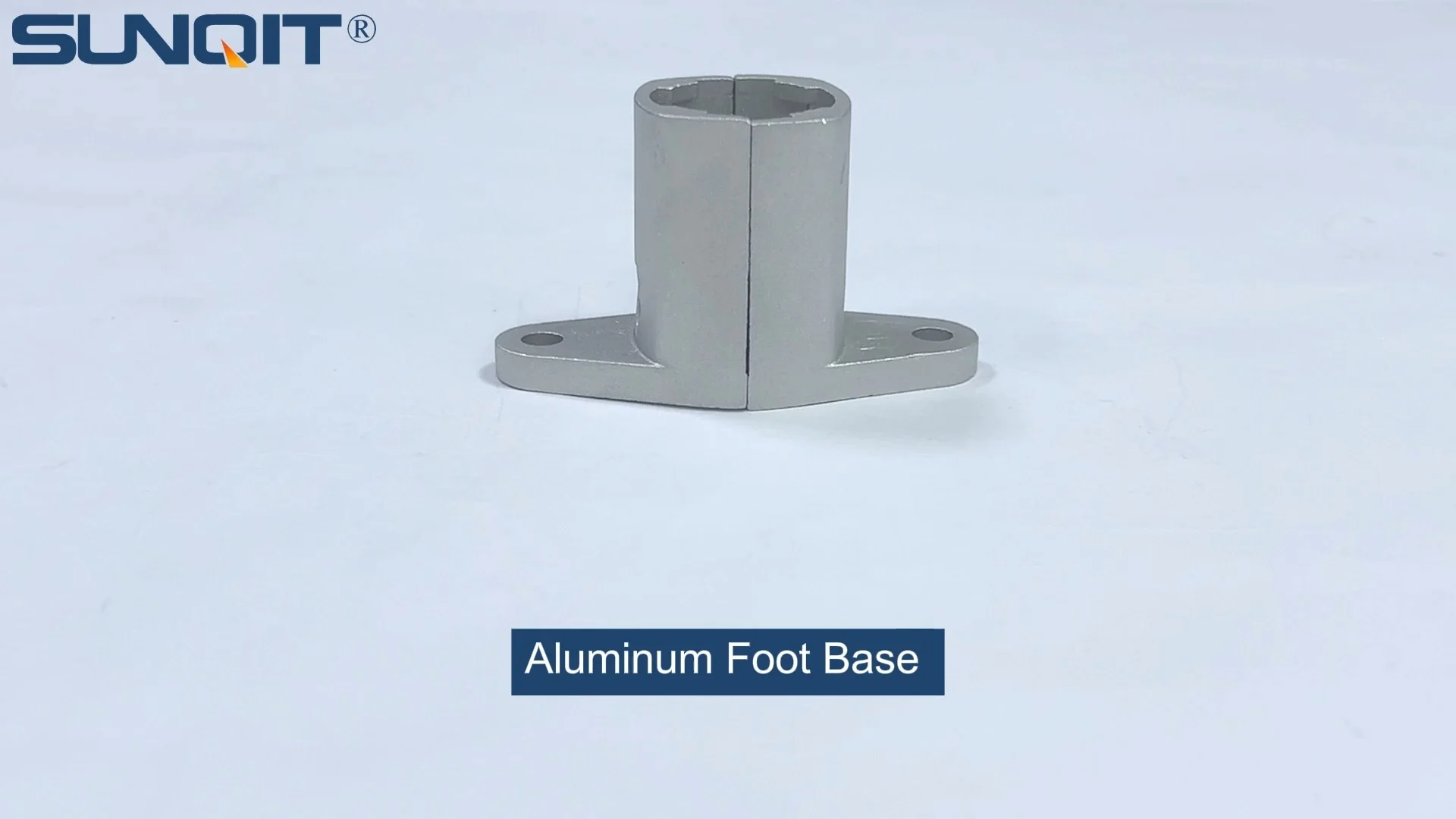
Aluminum Foot Base
Aluminum foot base to connect 28mm aluminum pipe and fixed it on the ground and prevent pipe fall and move.
In the fast-paced world of 3C manufacturing—where "3C" stands for computers, communications, and consumer electronics—every second counts. From smartphones that fit in the palm of your hand to sleek laptops and smartwatches, the industry thrives on speed, precision, and the ability to adapt to ever-shifting consumer trends. But here's the thing: behind every cutting-edge device rolling off the assembly line is a production floor that's just as innovative. Today, we're shining a light on a quiet workhorse that's revolutionizing how 3C manufacturers keep up with high-volume demands: the aluminum foot base. It might not grab headlines like the latest smartphone model, but without it, many of the efficiency gains and flexibility we take for granted in modern production simply wouldn't exist.
The 3C Industry's Perfect Storm: Demands That Break Traditional Systems
Let's start by understanding the pressure cooker that is 3C production. Imagine a factory tasked with assembling 50,000 smartphones a day—each with hundreds of tiny components, each requiring precise handling to avoid damage from electrostatic discharge (ESD). Now, add to that the need to switch production lines between models, accommodate design changes, and meet tight deadlines set by retailers or launch events. It's a perfect storm of demands: speed, precision, ESD safety, and adaptability. Traditional production setups, often built with heavy steel frames or rigid plastic structures, struggle here. Steel is durable but, making reconfiguration time-consuming and labor-intensive. Plastic, while lightweight, lacks the load-bearing capacity needed for heavy workbenches or conveyor systems. And neither always plays nice with ESD protocols, which are non-negotiable when dealing with sensitive electronics.
This is where the aluminum foot base steps in. Think of it as the backbone of modern 3C production—quietly supporting workbenches, conveyors, and material racks while enabling the agility manufacturers need to stay competitive. But what exactly is an aluminum foot base, and why has it become so indispensable?
The Unsung Hero: What Is an Aluminum Foot Base, Anyway?
At its core, an aluminum foot base is a modular, lightweight support structure designed to anchor production equipment to the floor. It's typically made from high-grade aluminum alloy, shaped into tubes or profiles that can be easily connected, adjusted, or reconfigured. Unlike traditional steel bases, which are often welded or bolted into fixed positions, aluminum foot bases use simple connectors and joints that allow for quick adjustments. Picture this: a workbench that needs to be raised by 5 cm to accommodate taller operators, or a conveyor section that needs to be extended by 2 meters to keep up with increased output. With an aluminum foot base, these changes can happen in hours, not days.
But its role goes beyond just support. Aluminum foot bases are engineered to integrate seamlessly with other components of lean manufacturing systems—think aluminum profiles for workbench frames, ESD-safe surfaces, and conveyor tracks. They're the glue that holds these systems together, ensuring everything from assembly workstations to material flow racks stays stable, aligned, and ready to handle the daily grind of high-volume production.

Material Matters: Why Aluminum? The Case for Lightweight Durability
Aluminum might seem like an obvious choice now, but its rise in 3C manufacturing wasn't accidental. Let's break down why it outperforms traditional materials like steel and plastic in this context:
| Feature | Aluminum Foot Base | Traditional Steel Base | Plastic Base |
|---|---|---|---|
| Weight | Lightweight (1/3 the weight of steel) | Heavy (requires machinery for repositioning) | Lightweight but prone to flexing under load |
| Durability | Corrosion-resistant; withstands daily wear | Prone to rust if not painted/coated | Can crack or warp under heavy use |
| ESD Compatibility | Easily treated with anti-static coatings | Requires additional grounding measures | Often non-conductive, but lacks structural integrity |
| Flexibility | Modular; reconfigured with basic tools | Fixed; requires welding or cutting for changes | Limited load capacity restricts reconfiguration |
| Cost (Long-Term) | Higher upfront, but lower maintenance and reconfiguration costs | Lower upfront, but higher labor/repair costs over time | Low upfront, but frequent replacement needed |
The standout here is aluminum's balance of strength and flexibility. For example, a typical aluminum foot base can support a workbench loaded with 500 kg of equipment—think soldering stations, component bins, and ESD mats—while still being light enough for two workers to reposition with minimal effort. That's a game-changer for 3C manufacturers, where production lines are constantly evolving.
Another key advantage is aluminum's natural resistance to corrosion. In busy factories, spills, humidity, and cleaning agents are part of daily life. Steel bases, even when painted, can rust over time, compromising stability. Aluminum? It forms a protective oxide layer that prevents rust, ensuring the base stays strong for years. And when it comes to ESD safety, aluminum can be easily treated with conductive coatings or grounded to dissipate static electricity—critical for protecting microchips and circuit boards from damage.

Building Blocks of Efficiency: Aluminum Foot Base in Action
Now that we understand why aluminum is the material of choice, let's dive into how aluminum foot bases are used in key areas of 3C production. From workbenches to conveyors, these unassuming structures are the foundation of lean, efficient workflows.
1. Workbenches: Where Precision Meets Flexibility
Walk into any 3C assembly plant, and you'll see workbenches everywhere—each one a hub of activity where operators assemble, test, or inspect components. These workbenches need to be rock-solid (to prevent vibration from affecting delicate tasks) and adjustable (to fit operators of different heights). Enter the aluminum foot base. Unlike fixed steel legs, aluminum foot bases often come with adjustable leveling feet—screw-in pads that can be turned to raise or lower individual corners, ensuring the workbench stays stable even on uneven factory floors. This might sound trivial, but for an operator soldering a 0.5mm circuit board, a wobbly workbench could mean the difference between a functional component and a costly defect.
But the real magic is in modularity. Many aluminum foot bases are designed to work with aluminum profiles—the T-slot extrusions you see forming the frames of workbenches. By combining foot bases with these profiles, manufacturers can build workbenches that are as unique as their production needs. Need a bench with a built-in ESD mat, a shelf for tools, and a light bar overhead? No problem. The foot base provides the stable foundation, while the aluminum profiles allow for easy attachment of accessories. And when the production line changes? Simply detach the profiles, reconfigure the foot base layout, and rebuild—no welding, no cutting, no downtime.
2. Conveyors: Keeping the Flow Smooth
In high-volume 3C production, material flow is everything. Components need to move from storage to assembly stations, then to testing, packaging, and shipping—all without bottlenecks. Conveyor systems are the arteries of this flow, and their performance depends heavily on their support structures. Aluminum foot bases are ideal here because they're lightweight enough to support long conveyor tracks without adding unnecessary bulk, yet strong enough to handle the constant motion of parts sliding or rolling along the line.
Consider a roller conveyor used to transport smartphone cases between assembly steps. Each section of the conveyor needs to be perfectly aligned to prevent jams. With aluminum foot bases, adjustability is built-in: operators can tweak the height or angle of each section using the same leveling feet found on workbenches. And if the production line needs to be rerouted—say, to make space for a new testing station—the aluminum foot bases can be disassembled and reassembled in the new layout, often in a matter of hours. Compare that to steel conveyors, which might require cutting and rewelding, and you start to see why aluminum is a favorite among lean manufacturing teams.
3. Lean Systems: Adapting to Change Without Missing a Beat
Lean manufacturing is all about eliminating waste—whether it's time, materials, or space. Aluminum foot bases embody this philosophy by enabling systems that can adapt on the fly. Take kanban racks, for example—material storage racks that hold components at the point of use, reducing the time operators spend walking to fetch parts. A kanban rack supported by an aluminum foot base can be easily moved closer to the assembly line if workflow changes, or expanded by adding more sections if inventory needs grow. It's this flexibility that allows 3C manufacturers to respond quickly to shifts in demand—like ramping up production for a holiday season or pivoting to a new model after a product launch.
Even more impressive is how aluminum foot bases support continuous improvement. In lean systems, teams are constantly analyzing workflows and making small adjustments to boost efficiency. Maybe a material rack is better suited on the left side of a workbench instead of the right. With an aluminum foot base, that change can happen in 15 minutes. No need to call in maintenance, no need to shut down the line—just a few loosened bolts, a quick move, and the line is back up and running. This kind of agility is priceless in an industry where product life cycles are measured in months, not years.
4. ESD Workstations: Protecting Sensitive Electronics
Electrostatic discharge (ESD) is the silent killer of electronics manufacturing. A single static shock—one you might not even feel—can fry a microchip, rendering an entire device useless. That's why ESD workstations are mandatory in 3C plants, and aluminum foot bases play a key role in keeping them safe. Aluminum is naturally conductive, which means when paired with ESD-safe flooring and grounded work surfaces, the foot base can help dissipate static electricity away from sensitive components. Some aluminum foot bases even come with built-in grounding points—metal tabs or screws that connect directly to the factory's grounding system, ensuring there's no buildup of static charge.
But ESD protection isn't just about materials; it's about consistency. Aluminum foot bases are machined to precise tolerances, ensuring that every workstation in the factory has the same level of ESD protection. No more guessing if a plastic base is conductive enough or if a rusted steel leg is compromising the ground. With aluminum, you get reliability—day in, day out.

Real-World Impact: How One 3C Manufacturer Cut Downtime by 40%
Case Study: XYZ Electronics Adopts Aluminum Foot Bases
The Challenge: XYZ Electronics, a mid-sized manufacturer of smartwatch components, was struggling to keep up with demand. Their production line used traditional steel workbenches and conveyor bases, which took 2–3 days to reconfigure whenever they switched between watch models. With new designs launching every quarter, downtime was eating into their output, and labor costs for reconfiguration were skyrocketing.
The Solution: XYZ decided to upgrade to aluminum foot bases paired with aluminum profile workbenches and conveyors. They started with a pilot line, replacing steel bases with modular aluminum ones. The new bases featured adjustable leveling feet, quick-connect joints, and ESD grounding tabs.
The Results: The impact was immediate. Reconfiguring the pilot line went from 3 days to just 4 hours—a 87% reduction in downtime. Operators reported fewer vibrations during assembly, leading to a 15% drop in defect rates. Even better, the aluminum bases were lighter, so moving workstations to optimize workflow required half the labor. Encouraged by the results, XYZ rolled out the upgrade to all 12 production lines. Within six months, they cut overall downtime by 40% and increased output by 25%—all without adding new floor space.
Stories like XYZ's are becoming increasingly common in the 3C industry. As manufacturers face pressure to produce more, faster, and with fewer resources, aluminum foot bases are emerging as a cost-effective way to boost efficiency. They're not a silver bullet, of course—lean systems require careful planning, skilled operators, and ongoing optimization—but they provide the flexible foundation that makes these goals achievable.
Looking Ahead: The Future of Aluminum Foot Bases in 3C Manufacturing
As 3C manufacturing continues to evolve—with trends like automation, IoT-connected factories, and even more compact devices on the horizon—aluminum foot bases are poised to play an even bigger role. Here are a few trends to watch:
1. Integration with Smart Factories: Imagine an aluminum foot base embedded with sensors that monitor vibration, load, or ESD levels in real time. If a workbench becomes unbalanced or a conveyor track starts to misalign, the sensor could send an alert to maintenance before a breakdown occurs. This kind of predictive maintenance is already being tested in some advanced plants, and aluminum's conductivity makes it an ideal platform for embedding electronics.
2. Sustainable Manufacturing: Aluminum is 100% recyclable, and recycling it uses just 5% of the energy required to produce new aluminum. As brands and consumers demand more sustainable practices, aluminum foot bases will become a selling point for manufacturers looking to reduce their carbon footprint. Some suppliers are even offering "closed-loop" programs, where old aluminum bases are recycled into new ones, further cutting waste.
3. Advanced Alloys for Extreme Conditions: While standard aluminum alloys work for most 3C applications, some manufacturers are experimenting with high-strength aluminum-lithium alloys, which are even lighter and stronger. These could be used in specialized applications, like workbenches supporting heavy automated assembly arms or conveyors carrying large displays.
Conclusion: The Foundation of Tomorrow's Factories
In the end, the aluminum foot base is more than just a support structure—it's a symbol of how innovation in manufacturing often happens in the details. While consumers marvel at the latest smartphone features, the real breakthroughs that make those devices possible are happening on the factory floor, in the form of modular, flexible, and durable tools like aluminum foot bases. For 3C manufacturers, investing in these bases isn't just about keeping up with demand—it's about future-proofing their operations, enabling the agility to adapt to whatever the industry throws their way next.
So the next time you pick up a smartphone or power on your laptop, take a moment to appreciate the quiet backbone that helped build it. The aluminum foot base might not be glamorous, but in the high-stakes world of 3C production, it's nothing short of essential.