- Company Articles
- Industry articles
- Industry standards
- Aluminum Foot Base in Automotive Industry: Applications & Standards

Aluminum Foot Base in Automotive Industry: Applications & Standards
Related Product
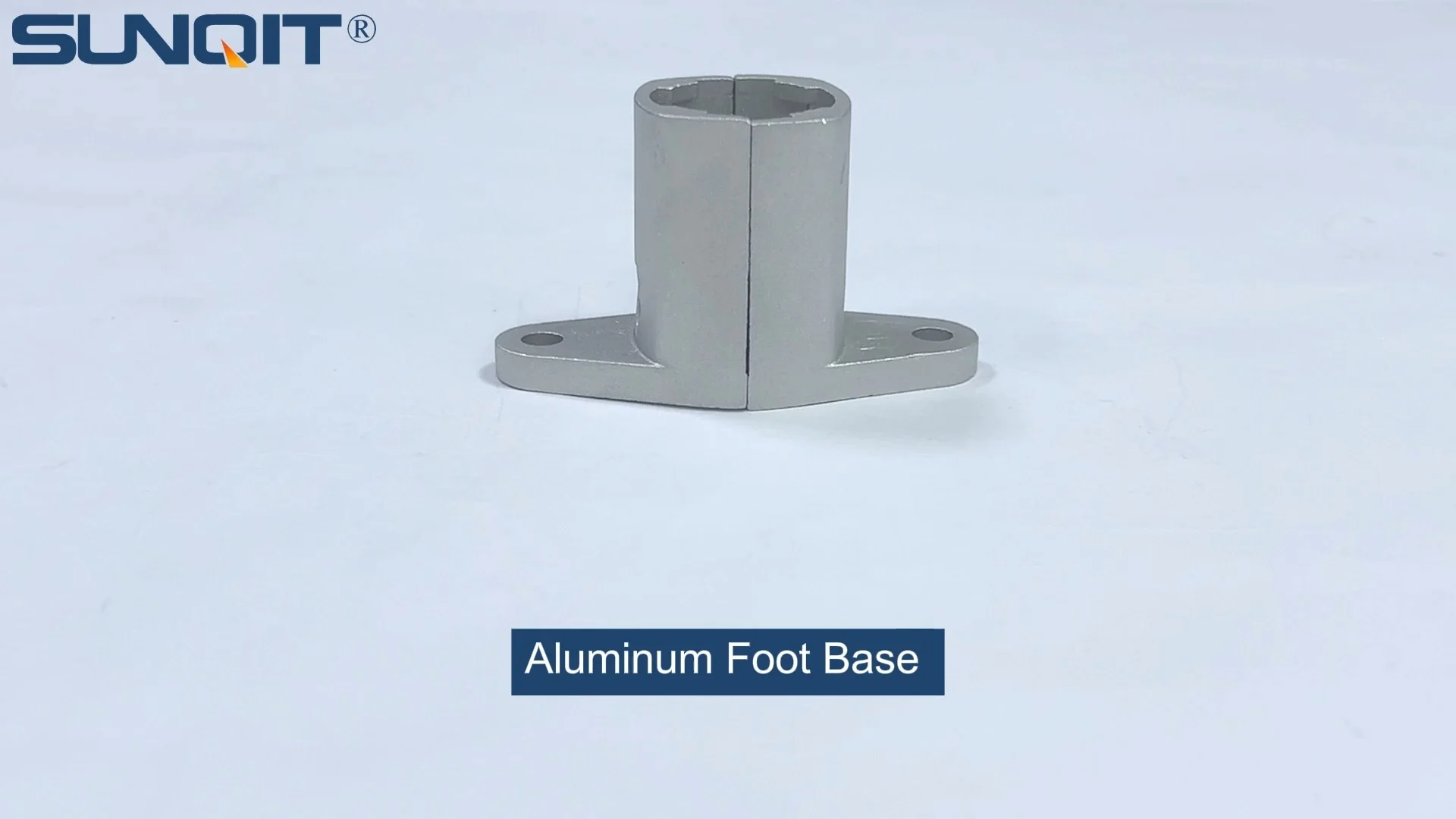
Aluminum Foot Base
Aluminum foot base to connect 28mm aluminum pipe and fixed it on the ground and prevent pipe fall and move.
Walk into any modern automotive manufacturing plant, and you'll immediately sense the rhythm of precision. Conveyor belts hum as car parts glide by, robotic arms twist and turn with mechanical grace, and workers in crisp uniforms move with purpose—all toward the common goal of building vehicles that millions will rely on. But amid this orchestration of technology and human skill, there's a silent player that holds everything together: the foundational components that keep workstations stable, equipment secure, and processes flowing. One such component, often overlooked but critically important, is the aluminum foot base. In this article, we'll explore how this unassuming part has become a cornerstone of automotive manufacturing, its wide-ranging applications, the standards that govern its use, and why it's become indispensable in an industry that demands both efficiency and durability.
What Exactly Is an Aluminum Foot Base?
Let's start with the basics. An aluminum foot base is, at its core, a structural component designed to provide stability and support to various pieces of equipment in a manufacturing setting. Think of it as the "feet" of a workstation, material rack, or assembly line fixture—anchoring the equipment to the floor while distributing weight evenly and absorbing vibrations. But what sets it apart from other types of foot bases (like those made of steel or plastic) is its construction: it's primarily crafted from aluminum extrusion profile, a material celebrated for its unique blend of strength, lightness, and versatility.
To understand why aluminum extrusion profile is the material of choice, let's break down its composition. Aluminum extrusion is created by forcing heated aluminum alloy through a die, shaping it into long, uniform profiles with specific cross-sectional designs—think T-slots, channels, or hollow tubes. This process allows manufacturers to create custom shapes tailored to the exact needs of the application. For foot bases, this often means profiles that are both lightweight and rigid, with built-in features like slots for attaching accessories (more on that later) or reinforced edges for added strength. Unlike cast aluminum, which can be brittle, extruded aluminum retains a high strength-to-weight ratio, making it ideal for supporting heavy loads without adding unnecessary bulk.
But an aluminum foot base isn't just a hunk of metal. Its design is surprisingly nuanced. Most models include adjustable feet, which allow workers to level the equipment on uneven floors—a small detail that prevents wobbling and ensures precision in tasks like part assembly or quality inspection. Many also feature mounting holes or brackets that integrate seamlessly with other components, such as workbenches, material racks, or conveyor systems. And because aluminum is naturally resistant to corrosion, these foot bases hold up well in the often-dusty, occasionally damp environments of automotive plants, where exposure to oils, coolants, and humidity is par for the course.
From Raw Aluminum to Finished Product: The Manufacturing Journey
Creating an aluminum foot base is a multi-step process that combines art and engineering. It starts with the selection of the right aluminum alloy. For automotive applications, manufacturers typically opt for alloys like 6061 or 6063. These alloys contain small amounts of silicon and magnesium, which, when heat-treated, form a microstructure that boosts strength and durability. 6061, for example, is known for its excellent machinability and weldability, making it easy to customize, while 6063 offers superior corrosion resistance—key in environments where chemicals are present.
Once the alloy is chosen, the extrusion process begins. The aluminum billet (a solid cylinder of raw material) is heated to around 800–900°F (427–482°C), a temperature that softens the metal without melting it. It's then loaded into an extrusion press, where a hydraulic ram pushes the billet through a steel die. The die, which is custom-designed for the desired profile, shapes the aluminum into long lengths—sometimes up to 50 feet—with the exact cross-section needed for the foot base. After extrusion, the profiles are cooled rapidly (often with water sprays) to lock in their shape, then cut to the required length for the foot base.
But the process doesn't end there. The extruded aluminum profiles then undergo secondary operations to prepare them for use. This might include machining—drilling holes for mounting, tapping threads for bolts, or cutting notches for adjustments. Surface treatment is another critical step. Most aluminum foot bases are anodized, a process that creates a protective oxide layer on the surface. Anodizing not only enhances corrosion resistance but also allows for color customization (though in automotive settings, natural silver or black are the most common choices to maintain a clean, industrial look). Some foot bases also receive a powder coating, which adds an extra layer of protection and can be matched to a plant's color-coding system for organization.
Finally, aluminum profile accessories come into play. These are the small but essential components that turn a basic extrusion into a functional foot base. Think brackets, connectors, or end caps that cover sharp edges and prevent dust buildup. For example, a foot base might use T-slot nuts (inserted into the extrusion's T-slots) to attach adjustable leveling feet, or corner brackets to reinforce joints. These accessories are what make aluminum foot bases modular—meaning they can be easily modified or expanded as manufacturing needs change. A plant might start with a simple foot base for a workbench, then later add a cross-brace or extend the length by connecting two profiles with a connector—all without needing to replace the entire component.

Where You'll Find Aluminum Foot Bases in Automotive Plants: Key Applications
Now that we understand what aluminum foot bases are and how they're made, let's dive into where they're actually used in automotive manufacturing. Their versatility means they pop up in nearly every corner of the plant, from the assembly line to the shipping dock. Here are some of the most critical applications:
1. Assembly Line Workstations
If you've ever watched a car being built, you know that assembly lines are the heart of automotive manufacturing. Each station along the line is dedicated to a specific task: installing dashboards, attaching wheels, wiring electrical systems, or fitting seats. Each of these stations relies on a workstation—a flat, stable surface where workers or robots perform their tasks. And under nearly every one of these workstations, you'll find aluminum foot bases.
Why aluminum here? Assembly line workstations often need to support heavy tools, parts bins, and even the weight of workers leaning on them. Steel foot bases could do the job, but they'd add significant weight, making the workstation hard to move if the line needs reconfiguring (a common occurrence in lean manufacturing). Aluminum foot bases, by contrast, are lightweight enough to be adjusted with minimal effort but strong enough to support loads of up to 1,000 pounds or more, depending on the design. Their adjustable feet also ensure that the workstation remains level, even if the factory floor has small dips or cracks—a must for precision tasks like aligning engine components or torqueing bolts to exact specifications.
Take, for example, a workstation used to install door panels. The foot base here might support a tabletop, a parts bin holding screws and clips, and a power tool rack. Over the course of a shift, workers will lean on the table, drop tools, and move around it—all while the foot base quietly absorbs the impact, preventing the table from wobbling and ensuring the door panels are installed straight. Without a stable base, even a small tremor could lead to misalignment, resulting in doors that don't close properly or rattle on the road.
2. Material Handling Equipment
Automotive manufacturing involves moving an enormous amount of materials—from small screws to entire engine blocks—across the plant. This is where material handling equipment comes in: turnover trolleys, racks, and flow racks that transport parts from storage to the assembly line. And again, aluminum foot bases play a starring role here.
Consider a turnover trolley, which is used to cart bins of parts between stations. These trolleys need to be lightweight for easy pushing but stable enough to prevent the bins from tipping over, even when cornering. An aluminum foot base with casters (wheels) attached to its bottom provides the perfect solution. The aluminum keeps the trolley light, while the wide base and locking casters ensure stability when loading or unloading. Similarly, flow racks—tilted racks where parts slide down to the front as they're used—rely on aluminum foot bases to maintain their angle. If the base is uneven, parts might get stuck or slide too quickly, disrupting the flow of production.
One of the biggest advantages of aluminum foot bases in material handling is their compatibility with lean system principles. Lean manufacturing, which focuses on reducing waste and improving efficiency, often requires equipment that can be quickly reconfigured. Aluminum foot bases, with their modular design and aluminum profile accessories, make this easy. Need to add a shelf to a trolley? Just bolt on an extra extrusion. Want to shorten a flow rack? Cut the profile to length and reattach the feet. This flexibility means plants can adapt to changes in production volume or part sizes without having to invest in entirely new equipment.
3. Quality Control Stations
In automotive manufacturing, quality is non-negotiable. A single defective part can lead to safety recalls, costly repairs, or even accidents. That's why quality control (QC) stations are dotted throughout the plant, where finished parts or subassemblies are inspected for defects. These stations demand the highest level of precision, and their foot bases are no exception.
QC stations often use specialized equipment: measuring tools like calipers, coordinate measuring machines (CMMs), or vision systems that check for cracks, misalignments, or surface imperfections. For these tools to work accurately, they need to be mounted on a surface that's completely stable—no vibrations, no wobbling. Aluminum foot bases excel here because they dampen vibrations better than steel (which can transmit vibrations from nearby machinery) and are more rigid than plastic (which might flex under the weight of heavy tools). Their non-magnetic properties are also a plus, as they won't interfere with sensitive measuring equipment.
Imagine a QC station inspecting brake rotors. The rotor is placed on a fixture attached to a table supported by an aluminum foot base. A laser measurement tool checks the rotor's thickness and parallelism to within thousandths of an inch. If the foot base were unstable, the laser might give false readings, leading inspectors to pass a defective rotor—or reject a perfectly good one. Either way, the result is waste: in the first case, a bad part reaches the customer; in the second, a good part is scrapped. The aluminum foot base prevents this by keeping the entire setup rock-steady.

Standards: Ensuring Safety, Consistency, and Reliability
In an industry as regulated as automotive, nothing is left to chance—including foot bases. Aluminum foot bases must adhere to strict standards to ensure they're safe, reliable, and compatible with other equipment. These standards cover everything from the aluminum alloy used to the load it can bear and even how it's tested.
Material Standards: Getting the Alloy Right
The first set of standards applies to the aluminum itself. Organizations like the International Organization for Standardization (ISO) and the American Society for Testing and Materials (ASTM) have established guidelines for aluminum alloys used in structural applications. For example, ASTM B221 specifies the chemical composition and mechanical properties of aluminum extrusion profiles, ensuring that the material has the right balance of strength, ductility, and corrosion resistance. Similarly, ISO 6361 outlines the tolerances for extruded aluminum profiles, so manufacturers know that a "2-inch square" profile will measure exactly that, regardless of where it's produced.
Automotive manufacturers often go a step further, setting their own internal standards based on these industry guidelines. For instance, a carmaker might require that all aluminum foot bases use 6061-T6 aluminum—a heat-treated version of 6061 that has a minimum yield strength of 35,000 psi (pounds per square inch). This ensures that the foot base can handle the maximum expected load without deforming. Why T6? The "T6" designation means the aluminum was solution heat-treated and then artificially aged, a process that maximizes its strength. For foot bases supporting heavy workstations, this level of strength is non-negotiable.
Load-Bearing and Safety Standards
Another critical set of standards relates to load capacity and safety. A foot base that collapses under weight isn't just a nuisance—it's a safety hazard. To prevent this, standards like ISO 12100 (which covers machinery safety) and ANSI/RIA R15.06 (for industrial robots and robot systems) set requirements for structural components like foot bases. These standards specify that foot bases must be tested to withstand 1.5 times their maximum rated load for a certain period (usually several minutes) without permanent deformation. For example, a foot base rated to support 500 pounds must pass a test where it's loaded with 750 pounds and shows no signs of bending or cracking afterward.
Vibration resistance is another key safety consideration. Automotive plants are noisy places, with machinery generating constant vibrations. Over time, these vibrations can loosen bolts or weaken materials. Standards like ISO 10816 outline methods for measuring vibration levels and ensuring that components like foot bases can withstand them. Some foot bases even include rubber or foam dampeners (attached via aluminum profile accessories) to absorb vibrations, further enhancing safety and stability.
Environmental and Sustainability Standards
In recent years, environmental standards have become increasingly important in automotive manufacturing. Aluminum foot bases, being made from a recyclable material, already have a sustainability edge, but standards like ISO 14001 (environmental management systems) push manufacturers to go further. This might mean using recycled aluminum in the extrusion process (aluminum can be recycled repeatedly without losing quality) or minimizing waste during production. For example, a manufacturer might repurpose scrap aluminum from the extrusion process to create smaller components like brackets or end caps, reducing the overall carbon footprint.
Automakers, under pressure to meet global emissions targets, are also prioritizing sustainable suppliers. A foot base manufacturer with ISO 14001 certification is more likely to win contracts, as it demonstrates a commitment to reducing environmental impact—something that aligns with the industry's shift toward electric vehicles and greener production methods.

Aluminum vs. the Competition: Why It's the Top Choice
You might be wondering: Why aluminum? Why not stick with steel, which has been used in manufacturing for decades, or plastic, which is cheaper? The answer lies in aluminum's unique combination of properties, which make it better suited to automotive applications than these alternatives. To illustrate, let's compare aluminum foot bases with steel and plastic foot bases across key metrics:
| Metric | Aluminum Foot Base | Steel Foot Base | Plastic Foot Base |
|---|---|---|---|
| Weight | Lightweight (≈1/3 the weight of steel) | Heavy (high strength but adds bulk) | Very lightweight (but low strength) |
| Strength-to-Weight Ratio | High (strong for its weight) | High (but heavier) | Low (weak under heavy loads) |
| Corrosion Resistance | Excellent (naturally resistant; enhanced by anodizing) | Poor (prone to rust; requires painting/coating) | Good (but can degrade in extreme temperatures) |
| Modularity | High (easily modified with aluminum profile accessories) | Low (hard to cut or drill without specialized tools) | Medium (can be molded but not easily adjusted) |
| Cost | Moderate (higher upfront than plastic, lower than stainless steel) | Low (cheap but heavy; higher shipping costs) | Low (but needs frequent replacement) |
| Environmental Impact | Highly recyclable; low energy to recycle | Recyclable but energy-intensive | Non-biodegradable; limited recycling options |
As the table shows, aluminum strikes a balance that steel and plastic can't match. Steel is strong, but its weight makes it hard to reconfigure—critical in lean manufacturing systems where flexibility is key. Plastic is lightweight and cheap, but it can't handle heavy loads and degrades over time when exposed to chemicals or UV light. Aluminum, on the other hand, offers the best of both worlds: strength without the weight, durability without the corrosion issues, and modularity that allows plants to adapt quickly to changing needs.
Challenges and the Road Ahead
Of course, aluminum foot bases aren't without their challenges. The biggest hurdle is cost. Aluminum is more expensive than steel or plastic upfront, which can be a barrier for smaller manufacturers or those on tight budgets. However, this cost is often offset by long-term savings: aluminum foot bases last longer, require less maintenance, and are easier to modify, reducing the need for frequent replacements. For large automotive plants, where downtime is costly, the investment in aluminum pays off quickly.
Another challenge is customization. While aluminum extrusion profile is versatile, creating custom dies for unique foot base designs can be expensive and time-consuming. This is where aluminum profile accessories come to the rescue. By using standard extrusions and adding modular accessories (like brackets, connectors, or adjustable feet), manufacturers can create custom foot bases without the need for custom dies. For example, a plant needing a foot base with an unusual width can simply cut a standard extrusion to length and attach end caps or cross-braces using T-slot nuts and bolts—no custom tooling required.
Looking to the future, the role of aluminum foot bases in automotive manufacturing is only set to grow. As the industry shifts toward electric vehicles (EVs), which require lighter, more efficient production processes, the demand for lightweight, modular components will increase. Aluminum foot bases, with their ability to support battery assembly stations (which are heavy but require precise alignment) or lightweight robotic workcells, will be at the forefront of this shift. Additionally, advances in aluminum alloys—like the development of aluminum-lithium alloys, which are even lighter and stronger—could further enhance the performance of foot bases, making them suitable for even more demanding applications.
Conclusion: The Unsung Hero of Automotive Manufacturing
In the grand scheme of automotive manufacturing, the aluminum foot base may not get the same attention as a high-tech robot or a cutting-edge battery. But without it, the entire operation would grind to a halt. It's the quiet foundation that supports the tools, the workers, and the processes that build the cars we drive. From assembly line workstations to material handling trolleys, from quality control stations to lean manufacturing systems, aluminum foot bases ensure that every task is performed with precision, safety, and efficiency.
What makes them so indispensable? It's their unique blend of properties: the strength of extruded aluminum, the versatility of aluminum profile accessories, the adherence to strict industry standards, and the ability to adapt to the ever-changing needs of automotive manufacturing. As the industry evolves—embracing EVs, automation, and sustainability—the aluminum foot base will evolve with it, remaining a critical component in the factories of today and tomorrow.
So the next time you see a car on the road, take a moment to appreciate the unseen work that went into building it. Somewhere, in a bustling factory, an aluminum foot base is standing firm, doing its job quietly, reliably, and without fanfare. And that, in the end, is what makes it a true unsung hero of automotive manufacturing.