- Company Articles
- Industry articles
- Industry standards
- Aluminum Foot Base Quality Standards: ISO Compliance for Lean Factories

Aluminum Foot Base Quality Standards: ISO Compliance for Lean Factories
Related Product
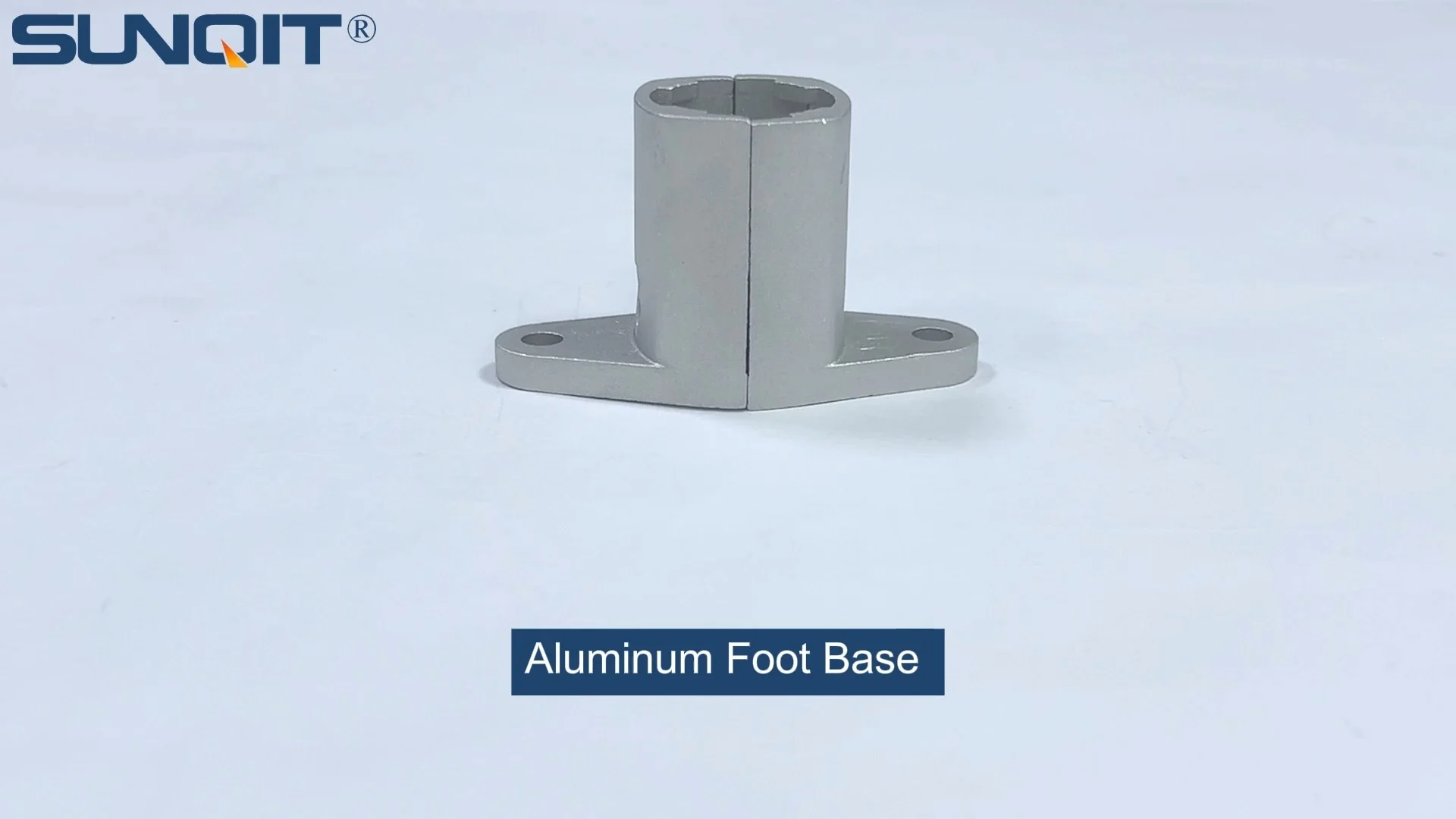
Aluminum Foot Base
Aluminum foot base to connect 28mm aluminum pipe and fixed it on the ground and prevent pipe fall and move.
Walk into any lean factory, and you'll notice a rhythm—a seamless flow of materials, workers moving with purpose, and equipment that seems to hum in harmony with productivity. Behind this efficiency lies a truth often overlooked: every component, no matter how small, plays a role in keeping the system running. Take the aluminum foot base, for example. It's not the flashiest part of a workbench or material rack, but without it, the stability of those work surfaces crumbles. A wobbly workbench leads to spilled parts, imprecise assembly, and frustrated operators—exactly the kind of waste lean manufacturing to eliminate. That's where ISO compliance comes in. It's the invisible framework ensuring that even the most unassuming components, like aluminum foot bases, meet the rigorous standards needed to support a lean system's success.
Understanding Lean Systems and the Critical Role of Aluminum Foot Bases
Lean manufacturing, born from the Toyota Production System, is all about stripping away waste to focus on value. From overproduction to unnecessary movement, the "7 Wastes" are the enemies of efficiency. But here's the thing: lean isn't just about processes—it's about the physical space where those processes unfold. Workbenches where assembly happens, material racks that hold inventory, and turnover trolleys that transport parts (keywords: workbench, lean system) are the backbone of this space. And none of these can function without a solid foundation.
Aluminum foot bases have become the go-to choice for lean factories, and for good reason. Aluminum brings together strength and lightness, making it easy to install while still supporting heavy loads. Unlike steel, it resists corrosion, which is a boon for factories dealing with moisture or chemicals. Most importantly, it's compatible with modular systems—think aluminum profile workbenches or adjustable material racks—allowing factories to reconfigure their layouts as needs change, a key lean principle of flexibility.
But what exactly does an aluminum foot base do? Imagine a workbench used for assembling small electronic components. The operator needs a steady surface to place delicate parts and tools. If the foot base is uneven, the workbench rocks, and a tiny screw rolls off the table. That's "defects" and "unnecessary motion" waste right there. Or consider a material rack loaded with heavy parts; a weak foot base might bend under the weight, causing the rack to tilt. Suddenly, workers are spending time readjusting the rack instead of fetching materials—a classic case of "waiting" waste. In short, aluminum foot bases aren't just about holding things up; they're about holding lean systems together.
ISO Standards: The Blueprint for Aluminum Foot Base Quality
If aluminum foot bases are the unsung heroes of lean infrastructure, ISO standards are the rulebook that makes them heroes. ISO (International Organization for Standardization) develops guidelines that ensure products, services, and systems are safe, reliable, and of consistent quality. For aluminum foot bases, the most relevant standard is ISO 9001, the gold standard for quality management systems. It's not just a checklist; it's a mindset that permeates every stage of production—from sourcing raw materials to shipping the final product.
ISO 9001 requires manufacturers to document every process, track materials from supplier to finished product, and continuously improve based on feedback. For aluminum foot bases, this means nothing is left to chance. Let's say a factory orders aluminum profile (keyword: aluminum profile) to make foot bases. Under ISO 9001, the manufacturer must verify that the aluminum alloy meets specific purity and strength requirements. If a batch of profiles is subpar, the system flags it before it ever becomes a foot base. Later, during machining, operators follow detailed work instructions to drill holes for bolts—ensuring each foot base is identical, so when it's installed under a workbench, there's no guesswork about alignment.
Other ISO standards play supporting roles, too. ISO 10012, for example, focuses on measurement management, ensuring that the calipers used to check a foot base's height or the scales testing its load capacity are calibrated and accurate. Even ISO 14001, which addresses environmental management, can come into play—encouraging manufacturers to use recycled aluminum or reduce waste in the extrusion process, aligning with lean's own focus on sustainability.

Breaking Down Aluminum Foot Base Quality Standards
So, what makes an ISO-compliant aluminum foot base "quality"? Let's dig into the specifics, from the aluminum itself to the final product rolling off the production line.
Material Standards: Choosing the Right Aluminum
It starts with the raw material. Not all aluminum is created equal. For foot bases, manufacturers typically use alloys like 6061 or 6063. 6061 is prized for its high tensile strength—important for supporting heavy workbenches—while 6063 offers better extrusion properties, making it ideal for shaping into complex foot base designs. ISO standards require strict material traceability, meaning every batch of aluminum can be traced back to its source, complete with certificates of analysis (CoA) proving its chemical composition and mechanical properties. For example, a 6061 aluminum profile used in a foot base should have a tensile strength of at least 205 MPa and a yield strength of 110 MPa—numbers that aren't just arbitrary; they're what ensure the foot base won't bend or crack under stress.
Design Standards: More Than Just a "Block of Metal"
A well-designed aluminum foot base looks simple, but that simplicity is intentional. ISO-compliant designs start with load capacity calculations. A foot base for a lightweight assembly workbench might need to support 200 kg, while one under a heavy-duty material rack could require 500 kg or more. Engineers use finite element analysis (FEA) to simulate how the foot base will behave under different loads, ensuring there are no weak points. Then there's adjustability—many foot bases include threaded leveling feet, allowing operators to tweak height by a few millimeters to compensate for uneven factory floors. ISO standards dictate that these adjustments should be smooth, with clear markings to ensure consistency across workstations.
Size matters too. The base plate, the part that touches the floor, must be large enough to distribute weight evenly. A too-small base plate could sink into a concrete floor over time, destabilizing the equipment above. ISO guidelines recommend base plate dimensions based on the total load—for example, a 500 kg capacity foot base might require a base plate of 150mm x 150mm. Even the shape is considered: rounded edges reduce the risk of tripping, a small detail that prevents "safety-related waste" in lean terms.
Manufacturing Processes: Precision at Every Step
Once the design is locked in, manufacturing begins—and ISO compliance leaves no room for shortcuts. Extrusion, the process of forcing aluminum through a die to create profiles, is a common first step. ISO 9001 requires that extrusion parameters (temperature, speed, die alignment) are documented and monitored to ensure consistent profile dimensions. After extrusion, the aluminum might undergo machining—drilling holes for bolts, threading the leveling feet, or cutting the base plate to size. Here, ISO 10012 ensures that the CNC machines or drills used are calibrated regularly, so a hole meant to be 10mm in diameter isn't 9.8mm or 10.2mm, which could throw off the entire assembly.
Surface treatment is another critical step. Most aluminum foot bases are anodized—a process that creates a protective oxide layer on the surface, boosting corrosion resistance. ISO standards specify the thickness of this layer (usually 10-20 microns) and require salt spray testing to verify it. For factories in particularly harsh environments, a powder coating might be added over anodization, adding another layer of protection. Every step, from extrusion to coating, is recorded in batch logs, making it easy to trace back if a defect is found later—another ISO 9001 requirement.
Testing Standards: Proving It Works When It Counts
An ISO-compliant aluminum foot base doesn't just "look" good—it performs under pressure. Testing is rigorous and covers every aspect of the foot base's job.
Load testing: Static load testing involves placing a constant weight (e.g., 500 kg) on the foot base for 24 hours. If it deforms more than 0.5mm, it fails. Dynamic load testing goes further, simulating the vibrations of a busy factory floor by applying varying weights over time. This ensures the foot base can handle the day-to-day bumps and movements without weakening.
Corrosion testing: The salt spray test is standard here. The foot base is exposed to a mist of saltwater for 500 hours; afterward, inspectors check for rust or pitting. For ISO compliance, there should be no visible corrosion, ensuring the foot base lasts in factories near coastlines or with high humidity.
Dimensional accuracy: Using calibrated tools, inspectors measure critical dimensions: height, base plate size, hole positions. Tolerances are tight—usually +/- 0.1mm for height, ensuring that when multiple foot bases are used (like under a long workbench), they all sit at the same level.
Durability testing: This involves repeatedly adjusting the leveling feet (if applicable) or subjecting the foot base to impact (simulating a dropped tool). The goal is to ensure it holds up over years of use, reducing the need for replacements—another win for lean's "waste of defects" battle.
| ISO 9001 Requirement | Description | Relevance to Aluminum Foot Bases |
|---|---|---|
| Process Documentation | Detailed work instructions for every production step | Ensures extrusion temperatures, machining depths, and coating thicknesses are consistent across batches |
| Material Traceability | Tracking raw materials from supplier to finished product | Allows recall of faulty foot bases if a batch of aluminum is found to be substandard |
| Measurement Control | Calibration of tools and equipment used in production | Guarantees that hole diameters, height measurements, and load tests are accurate |
| Corrective Action | Systems to address non-conformities and prevent recurrence | If a foot base fails a load test, the root cause (e.g., incorrect alloy) is identified and fixed |
| Continuous Improvement | Using data and feedback to enhance processes | Customer feedback about leveling foot smoothness might lead to a design tweak for easier adjustment |

How ISO Compliance Strengthens Lean Factory Performance
At first glance, ISO compliance might seem like just another certification—a box to check for customers or regulators. But in lean factories, it's much more than that. It's a tool that directly supports lean's core goals: reducing waste, improving efficiency, and boosting reliability.
Take variability, for example. Lean thrives on consistency. If one aluminum foot base is 10mm taller than the next, installing a workbench becomes a nightmare of shimming and adjusting—wasted time. ISO standards eliminate this variability by ensuring every foot base is nearly identical. Workers don't have to guess if a foot base will fit; they know it will. This predictability reduces setup time for new workstations, a key "lean win."
Then there's maintenance. A non-compliant foot base might last 6 months before bending or rusting, requiring replacement. An ISO-compliant one? It could last 5 years or more. That means fewer maintenance stops, less inventory tied up in spare foot bases, and workers focused on value-added tasks instead of repairs. In lean terms, that's eliminating "maintenance waste" and "inventory waste" in one fell swoop.
Safety is another area where ISO compliance and lean align. A wobbly workbench isn't just inefficient—it's dangerous. A tool could fall, or a worker could trip. ISO standards include safety requirements, like rounded edges or slip-resistant base plates, reducing the risk of accidents. Fewer accidents mean fewer disruptions, lower workers' compensation costs, and a team that feels confident in their workspace—all of which fuel lean productivity.
Perhaps most importantly, ISO compliance builds trust. When a lean factory sources aluminum foot bases from an ISO 9001-certified supplier, they're not just buying a product—they're buying peace of mind. They know the supplier has systems in place to catch defects before they reach the factory floor. This trust reduces the need for in-house inspections, freeing up quality control teams to focus on other areas. It also strengthens the supply chain, a critical component of lean's "just-in-time" inventory model—if you can rely on your supplier to deliver quality, you don't need to stockpile extra foot bases "just in case."

Real-World Impact: Case Studies of ISO-Compliant Aluminum Foot Bases in Action
Let's look at two factories that saw tangible benefits from switching to ISO-compliant aluminum foot bases.
Case Study 1: Automotive Parts Assembly Plant
A mid-sized automotive parts factory was struggling with assembly errors on their workbenches. Operators reported that the benches "moved" during precision tasks, leading to misaligned components and a 15% rework rate. The root cause? Cheap steel foot bases that rusted and warped over time, making the benches uneven. The factory switched to ISO 9001-certified aluminum foot bases with anodized finishes and adjustable leveling feet. Within 3 months, rework dropped to 3%. Maintenance teams, who had been replacing steel foot bases monthly, now only checked the aluminum ones quarterly. The factory estimated annual savings of $45,000 in rework costs and $12,000 in maintenance labor.
Case Study 2: Electronics Manufacturing Facility
An electronics factory using ESD (electrostatic discharge) workbenches faced a different problem: static buildup. Their old foot bases, made of uncoated aluminum, didn't ground properly, leading to occasional static discharges that damaged sensitive circuit boards. They switched to ISO-compliant aluminum foot bases with conductive anodization, designed to dissipate static. The result? Static-related defects dropped by 70%, and the factory was able to reduce its ESD testing frequency, saving 8 hours per week in quality checks.
Challenges in Maintaining ISO Compliance (and How to Overcome Them)
Of course, achieving and maintaining ISO compliance isn't without challenges. For aluminum foot base manufacturers, sourcing high-quality aluminum can be a hurdle. Global supply chains mean prices and availability fluctuate, and cutting corners with cheaper, lower-grade aluminum is tempting. To combat this, smart suppliers build relationships with certified aluminum profile producers, even if it means paying a premium. They also invest in in-house material testing, using spectrometers to verify alloy composition before production begins.
Documentation is another pain point. ISO 9001 requires mountains of paperwork—batch records, calibration logs, customer feedback forms. For small manufacturers, this can feel overwhelming. The solution? Digital tools. Many suppliers now use cloud-based quality management software to automate documentation, making it easier to track processes and generate reports during audits.
Training is also critical. A new operator might not understand why they need to measure a foot base's height to the nearest 0.1mm. Without proper training, they might skip steps or take shortcuts. ISO-compliant suppliers invest in regular training sessions, not just on how to use equipment, but on why the standards matter. When workers understand that their attention to detail prevents a workbench from wobbling in a customer's factory, they're more likely to take pride in their work.
Conclusion: The Unsung Foundation of Lean Success
Aluminum foot bases may never get the spotlight in a lean factory. They won't be featured in a tour or mentioned in a quarterly report. But make no mistake—they're the unsung heroes holding the system together. Every time a workbench stays level, every time a material rack stands firm, every time a worker avoids a trip or a tool stays in place, it's because of the quality built into those foot bases. And that quality? It's guaranteed by ISO compliance.
In the end, lean manufacturing and ISO standards are two sides of the same coin. Lean asks, "How can we do better?" ISO answers, "Here's how to ensure we do." Together, they create a culture where even the smallest component is designed, built, and tested to support the bigger goal: a factory that runs smoothly, waste-free, and ready to adapt to whatever the future brings. So the next time you walk through a lean factory, take a second look at the floor. Those aluminum foot bases under the workbenches? They're not just metal—they're the quiet promise of efficiency, reliability, and success.