- Company Articles
- Industry articles
- Industry News
- Aluminum Guide Rail A vs. Wood Rails: Sustainability & Reusability Analysis

Aluminum Guide Rail A vs. Wood Rails: Sustainability & Reusability Analysis
Related Product
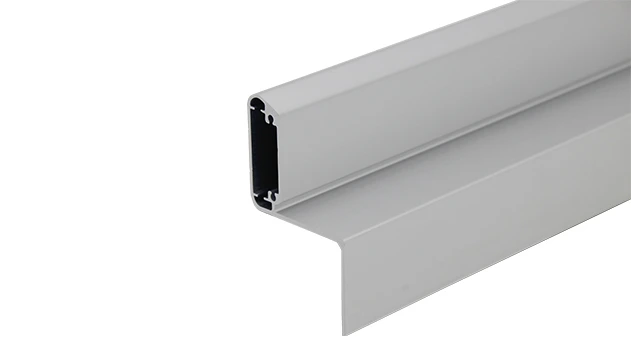
Aluminum Guide Rail A
The aluminum guide rails hold the transport goods securely on the roller track. For installation, the guide rails are simply pushed over the roller tracks.To protect sensitive products.
In the fast-paced world of manufacturing, every component counts—especially when it comes to building efficient, eco-friendly workspaces. Today, we're diving into a critical comparison: the traditional wood rails that have long been a staple in factories, versus the innovative Aluminum Guide Rail A. Let's explore why sustainability and reusability aren't just buzzwords here, but game-changers for your operations.
Why This Comparison Matters
Rails are the unsung heroes of production lines, workbenches, and storage systems. They guide materials, support workflows, and keep operations running smoothly. For decades, wood has been the go-to choice—cheap, easy to source, and simple to cut. But as manufacturers worldwide shift toward leaner, greener practices, the limitations of wood rails are becoming hard to ignore.
Enter Aluminum Guide Rail A—a key component in modern lean systems. Designed with the principles of lean system in mind, it's built to align with the "reusable, continuously improvable" mindset that drives today's most efficient factories. But how does it really stack up against wood when it comes to sustainability and reusability? Let's break it down.
Sustainability: From Material to Lifespan
Sustainability isn't just about "being green"—it's about reducing waste, minimizing environmental impact, and making choices that don't compromise future resources. Let's compare Aluminum Guide Rail A and wood rails across four critical areas:
1. Material Sourcing: Where Do They Come From?
Wood rails start with timber—often from forests that may or may not be sustainably managed. Even with responsible logging, mature trees take decades to regrow, and the process of cutting, transporting, and treating wood (to resist rot or pests) often involves chemicals that leach into soil and water.
Aluminum Guide Rail A, on the other hand, is made from aluminum profile —a metal that's 100% recyclable. What's more, over 75% of all aluminum ever produced is still in use today. That's because recycling aluminum uses just 5% of the energy needed to produce new aluminum from ore. When you choose Aluminum Guide Rail A, you're not just buying a product—you're tapping into a circular economy where materials are reused, not wasted.
2. Production Impact: Energy and Emissions
Wood rail production might seem low-tech, but it's surprisingly resource-heavy. Logging requires heavy machinery, and treating wood with preservatives releases volatile organic compounds (VOCs). Plus, transporting large timber loads adds to carbon footprints.
Aluminum profile production, while energy-intensive initially, benefits from massive efficiency gains in modern extrusion processes. Many manufacturers (including those focused on lean system practices) now use renewable energy in smelting and extrusion, cutting down on emissions. And because aluminum profiles like Aluminum Guide Rail A are extruded in precise shapes, there's almost no waste during manufacturing—unlike wood, which often results in sawdust and off-cuts that end up in landfills.
3. Longevity: How Long Do They Last?
Here's where the difference becomes stark. Wood rails are prone to warping, rotting, and insect damage—especially in humid factory environments or when exposed to oils and chemicals. A typical wood rail might last 2-3 years before needing replacement. That means constant reordering, more waste, and higher long-term costs.
Aluminum Guide Rail A? It's built to withstand the tough conditions of manufacturing. Resistant to corrosion, scratches, and chemical spills, it can last 10-15 years with minimal maintenance. Think about it: one aluminum rail replaces 5+ wood rails over a decade. That's less material extracted, less energy used in production, and far less waste sent to landfills.
4. End-of-Life: Recycling vs. Waste
When a wood rail reaches the end of its life, options are limited. It might be burned (releasing CO2), dumped in a landfill (where it decomposes slowly, producing methane), or repurposed as low-grade fuel or mulch—hardly a "sustainable" end.
Aluminum Guide Rail A, though, is infinitely recyclable. Even after 15 years of use, it can be melted down and reformed into new aluminum profile or aluminum pipe accessories without losing quality. This closed-loop system is why aluminum is often called "the forever metal"—and it's a cornerstone of sustainable manufacturing.

Reusability: The Power of Modularity
Reusability is at the heart of lean system philosophy—why build something for one-time use when you can design it to adapt and evolve? Let's see how Aluminum Guide Rail A and wood rails measure up here.
1. Modular Design: Built to Adapt
Wood rails are rigid by nature. Cut to specific lengths and nailed or screwed into place, they're fixed in both size and function. If your production line changes—say, you need to adjust a workbench or reconfigure a flow rack—you'll likely have to saw new wood rails, rendering the old ones useless.
Aluminum Guide Rail A is a modular marvel. Designed to work with aluminum pipe accessories like connectors, brackets, and end caps, it can be easily cut to length, joined, or extended. Need to shorten a rail for a new workstation? Simply cut it with a hacksaw (no special tools needed). Want to add a curve or a branch? Attach a connector. This flexibility means one rail can serve multiple purposes over its lifetime—from a straight guide on a conveyor to a curved edge on a workbench.
2. Easy Assembly and Disassembly
Wood rails require glue, nails, or screws—permanent fixes that make disassembly messy and destructive. Taking apart a wood-based system often means breaking the rails, making them unreusable.
Aluminum Guide Rail A, though, uses friction-fit or bolt-on connections with aluminum pipe accessories . No glue, no nails—just simple tools. This makes disassembly quick and damage-free. When your production line retools for a new product, you can take down the old rail system, sort the components, and rebuild something entirely new with the same parts. It's like building with Lego blocks for adults—and it's a game-changer for manufacturers who need to pivot quickly.
3. Maintenance: Keeping It in Use
Wood rails demand constant upkeep. Scratches lead to splinters, which can damage products or injure workers. Water exposure causes warping, and chemicals can stain or weaken the wood. Maintenance often means sanding, repainting, or replacing sections—all of which take time and money.
Aluminum Guide Rail A? Wipe it down with a damp cloth, and it's good as new. Its smooth, anodized surface resists scratches and stains, and minor dents can be easily hammered out. No repainting, no sealing, no costly repairs. This low maintenance means it spends more time in use and less time in the repair shop—boosting both reusability and productivity.

By the Numbers: A Quick Comparison
Still on the fence? Let's put the sustainability and reusability of Aluminum Guide Rail A and wood rails side by side:
| Criteria | Aluminum Guide Rail A | Traditional Wood Rails |
|---|---|---|
| Material Source | Recyclable aluminum (75% recycled content globally) | Timber (often from non-certified forests) |
| Production Waste | <5% waste (precision extrusion) | 15-20% waste (sawdust, off-cuts) |
| Expected Lifespan | 10-15 years | 2-3 years |
| Recyclability Rate | 95%+ (recycled into new aluminum products) | <10% (limited to low-value repurposing) |
| Reusability Score (1-10) | 9/10 (modular, repairable, reconfigurable) | 2/10 (fixed design, prone to damage) |
| Maintenance Frequency | Annual inspection (no major repairs) | Quarterly repairs/replacements |
Real-World Impact: A 3C Manufacturer's Story
From Wood to Aluminum: A Lean Transformation
A mid-sized 3C assembly plant in China was struggling with frequent workbench reconfigurations. Their wood rail-based flow racks and workstations needed constant replacement—costing them $15,000 annually in new wood rails and labor for repairs. Worse, the discarded wood was piling up, leading to fines from local environmental authorities.
They switched to Aluminum Guide Rail A and a lean system approach. Within a year, they noticed:
- No more quarterly rail replacements—their aluminum rails looked as good as new.
- Reconfiguring workstations for new phone models took 2 hours instead of 2 days (thanks to modular aluminum pipe accessories ).
- Zero wood waste sent to landfills, cutting environmental fines to zero.
- Long-term savings: They projected a 70% reduction in rail-related costs over 5 years.
This isn't an isolated case. Manufacturers in automotive, medical, and (warehousing and logistics) are making the switch—and reaping the benefits of sustainability and reusability.
The Verdict: Aluminum Guide Rail A Leads the Way
When it comes to sustainability and reusability, Aluminum Guide Rail A outperforms traditional wood rails in every category. From its recycled material base and long lifespan to its modular design and infinite recyclability, it embodies the lean system principles of efficiency, waste reduction, and continuous improvement.
Wood rails might seem cheaper upfront, but their hidden costs—frequent replacements, maintenance, waste disposal, and environmental impact—add up fast. Aluminum Guide Rail A is an investment in your factory's future: one that reduces your carbon footprint, cuts long-term costs, and keeps your operations agile in a changing market.
So, if you're building a production line, upgrading workstations, or designing a new flow rack, ask yourself: Are you choosing a temporary fix, or a sustainable solution that grows with your business? With Aluminum Guide Rail A, the answer is clear.