- Company Articles
- Industry articles
- Industry standards
- Aluminum Guide Rail B for Medical Equipment Assembly: Meeting Sterility and Precision Standards

Aluminum Guide Rail B for Medical Equipment Assembly: Meeting Sterility and Precision Standards
Related Product
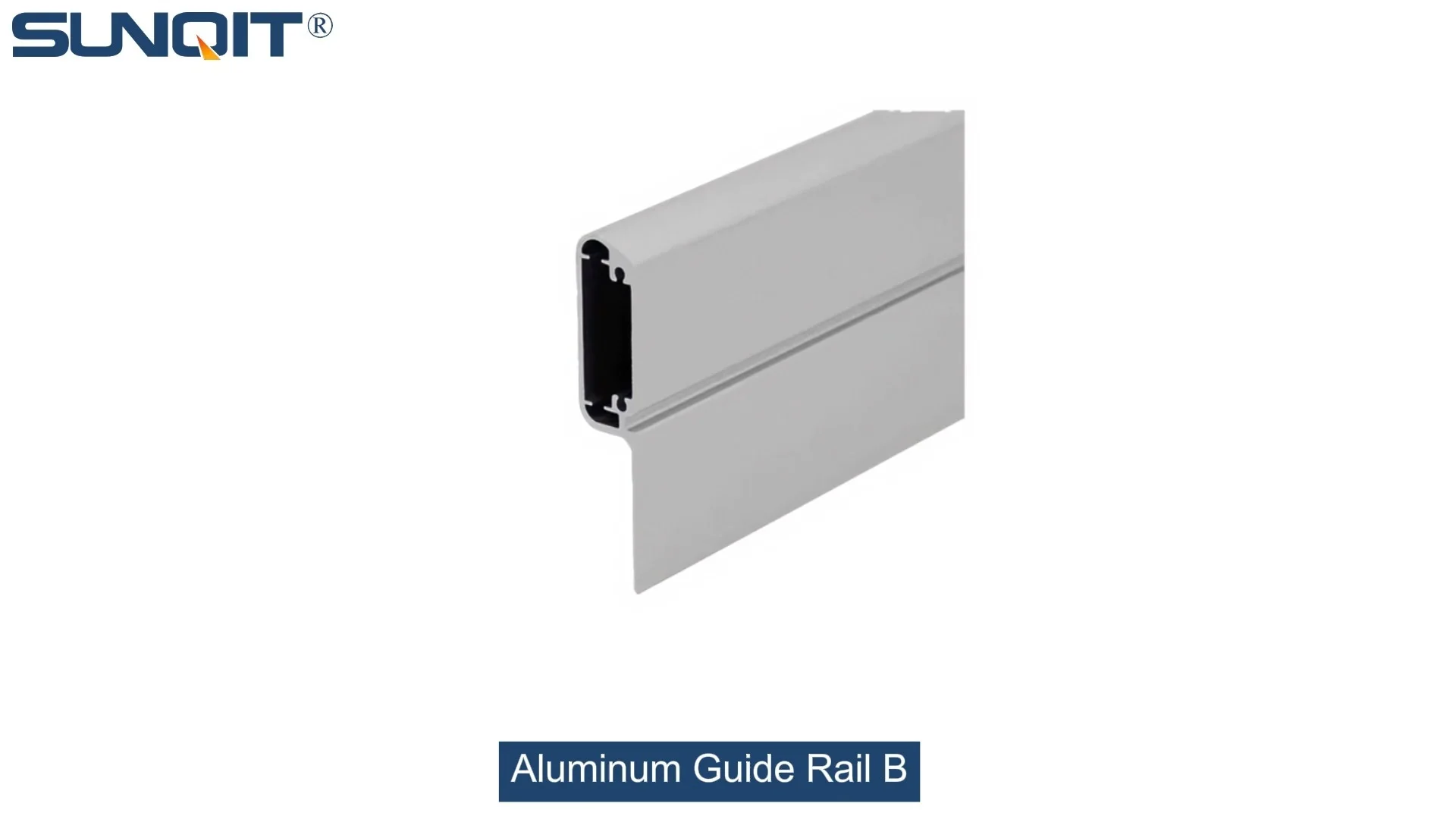
Aluminum Guide Rail B
The aluminum guide rails hold the transport goods securely on the roller track. For installation, the guide rails are simply pushed over the roller tracks.To protect sensitive products.
In the high-stakes world of medical equipment assembly, where every component carries the weight of patient safety and regulatory compliance, the tools and systems behind the scenes play a role as critical as the devices themselves. Imagine a surgical instrument that must align with sub-millimeter precision, or a diagnostic machine whose internal wiring demands absolute stability—these are not just products; they are lifelines. It's in this environment that Aluminum Guide Rail B emerges as more than a mechanical component. It becomes a silent partner in upholding the rigorous standards of sterility, precision, and reliability that define medical manufacturing.
The Unique Challenges of Medical Equipment Assembly
Medical device assembly lines operate under constraints unlike any other industry. Cleanrooms require surfaces that resist bacterial growth and are easy to sanitize. Regulatory bodies like the FDA demand traceability and consistency in every step of production. Meanwhile, the equipment itself—from delicate imaging sensors to life-support machines—often involves small, sensitive parts that demand micron-level precision during assembly. Traditional metal rails, with their rough edges and susceptibility to corrosion, frequently fall short. They collect debris in hard-to-reach crevices, add unnecessary weight to mobile workstations, and struggle to maintain alignment over time. For manufacturers, these challenges aren't just operational hurdles; they're barriers to delivering the life-saving equipment healthcare professionals depend on.
Enter Aluminum Guide Rail B—a solution engineered with the unique demands of medical assembly in mind. More than just a length of aluminum, it's a testament to how thoughtful design can transform production lines from sources of stress into engines of excellence. Let's dive into what makes this guide rail a game-changer for medical manufacturers.
Aluminum Guide Rail B: Engineered for the Medical Assembly Environment
Material Matters: Why Aluminum Stands Above the Rest
At first glance, aluminum might seem like a simple choice, but its selection for medical guide rails is rooted in science. Unlike steel, aluminum naturally forms a protective oxide layer, making it resistant to corrosion from the frequent cleaning agents—like hydrogen peroxide and isopropyl alcohol—used in cleanrooms. This resistance isn't just about longevity; it's about safety. A corroded rail could flake off particles, contaminating sterile components. Aluminum's smooth, non-porous surface leaves nowhere for bacteria to hide, ensuring that even after hundreds of wipe-downs, the rail remains a hygienic part of the assembly process.
Lightweight yet strong, aluminum also addresses the mobility needs of modern assembly lines. Medical manufacturers often reconfigure workstations to adapt to new device models, and heavy steel rails make these adjustments labor-intensive and time-consuming. Aluminum Guide Rail B cuts that effort in half, allowing teams to reposition components quickly without sacrificing structural integrity. This combination of durability, hygiene, and flexibility sets the stage for a rail system that doesn't just meet medical standards—it redefines them.
Precision by Design: The Engineering Behind the Rail
In medical assembly, "close enough" isn't close at all. A guide rail that deviates by even 0.1mm can throw off the alignment of a surgical tool's gears or the calibration of a diagnostic scanner. Aluminum Guide Rail B tackles this with tight tolerance controls, ensuring each rail segment adheres to a dimensional accuracy of ±0.05mm. How does this translate to real-world performance? Imagine guiding a robotic arm that places microchips into a pacemaker—with Aluminum Guide Rail B, that arm moves with the steady precision of a surgeon's hand, reducing errors and rework to near zero.
The rail's profile is another engineering triumph. Its edges are rounded to prevent snags on gloves or delicate components, while its top surface is machined to a mirror-like finish, minimizing friction as parts glide across it. This smoothness isn't just about speed; it's about control. When assembling a catheter, for example, the last thing a technician needs is a jerky movement caused by a rough rail surface. Aluminum Guide Rail B ensures that every slide, push, and alignment happens with the gentle predictability that sensitive medical parts require.
Sustainability Meets Lean Manufacturing
Medical manufacturers are increasingly embracing lean principles—not just to cut costs, but to reduce waste in a world where resources matter more than ever. Aluminum Guide Rail B aligns perfectly with this ethos. Its modular design means sections can be reused or repurposed when production lines change, eliminating the need to replace entire systems. Unlike plastic rails that degrade over time or steel rails that require constant painting, aluminum's longevity ensures a lower total cost of ownership. For a medical device company aiming to reduce its environmental footprint while maintaining compliance, this isn't just a bonus—it's a strategic advantage.

Beyond the Rail: Building a Complete Medical Assembly Ecosystem
A guide rail is only as effective as the system it supports. Aluminum Guide Rail B truly shines when integrated with complementary components, creating a seamless assembly environment tailored to medical needs. Let's explore how it works hand-in-hand with other key elements of modern medical production lines.
Aluminum Guide Rail B + Lean Pipe Workbench: The Foundation of Flexible Assembly
Lean pipe workbenches (lean pipe workbench) have revolutionized manufacturing with their modular, adjustable design—and when paired with Aluminum Guide Rail B, they become even more powerful in medical settings. Picture a workstation where the rail is mounted along the edge of the bench, guiding a sliding tray that holds surgical instrument parts. As a technician assembles a tool, they can slide the tray smoothly from one station to the next, keeping components organized and within arm's reach. The aluminum rail's lightweight nature means the bench remains easy to reconfigure, whether the team is switching from assembling syringes to IV pumps or scaling up production for a sudden demand spike.
What truly sets this combination apart is its adaptability to cleanroom protocols. The lean pipe workbench's aluminum frame, paired with the rail's non-porous surface, creates a workstation that can be sanitized in minutes. No more disassembly to clean hard-to-reach corners—just a quick wipe with a disinfectant cloth, and the bench is ready for the next shift. For medical manufacturers, this means less downtime, more consistent compliance, and a workforce that can focus on precision rather than cleaning.
ESD Workstations: Protecting Sensitive Electronics
Many medical devices, from heart monitors to MRI machines, rely on delicate electronic components that are vulnerable to electrostatic discharge (ESD). An unexpected static charge can fry a circuit board, rendering an entire device useless. That's where ESD workstations (esd workstation) come in—and Aluminum Guide Rail B plays a crucial role in their effectiveness. The rail's aluminum construction is naturally conductive, allowing it to be grounded alongside the workstation, dissipating static charges safely away from sensitive parts. This integration isn't just about protecting components; it's about peace of mind for manufacturers, knowing that every assembly step is shielded from a silent but deadly threat.
Imagine an ESD workstation where a rail guides a tray of pacemaker batteries. As the tray slides along the rail, any static buildup is immediately channeled to the ground, ensuring the batteries remain unharmed. This level of protection isn't optional in medical manufacturing—it's mandatory. Aluminum Guide Rail B doesn't just meet ESD standards; it becomes an active participant in maintaining them, making it an indispensable part of the workstation ecosystem.
Flow Racks: Streamlining Material Delivery in Sterile Environments
In medical assembly, the way materials move through the line is just as critical as the assembly itself. Flow racks (flow rack) are designed to deliver components to workers efficiently, but in sterile environments, they must do so without introducing contaminants. Aluminum Guide Rail B serves as the backbone of these racks, ensuring that bins of parts glide smoothly from storage to assembly without jamming or collecting dust. The rail's smooth surface prevents friction that could generate particles, while its corrosion resistance ensures that even in humid cleanrooms, the rack remains reliable for years.
Consider a flow rack used to deliver IV catheter components. Each bin holds sterile needles, tubes, and connectors, and as a technician removes a bin, the next one slides forward—guided by Aluminum Guide Rail B—without a hitch. This seamless flow reduces the need for technicians to reach, stretch, or bend, minimizing the risk of accidental contamination from contact with non-sterile surfaces. It's a small detail, but in a field where every detail matters, it's the difference between a compliant process and a compromised one.
Custom Solutions: Tailoring the Rail to Unique Medical Needs
No two medical devices are the same, and neither are their assembly requirements. A manufacturer producing MRI machines will have different rail needs than one assembling surgical robots. That's where custom solutions (lean solution) come into play. Aluminum Guide Rail B isn't a one-size-fits-all product—it's a versatile platform that can be modified to meet specific challenges. Need a curved rail to navigate around a cleanroom pillar? The aluminum can be precision-bent without weakening its structure. Require a longer rail for a high-volume IV assembly line? Sections can be joined with seamless connectors that maintain the same precision as a single piece. For medical manufacturers with unique needs, this level of customization isn't just convenient—it's essential.
| Assembly Challenge | Traditional Rail Systems | Aluminum Guide Rail B Solution |
|---|---|---|
| Sterility & Cleanability | Rough surfaces trap bacteria; require disassembly for deep cleaning | Non-porous aluminum surface; wipe-down ready with no hidden crevices |
| Precision Alignment | Tolerances of ±0.5mm; prone to misalignment over time | Tight ±0.05mm tolerance; stable performance even after repeated use |
| ESD Protection | Requires additional grounding components; inconsistent performance | Conductive aluminum integrates with ESD workstations for seamless grounding |
| Flexibility & Reusability | Rigid design; difficult to repurpose; high replacement costs | Modular sections; easy to reconfigure; reusable across multiple production lines |

Real-World Impact: How Medical Manufacturers Are Thriving with Aluminum Guide Rail B
It's one thing to talk about features and benefits, but it's another to see how they translate to real success. Take, for example, a mid-sized medical device company specializing in endoscopic equipment. Before switching to Aluminum Guide Rail B, their assembly line struggled with two major issues: frequent rail corrosion in their humid cleanroom, which led to monthly replacements, and inconsistent part alignment, resulting in a 5% error rate on their most sensitive components. Within three months of integrating Aluminum Guide Rail B into their lean pipe workbenches and flow racks, they saw a 90% reduction in rail maintenance costs and a drop in error rates to 0.5%. Their FDA audit scores improved, and production capacity increased by 15%—all because they invested in a rail system that was designed to solve their specific challenges.
Another success story comes from a manufacturer of neonatal incubators. Their team needed a way to guide temperature-sensitive components along the assembly line without exposing them to static electricity. By pairing Aluminum Guide Rail B with ESD workstations, they created a controlled environment where components moved smoothly and safely, reducing static-related failures by 100%. "It's not just about the rail itself," said their production manager. "It's about how it works with our entire system to make our process more reliable. We used to worry about every little thing going wrong; now, we can focus on making the best incubators possible."

Why Choose a Partner Committed to Lean and Customization?
In a market flooded with generic manufacturing components, choosing the right supplier matters. The best Aluminum Guide Rail B isn't just a product—it's part of a larger commitment to lean manufacturing and customer-centric solutions. A supplier that understands medical assembly doesn't just sell you a rail; they work with you to design a system that fits your space, your compliance needs, and your long-term goals. They offer technical support to help integrate the rail with your existing lean pipe workbenches or ESD workstations. They provide documentation to simplify FDA audits, from material certifications to performance test reports. And they stand behind their product, offering warranties that reflect confidence in its durability.
For medical manufacturers, this partnership is invaluable. It means access to a team that speaks their language—whether discussing cleanroom classifications, ESD standards, or lean waste reduction. It means knowing that the components they rely on are backed by expertise, not just a sales pitch. And it means having a partner invested in their success, not just their next order.
Conclusion: Aluminum Guide Rail B—More Than a Component, a Commitment to Care
In the end, Aluminum Guide Rail B is about more than metal and precision. It's about the patients who depend on the medical devices it helps assemble. It's about the technicians who can work with confidence, knowing their tools are designed to support their best work. It's about the manufacturers who can focus on innovation, secure in the knowledge that their production line is built to meet the highest standards of sterility, precision, and reliability.
Medical equipment assembly is a field where excellence isn't optional—it's a responsibility. Aluminum Guide Rail B rises to that responsibility, proving that even the smallest component can make a big difference in the quest to deliver life-saving care. For manufacturers ready to elevate their assembly process, the choice is clear: invest in a rail system that doesn't just meet the standards, but helps you set new ones. Because when it comes to medical manufacturing, good enough is never enough—and with Aluminum Guide Rail B, you'll never have to settle for less.