- Company Articles
- Industry articles
- Industry News
- Aluminum Honeycomb Panels in Aerospace vs. Automotive Manufacturing: Key Differences

Aluminum Honeycomb Panels in Aerospace vs. Automotive Manufacturing: Key Differences
Related Product
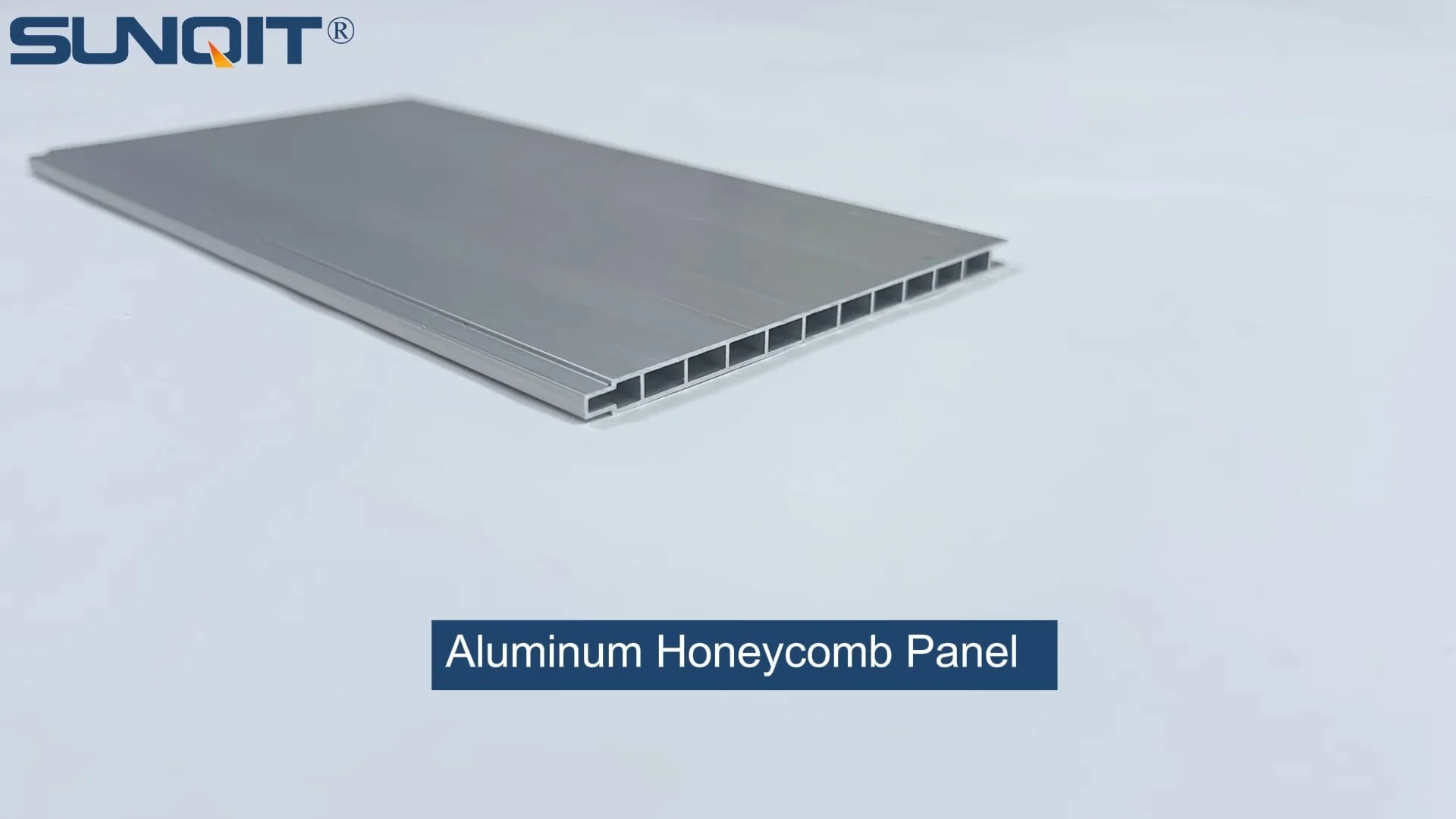
Aluminum Honeycomb Panel
Aluminum honeycomb panel used as table top, side wall, it is connected one pcs by one pcs from the side slot to make a full pieces.This panel width 105mm, 55mm, 35mm are optional for slection.
In the world of modern manufacturing, where innovation and efficiency collide, few materials have revolutionized industries quite like aluminum honeycomb panels. These lightweight, high-strength structures—composed of a honeycomb-shaped core sandwiched between thin face sheets—have become staples in sectors demanding both performance and practicality. Yet, while their basic design remains consistent, their applications in aerospace and automotive manufacturing couldn't be more distinct. What works for a jetliner soaring at 35,000 feet may not translate to a family sedan navigating city streets, and vice versa. Let's dive into the nuances that set these two industries apart when it comes to leveraging aluminum honeycomb panels, exploring how material choices, design priorities, and real-world demands shape their unique approaches.
Understanding Aluminum Honeycomb Panels: A Quick Primer
Before we compare, let's ground ourselves in the basics. Aluminum honeycomb panels are engineered for strength without the bulk. The honeycomb core—typically made from aluminum foil, aramid paper, or even composite materials—acts as a structural skeleton, distributing weight evenly across the panel. The face sheets, often aluminum alloys or carbon fiber, add rigidity and protect the core from external forces. This combination results in a material that's up to 80% lighter than solid metal while maintaining comparable strength—a game-changer for industries where every pound counts.
But here's the thing: "strength" and "lightweight" mean different things to aerospace engineers versus automotive designers. A panel that keeps a plane's cabin floor stable at Mach 0.85 faces different challenges than one supporting a car's battery pack during a highway collision. Let's unpack these differences, starting with the materials themselves.
Material Requirements: Aerospace's "No Compromise" vs. Automotive's "Balanced Trade-offs"
Aerospace: Pushing the Limits of Performance
In aerospace, failure isn't an option. A single flaw in a panel could lead to catastrophic consequences, so material selection is governed by strict standards—think ASTM, SAE, and aerospace-specific certifications like AS9100. Aluminum honeycomb panels here are built to withstand extreme conditions: rapid temperature swings from -60°C at cruising altitude to 50°C on the tarmac, constant vibration from jet engines, and even the occasional bird strike.
Face sheets in aerospace panels often use high-grade aluminum alloys like 7075-T6 (known for its tensile strength) or even titanium for critical components. The honeycomb core, too, is no afterthought. Aramid paper cores, treated with heat-resistant resins, are common in commercial aircraft, while military applications might opt for titanium honeycomb for added durability. And when it comes to joining these components, precision is key. Adhesives must meet aerospace specs for shear strength and temperature resistance, often requiring autoclave curing to eliminate air bubbles—no shortcuts allowed.
Automotive: Cost, Crashworthiness, and Scalability
Automotive manufacturers face a different set of pressures. While performance matters, cost and mass production feasibility often take center stage. For most automakers, aluminum honeycomb panels need to be affordable enough for high-volume assembly lines, easy to integrate into existing manufacturing processes, and capable of meeting crash safety standards without breaking the bank.
Here, the focus shifts to aluminum alloys like 6061-T6 for face sheets—strong enough for structural roles but cheaper and more malleable than aerospace-grade materials. The honeycomb core is typically aluminum foil (thinner and lighter than aramid) bonded with epoxy adhesives that cure at lower temperatures, reducing production time and energy costs. And unlike aerospace, where panels are often custom-designed for each aircraft model, automotive panels are standardized. This is where aluminum extrusion profile comes into play: extruded aluminum sections allow for consistent, repeatable panel shapes, making it easier to scale production for millions of vehicles.
Another automotive priority? Crashworthiness. Aluminum honeycomb panels in cars are often used in crumple zones or battery enclosures, where they need to absorb impact energy without splintering. This means the core's cell size and wall thickness are optimized for controlled deformation—think of it as a "shock absorber" for the vehicle's structure.

Design Priorities: Weight Savings vs. Practicality
Aerospace: Every Gram Counts
In aerospace, weight is the ultimate enemy. A single pound removed from an aircraft can save thousands of dollars in fuel costs over its lifetime. For example, Boeing estimates that reducing the weight of a 747 by 1,000 pounds cuts fuel consumption by 500,000 gallons annually. Aluminum honeycomb panels are therefore designed to be as light as possible while meeting structural demands.
This obsession with weight leads to innovative design choices. Take aircraft interiors: overhead bins, galley walls, and even seat frames use honeycomb panels to trim pounds without sacrificing durability. The core's cell size is often optimized for specific loads—larger cells for non-critical areas, smaller, denser cells for high-stress zones like floor panels. Engineers also experiment with hybrid designs, combining honeycomb cores with aluminum profile accessories like reinforcing ribs or edge trims to add strength without significant weight gain.
Automotive: Balancing Weight, Cost, and Repairability
Automakers care about weight, too—especially with the rise of electric vehicles (EVs), where every pound affects range. A lighter car requires a smaller battery, reducing costs and improving efficiency. But unlike aerospace, automotive design must also account for affordability and repairability.
For example, an EV's battery tray might use aluminum honeycomb panels to protect the battery pack while keeping weight down. But if that tray gets damaged in a minor collision, replacing a honeycomb panel should be cheaper than replacing a solid metal one. This leads to modular designs, where panels are sized to fit standard repair processes. Automakers also avoid overly complex core structures, sticking to simple hexagonal cells that are easy to mass-produce.
Another automotive consideration? Noise, vibration, and harshness (NVH). Honeycomb panels can act as acoustic insulators, damping road noise and improving ride comfort. This dual role—structural support + noise reduction—makes them a favorite in luxury and electric vehicles, where a quiet cabin is a selling point.

Manufacturing Processes: Precision vs. Speed
Aerospace: Handcrafted for Perfection
Aerospace manufacturing is a slow, meticulous process. Aluminum honeycomb panels here are often hand-laid, with operators carefully aligning face sheets and core materials before bonding. Autoclave curing—subjecting the panel to high heat and pressure—ensures the adhesive forms a flawless bond, critical for withstanding extreme temperatures and fatigue over decades of flight.
Quality control is relentless. Each panel undergoes ultrasonic testing to detect hidden voids, tensile strength tests to verify load capacity, and thermal cycling tests to simulate years of altitude changes. For military or space applications, panels might even be X-rayed or CT-scanned to ensure no defects slip through. This attention to detail means aerospace honeycomb panels can take weeks to produce, with costs reaching thousands of dollars per square meter.
Automotive: Built for the Assembly Line
Automotive manufacturing is all about speed. A modern car plant can produce hundreds of vehicles per day, so honeycomb panels must be made in minutes, not weeks. Here, automation takes center stage: robotic arms apply adhesive, laser-guided systems align face sheets and cores, and conveyor belts move panels through curing ovens (no autoclaves needed—lower-temperature adhesives cure faster).
Standardization is key. Automotive honeycomb panels use pre-cut cores and face sheets, with lean system principles minimizing waste. For example, leftover aluminum from extrusion processes might be recycled into honeycomb core material, reducing costs and environmental impact. Quality control is still rigorous—panels are tested for impact resistance and corrosion—but the focus is on consistency across thousands of units, not perfection in every individual panel.
Key Differences at a Glance: A Comparative Table
| Aspect | Aerospace Manufacturing | Automotive Manufacturing |
|---|---|---|
| Material Focus | Ultra-high strength, temperature resistance, fatigue durability | Cost-effectiveness, crashworthiness, mass production feasibility |
| Primary Design Goal | Minimize weight while meeting strict safety standards | Balance weight, cost, repairability, and NVH performance |
| Manufacturing Volume | Low-volume, custom production (hundreds of panels per year) | High-volume, standardized production (millions of panels per year) |
| Key Test Criteria | Thermal cycling, vibration resistance, ultrasonic flaw detection | Crash impact, corrosion resistance, cost per unit |
| Typical Applications | Aircraft interiors, floor panels, satellite structures | EV battery trays, cargo floors, door panels, crumple zones |
Cost Considerations: Why Aerospace Panels Cost 10x More
It's no secret that aerospace-grade aluminum honeycomb panels are exponentially more expensive than their automotive counterparts. A square meter of aerospace panel can cost $500–$2,000, while automotive panels range from $50–$200 per square meter. What drives this gap?
First, materials. Aerospace panels use high-performance alloys and adhesives that meet strict certifications. For example, a panel for a fighter jet might require a core made from titanium foil and face sheets of carbon fiber-reinforced polymer (CFRP)—materials that cost 10–20x more than standard aluminum. Automotive panels, by contrast, use off-the-shelf aluminum alloys and epoxy adhesives.
Second, manufacturing complexity. Aerospace panels often require custom tooling, hand assembly, and extensive testing. A single panel might undergo 20+ quality checks, from material certification to final stress testing. Automotive panels, meanwhile, are produced on automated lines with minimal human intervention, driving down labor costs.
Finally, scale. Aerospace manufacturers produce a fraction of the panels automakers do, so they can't leverage economies of scale. A single aircraft model might use 1,000 honeycomb panels, while a popular car model could use 100,000+—spreading tooling and development costs across more units.
Real-World Examples: How Industries Put Honeycomb Panels to Work
Aerospace: Airbus A350 XWB
The Airbus A350 XWB is a masterclass in honeycomb panel innovation. Its fuselage uses a carbon fiber-reinforced polymer (CFRP) skin, but many interior components rely on aluminum honeycomb. The overhead bins, for instance, use honeycomb cores with thin aluminum face sheets to reduce weight by 30% compared to traditional designs. The cargo hold floors, which must support heavy luggage and freight, use a hybrid honeycomb structure with aluminum alloy face sheets and a high-density core—proving that even in a CFRP-dominated aircraft, aluminum honeycomb remains irreplaceable.
Automotive: Tesla Model Y
Tesla's Model Y showcases automotive honeycomb panel ingenuity. The vehicle's battery pack is encased in an aluminum honeycomb tray, designed to absorb impacts and protect the cells. Tesla uses a standardized honeycomb core with 6mm cell walls and 0.2mm aluminum foil, balancing strength and cost. The tray is also modular, allowing for easy replacement if damaged—critical for a vehicle built at scale.
Future Trends: Blurring the Lines?
As technology advances, the gap between aerospace and automotive honeycomb panels may narrow. For example, aerospace manufacturers are exploring automated production techniques borrowed from automotive lines to reduce costs. Meanwhile, automakers are adopting aerospace-grade adhesives and core designs to improve EV range.
One area of overlap is sustainability. Both industries are pushing for recycled aluminum in honeycomb cores and bio-based adhesives to reduce environmental impact. Aerospace giant Lockheed Martin, for instance, is testing honeycomb panels made from recycled aluminum foil, while Ford is experimenting with plant-based core materials like hemp fiber.
Another trend is digitalization. 3D modeling and simulation tools allow engineers in both sectors to optimize honeycomb designs faster than ever. For example, using finite element analysis (FEA), an automotive engineer can simulate how a honeycomb battery tray performs in a crash in hours, not days—speeding up development and reducing waste.
Conclusion: Two Industries, One Material, Endless Possibilities
Aluminum honeycomb panels are a testament to the power of material science to adapt to diverse needs. In aerospace, they're precision tools for weight reduction and performance; in automotive, they're workhorses balancing cost, safety, and scalability. While their applications differ, both industries share a common goal: to build better, more efficient products.
As we look to the future—with electric aircraft, autonomous cars, and space tourism on the horizon—aluminum honeycomb panels will undoubtedly play a starring role. And who knows? Maybe one day, the same panel design that keeps a Mars rover's solar array stable will find its way into your next family car. For now, though, let's appreciate the beauty in their differences: aerospace's "no compromise" pursuit of excellence and automotive's "practical innovation" that brings cutting-edge materials to the masses.