
It's 7:15 AM on a Tuesday at PrecisionWorks Manufacturing, and Raj, a third-shift assembly line supervisor, pauses by the material rack near Station 4. The rack—built with sleek aluminum pipes and sturdy tray holders—holds dozens of small motor components, each critical for the day's production run. He runs a hand along the edge of the top tray, feeling the cool metal beneath his palm. "This thing's been holding up for six months straight," he mutters to himself, "but I still wonder—what if it gave way today?"
Raj's quiet concern isn't unique. In factories, warehouses, and workshops around the world, millions of workers interact daily with equipment built from aluminum pipes, lean systems, and tray holders. These tools aren't just metal and plastic; they're the backbone of efficient workflows, the silent partners in meeting deadlines, and—most importantly—the guardians of worker safety. Yet their reliability hinges on one often-overlooked process: load testing. For aluminum pipe with tray holders, load testing isn't just a box to check on a quality control list. It's a promise that the equipment will stand strong when it matters most—whether it's supporting 50 kg of electronics components or 200 kg of automotive parts. In this article, we'll dive into why load testing is the unsung hero of workplace safety, how it's done, and what it means for everyone from the factory floor to the C-suite.
What Are Aluminum Pipe with Tray Holders, Anyway?
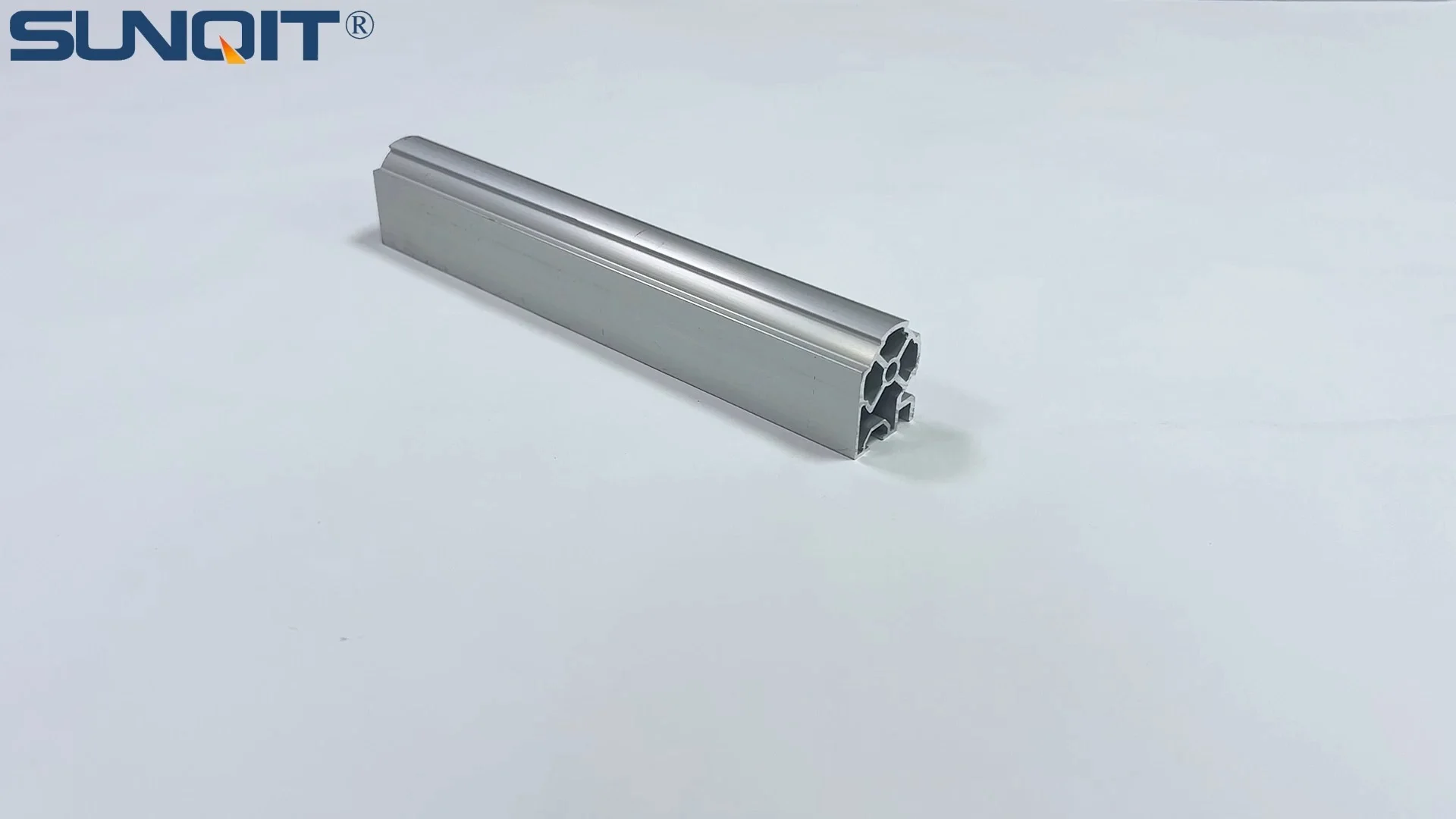
Before we talk about load testing, let's get clear on what we're actually testing. Aluminum pipe with tray holders is a versatile component of modern lean systems, designed to organize, transport, and store materials in industrial settings. Think of it as the "skeleton" of workbenches, flow racks, and material carts. The aluminum pipes—often lightweight yet surprisingly strong—form the frame, while the tray holders (attached via joints and connectors) provide flat surfaces to hold tools, parts, or finished products.
Unlike traditional steel pipes, aluminum lean pipe offers a unique blend of benefits: it's resistant to corrosion, easy to assemble and reconfigure (thanks to simple joints like the internal rotatary aluminum joint), and light enough to move without heavy machinery. This makes it a favorite in industries like electronics manufacturing, where clean, adaptable workspaces are key, and automotive production, where rapid line changes demand flexible equipment. When paired with tray holders—whether plastic, metal, or composite—these pipes become workhorses, carrying the weight of daily operations.
But here's the thing: not all aluminum pipes are created equal. A basic aluminum tube might work for light-duty tasks, like holding small tools on a workbench, but when you're stacking heavy trays of circuit boards or engine parts, you need something more robust. That's where aluminum lean pipe comes in. Reinforced with thicker walls or alloy blends, it's engineered to handle higher loads without bending or warping. And that's exactly why load testing matters—because "engineered to handle" and "actually handles" are two very different things.
Why Load Testing Isn't Optional: The Human Cost of Cutting Corners
Imagine this: It's a busy Friday afternoon at a consumer goods plant. Priya, a picker, is rushing to fill orders before the weekend. She grabs a cart loaded with boxed products, its frame made of aluminum pipe and tray holders, and pushes it toward the shipping area. Halfway there, she hears a sharp creak. She stops, looks down, and freezes—the bottom tray has started to bow, and a corner of the cart's frame is visibly bent. The boxes teeter, and Priya leaps back just as two of them crash to the floor, spilling their contents. No one is hurt, but the cart is ruined, the products are damaged, and the shipping deadline is now in jeopardy.
Scenarios like Priya's are preventable. The cart in question? It was never load tested. The supplier had promised it could hold 150 kg, but in reality, its maximum safe load was closer to 100 kg. No one checked. No one verified. And so, a small miscalculation led to chaos. This is why load testing isn't just about compliance with regulations—it's about respect for the people who rely on the equipment. When we skip load testing, we're gambling with more than production schedules; we're gambling with workers' trust, their safety, and even their lives.
The consequences of inadequate load testing go beyond accidents, too. A tray holder that sags under weight might not collapse, but it can slow down work. Workers may hesitate to place heavy items on it, leading to inefficient "babying" of equipment. Over time, this erodes productivity and morale. "I've seen guys spend extra minutes rearranging parts to avoid overloading a shelf," says Mike, a 20-year veteran of a aerospace manufacturing plant. "They know it's not safe, but management didn't want to spend the money on testing. So we all just… work around it. Until one day, we can't."
Then there's the financial toll. A single equipment failure can cost thousands in damaged inventory, downtime, and repairs. In 2023, a mid-sized electronics factory in Texas reported a $75,000 loss after a flow rack—built with untested aluminum pipes—collapsed, destroying 300 units of a newly designed circuit board. The incident also led to a two-hour production halt, as workers cleaned up and inspected other racks. "We thought we were saving money by buying cheaper, untested parts," the plant manager later told a trade publication. "Turns out, we were just borrowing trouble."

The Load Testing Process: How We Make Sure It Holds
So, how do you actually test if an aluminum pipe with tray holder can handle the load? It's not as simple as stacking weights and crossing your fingers. Load testing is a systematic process, governed by industry standards and best practices. Let's walk through the steps, using a typical aluminum lean pipe tray holder assembly (like the ones used in workbench E or material rack B) as an example.
Step 1: Pre-Test Inspection—The "Check Under the Hood"
Before any weights are added, engineers start with a visual and physical inspection. They check the aluminum pipe for dents, cracks, or uneven bends—small flaws that could weaken the structure. They examine the joints (like the parallel rotatory aluminum joint) to ensure they're tightened properly, with no stripped threads or loose connections. The tray holder itself is inspected for warping, especially at the edges where it attaches to the pipes. Even the surface of the tray is checked: a rough or uneven surface might cause weight to distribute unevenly, leading to stress points.
"We once found a hairline crack in a pipe joint during pre-test," recalls Lena, a quality control engineer at a leading aluminum profile supplier. "The joint looked fine at first glance, but under a magnifying glass? You could see where the metal had started to fatigue. If we'd skipped that step, the test would have failed spectacularly—and in the real world, that could have been a disaster."
Step 2: Static Load Testing—How Much Can It Hold… Without Moving?
Static load testing is all about measuring how much weight the aluminum pipe and tray holder can support when the load is stationary. Think of it as testing the "base strength" of the equipment. Here's how it works: The assembly (say, a small flow rack with three trays) is secured to a stable surface to prevent tipping. Then, calibrated weights—usually in 10 kg increments—are added to the tray, starting with 25% of the manufacturer's claimed capacity, then 50%, 75%, 100%, and finally 125% (a common "overload" test to ensure a safety buffer).
At each stage, engineers monitor the assembly for signs of stress: bending pipes, creaking joints, or shifting trays. They use tools like dial indicators to measure deflection (how much the pipe bends under load). For most industrial applications, a deflection of more than 2 mm under full load is considered a red flag—it means the pipe is starting to permanently deform. If the assembly passes 125% load with minimal deflection and no visible damage, it moves on to the next test.
Step 3: Dynamic Load Testing—What Happens When It's Moving?
Static testing is important, but in the real world, equipment rarely stays still. Material carts are pushed across factory floors; flow racks are loaded and unloaded as workers grab parts. That's where dynamic load testing comes in. This step simulates the forces of movement—vibration, sudden stops, and uneven surfaces—to see how the aluminum pipe and tray holder hold up.
One common dynamic test involves mounting the assembly on a shaker table, which vibrates at frequencies similar to those of a moving cart (usually 10–50 Hz). Weights are secured to the tray, and the table runs for hours—sometimes days—to mimic weeks of use. Engineers check for loosened joints, cracks, or fatigue in the pipes. Another test involves tilting the assembly to a 15° angle (simulating an uneven floor) while loaded, to ensure it doesn't tip or collapse.
"Dynamic testing is where we separate the 'good' from the 'great,'" says Raj (yes, the same supervisor from the start of the article, who now sits on his company's safety committee). "A rack might pass static testing, but if it rattles apart after an hour of vibration? That's useless on our factory floor, where carts are moving nonstop."
Step 4: Endurance Testing—Can It Keep Going… and Going… and Going?
Even if an assembly passes static and dynamic tests, it needs to prove it can handle repeated use over time. Endurance testing (also called "fatigue testing") subjects the aluminum pipe and tray holder to thousands of load cycles—adding and removing weight, moving it back and forth—to simulate months or years of operation. This is critical because materials like aluminum can develop "metal fatigue" over time, where small stresses add up to big failures.
For example, a tray holder might support 100 kg easily on day one, but after 10,000 cycles of loading and unloading, a joint could start to wear down, reducing the maximum safe load to 80 kg. Endurance testing catches these issues early, ensuring the equipment's "shelf life" matches its intended use.
Step 5: Certification—The Stamp of Approval
Once all tests are complete, the assembly is either certified or rejected. A certified product comes with a load rating (e.g., "Safe for static loads up to 150 kg; dynamic loads up to 120 kg") and a test report detailing the methods and results. This isn't just paperwork—it's a guarantee that the manufacturer stands behind their product. For buyers, it's proof that they're not just purchasing aluminum and plastic; they're purchasing peace of mind.

The Numbers Behind Safety: Load Capacity Standards You Need to Know
Load testing doesn't happen in a vacuum. It's guided by strict industry standards set by organizations like the Occupational Safety and Health Administration (OSHA), the International Organization for Standardization (ISO), and the Material Handling Industry (MHI). These standards ensure consistency—so a "100 kg load capacity" means the same thing whether you're buying from a supplier in Michigan or Malaysia.
For example, ISO 10218, which governs industrial equipment safety, requires that load-bearing components like aluminum pipe tray holders be tested to at least 125% of their rated capacity without failure. OSHA takes it a step further, mandating that employers "ensure that all materials handling equipment is inspected before use and maintained in safe operating condition" (OSHA Standard 1910.176(b)), which includes verifying load ratings through testing.
To put this in perspective, let's look at a common scenario: a workbench E (single deck, without casters) built with aluminum lean pipe and a basic aluminum tube frame. According to MHI guidelines, a workbench of this type, intended for light assembly work, should have a minimum static load capacity of 200 kg for the top tray. To meet ISO standards, it must pass a test with 250 kg (125% of 200 kg) without bending more than 1.5 mm or showing signs of stress.
| Assembly Type | Intended Use | Minimum Static Load Capacity (kg) | ISO Required Test Load (125% of Capacity) | Maximum Allowable Deflection (mm) |
|---|---|---|---|---|
| Workbench E (Single Deck) | Light assembly, tool storage | 200 | 250 | 1.5 |
| Material Rack B (3 Row, 3 Floor) | Heavy part storage, bulk materials | 300 (per shelf) | 375 | 2.0 |
| Flow Rack (with Roller Track) | Dynamic material flow (e.g., automotive parts) | 150 (per level) | 187.5 | 1.0 (under movement) |
These standards aren't arbitrary. They're based on decades of data on workplace accidents, material science, and human factors. For instance, the maximum allowable deflection (how much the tray bends) is set to prevent items from sliding off or workers from losing balance when leaning on the workbench. It's a small detail, but it makes a big difference in day-to-day safety.
From Test Lab to Factory Floor: How Load Testing Changes Real Lives
At this point, you might be thinking, "This all sounds great, but does load testing really make a difference in the real world?" Let's meet Sarah, a production line worker at a medical device plant in Ohio, to find out. "A year ago, we had a flow rack that kept sagging," she says. "The trays would tilt, and small parts would roll off onto the floor. We'd spend 10 minutes every hour picking them up, and everyone was worried about stepping on something sharp. Then management brought in new racks—ones with load-tested aluminum pipes and tray holders. Now? The trays stay flat, parts stay put, and we're way less stressed. It sounds silly, but not having to worry about the rack failing? That's a weight off my shoulders, too."
Sarah's story isn't an anomaly. A 2024 study by the Manufacturing Safety Council found that facilities using load-tested aluminum lean pipe systems reported a 32% reduction in material-handling accidents and a 19% increase in worker satisfaction compared to those using untested equipment. "Workers notice when their employer invests in safety," says Dr. Elena Kim, the study's lead researcher. "It sends a message: 'We care about you.' And when workers feel cared for, they're more engaged, more productive, and less likely to cut corners themselves."
For managers, the benefits go beyond morale. Reduced accidents mean fewer workers' compensation claims, less downtime, and lower insurance premiums. At PrecisionWorks Manufacturing (where Raj works), switching to load-tested flow racks and workbenches saved the company $45,000 in accident-related costs in the first year alone. "We used to have a 'replace it when it breaks' mentality," Raj admits. "Now? We see load testing as an investment, not an expense. The math speaks for itself."
Choosing the Right Supplier: What to Look for in a Load-Tested Partner
So, you're convinced: load testing is non-negotiable. Now, how do you find a supplier who takes it seriously? Not all "aluminum pipe suppliers" are created equal, and some may cut corners on testing to offer lower prices. Here are four questions to ask before signing a purchase order:
1. "Can you show me the load test reports for this product?"
A reputable supplier will have detailed test reports for every product line, including photos, deflection measurements, and certification numbers. If they hesitate or say, "We test in-house but don't keep records," walk away. Without documentation, there's no proof the testing was done properly.
2. "What standards do you follow for load testing?"
Look for suppliers who reference OSHA, ISO, or MHI standards specifically. A vague answer like "We test to industry standards" is a red flag. The best suppliers will even explain their testing process in detail—how they simulate static vs. dynamic loads, how many cycles they run for endurance testing, etc.
3. "Do you offer custom load testing for unique applications?"
Maybe you need a tray holder that supports 300 kg instead of the standard 200 kg, or one that can withstand extreme temperatures in a food processing plant. A good supplier will work with you to design and test a custom solution, rather than pushing a one-size-fits-all product.
4. "What happens if a product fails in the field despite passing your tests?"
Even the best testing can't predict every scenario. A supplier who stands behind their products will offer a warranty or replacement policy for failed equipment. "We had a customer whose tray holder bent after six months," says Mark, a sales manager at an aluminum profile supplier. "We sent a team to inspect it, found the load was higher than expected, and replaced the entire rack with a higher-capacity model—no charge. That's how you build trust."
The Future of Load Testing: Smart Sensors and Predictive Safety
As technology advances, load testing is evolving, too. The next frontier? Smart load testing, powered by IoT sensors and AI. Imagine aluminum pipes embedded with tiny strain gauges that measure stress in real time, sending data to a cloud platform. If a pipe starts to weaken, the system alerts managers before it fails—no need for manual inspections or scheduled downtime.
"We're already testing prototypes with built-in sensors," says Lena, the quality control engineer. "One of our clients is using them on their high-capacity flow racks. The sensors track how much weight is on each tray, how often it's loaded/unloaded, and even the temperature and humidity in the environment. Over time, the AI learns the 'normal' stress patterns and flags anomalies—like a joint that's starting to loosen or a pipe that's fatigued from too many heavy loads. It's like having a 24/7 safety inspector who never sleeps."
While smart sensors are still in the early stages, they're a glimpse into a future where load testing isn't just a one-time event—it's a continuous conversation between equipment and operators. For workers like Sarah and Raj, that future means even fewer worries about the tools they rely on. For businesses, it means safer, more efficient operations, and a competitive edge in an increasingly tight market.
Conclusion: Safety Isn't Just a Standard—It's a Mindset
Aluminum pipe with tray holders may seem like simple equipment, but their role in workplace safety is anything but small. They're the silent sentinels of the factory floor, supporting not just materials, but the people who handle them. Load testing ensures that these sentinels are up to the task—strong, reliable, and ready for whatever the workday throws at them.
But load testing is more than a process. It's a mindset—a commitment to putting safety first, even when it's easier or cheaper to cut corners. It's about recognizing that every aluminum pipe, every tray holder, and every joint is part of a larger promise: that when a worker places their trust in the equipment, that trust won't be broken.
So the next time you walk through a factory, warehouse, or workshop, take a moment to look at the aluminum pipes and tray holders around you. They might not look like much, but chances are, they've been through rigorous load testing. And that? That's the sound of safety in action.