- Company Articles
- Industry articles
- Industry News
- Aluminum Profile 3 Way Connector Innovations: Latest Industry Trends

Aluminum Profile 3 Way Connector Innovations: Latest Industry Trends
Related Product
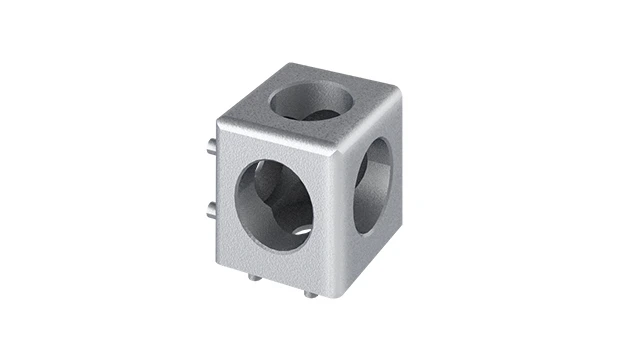
Aluminum Profile 3 Way Connector
The 3 way - squared corner connector is an external fastening method that is typically used to create a corner connection between three profiles. It is a heavy-duty connection that is simple to use and provides a polished look.
Walk into any modern manufacturing facility, and you'll notice a common thread: aluminum structures shaping the workflow. From assembly line workbenches to material storage racks, these lightweight yet sturdy frameworks are the backbone of efficient production. But what holds these aluminum extrusion profiles together? Connectors—small, unassuming components that play a critical role in determining a system's flexibility, strength, and adaptability. Among these, the aluminum profile 3 way connector stands out as a unsung hero, enabling the creation of multi-directional, stable structures that adapt to evolving industrial needs. In this article, we'll explore the latest innovations in these connectors, how they're transforming industries, and the trends driving their development.
The Backbone of Modular Aluminum Systems
Aluminum extrusion profiles have revolutionized industrial design by offering a perfect blend of strength, lightness, and precision. Unlike rigid steel structures, these profiles—shaped by pushing molten aluminum through custom dies—come in standardized sizes (think 2020, 3030, or 4040 series) with T-slot grooves that allow for easy attachment of accessories. But without reliable connectors, even the best profiles would fail to deliver on their promise of modularity. This is where 3 way connectors shine: they join three profiles at a single point, enabling the creation of corners, branches, and complex frameworks essential for workbenches, flow racks, and production cells.
Traditional 3 way connectors, often made of cast iron or basic steel, were functional but limited. They offered fixed angles (usually 90 degrees), required tools for tightening, and often sacrificed either strength or flexibility. Today, however, advancements in materials and engineering have turned these humble components into sophisticated tools that align with the demands of lean manufacturing, rapid prototyping, and sustainable production. Let's dive into the innovations reshaping their design and functionality.
Material Breakthroughs: Stronger, Lighter, More Durable
One of the most significant shifts in 3 way connector design is the move to high-performance aluminum alloys. While early connectors relied on heavier metals, modern versions leverage alloys like 6061-T6—known for its excellent tensile strength (up to 310 MPa) and corrosion resistance. This switch not only reduces the overall weight of structures (critical for mobile applications like turnover trolleys) but also improves durability in harsh industrial environments, from humid warehouses to cleanrooms in electronics manufacturing.
Some manufacturers are even experimenting with hybrid materials, combining aluminum cores with reinforced plastic components for specific use cases. For example, connectors used in ESD workstations (where static control is vital) may feature conductive plastic elements to dissipate electrostatic charges, protecting sensitive electronics during assembly. This blend of materials ensures the connector remains lightweight while meeting specialized industry standards.

Design Innovations: From Rigid to Remarkably Flexible
Gone are the days of one-size-fits-all connectors. Today's aluminum profile 3 way connectors prioritize adaptability, with features that cater to the need for quick reconfiguration and tool-less assembly. Here are three key design trends making waves:
1. Adjustable Angles Beyond 90 Degrees – Modern connectors aren't limited to right angles. Innovative designs now offer 45°, 135°, or even fully rotatable joints, allowing engineers to create slopes for gravity-fed flow racks or diagonal bracing for added stability. For instance, a material rack used in automotive parts storage might use 45°-adjustable 3 way connectors to angle shelves, ensuring easy access to heavy components while preventing product damage.
2. Tool-Less Assembly – Time is money on the factory floor, and tool-less connectors are a game-changer. Many new models feature thumb screws, cam levers, or quick-release pins that let workers assemble or disassemble structures in minutes, not hours. Imagine a lean system where a production supervisor can reconfigure a workbench from single-deck to double-deck in under 15 minutes—no wrenches or Allen keys required. This speed directly supports lean principles by minimizing downtime during line changes.
3. Compatibility Across Profile Sizes – Standardization is key in modular systems, but that doesn't mean rigidity. New 3 way connectors often come with interchangeable inserts or adjustable clamping mechanisms, allowing them to work with different profile widths (e.g., connecting a 3030 profile to a 4040 profile). This versatility is a boon for facilities that use mixed-profile systems, reducing the need to stock multiple connector types.
| Feature | Traditional 3 Way Connectors | Innovative 3 Way Connectors |
|---|---|---|
| Material | Cast iron, basic steel | 6061-T6 aluminum alloy, hybrid metal-plastic |
| Angle Flexibility | Fixed (90° only) | Adjustable (45°-135°) or fully rotatable |
| Assembly Time | 10-15 minutes per connector (with tools) | 1-2 minutes per connector (tool-less) |
| Profile Compatibility | Single profile size | Multiple sizes (via adjustable clamps/inserts) |
| Load Capacity | Up to 150 kg per joint | Up to 300 kg per joint (high-strength alloys) |

Synergy with Aluminum Profile Accessories
A connector is only as effective as the ecosystem it operates in, and today's 3 way connectors are designed to work seamlessly with a wide range of aluminum profile accessories. Take end caps, for example: these simple plastic or rubber covers snap into the ends of profiles to prevent dust buildup and protect workers from sharp edges. When paired with a 3 way connector, they ensure a clean, finished look while maintaining the structural integrity of the joint.
Gussets are another essential accessory. These triangular brackets reinforce 3 way connections, distributing weight evenly and boosting load capacity—critical for heavy-duty applications like material rack B (a 3-row, 3-floor storage system common in warehouses). Similarly, internal rotary aluminum joints, which allow profiles to swivel post-assembly, can be integrated with 3 way connectors to create dynamic structures, such as adjustable workbench shelves that tilt for ergonomic access.
Even small accessories like roller track placon mounts—used to attach roller tracks to profiles—rely on 3 way connectors for stability. In a typical flow rack setup, these mounts secure the roller track (which guides materials along the production line) to vertical and horizontal profiles, with 3 way connectors ensuring the entire structure can withstand the constant movement of goods without wobbling or shifting.
Driving Lean System Efficiency
Lean manufacturing isn't just a buzzword—it's a philosophy centered on eliminating waste, optimizing flow, and responding quickly to change. Aluminum profile 3 way connectors align perfectly with these goals by enabling rapid reconfiguration . In a traditional steel workshop, modifying a production line might require welding, cutting, or hiring external contractors. With modular aluminum systems and innovative connectors, a team can disassemble a workbench, reposition the profiles, and reassemble it into a material trolley in an afternoon—all while minimizing downtime.
Consider a scenario in an electronics plant producing smartphones. When a new model is launched, the assembly line needs to adapt to smaller components and new tools. Using 3 way connectors, workers can adjust the height of work surfaces, add tool holders to the T-slots, or reposition flow racks to shorten material travel distances. This agility reduces lead times and ensures the plant stays competitive in a fast-paced market.
Sustainability is another lean principle where these connectors excel. Aluminum is 100% recyclable, and modular systems reduce waste by allowing components to be reused across projects. A 3 way connector that once held together a prototype workbench can later be repurposed in a permanent production cell, minimizing the need for new materials. This circular approach not only cuts costs but also aligns with global efforts to reduce industrial carbon footprints.
Industry Trends Shaping the Future of Connectors
As manufacturing evolves, so too do the demands on aluminum profile 3 way connectors. Here are three trends driving their development:
1. Customization for Niche Applications – While standardization remains important, industries like aerospace and medical device manufacturing are demanding bespoke solutions. Suppliers now offer custom 3 way connectors with unique angles, locking mechanisms, or material blends to meet strict regulatory requirements. For example, a medical equipment manufacturer might need connectors made from biocompatible aluminum alloys for cleanroom workstations, while an aerospace plant could require high-temperature-resistant versions for use near welding stations.
2. Integration with Digital Tools – The rise of Industry 4.0 has brought digitalization to every corner of manufacturing, and connectors are no exception. Modern 3 way connectors are often designed with 3D modeling in mind, with CAD files available for easy integration into virtual design tools. This allows engineers to test structural integrity in simulation software before physical assembly, reducing trial-and-error and speeding up project timelines.
3. Focus on Ergonomics and Safety – Worker safety and comfort are becoming top priorities, and connectors are adapting accordingly. New designs feature rounded edges to prevent cuts, rubberized grips for easier handling, and color-coded components to reduce assembly errors. Some even include built-in cable management channels, keeping wires and hoses organized and out of the way—critical for preventing tripping hazards on the factory floor.
Real-World Impact: A Case Study
To see these innovations in action, let's look at a mid-sized automotive parts supplier. Facing pressure to reduce lead times and accommodate smaller batch sizes, the company decided to replace its fixed steel workbenches with modular aluminum systems. The key? Upgrading to adjustable 3 way connectors with tool-less assembly.
Previously, reconfiguring a workbench for a new part required 4-6 hours of downtime, as workers used wrenches to disassemble old steel brackets and drill new holes. With the new aluminum system, the same task takes just 1 hour: workers release the cam levers on the 3 way connectors, adjust the profile angles to fit the new part's dimensions, and re-tighten—no tools needed. The result? A 75% reduction in changeover time, allowing the company to take on more custom orders without sacrificing productivity.
Additionally, the lighter aluminum structures (made possible by alloy connectors) reduced the strain on workers who occasionally need to move workbenches. This led to a 20% decrease in workplace injuries related to lifting, further boosting overall efficiency.
Looking Ahead: What's Next for 3 Way Connectors?
The future of aluminum profile 3 way connectors lies in even greater integration, smarter materials, and enhanced connectivity. We're already seeing early prototypes of "smart connectors" with embedded sensors that monitor tension or vibration, alerting maintenance teams if a joint becomes loose. In the next decade, we might see connectors that pair with IoT platforms, automatically adjusting their tightness based on real-time usage data—ensuring optimal performance while extending lifespan.
Material science will also play a role. Researchers are exploring nano-engineered aluminum alloys that offer even higher strength-to-weight ratios, potentially allowing connectors to support heavier loads without increasing size. Meanwhile, bio-based plastics could replace some synthetic components, further reducing environmental impact.
Perhaps most exciting is the potential for AI-driven design. Imagine inputting your requirements (load capacity, profile size, angle) into a software tool, and it generates a custom 3 way connector design optimized for your specific needs—then sends the file to a 3D printer for on-demand production. This level of personalization could revolutionize small-batch manufacturing and prototyping, making modular systems accessible to even the smallest workshops.
Conclusion: Small Components, Big Impact
Aluminum profile 3 way connectors may not grab headlines, but they're the unsung enablers of modern manufacturing. From their humble beginnings as fixed steel joints to today's adjustable, tool-less, and smart designs, these components have evolved to meet the demands of flexibility, sustainability, and efficiency. As industries continue to embrace lean systems, customization, and digitalization, 3 way connectors will remain at the forefront—quietly holding everything together while empowering businesses to adapt, grow, and thrive.
So the next time you walk through a factory, take a closer look at those aluminum structures. Chances are, a 3 way connector is hard at work, turning simple profiles into the complex, dynamic systems that power our global economy.