- Company Articles
- Industry articles
- Industry News
- Aluminum Profile Rubber Strips in Aerospace Component Manufacturing: Precision Requirements

Aluminum Profile Rubber Strips in Aerospace Component Manufacturing: Precision Requirements
Related Product
Aluminum Profile Rubber Strip
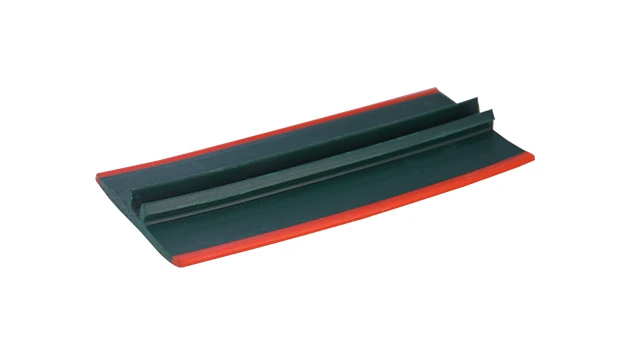
The tread strip fits into a T-slot channel and provides an anti-slip ribbed surface. It has a key pad that presses into a T-slot and is commonly used for adding traction on steps or as padding for doors. Tread strip can be ordered by rolls. The high quali
The unseen components that define aerospace reliability
Introduction: Precision as a Non-Negotiable in the Skies
In the world of aerospace manufacturing, where a single loose bolt or misaligned panel can have catastrophic consequences, precision isn't just a buzzword—it's the foundation of every component, every assembly, and every flight. From the turbine blades of jet engines to the rivets holding an aircraft's fuselage together, every part must meet standards so rigorous that even microscopic deviations can lead to failure. Yet, among these high-profile components, there exists a category of smaller, often overlooked elements that play an outsized role in ensuring safety and performance: aluminum profile rubber strips. These unassuming strips, designed to seal, protect, and enhance the functionality of aluminum structures, are a testament to the industry's obsession with detail. In this article, we'll explore why these tiny components matter, the exacting precision requirements they must meet, and how they integrate with critical aerospace systems—including the role of t-slot rubber seal covers and aluminum extrusion profiles in their design and application.
Aluminum Extrusion Profiles: The Backbone of Modern Aerospace Design
Before diving into rubber strips, it's essential to understand the role of their primary partner: aluminum extrusion profiles. In aerospace manufacturing, weight is the enemy—every pound added to an aircraft increases fuel consumption, reduces range, and strains structural integrity. Aluminum, with its exceptional strength-to-weight ratio, corrosion resistance, and malleability, has long been the material of choice for everything from airframes to interior components. But what makes aluminum truly indispensable is its ability to be extruded into complex, custom shapes known as aluminum extrusion profiles.
Extrusion is a process where heated aluminum billets are forced through a die, shaping the metal into long, uniform profiles with specific cross-sections. This method allows manufacturers to create intricate designs—think hollow tubes, T-shaped beams, or channels with internal ribs—tailored to exact structural or functional needs. In aerospace, these profiles form the framework for everything from wing ribs and floor supports to overhead storage bins and avionics racks. Their versatility is unmatched: a single profile might serve as a mounting rail for electrical components, a protective channel for wiring, or a structural brace distributing loads during flight.
But aluminum extrusion profiles aren't just about structure—they're about integration. Many profiles feature t-slots : long, narrow grooves running along their length that act as built-in mounting points. These slots allow engineers to attach brackets, panels, and other components without drilling holes (which weakens the material) or using adhesives (which can degrade over time). Instead, fasteners slide into the slots and lock in place, creating a secure, adjustable connection. It's here, in these t-slots, that aluminum profile rubber strips come into play—turning a functional design feature into a system that meets aerospace's most demanding standards.

Aluminum Profile Rubber Strips: Small Components, Big Responsibilities
At first glance, aluminum profile rubber strips might seem trivial—simple pieces of rubber designed to fill gaps or cover slots. But in aerospace, their role is far more critical. These strips serve three primary functions, each of which directly impacts safety and performance:
Sealing and Contamination Prevention: Aircraft operate in harsh environments, from the freezing temperatures of high altitudes to the humidity and salt spray of coastal airports. Aluminum extrusion profiles, with their t-slots and crevices, are vulnerable to contamination by dust, moisture, and debris. Rubber strips seal these gaps, preventing water from corroding internal components, dust from clogging moving parts, or fuel vapors from seeping into sensitive areas. In avionics bays, for example, a poorly sealed t-slot could allow condensation to short-circuit wiring—potentially disabling navigation systems mid-flight.
Vibration Dampening and Noise Reduction: Flight is inherently noisy and vibration-intensive. Turbulence, engine roar, and aerodynamic forces create constant movement that can loosen fasteners, fatigue materials, and disrupt sensitive instruments. Rubber strips act as shock absorbers, dampening vibrations between aluminum components and reducing noise transmission. In passenger cabins, this translates to a quieter, more comfortable ride; in cargo holds or engine compartments, it means longer component lifespans and fewer maintenance issues.
Thermal and Electrical Insulation: Aerospace systems generate extreme heat (from engines, brakes, and avionics) and require precise temperature control. Rubber strips, made from materials like EPDM or silicone, provide thermal barriers, preventing heat transfer between hot and cold zones. They also insulate against electrical current, reducing the risk of short circuits when metal components come into contact. In electric or hybrid aircraft, where high-voltage systems are becoming more common, this insulation is even more critical.
To fulfill these roles, aluminum profile rubber strips can't just be "good enough"—they must be perfect. Which raises the question: what exactly does "perfect" look like in this context?

Precision Requirements: Tolerances, Materials, and Fit
Aerospace specifications for aluminum profile rubber strips are so tight that they make most industrial standards look lenient. Let's break down the key areas where precision is non-negotiable:
Dimensional Tolerances: Measuring in Microns
Aluminum extrusion profiles come in standardized sizes, but even minor variations in slot width, depth, or profile geometry can affect how well a rubber strip fits. For example, a t-slot in a 40mm-wide aluminum extrusion might have a nominal width of 8mm, but due to extrusion tolerances, the actual width could range from 7.95mm to 8.05mm. A rubber strip designed for an 8mm slot must therefore be flexible enough to adapt to this range while still maintaining a tight seal. To achieve this, manufacturers produce strips with dimensional tolerances as tight as ±0.05mm—about the thickness of a human hair. This precision ensures that whether the slot is at the minimum or maximum end of its tolerance range, the rubber strip will compress evenly, fill the gap, and stay in place.
Length is equally critical. A strip that's 1mm too short for a 2-meter profile will leave an exposed section at the end, creating a potential entry point for contaminants. Conversely, a strip that's 1mm too long will bunch up, causing uneven compression and weakening the seal. To avoid this, strips are often cut to exact lengths using laser or die-cutting machines, with length tolerances of ±0.5mm for profiles up to 3 meters.
Material Properties: Engineered for Extremes
The rubber used in aerospace strips isn't the same as the rubber in a household door seal. It must withstand temperatures ranging from -60°C (the cold of high-altitude flight) to 150°C (the heat near engine components). It must resist degradation from jet fuel, hydraulic fluids, lubricants, and UV radiation. It must remain flexible over thousands of temperature cycles without hardening, cracking, or losing elasticity. And it must do all this while maintaining its sealing and insulating properties for the lifespan of the aircraft—often 20 years or more.
| Material Property | Requirement | Testing Method |
|---|---|---|
| Temperature Resistance | -60°C to 150°C (continuous) | Thermal cycling chamber (500 cycles) |
| Chemical Resistance | No swelling/cracking after 1000 hours in jet fuel (JP-8) | Immersion test per ASTM D471 |
| Compression Set | ≤25% after 70 hours at 150°C | ASTM D395 Method B |
| Tensile Strength | ≥8 MPa | ASTM D412 (dumbbell specimen) |
| Elongation at Break | ≥300% | ASTM D412 (dumbbell specimen) |
Common materials meeting these specs include EPDM (ethylene propylene diene monomer) for general-purpose use and silicone for higher temperature applications. Both are formulated with additives to enhance UV resistance, flame retardancy, and chemical stability—ensuring they don't off-gas harmful fumes in sealed aircraft cabins, a critical requirement under FAA and EASA regulations.
Installation Precision: A Perfect Fit Every Time
Even a perfectly dimensioned, high-quality rubber strip is useless if it doesn't install correctly. In aerospace, installation isn't just about pressing the strip into a slot—it's about ensuring uniform compression, consistent adhesion (if the strip is adhesive-backed), and zero gaps. For t-slot rubber seal covers , which are designed to snap into t-slots and stay in place without adhesives, the fit must be so precise that the strip "locks" into the slot, resisting vibration and temperature-induced expansion/contraction. Engineers test this by subjecting installed strips to vibration tables simulating 10,000 flight hours—if the strip shifts, warps, or dislodges, it fails.
Adhesive-backed strips face additional challenges. The adhesive must bond instantly to aluminum (which may have a thin oxide layer) and maintain strength across temperature cycles. To ensure this, manufacturers apply adhesives with a thickness tolerance of ±0.01mm, ensuring even coverage without excess that could squeeze out and attract debris. Installation tools are also specialized: rollers with calibrated pressure (typically 5-10 N/cm²) ensure the strip bonds uniformly, eliminating air bubbles that could weaken adhesion over time.
T-Slot Rubber Seal Covers: A Case Study in Aerospace Accessory Design
Of all aluminum profile rubber strips, t-slot rubber seal covers are perhaps the most widely used in aerospace. As their name suggests, these strips are designed to seal the t-slots found in most aluminum extrusion profiles—a feature that, while invaluable for mounting components, creates a potential weak point if left uncovered. Let's take a closer look at how these small accessories are engineered to meet aerospace demands.
Design for Specific Profiles
Aluminum extrusion profiles in aerospace aren't one-size-fits-all. A profile used in a seat frame might have a narrow, shallow t-slot, while one in an avionics rack could have a wider, deeper slot to accommodate heavier brackets. T-slot rubber seal covers are therefore custom-designed for specific profile series. For example, a cover for a 2020 aluminum profile (20mm x 20mm) will have a different cross-section than one for a 4080 profile (40mm x 80mm). This customization ensures the cover fits the slot's unique geometry—whether the slot has rounded edges, undercuts, or special locking features.
Material Selection for the T-Slot Environment
T-slots are often exposed to more wear and tear than other parts of an aluminum profile. Technicians may slide fasteners in and out during maintenance, tools might scrape against the slot, and debris can accumulate in hard-to-reach corners. T-slot rubber seal covers must therefore be durable enough to withstand this abuse while still maintaining their sealing properties. EPDM is a popular choice here due to its excellent abrasion resistance—tests show that a high-quality EPDM seal cover can withstand 10,000 insertions/removals of a standard t-slot fastener without tearing or losing elasticity.
Installation Simplicity, Reliability
In aerospace manufacturing, assembly line efficiency matters, but not at the expense of quality. T-slot rubber seal covers are designed to install quickly—often with a simple push or snap—but not so easily that they dislodge during handling. The best designs feature a "lip" or "ridge" that catches on the edges of the t-slot, creating a mechanical lock. This eliminates the need for adhesives (which can fail in high heat) and allows for easy removal during maintenance—critical for accessing t-slots when reconfiguring components.
Consider a commercial airliner's overhead bin: the bin's frame is built from 3030 aluminum extrusion profiles with t-slots for mounting hinges and latches. T-slot rubber seal covers in these slots prevent dust and debris from accumulating, which could jam the latches. They also dampen noise when the bin is opened or closed, reducing cabin noise levels. If a cover were to fall out, the bin might start squeaking, or a small screw could work its way into the slot and jam the mechanism—both minor issues on the ground, but potential safety hazards at 35,000 feet.
Testing and Quality Control: Beyond the Blueprint
Meeting aerospace precision requirements doesn't end with design and manufacturing—it requires rigorous testing to ensure every batch of aluminum profile rubber strips performs as intended. Manufacturers employ a battery of tests, many of which simulate the extreme conditions of flight:
Dimensional Inspection: Laser Precision
Every strip undergoes 100% dimensional inspection using laser profilometers, which scan the cross-section and length to verify compliance with tolerances. For critical applications, like engine bay profiles, inspectors take measurements at 10-point intervals along the strip's length, ensuring no section deviates from specs. Automated systems flag even the smallest outliers—if a strip is 0.06mm too wide at any point, it's rejected.
Environmental Testing: From Freeze to Fire
Rubber strips are exposed to temperature cycling chambers that alternate between -60°C and 150°C, mimicking the rapid temperature changes of ascent and descent. After 500 cycles, strips are checked for cracks, hardening, or loss of flexibility. Chemical resistance tests immerse strips in jet fuel, hydraulic fluid, and de-icing solutions for 1000 hours, then measure weight gain/loss and mechanical properties. Flame resistance is also critical: strips must self-extinguish within 10 seconds when exposed to a 1500°C flame, per FAA standard FAR 25.853.
Real-World Simulation: Flight on the Ground
Perhaps the most rigorous tests involve installing strips in actual aluminum extrusion profiles and subjecting the assembly to flight-like conditions. Vibration tables shake the assembly at frequencies up to 2000 Hz (simulating engine vibration) for 1000 hours, while pressure chambers simulate cabin altitude changes (from sea level to 12,000 meters) to test seal integrity. If a strip leaks even 0.1 cubic centimeters of air per minute during pressure testing, it's deemed unfit for aerospace use.
Conclusion: The Invisible Guardians of Aerospace Safety
Aluminum profile rubber strips may not grace the covers of aerospace magazines or feature in promotional videos, but their role in ensuring flight safety is undeniable. From sealing t-slots to dampening vibrations, these small components embody the aerospace industry's commitment to precision—proving that even the smallest details can have the biggest impact. As aircraft design evolves—with lighter materials, more electric systems, and longer service lives—the demands on these strips will only grow. Manufacturers will respond with new materials (like nanocomposite rubbers), smarter designs (integrated sensors to monitor wear), and even tighter tolerances. But one thing will remain constant: in the skies, precision isn't optional. And for aluminum profile rubber strips, that means being perfect—every time, without exception.